

World
Meet Two Men That Got $9bn Court Judgment Against Nigeria

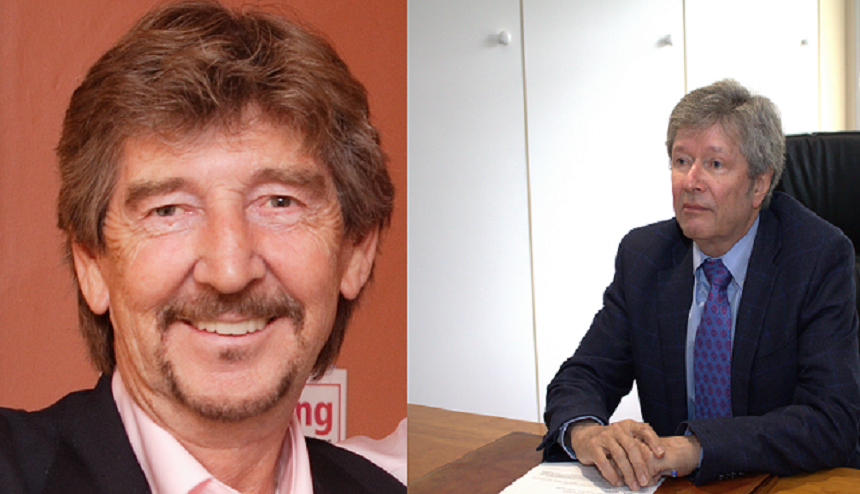
On February 15, 2015, members of the Irish music scene gathered in Dublin to pay their last respects to Michael Quinn, a long-time music impresario. Quinn was a well-known and colourful character. He partied and hob-knobbed with the who’s who in music, from the American band ‘The Supremes’ to the Irish folk band ‘The Dubliners’, until his death. Yet, it wasn’t the music stars who really attracted attention at the funeral; it was the large number of Nigerians in attendance, along with a Nigerian TV crew, that turned the heads of those gathered to say their farewells to Quinn.
Nigeria has, of course, seen its fair share of larger-than-life characters, but Michael Quinn deserves an honourable mention on any list. His rock-n-roll heritage led to a career in business, commodities, project management, and involvement in some of Nigeria’s most ambitious – and controversial – infrastructure deals of the past 30 years.
Quinn may be best known in Nigeria for being the co-founder of P&ID, involved in a gas flaring project that collapsed following the Nigerian government’s failure to uphold the terms of the agreement. This has led to Nigeria’s most difficult overseas investor challenge in its history: namely, the world’s largest arbitration award of over $9.5 billion.
What’s not really understood by most Nigerians is the full story on Michael Quinn – and his business partner, Brendan Cahill – and their business adventures here in Nigeria. BWN set out to investigate their business exploits, spanning Nigeria, Ireland, the British Virgin Islands, Cyprus and the United Kingdom, among others.
Where It All Began: ‘The Butanisation’ Project
BWN has established that Quinn and Cahill ran an international consulting company called Industrial Consultants (ICIL).
They got their first real start in Nigeria having won a contract from NNPC to establish Africa’s first-ever gas pressure vessel manufacturing facility – including installation at nine sites across Nigeria – known as the “Butanisation Project.”
In the early 1990’s, NNPC wanted to capture the Butane gas produced throughout the country at the oil refineries. Their plan was to install 1,000 tonne high pressure vessels at 9 sites across Nigeria with a total of 48 individual vessels to store this Butane.
At the time, the NNPC envisaged that international vessel manufacturers in the West (Europe, US) would tender for and export completed vessels into Nigeria. However, Quinn and Cahill had other ideas. They wanted to build the vessels in Nigeria. But they faced steep challenges in doing so, including the challenge of identifying qualified workers (welders and engineers) with the necessary skills.
To overcome this challenge, they pursued a technology transfer partnership with Babcock Robey, a long-established UK company, to consider setting up a factory, bringing in world-class welders and manufacturing the vessels in Nigeria whilst training up an entire cadre of Nigerian welders and engineers. This was not ordinary welding – an explosion at such a vessel would be devastating.
The technology transfer arrangement with Babcock Robey agreed that after completion of the project the factory and equipment would remain operative in Nigeria. As a direct result of that technology transfer, there are now a number of indigenous manufacturers in Nigeria, not only of pressure vessels, but of many other associated products used across the entire oil and gas industry. This industry as a whole is now worth billions of dollars to the Nigerian economy.
This technology transfer strategy would later become a signature strategy of the Quinn and Cahill approach to doing business in Nigeria.
Combating HIV/AIDS
Not all of Cahill and Quinn’s projects were as commercially successful as the Butanization project, though. An entrepreneurial project to support HIV/AIDS testing in Nigeria collapsed in the early 2000s, after disagreements between the various commercial partners – including Quinn and Cahill – and the Nigerian government. Why did the project collapse, and what was the involvement of Quinn and Cahill?
In the late 90s and early 2000s, sub-Sahara African governments were facing a staggering rise in the numbers of citizens suffering from HIV/AIDS. The lack of basic healthcare infrastructure, access to medicines, testing stigma and limited financial resources only made the plight worse.
In 2006, the Nigerian Health Ministry agreed to support a $15 million partnership with a local Nigerian company, Allied Consultants International (ACI) working with Trinity Biotech of Ireland to supply and create a facility that would locally-manufacture HIV testing kits. The Nigerian government would be a Joint Venture (JV) partner. Locally the company was known as Trinitron.
The initiative got off to a rough start due to the government’s failure to deliver the necessary funds and resources needed to start, and so ACI sought outside assistance. They went to Michael Quinn and Brendan Cahill and asked for their help. (BWN has established that Quinn and Cahill were not involved at the start of the project – they were simply called in to help when things began to go wrong). Quinn and Cahill arranged for new financing, and brought in new management. In return, Quinn and Cahill through ICIL became a shareholder in ACI. The new arrangement worked. Test kits were delivered from Ireland – over 4 million of them. And in May 2008 the manufacturing facility at Sheda was completed, and the first kits were rolled out for government licensing approval.
Notwithstanding this, the Nigerian government failed to purchase the test kits. This led in-part to the collapse of the project and the ultimate closure of the facility in Sheda, by the government.
BWN tracked down Gerry Nash, the project manager of the Sheda facility brought in by Quinn and Cahill, to understand why some in Nigeria claim this project was a sham or a fraud: He said: “The Trinitron project was an extraordinary success and supported Nigerians access to essential tests to combat the spread of HIV/AIDS. We delivered over 4 million test kits that were vital to stopping the spread of HIV/AIDS. The Sheda facility was in full operation and producing locally made kits. There will be those in the Western media who will say this project was a failure; however, that’s ridiculous as the only failure was the Nigerian government’s inability to continue funding the project.”
Port Expansion
Quinn and Cahill also had a hand in expanding the infrastructure of the ports of Lagos and Calabar. It resulted in them gaining a better understanding of the infrastructure and needs of cities like Lagos and Calabar. Their work in both communities saw the construction of improved industrial facilities that allowed for the increased import and export of goods and services.
Supporting Nigeria’s Military
Quinn and Cahill also found a niche in helping repair and rebuild ageing Nigerian military equipment. BWN has established that they worked on several such contracts since 2000.
In 2001, through their company Marshpearl, Quinn and Cahill won a contract to repair and upgrade 36 Scorpion tanks. Overall, the project was a resounding success, and delivered the tanks upgraded as required. Such military hardware upgrades were to be needed in the coming years, in particular in the fight against Boko Haram.
However, BWN has found that not all contracts with the Nigerian military were as successful as the Scorpion tank project. In 2010, Industrial Consultants partnered with a company called North Wales Military Aviation Services (NWMAS) and won a $5m contract to repair the ejector seats in six Alpha jets for the Nigerian Air Force, specifically for an Air Force unit called Aeronautical Engineering & Technical Services (AETS).
NWMAS had completed the first milestone of the project when the Nigerian AETS unit terminated its agreement with NWMAS and refused to pay for work that had been previously completed. Again, because the contract was well-structured and relied on milestones for payments, it should have been straightforward.
The two sides could not agree, though. This dispute ended up before a Nigerian arbitration panel, which awarded Quinn and Cahill $2.3 million because of the Nigerian decision to end the contract early and not pay for work completed.
Private Sector Projects
Quinn and Cahill didn’t just work for the government, but also for the private sector where they worked with some of the big names in the international oil industry.
For instance, their operation was involved in numerous feasibility studies in relation to high value projects (especially complex cable and fibre optics networks) subsequently undertaken by large private companies such as Shell – the Cawthorne Channel Gas Gathering Project and the Forcados Gas Gathering Project, to name but two. In relation to all of these studies – valued in aggregate in the hundreds of millions of dollars – the recommendations made by Quinn and Cahill were taken up and the specialist facilities proposed were successfully constructed.
Use of Offshore Companies and Section 54
Our investigation also revealed a pattern by Quinn and Cahill to use offshore tax havens like the British Virgin Islands (BVI) and Cyprus to establish their businesses that operated in Nigeria. We wanted to look into why the two men used this tactic repeatedly and if it has any relevance for the current dispute with P&ID, which is also based in the British Virgin Islands.
According to experts, businesses use these tax havens because they help to lower tax bills, they offer sound legal structures for businesses, and they allow the identities of the ownership to remain confidential. These are all general reasons why BVI companies are popular with international businesspeople.
Some claim these mirrored entities lead to confusion and are meant to intentionally mislead, especially during legal and arbitration disputes.
In the legal dispute on NWMAS, rumours abound that NWMAS Nigeria Ltd was established without NWMAS UK’s knowledge and the subsequent arbitration was not made aware to the UK entity. We looked into this claim, because it is a serious allegation.
According to discussions we had with contacts who know the details of the NWMAS case, these allegations are false, and in fact, the NWMAS UK was named as Claimant in the dispute.
Conclusion
Why does this all matter – Irish entrepreneurs making deals in everything from medicine kits, to tanks, to ports? It matters because Nigeria’s government currently owes $9.5 billion in judgment debt to P&ID, which is the company founded by Quinn and Cahill.
Some senior officials of the Nigerian government have claimed that P&ID is a “fake” company. It is clear from our investigation that similar arguments were levelled against other Quinn and Cahill adventures, such as NWMAS, in the past, and were subsequently found to be untrue.
Our investigation around Quinn and Cahill has shown these two men as having a long-track record here in Nigeria. Yes, they’ve set up multiple tax haven companies. Yes, they’ve had their fair share of disputes and arbitration awards against Nigeria. Yes, they have had some projects succeed and others fail. They are entrepreneurs and risk-takers, that is clear. Nigeria is a tough place to do business, and it needs such people to invest and show good faith. Without such investors, Nigeria would be in trouble, because investors who are heavily risk-averse do not want to come here. What the country needs is genuine entrepreneurs.
There is clearly some criticism about Quinn & Cahill that stands up: the projects that did not succeed could have been better handled. But to claim that these were “scams” or “frauds” is obviously untrue: there are real buildings, and machines, and facilities that show the contracts were real, and the work done was real. There is literally concrete evidence of this.
So, efforts by some people to characterise P&ID and its founders, Quinn and Cahill, as frauds, clearly fall short, unless those making such claims can produce real evidence. In any case, attacking previous projects that have served their purpose does not have any relevance to the current P&ID dispute.
The fact of the matter remains that until recently, no one had alleged fraud or misdeeds in the P&ID case. To date, not once during any of the legal proceedings either in the UK or US – where they are active currently – or even during the Nigerian legal proceedings, were these issues or claims raised by the Nigerian government. This shows that some sections of the media are simply falling for the spin; the government itself does not even believe the rumours sufficiently to raise them in court.
The most important single fact on the P&ID case is that, by failing to follow-through on the P&ID agreement, the expert Tribunal found that the Nigerian government was at fault and is now faced with the grim consequences of potentially paying for one of the largest arbitration awards in history – currently standing at over $9 billion!
And there is no evidence yet that the government is ready to enter into negotiations to find an amicable solution to the issue.








By Adedapo Adesanya
Social media platform, TikTok’s Chinese owner ByteDance has signed binding agreements with United States and global investors to operate its business in America.
Half of the joint venture will be owned by a group of investors, including Oracle, Silver Lake and the Emirati investment firm MGX, according to a memo sent by chief executive, Mr Shou Zi Chew.
The deal, which is set to close on January 22, 2026 would end years of efforts by the US government to force ByteDance to sell its US operations over national security concerns.
It is in line with a deal unveiled in September, when US President Donald Trump delayed the enforcement of a law that would ban the app unless it was sold.
In the memo, TikTok said the deal will enable “over 170 million Americans to continue discovering a world of endless possibilities as part of a vital global community”.
Under the agreement, ByteDance will retain 19.9 per cent of the business, while Oracle, Silver Lake and Abu Dhabi-based MGX will hold 15 per cent each.
Another 30.1 per cent will be held by affiliates of existing ByteDance investors, according to the memo.
The White House previously said that Oracle, which was co-founded by President Trump’s supporter Larry Ellison, will license TikTok’s recommendation algorithm as part of the deal.
The deal comes after a series of delays.
Business Post reported in April 2024 that the administration of President Joe Biden passed a law to ban the app over national security concerns, unless it was sold.
The law was set to go into effect on January 20, 2025 but was pushed back multiple times by President Trump, while his administration worked out a deal to transfer ownership.
President Trump said in September that he had spoken on the phone to China’s President Xi Jinping, who he said had given the deal the go ahead.
The platform’s future remained unclear after the leaders met face to face in October.
The app’s fate was clouded by ongoing tensions between the two nations on trade and other matters.

By Kestér Kenn Klomegâh
Despite the complexities posed by Russia-Ukraine crisis, United States has been taking conscious steps to improve commercial relations with Russia. Unsurprisingly, Russia, on the other hand, is also moving to restore and normalise its diplomacy, negotiating for direct connections of air-routes and passionate permission to return its diplomats back to Washington and New York.
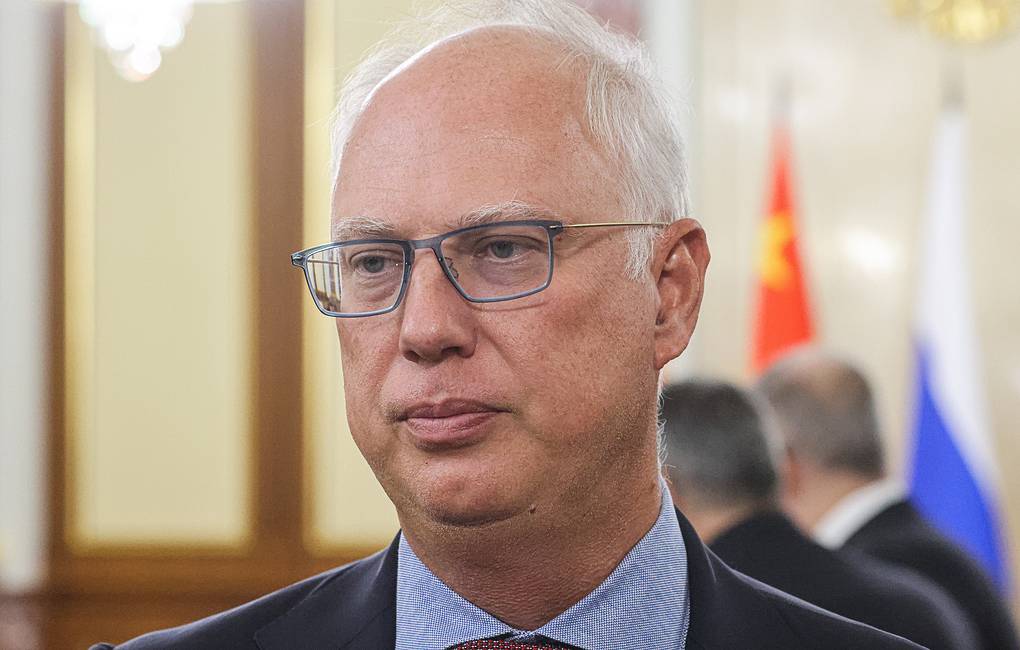
In the latest developments, Kirill Dmitriev, Chief Executive Officer of the Russian Direct Investment Fund (RDIF), has been appointed as Russian President’s Special Envoy to United States. This marked an important milestone towards raising bilateral investment and economic cooperation. Russian President Vladimir Putin tasked him to exclusively promote business dialogue between the two countries, and further to negotiate for the return of U.S. business enterprises. According to authentic reports, United States businesses lost $300+ bn during this Russia-Ukraine crisis, while Russia’s estimated 1,500 diplomats were asked to return to Moscow.
Strategically in late November 2025, the American Chamber of Commerce in Russia (AmCham) has awarded Kirill Dmitriev, praised him for calculated efforts in promoting positive dialogue between the United States and Russia within the framework decreed by President Vladimir Putin. Chief Executive Officer of Russian Direct Investment Fund (RDIF) Kirill Dmitriev is the Special Representative of the Russian President for Economic Cooperation with Foreign Countries. Since his appointment, his primary focus has been on United States.
“Received an American Chamber of Commerce award ‘For leadership in fostering the US-Russia dialogue,’” Dmitriev wrote on his X page, in late November, 2025. According to Dmitriev, more than 150 US companies are currently operating in Russia, with more than 70% of them being present on the Russian market for over 25 years.
In addition, Chamber President Sergey Katyrin and American Chamber of Commerce in Russia (AmCham) President Robert Agee have also been discussing alternatives pathways to raise bilateral business cooperation. Both have held series of meetings throughout this year, indicating the the importance of sustaining relations as previously. Expectedly, the Roscongress Foundation has been offered its platforms during St. Petersburg International Economic (SPIEF) for the American Chamber of Commerce (AmCham).
On December 9, Sergey Katyrin and Robert Agee noted that, despite existing problems and non-economic obstacles, the business communities of Russia and the United States proceed from the necessity of maintaining professional dialogue. Despite the worsening geopolitical conditions, Sergey Katyrin and Robert Agee noted the importance of preserving stable channels of trade and pragmatic prospects for economic cooperation. These will further serve as a stabilizing factor and an instrument for building mutual trust at the level of business circles, industry associations, and the expert community.
The American Chamber of Commerce (AmCham) will be working in the system of the Chamber of Commerce and Industry (CCI) in the Russian Federation, which currently comprises 57,000 legal entities, 130 regional chambers and a combined network of representative offices covering more than 350 points of presence.
According to reports obtained by this article author from the AmCham, promising sectors for Russian-American economic cooperation include healthcare and the medical industry, civil aviation, communications/telecom, natural resource extraction, and energy/energy equipment. The United States and Russia have, more or less, agreed to continue coordinating their work to facilitate the formation of a more favorable environment for Russian and American businesses, reduce risks, and strengthen business ties. Following the American-Russian Dialogue, a joint statement and working documents were adopted.
By Kestér Kenn Klomegâh
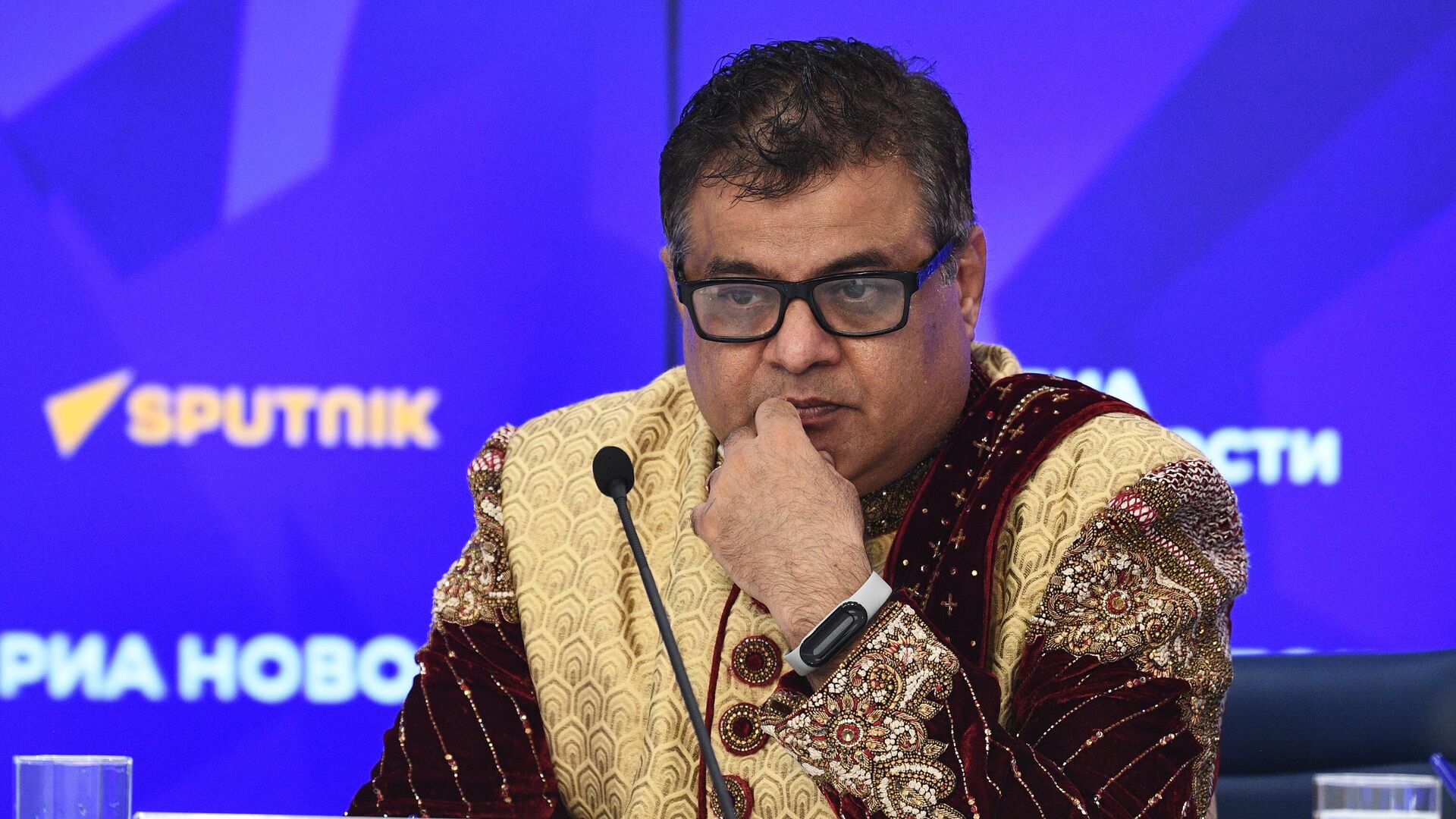
The Executive President of the Indian Business Alliance (IBA), Sammy Manoj Kotwani, discusses the landmark moment in deepening Russian-Indian collaboration. Kotwani explains the groundbreaking insights into President Vladimir Putin’s working visit to India, the emerging opportunities and pathways for future cooperation, especially for the two-sided economic collaboration. Follow Sammy Manoj Kotwani’s discussions here:
Interpretation of the latest development in Russian-Indian relations
From my viewpoint in Moscow, this visit has effectively opened a new operational chapter in what has always been described as a “Special and Privileged Strategic Partnership.” It did not just reaffirm political goodwill; it translated that goodwill into a structured economic roadmap through Programme 2030, a clear target to take bilateral trade to around USD 100 billion by 2030, and concrete sectoral priorities: energy, nuclear cooperation, critical minerals, manufacturing, connectivity, fertilizers, and labour mobility.
On the ground, the business community reads this summit as a strong signal that India and Russia are doubling down on strategic autonomy in a multipolar world order. Both sides are trying to de-risk their supply chains and payment systems from over-dependence on any single centre of power. This is visible in the focus on national currencies, alternative payment mechanisms, and efforts to stabilise Rupee–Ruble trade, alongside discussions on a Free Trade Agreement with the Eurasian Economic Union and the reinforcement of corridors like the INSTC and the Chennai–Vladivostok route.
In short, my interpretation is that this summit has moved the relationship from “politically excellent but structurally imbalanced” towards a more diversified, long-term economic framework in which companies are expected to co-produce, co-innovate, and invest, not just trade opportunistically.
Significance of the visit for Indian business in Russia and for the Indian Business Alliance (IBA)
For Indian business operating in the Russian Federation, the visit has three immediate effects: confidence, clarity, and continuity. Confidence, because Indian entrepreneurs now see that despite external pressure, New Delhi and Moscow have explicitly committed to deepening economic engagement—especially in energy, fertilizers, defence co-production, nuclear, and critical minerals—rather than quietly scaling it back.
Clarity, because the summit outcomes spell out where the real opportunities lie:
Energy & Petrochemicals: Long-term crude and LNG supply, but also downstream opportunities in refining, petrochemicals, and logistics, where Indian EPC and service companies can participate.
Pharmaceuticals & Medical Devices: Russia’s import substitution drive makes high-quality Indian generics, formulations, and even localized manufacturing extremely relevant.
IT, Digital & AI: There is growing appetite in Russia for Indian IT services, cybersecurity, and digital solutions that are not dependent on Western tech stacks.
Fertilizers, Agro & Food Processing: New joint ventures in fertilizers and agriculture supply chains were explicitly flagged during and around the summit, which is important for both food security and farm incomes.
Continuity, because the Programme 2030 framework and the expected EAEU FTA give businesses a medium-term policy horizon. Tariff reductions, improved market access and predictable regulation are precisely what Indian SMEs and mid-sized companies need to justify long-term investments in Russia.
For the Indian Business Alliance (IBA), this inevitably means more work and more responsibility. We already see increased incoming requests from Indian firms—from large listed companies to first-time exporters—asking very practical questions: Which Russian region should we enter? How do we navigate compliance under the sanctions environment? Which banks are still handling Rupee–Ruble or third-currency settlements? How can we structure joint ventures to align with Russia’s import substitution goals while protecting IP and governance standards?
IBA’s role, therefore, becomes that of economic diplomacy in action: translating high-level summit language into actual B2B meetings, sectoral delegations, regional partnerships, and deal-making platforms such as the India–Russia Business Dialogue in Moscow. This visit will undoubtedly stimulate and intensify IBA’s work as a bridge between the two ecosystems.
India’s current economic presence in the Russian Federation
If we look beyond the headline trade figures, India’s economic presence in Russia today is significant, but not yet commensurate with its potential. Bilateral trade has grown sharply since 2022, largely on the back of discounted Russian oil and coal, making India one of Russia’s top energy customers. However, the structure is still heavily skewed: Russian exports to India dominate, while Indian exports and investments in Russia remain relatively modest and under-diversified.
On the ground in Moscow and across the regions, we see several strong Indian footholds:
Pharmaceuticals: Indian pharma is well-established, respected for its affordability and quality, and poised to deepen localization in line with Russian import substitution policy.
Tea, Coffee, Spices & Food: Traditional segments with deep historical roots, now expanding into ready-to-eat, wellness, and ethnic food categories.
IT & Services: Still under-represented, but with growing interest as Russian entities look for non-Western software, integration, and outsourcing partners.
Diamonds, Textiles, Apparel, and Light Engineering: Present but fragmented, with enormous room to scale, especially if logistics and payment challenges are addressed.
Where India is still behind is on-the-ground investment and manufacturing presence compared to countries like China. Russian policymakers today are clearly favouring investors who help them achieve technological sovereignty and local value addition. For serious Indian companies willing to commit capital, adapt to Russian standards, and accept the complexities of the current environment, this is a period of unusual opportunity. For purely transactional players looking for quick arbitrage, it is becoming progressively harder.
So, I would characterise India’s economic presence as: strategically important, quickly growing in value, but still under-leveraged in terms of depth, diversification, and localization.
Geopolitical pressure from Washington and future predictions
Pressure from Washington—through sanctions, secondary sanctions risk, financial restrictions, and now even tariff measures linked to India’s energy purchases from Russia—is undoubtedly a real and continuing challenge. It affects everything from shipping insurance and dollar transactions to technology transfers and the risk appetite of global banks. In practical terms, it can complicate even a simple India–Russia trade deal if it touches a sanctioned bank, vessel, or technology.
However, my own assessment, based on 35 years of living and working in Russia, is that this pressure will not fundamentally derail India–Russia friendship, but it will reshape how the relationship functions. India’s foreign policy is anchored in strategic autonomy; it seeks strong ties with the United States and Europe, but not at the cost of abandoning a time-tested partner like Russia. Russia, for its part, sees India as a crucial Asian pole in an emerging multipolar world order and as a long-term market, technology partner, and political counterpart in forums like BRICS, SCO, and the G20.
Looking ahead, I see a few clear trends:
Normalization of alternative payment and logistics systems
We will see more institutionalised use of national currencies, alternative messaging systems, regional banks outside the direct sanctions line, and maybe even digital currencies for specific corridors. Rupee–Ruble trade mechanisms that are today seen as “workarounds” will gradually become part of the normal infrastructure of bilateral commerce.
Shift from pure trade to co-production and joint innovation
To reduce vulnerability to sanctions, both sides will push for manufacturing in India and Russia rather than simple exports: defence co-development, localized pharma and medical devices, high-tech and AI collaborations, and joint ventures in critical minerals and clean energy.
Greater role for regions and business associations
Regional governments in Russia (Far East, Arctic regions, industrial hubs) and Indian states will increasingly drive project-level cooperation, supported by platforms like IBA. This “bottom-up” economic diplomacy will make the relationship more resilient than if it relied only on central governments.
Managed balancing by India
India will continue to deepen technology and investment ties with the West while maintaining energy, defence and strategic cooperation with Russia. The challenge will be to manage U.S. and EU expectations without compromising its core national interests. My prediction is that India will stay firm on this course of balanced engagement, even if it means occasional friction with Washington.
In essence, external pressure may complicate the methods of Indo-Russian cooperation, but it is unlikely to overturn the foundations of trust, mutual interest, and long-term complementarity that have been built over decades.










-
 Feature/OPED6 years ago
Davos was Different this year
-
Travel/Tourism9 years ago
Lagos Seals Western Lodge Hotel In Ikorodu
-

 Showbiz3 years ago
Estranged Lover Releases Videos of Empress Njamah Bathing
-
 Banking7 years ago
Sort Codes of GTBank Branches in Nigeria
-

 Economy3 years ago
Subsidy Removal: CNG at N130 Per Litre Cheaper Than Petrol—IPMAN
-

 Banking3 years ago
First Bank Announces Planned Downtime
-

 Banking3 years ago
Sort Codes of UBA Branches in Nigeria
-

 Sports3 years ago
Highest Paid Nigerian Footballer – How Much Do Nigerian Footballers Earn