World
Reviewing the Dynamics of Indian–Russian Business Partnership
By Kestér Kenn Klomegâh
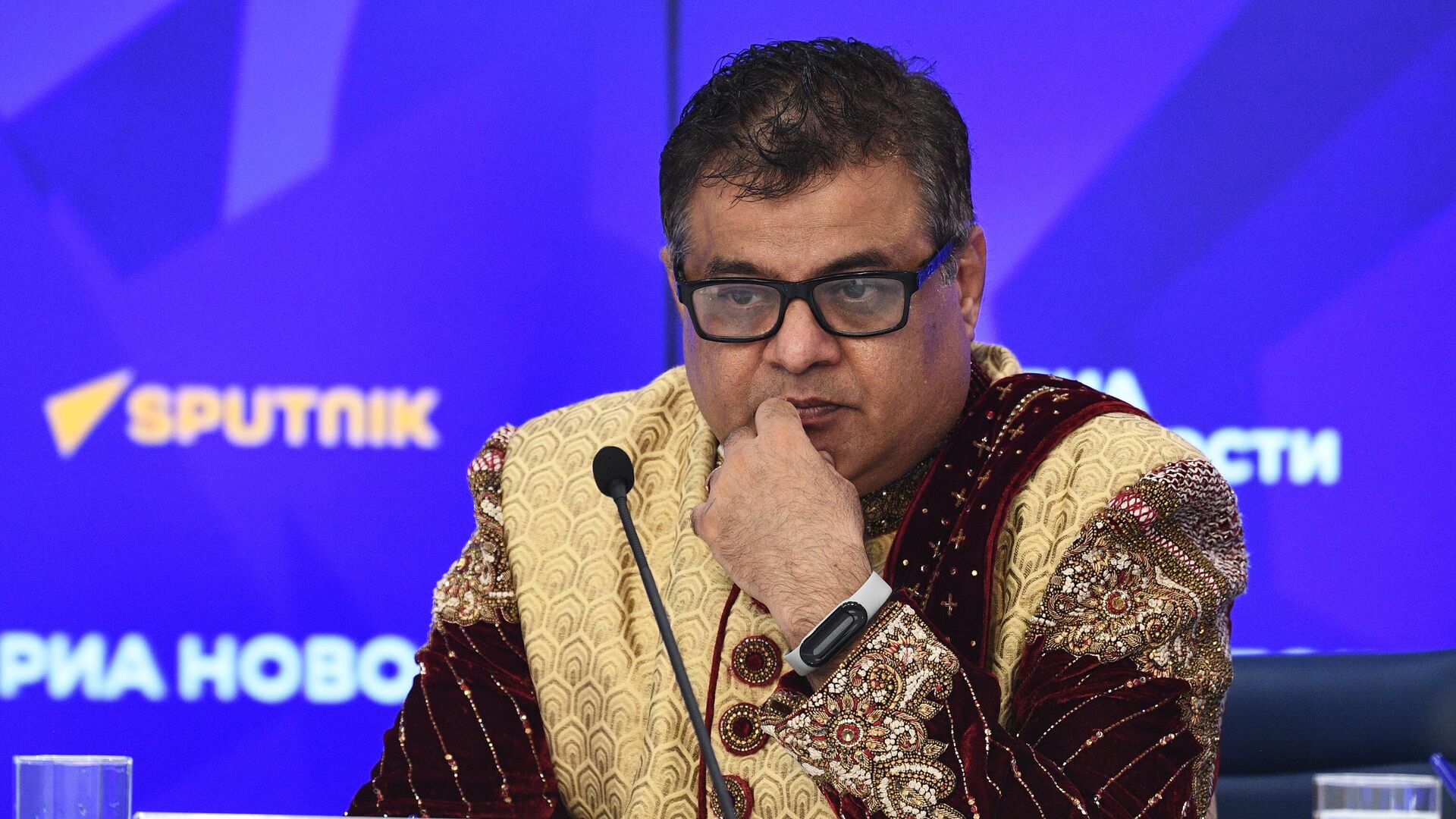
The Executive President of the Indian Business Alliance (IBA), Sammy Manoj Kotwani, discusses the landmark moment in deepening Russian-Indian collaboration. Kotwani explains the groundbreaking insights into President Vladimir Putin’s working visit to India, the emerging opportunities and pathways for future cooperation, especially for the two-sided economic collaboration. Follow Sammy Manoj Kotwani’s discussions here:
Interpretation of the latest development in Russian-Indian relations
From my viewpoint in Moscow, this visit has effectively opened a new operational chapter in what has always been described as a “Special and Privileged Strategic Partnership.” It did not just reaffirm political goodwill; it translated that goodwill into a structured economic roadmap through Programme 2030, a clear target to take bilateral trade to around USD 100 billion by 2030, and concrete sectoral priorities: energy, nuclear cooperation, critical minerals, manufacturing, connectivity, fertilizers, and labour mobility.
On the ground, the business community reads this summit as a strong signal that India and Russia are doubling down on strategic autonomy in a multipolar world order. Both sides are trying to de-risk their supply chains and payment systems from over-dependence on any single centre of power. This is visible in the focus on national currencies, alternative payment mechanisms, and efforts to stabilise Rupee–Ruble trade, alongside discussions on a Free Trade Agreement with the Eurasian Economic Union and the reinforcement of corridors like the INSTC and the Chennai–Vladivostok route.
In short, my interpretation is that this summit has moved the relationship from “politically excellent but structurally imbalanced” towards a more diversified, long-term economic framework in which companies are expected to co-produce, co-innovate, and invest, not just trade opportunistically.
Significance of the visit for Indian business in Russia and for the Indian Business Alliance (IBA)
For Indian business operating in the Russian Federation, the visit has three immediate effects: confidence, clarity, and continuity. Confidence, because Indian entrepreneurs now see that despite external pressure, New Delhi and Moscow have explicitly committed to deepening economic engagement—especially in energy, fertilizers, defence co-production, nuclear, and critical minerals—rather than quietly scaling it back.
Clarity, because the summit outcomes spell out where the real opportunities lie:
Energy & Petrochemicals: Long-term crude and LNG supply, but also downstream opportunities in refining, petrochemicals, and logistics, where Indian EPC and service companies can participate.
Pharmaceuticals & Medical Devices: Russia’s import substitution drive makes high-quality Indian generics, formulations, and even localized manufacturing extremely relevant.
IT, Digital & AI: There is growing appetite in Russia for Indian IT services, cybersecurity, and digital solutions that are not dependent on Western tech stacks.
Fertilizers, Agro & Food Processing: New joint ventures in fertilizers and agriculture supply chains were explicitly flagged during and around the summit, which is important for both food security and farm incomes.
Continuity, because the Programme 2030 framework and the expected EAEU FTA give businesses a medium-term policy horizon. Tariff reductions, improved market access and predictable regulation are precisely what Indian SMEs and mid-sized companies need to justify long-term investments in Russia.
For the Indian Business Alliance (IBA), this inevitably means more work and more responsibility. We already see increased incoming requests from Indian firms—from large listed companies to first-time exporters—asking very practical questions: Which Russian region should we enter? How do we navigate compliance under the sanctions environment? Which banks are still handling Rupee–Ruble or third-currency settlements? How can we structure joint ventures to align with Russia’s import substitution goals while protecting IP and governance standards?
IBA’s role, therefore, becomes that of economic diplomacy in action: translating high-level summit language into actual B2B meetings, sectoral delegations, regional partnerships, and deal-making platforms such as the India–Russia Business Dialogue in Moscow. This visit will undoubtedly stimulate and intensify IBA’s work as a bridge between the two ecosystems.
India’s current economic presence in the Russian Federation
If we look beyond the headline trade figures, India’s economic presence in Russia today is significant, but not yet commensurate with its potential. Bilateral trade has grown sharply since 2022, largely on the back of discounted Russian oil and coal, making India one of Russia’s top energy customers. However, the structure is still heavily skewed: Russian exports to India dominate, while Indian exports and investments in Russia remain relatively modest and under-diversified.
On the ground in Moscow and across the regions, we see several strong Indian footholds:
Pharmaceuticals: Indian pharma is well-established, respected for its affordability and quality, and poised to deepen localization in line with Russian import substitution policy.
Tea, Coffee, Spices & Food: Traditional segments with deep historical roots, now expanding into ready-to-eat, wellness, and ethnic food categories.
IT & Services: Still under-represented, but with growing interest as Russian entities look for non-Western software, integration, and outsourcing partners.
Diamonds, Textiles, Apparel, and Light Engineering: Present but fragmented, with enormous room to scale, especially if logistics and payment challenges are addressed.
Where India is still behind is on-the-ground investment and manufacturing presence compared to countries like China. Russian policymakers today are clearly favouring investors who help them achieve technological sovereignty and local value addition. For serious Indian companies willing to commit capital, adapt to Russian standards, and accept the complexities of the current environment, this is a period of unusual opportunity. For purely transactional players looking for quick arbitrage, it is becoming progressively harder.
So, I would characterise India’s economic presence as: strategically important, quickly growing in value, but still under-leveraged in terms of depth, diversification, and localization.
Geopolitical pressure from Washington and future predictions
Pressure from Washington—through sanctions, secondary sanctions risk, financial restrictions, and now even tariff measures linked to India’s energy purchases from Russia—is undoubtedly a real and continuing challenge. It affects everything from shipping insurance and dollar transactions to technology transfers and the risk appetite of global banks. In practical terms, it can complicate even a simple India–Russia trade deal if it touches a sanctioned bank, vessel, or technology.
However, my own assessment, based on 35 years of living and working in Russia, is that this pressure will not fundamentally derail India–Russia friendship, but it will reshape how the relationship functions. India’s foreign policy is anchored in strategic autonomy; it seeks strong ties with the United States and Europe, but not at the cost of abandoning a time-tested partner like Russia. Russia, for its part, sees India as a crucial Asian pole in an emerging multipolar world order and as a long-term market, technology partner, and political counterpart in forums like BRICS, SCO, and the G20.
Looking ahead, I see a few clear trends:
Normalization of alternative payment and logistics systems
We will see more institutionalised use of national currencies, alternative messaging systems, regional banks outside the direct sanctions line, and maybe even digital currencies for specific corridors. Rupee–Ruble trade mechanisms that are today seen as “workarounds” will gradually become part of the normal infrastructure of bilateral commerce.
Shift from pure trade to co-production and joint innovation
To reduce vulnerability to sanctions, both sides will push for manufacturing in India and Russia rather than simple exports: defence co-development, localized pharma and medical devices, high-tech and AI collaborations, and joint ventures in critical minerals and clean energy.
Greater role for regions and business associations
Regional governments in Russia (Far East, Arctic regions, industrial hubs) and Indian states will increasingly drive project-level cooperation, supported by platforms like IBA. This “bottom-up” economic diplomacy will make the relationship more resilient than if it relied only on central governments.
Managed balancing by India
India will continue to deepen technology and investment ties with the West while maintaining energy, defence and strategic cooperation with Russia. The challenge will be to manage U.S. and EU expectations without compromising its core national interests. My prediction is that India will stay firm on this course of balanced engagement, even if it means occasional friction with Washington.
In essence, external pressure may complicate the methods of Indo-Russian cooperation, but it is unlikely to overturn the foundations of trust, mutual interest, and long-term complementarity that have been built over decades.
World
Africa Startup Deals Activity Rebound, Funding Lags at $110m in April 2026
By Adedapo Adesanya
Africa’s startup ecosystem showed tentative signs of recovery in April 2026, with deal activity picking up after a subdued March, though funding volumes remained weak by recent standards, Business Post gathered from the latest data by Africa: The Big Deal.
In the review month, a total of 32 startups across the continent announced funding rounds of at least $100,000, raising a combined $110 million through a mix of equity, debt and grant deals, excluding exits. The figure represents a notable rebound from the 22 deals recorded in March, suggesting renewed investor engagement after a slow start to the second quarter.
However, the recovery in deal count did not translate into stronger capital inflows. April’s $110 million total marks the lowest monthly funding volume since March 2025, when startups raised $52 million, and falls significantly short of the previous 12-month average of $275 million per month.
The data highlights a growing divergence between investor activity and cheque sizes, with more deals being completed but at smaller ticket values.
The data showed that, despite this, looking at the numbers on a month-to-month basis does not tell the whole story of venture funding cycles as a broader 12-month rolling view presents a more stable picture of Africa’s startup ecosystem.
Based on this, over the 12 months to April 2026 (May 2025–April 2026), startups across the continent raised a total of $3.1 billion, excluding exits – largely in line with the range observed since August 2025. The figure has hovered around $3.1 billion, with only marginal deviations of about $90 million, indicating relative stability despite recent monthly dips.
A closer breakdown shows that equity financing accounted for $1.7 billion of the total, while debt funding contributed $1.4 billion, alongside approximately $30 million in grants. This composition underscores the growing role of debt in sustaining overall funding levels.
The data suggests that while headline monthly figures may point to short-term weakness, the broader funding environment remains resilient, supported in large part by continued activity in debt financing, even as equity investments show signs of moderation.
The report said if April’s total amount was lower than March’s overall, it was higher on equity: $74 million came as equity and $36 million as debt, while March had been overwhelmingly debt-led ($55 million equity, $96 million debt).
In the review month, the deals announced include Egyptian fintech Lucky raising a $23 million Series B, while Gozem ($15.2 million debt) and Victory Farms ($15 milliomn debt) did most of the heavy lifting on the debt side. Ethiopia-based electric mobility start-up Dodai announced $13m ($8m Series A + $5m debt).
April also saw two exits as Nigeria’s Bread Africa was acquired by SMC DAO as consolidation continues in the country’s digital asset sector, and Egypt’s waste recycling start-up Cyclex was acquired by Saudi-Egyptian investment firm Edafa Venture.
Year-to-Date (January to April), startups on the continent have raised a total of $708 million across 124 deals of at least $100,000, excluding exits. The funding mix was almost evenly split, with $364 million in equity (51.4 per cent) and $340 million in debt (48.0 per cent), alongside a small contribution from grants (0.6 per cent). This is an early sign that funding startups is taking a different shape compared to what the ecosystem witnessed in 2025.
For instance, in the first four months of last year, startups raised a higher $813 million across a significantly larger 180 deals. More notably, last year’s funding was heavily skewed toward equity, which accounted for $652 million (80.1 per cent) compared to just $138 million in debt (16.9 per cent).
The year-on-year comparison points to two clear trends: a contraction in deal activity as evidenced by a 31 per cent drop, and a 13 per cent decline in total funding. At the same time, the composition of capital has shifted meaningfully, with debt now playing a much larger role in sustaining funding volumes.
World
Nigeria Summons South Africa Envoy Over Xenophobic Attacks
By Adedapo Adesanya
Nigeria’s Ministry of Foreign Affairs has summoned South Africa’s Acting High Commissioner to complain about xenophobic attacks against its citizens, weeks after a similar complaint was lodged by Ghana.
The ministry called the meeting to convey “profound concern regarding recent events that have the potential to impact the established cordial relations between Nigeria and South Africa,” it said in a statement posted on X on Monday.
It noted that the country is aware of the growing discontent among Nigerians concerning the treatment of their nationals in South Africa, but implored calm while it plans to repatriate those willing to return home voluntarily, amid growing fears that recent attacks on foreigners there could escalate.
Foreign Minister, Mrs Bianca Odumegwu-Ojukwu, said 130 applicants had already registered for the exercise, adding that the number was expected to rise.
She expressed President Bola Tinubu’s concern about the attacks in the southern African nation, and condemned the violence against foreign nationals and demonstrations characterised by “xenophobic rhetoric, hate speeches and incendiary anti-migrant statements”.
“Nigerian lives and businesses in South Africa must not continue to be put at risk, and we remain committed to working to explore with South Africa ways to put an end to this,” she said.
She cited the killing of two Nigerians in separate incidents involving local security personnel, insisting that her government was demanding justice.
She said the Nigerian president’s priority was for the safety of citizens and “consequently, arrangements are currently underway to collate details of Nigerians in South Africa for voluntary repatriation flights for those seeking assistance to return home”.
According to reports, four Ethiopian nationals have also been killed in recent weeks, while there have been attacks on citizens of other African countries.
South African President Cyril Ramaphosa has condemned the attacks but also cautioned foreigners to respect local laws.
He used his Freedom Day address last week – marking the country’s first democratic elections in 1994 – to remind South Africans of the support other African nations had given in the struggle against the racist system of apartheid.
However, anti-immigrant groups in South Africa have accused foreigners of being in the country illegally, taking jobs from locals and having links to crime, especially drug trafficking.
They have also reportedly been stopping people outside hospitals and schools, demanding to see their identity papers.
Last month, Ghana summoned South Africa’s top envoy after a video was widely shared showing a Ghanaian man being challenged to prove he had the correct immigration papers.
Anti-immigrant sentiment rose earlier this year after reports that the head of the Nigerian community in the port city of KuGompo (formerly East London) had been installed in a traditional role often translated as “king”. Some South Africans in the local area saw this as an attempt to grab political power and kicked against it.
South Africa is home to about 2.4 million migrants, just less than 4 per cent of the population, according to official figures. However, many more are thought to be in the country without official authorisation. Most come from neighbouring countries such as Lesotho, Zimbabwe and Mozambique, which have a history of providing migrant labour to their wealthy neighbour.
World
United States Building Entrepreneurial Partnerships With Africa
By Kestér Kenn Klomegâh
Within the heightening of geopolitical tension, the United States is actively building diversified entrepreneurial partnerships with African countries, reviewing and restyling working relations with relevant institutions and adopting new policy frameworks largely based on African-led initiatives. The economic policy architecture concentrates more on bilateral partnerships, but with some variation of investments in infrastructure and exploiting natural resources, while taking into account the needs of individual African countries.
In the context of broadening economic dimensions, the Corporate Council on Africa (CCA) and the Government of the Republic of Mauritius have agreed to hold the 18th US-Africa Business Summit on July 26-29, 2026.
According to reports, Dhananjay Ramful, Minister of Foreign Affairs, Regional Integration and International Trade of the Republic of Mauritius and Ms Florizelle (Florie) Liser, President and CEO of CCA, signed the agreement on the sidelines of the United Nations General Assembly in New York.
The US-Africa Business Summit is one of the most important business platforms that annually brings together African Heads of State and Government, Ministers, high-level US and African Government Officials, CEOs, and senior executives of the US and African companies to explore investment, trade and commercial opportunities.
The selection of Mauritius as the host country for the 18th US-Africa Business Summit bears testimony to the deep commitment of the country to play a key role in strengthening a mutually beneficial trade and investment relationship between Africa and the United States. Both envision facilitating bilateral trade and building long-term and high-value economic partnerships.
Positioned at the crossroads of Africa and Asia in the Indian Ocean, Mauritius is recognised for its political stability, reform-driven economy, strong governance, innovation-friendly policies and high-quality local infrastructure. It offers a strong regulatory framework, a sophisticated financial services sector, and a proven track record as a gateway for investment into Africa. As a dynamic financial and trade hub, Mauritius is an ideal setting for the 2026 US-Africa Business Summit.
With momentum building across both public and private sectors, this Summit provides an excellent opportunity for participants to engage on critical issues impacting the US-Africa trade and investment relationship and strike landmark deals in key sectors such as energy, infrastructure, agri-business, health, ICT and financial services that will have a high impact on the lives of African and American citizens, enterprises, workers and consumers.
In a thoroughly analytical study, the CCA has broadened its operational focus to the entire Africa, strategically dealing with institutions that matter for implementing its economic policy initiatives. In order to ensure a significant degree of success, CCA is seriously addressing the complex diversities on the continent, explaining to leaders within the political structures the essence of large-scale cooperation.
Florie Liser, President & CEO of CCA, said: “We are delighted to bring the 2026 U.S.-Africa Business Summit to Mauritius, a country known for its strategic location, strong governance, and dynamic business environment. This Summit will provide a critical platform to strengthen U.S.-Africa economic relations, explore investment opportunities, and foster partnerships that will increase two-way trade.”
Liser underlined the fact that high possibility exists for stronger engagement through initiatives that support trade and investment (including renewal of the African Growth and Opportunity Act (AGOA), and continued policy and financing support by key US government agencies including the Export-Import Bank of the U.S. (Eximbank), Development Finance Corporation (DFC), US Trade and Development Agency, Departments of State and Commerce, US Trade Representative and others.
The Dhananjay Ramful, Minister of Foreign Affairs, Regional Integration and International Trade of the Republic of Mauritius, stated: “Mauritius is honoured to host the 2026 US -Africa Business Summit and play a key role in strengthening a mutually beneficial trade and investment relationship between Africa and the United States. Our nation has long been a bridge between Africa and the world, and we are committed to creating an enabling environment that encourages trade, innovation, and inclusive growth. Hosting this prestigious gathering further underscores Mauritius’ role as a hub for investment and partnership in Africa.”
The United States brings a distinct and compelling value proposition to partnerships in Africa, grounded in transparency, high standards, and a long-term commitment to mutually beneficial US-Africa economic and commercial partnerships. In addition, the US companies are known for delivering quality products and services, fostering innovation, and building partnerships that prioritise local value creation, skills transfer, and economic impact. These are not short-term engagements—they are investments designed to support businesses and growth on both sides of the Atlantic.
That means continuing to mobilise capital, support competitive US participation in African markets, and ensure that partnerships are responsive to the priorities of African countries. The role of the Corporate Council on Africa is to help bridge that gap—connecting businesses to opportunities, advocating for policies that enable investment, and ensuring that the US–Africa commercial relationship remains strong, competitive, and mutually beneficial.
The Corporate Council on Africa (CCA) is the leading US business association focused solely on connecting business interests in Africa. It encourages US-Africa private sector partnerships and advocates for a business climate conducive to long-term investment. Founded in 1993, CCA has been at the forefront of fostering strategic partnerships, promoting investments, and facilitating trade between the United States and the diverse nations of Africa.
-
Feature/OPED6 years agoDavos was Different this year
-
Travel/Tourism10 years ago
Lagos Seals Western Lodge Hotel In Ikorodu
-
Showbiz3 years agoEstranged Lover Releases Videos of Empress Njamah Bathing
-
Banking8 years agoSort Codes of GTBank Branches in Nigeria
-
Economy3 years agoSubsidy Removal: CNG at N130 Per Litre Cheaper Than Petrol—IPMAN
-
Banking3 years agoSort Codes of UBA Branches in Nigeria
-
Banking3 years agoFirst Bank Announces Planned Downtime
-
Sports3 years agoHighest Paid Nigerian Footballer – How Much Do Nigerian Footballers Earn