

Economy
Investors Lament Resumption of 5% VAT on NSE Transactions

By Dipo Olowookere
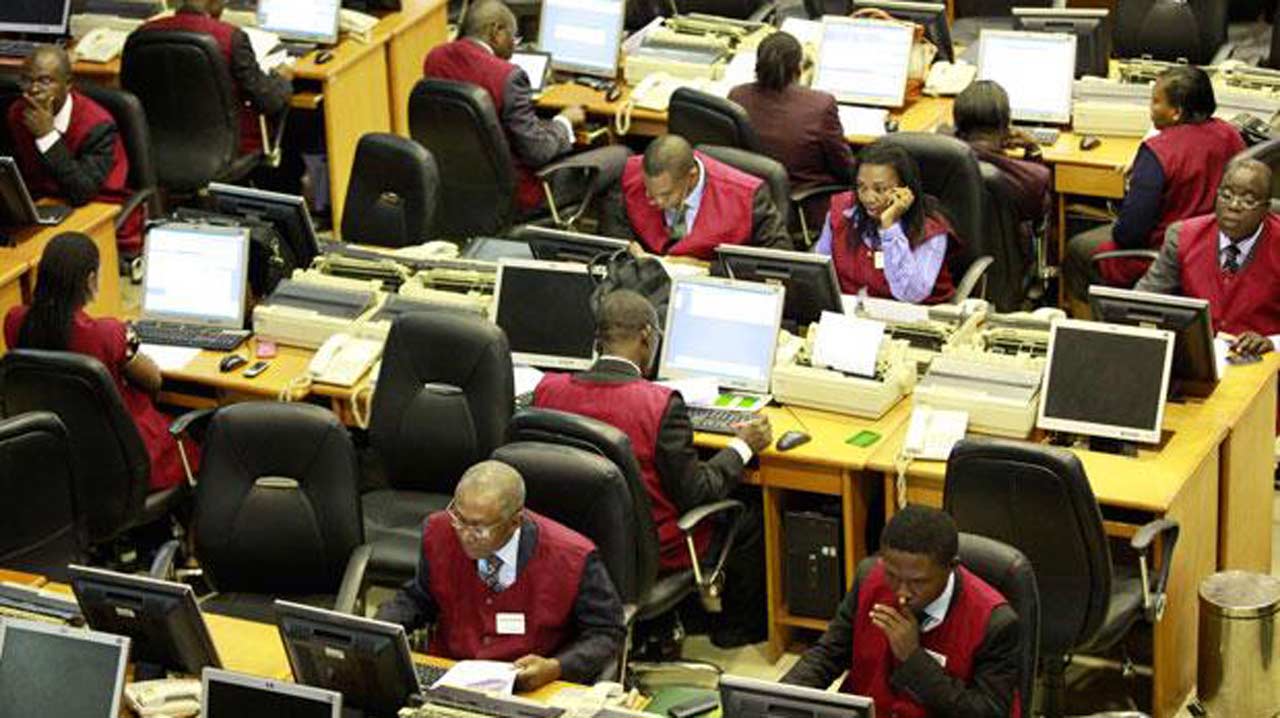
Some investors in the Nigerian Stock market have expressed dissatisfaction with the resumption of 5 percent Value Added Tax (VAT) commission to be charged on all transactions executed at the exchange from Wednesday, July 24, 2019.
Business Post recalls that on July 25, 2014, the federal government, through the then Minister of Finance and Coordinating Minister of the Economy, Mrs Ngozi Okonjo-Iweala, commenced the exemption of VAT payment on all NSE transactions. This exemption had a lifespan of five years, which lapses on July 24, 2019.
Already, some stockbrokers have been sending notifications to their clients, informing them that from next week, they will begin to pay extra amount of money for transactions carried out on their behalf.
“Please be notified that Value Added Tax (VAT) on commissions will now be charged on transactions conducted on the Nigerian Stock Exchange (NSE).
“The order for exemption of VAT from all NSE transactions was granted by the Coordinating Minister of the Economy and the Honourable Minister of Finance in 2014. The order became effective on the 25th July 2014 for a 5 -year period, which expires on the 24th July, 2019.
“In this regard, all dealing members of the Nigerian Stock Exchange have been notified to resume charging of VAT on all NSE transactions effective 25th July 2019.
“Subsequently, a 5% VAT on brokerage commission earned, NSE fees and CSCS fees will be restored effective 25th July 2019.
“Thank you for your valued patronage,” a notice sent to investors by one of the stockbrokers in Lagos and obtained by Business Post said.
The NSE had in a circular dated July 10, 2019 and titled NSE/RD/BDR/CIR5/19/07/10 informed stockbrokers of the resumption of the VAT payment.
“Please refer to our circular with reference BDR/CIR/GOI/10/14 dated 27 October 2014 on the above subject matter (attached as Appendix A); and the Value Added Tax (VAT) Exemption of Commissions on Stock Exchange Transactions Order (Order) granted by the Coordinating Minister for the Economy and Honourable Minister of Finance in 2014. (See, Official Gazette of the Federal Republic of Nigeria: No. 95, Vol. 101 issued on 30 July 2014).
“The Order which became effective on 25 July 2014 is valid for a period of five (5) years, and thus the exemption granted in the Order is set to expire on 24 July 2019.
“To that extent, all Dealing Members of the Nigerian Stock Exchange are to note that effective 25 July 2019, barring any further extensions from the Federal Government:
“i. VAT is to be charged on all commissions applicable to capital market transactions. These are commissions: a. earned by Dealing Members on traded values of shares; and b. payable to The Nigerian Stock Exchange (NSE) and the Central Securities Clearing System Plc. (CSCS);
“ii. The CSCS will automate the deduction of VAT charged on commissions payable to The NSE and the CSCS; and
“iii. Dealing Members are required to resume the deduction of VAT on commissions earned.
“Consequently, Dealing Members are required to engage their software vendors for the automation of VAT deductions, and communicate to their clients the above ahead of the effective date.
“Furthermore, Dealing Members are reminded to ensure that the VAT charged on the commissions earned are remitted to the Federal Inland Revenue Service (FIRS) as and when due; and that the corresponding evidence of remittance is retained for future reference,” the circular from the NSE last week had stated.
However, some investors are calling for an extension of the five percent VAT exemption, saying it would further encourage more people to consider joining the stock market at this moment.
Business Post reports that in 2014, when the federal government introduced the initiative, it was to encourage more investors into joining the capital market.
But some investors want this to continue for another five or three years.
“Government should consider extending the VAT exemption for another five or three years. The present state of the economy in Nigeria is not encouraging investment and if this exemption is not restored, I can guarantee you that more people will exit the market,” an investor at the stock market, who identified herself as Modupe Adediran, informed our correspondent.
“Since I received the notification from my stockbroker last week, I have been in a thinking mode. I cannot just imagine paying 5 percent tax on any transaction I execute in the trading of shares in my portfolio. The NSE should just fight for us by convincing the federal government to extend the exemption for another period,” another investor, who asked not to be named, told Business Post on Monday.
An official of one of the leading stockbrokers in the country, who begged for anonymity, said their hands were tied on this issue.
“There is nothing we can actually do concerning this matter because we received a circular to adhere to the directive. The best we can do to attract more investors or clients is to slightly reduce what we charge as commission. Asides that, there is nothing we can do,” the official said.
Business Post learned that the exemption can remain for another period except President Muhammadu Buhari appoints a Minister of Finance, which is likely not possible before July 24 because such person would have to be screened and confirmed by the Senate.
However, when a Finance Minister is eventually appointed by the President, the exemption can still be brought back.



By Aduragbemi Omiyale
The Debt Management Office (DMO) on Monday allotted bonds worth N929.3 billion to investors from the N1.7 trillion bids it received from subscribers.
The exercise, which took place on Monday, July 20, 2026, was oversubscribed by market participants, reflecting the confidence investors have in the government’s ability to redeem the debt instrument on maturity.
On offer for sale for the July auction was N1.2 trillion worth of the FGN bonds, but the DMO allotted below this, despite receiving bids above the offer.
The papers were offered in 10-year, 15-year, and 20-year tenors, at N400 billion each.
For the decade-old note, investors staked N444.47 billion, but the debt office sold N245.73 billion at an 18.34 per cent coupon rate. For the one and a half-decade-old paper, bids valued at N518.00 billion were received by the DMO, with a non-competitive bid of N50.00 billion, with N302.13 billion allotted to investors at 18.40 per cent, and for the two-decade paper, the DMO got competitive bids of N665.19 billion and N381.46 billion was sold to bondholders at 18.35 per cent.


By Adedapo Adesanya
The Governor of the Central Bank of Nigeria (CBN), Mr Yemi Cardoso, disclosed that Nigeria’s external reserves had risen to $52.5 billion, enough to finance about nine months of imports.
He disclosed this on Tuesday at the end of the 306th meeting of the Monetary Policy Committee (MPC) held in Abuja, where the Monetary Policy Committee (MPC) retained the benchmark interest rate at 26.50 per cent as well as the standing facilities corridor at +50/-450 basis points around the MPR.
Similarly, the Cash Reserve Requirement (CRR) was maintained at 45 per cent for Deposit Money Banks, 16 per cent for Merchant Banks, and 75 per cent for non-Treasury Single Account (TSA) public sector deposits.
Speaking on FX developments, the central banker said at the $52 billion level, the country’s external reserves were significantly above the internationally recommended threshold of three months of import cover.
On the Naira exchange rate, Mr Cardoso said the foreign exchange market had deepened and was now operating on a transparent willing-buyer, willing-seller basis.
He said the apex bank remained committed to maintaining a liquid and functional foreign exchange market, adding that daily market turnover sometimes exceeded $1 billion.
According to him, the long-term stability of the naira would depend on key economic fundamentals, including increased oil exports, foreign direct investment, and improved domestic productivity to reduce dependence on imports.
He also added that the MPC welcomed the federal government’s renewed commitment to stronger policy coordination, particularly collaboration between fiscal and monetary authorities, which he said had helped reduce the impact of the Middle East crisis on the Nigerian economy.
Mr Cardoso said members of the committee also commended efforts to improve crude oil production and urged relevant agencies to intensify reforms in other sectors, including solid minerals, to boost government revenue.
On the regulatory forbearance granted to banks during the COVID-19 period, he reiterated that this had been discontinued because it had served its purpose.
According to him, the policy had “outlived its time” and was no longer necessary in assessing the health of the banking sector.
“Forbearance, we felt, had outlived its time. Many of you will recall this is something that came as a result of COVID. And now we are in 2026; we did not see the reason why that should continue to form part of the analysis of the banking system,” he said.
Mr Cardoso explained that banks had begun recalibrating their portfolios following the end of the policy, leading to a temporary reduction in outstanding risk assets.
He, however, assured that the development was part of a transition towards a stronger and more sustainable credit environment.
“It reflects a transition to a more sustainable and better quality credit environment, which is what we all want. We don’t want unanticipated shocks that come in a boom-and-bust fashion,” he said.

By Adedapo Adesanya
The NASD Over-the-Counter (OTC) Securities Exchange extended its recent positive run by 1.17 per cent on Tuesday, July 21, triggered by appreciation seen in four bellwethers.
Leading the pack was FrieslandCampina Wamco Nigeria Plc, which added N12.00 to its value to close at N153.15 per share compared with the previous day’s N141.15 per share. NASD Plc appreciated by N1.90 to N36.00 per unit from N34.10 per unit, Food Concepts Plc improved by 23 Kobo to N2.48 per share from N2.25 per share, and Afriland Properties Plc grew by a marginal 1 Kobo to N15.01 per unit from N15.00 per unit.
As a result, the market capitalisation of the bourse increased by N30.40 billion to N2.637 trillion from Monday’s N2.606 trillion, and the NASD Security Index (NSI) gained 50.70 points to finish at 4,393.97 points, in contrast to the 4,343.27 points it ended a day earlier.
The unlisted securities exchange recorded a price loser yesterday, and it was Geo-Fluids Plc, which shed 1 Kobo to settle at N2.30 per share versus N2.31 per share.
During the trading day, the volume of securities traded by market participants on Tuesday dropped 99.4 per cent to 322,147 units from the previous day’s 52.6 million units, the value of securities dipped by 89.8 per cent to N19.4 million from the preceding session’s N191.2 million, and the number of deals contracted by 3.6 per cent to 27 deals from 28 deals.
Great Nigeria Insurance (GNI) Plc ended the day as the most traded stock by value on a year-to-date basis, with 3.4 billion units traded for N8.4 billion, followed by Infrastructure Credit Guarantee (Infracredit) Plc with 2.3 billion units transacted for N6.5 billion, and Central Securities Clearing System (CSCS) Plc with 75.4 million units exchanged for N5.3 billion.
GNI Plc also closed the day as the most traded stock by volume on a year-to-date basis, with 3.4 billion units worth N8.4 billion, followed by Infracredit Plc with 2.3 billion units valued at N6.5 billion, and Resourcery Plc with 1.1 billion units sold for N415.7 million.
