Technology
Airtel Africa, MasterCard Strike Digital Payments Deal
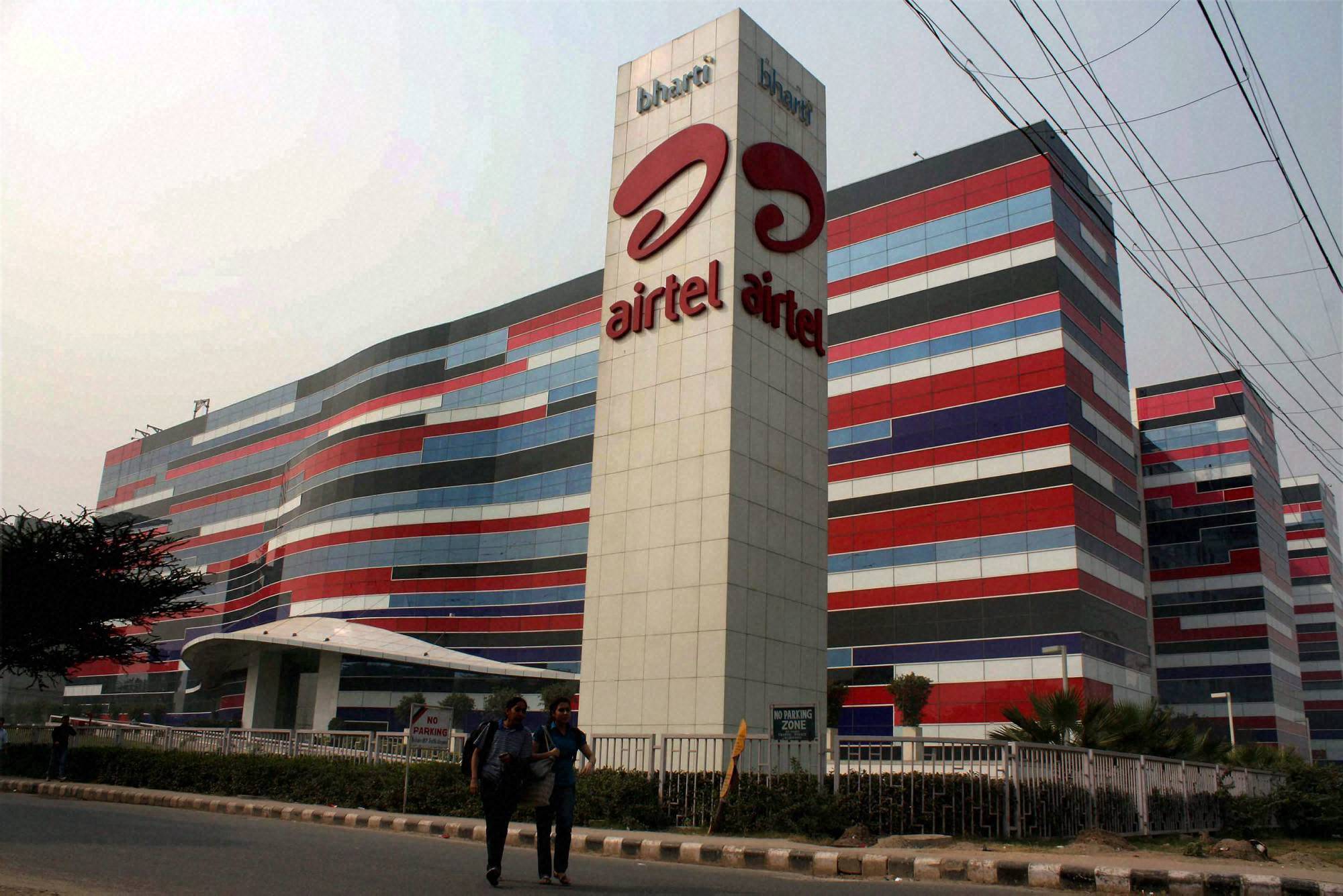
A deal to help Airtel Africa reach out to over 100 million users of its services in 14 African countries has been signed with MasterCard. This partnership aims to customers of Airtel Money have access the MasterCard virtual (non-plastic) card.
A statement issued by the GSM network provider said this deal will allow Airtel Money customers, even those without a bank account, to make payments to local and global online merchants that accept Mastercard cards, while ensuring that the customer’s financial data is always secure and private.
In addition, Airtel Money customers will also be able to make in-person payments at outlets via Quick Response (QR) codes (whereby payments are made from an Airtel mobile phone by scanning the QR code displayed at checkout or by entering a merchant identifier, at any location worldwide that Mastercard QR is accepted).
To date, there are over one million merchant locations across Africa that accept Mastercard QR payments. Airtel Money customers will also benefit from competitive pricing and preferential exchange rates for international payments, and gain access to other domestically relevant use cases including bill payments, merchants’ payments and value-added services such as cash management solutions.
CEO of Airtel Africa, Mr Raghunath Mandava, while speaking on the partnership, stated that, “Airtel and Mastercard have a shared passion for digital transformation and making mobile financial services accessible to everyone across the continent.
“Through our partnership we will enable over 100 million Airtel Africa customers make safe mobile money purchases online and in person. The partnership will also significantly bolster Airtel’s position as one of the largest offline-to-online digital payment network in Africa.
“We are really excited to embark on this partnership with a globally trusted brand like Mastercard. This partnership is truly revolutionary in our market, giving millions of people better access to the digital and online world.”
Amnah Ajmal, Executive Vice President for Market Development, Mastercard Middle East and Africa, said, “Across the MEA region our digital partnerships strategy remains focused on enabling digital transformation for our partners so that their consumers can enjoy seamless access to payments and a superior experience.
“We are very excited to partner with Airtel to lead the transition to digital by enabling access to their millions of consumers for online and in-person payments across the globe.
“Mastercard is uniquely positioned as a single technology provider to enable our digital partners like Airtel to transition seamlessly into digital”.
Mobile internet connections are expected to grow rapidly in Africa due to low cost smartphones and high-speed GSM networks being rolled out by Mobile Network Operators like Airtel.
This growth in internet connections is creating increased demand for digital content, social media, m-commerce even online education and a need to make online payments easily and securely by both banked and unbanked consumers.
Technology
Google Unveils New Agentic AI, Infrastructure Investments
By Modupe Gbadeyanka
Five major new initiatives focused on bridging the digital divide, expanding subsea connectivity, and positioning Africa to lead in the Agentic Era of Artificial Intelligence (AI) have been unveiled by Google.
These initiatives were introduced by the firm at its inaugural Cloud Summit in Africa at the Sandton Convention Centre in South Africa.
The event, which was opened by South African President Cyril Ramaphosa, was attended by about 3,000 business leaders, developers, public sector leaders, and partners.
Anchored by the central theme, Building for Africa with Google Cloud, the summit builds upon Google’s 2025 launch of its Johannesburg Cloud Region.
“By building robust infrastructure to harness this technology, we are doing more than modernising our economy; we are taking a quantum leap into the future,” Mr Ramaphosa said.
Also speaking, Google’s Senior Vice President for Research, Labs, Technology & Society, Mr James Manyika, said, “The AI opportunity for Africa is significant, and Google is committed to doing our part working with Africans to help Africa realise it. Building on our past commitments, we’re making new investments in critical areas: infrastructure, African-led innovation, and education and skill building.”
On her part, Google Cloud’s Vice President for the UK, Ireland, and Sub-Saharan Africa, Ms Maureen Costello, said, “African enterprises have moved decisively past the initial phases of AI experimentation. Powered by our Johannesburg Cloud Region, which is estimated to contribute $90.6 billion in additional gross economic output and support 314,900 jobs by 2030, leading organisations like Vodacom, Discovery, Pepkor, and Naspers are establishing the essential framework to build and deploy autonomous agents that solve uniquely African challenges in real-world environments.”
It was gathered that the five new initiatives build on Google’s existing $1 billion investment commitment, its recent $37 million AI skills and research funding, and the launch of the AI Community Centre in Accra last year to advance AI in Africa.
Google announced a new connectivity hub (Digital Exchange Port) located in the Eastern Cape, South Africa. It will anchor the country as a strategic international switching point, directly connecting the continent to Australia via the Umoja subsea cable, as well as a new subsea route to India, to support African internet connectivity.
In Ghana, Google AI Futures Fund, Google Research, and leading VC partners are launching Africa’s first applied AI lab. The Google Africa Applied AI Lab pairs African founders with Google researchers and provides early access to Google’s latest AI models. Based at the Accra AI Community Centre (AICC), the Lab supports founders from across the continent in using the latest AI research to address real-world, uniquely African challenges across work, knowledge, creativity, entertainment, and software development – and, in turn, helps support Africa’s first generation of AI-native unicorn startups. Applications are open now and will close on August 31, 2026.
Google is partnering with The Akuna Group to empower underrepresented creators in Africa. Backed by more than $1 million in Google.org funding, the program delivers AI creative education alongside advanced digital tools. The program’s goal is to equip African creators to tell locally rooted stories in new ways and forge professional advancement pathways.
To ensure the next generation is equipped to lead in the AI era, Google’s Economic and Community Development programme and WeThinkCode have committed to building a R3 million digital innovation centre at the George Tabor Campus of South West Gauteng TVET College in Soweto. Once complete, the centre will serve as a scalable skills platform built to reach talent the industry usually overlooks.
On July 21, 2026, Google will open applications for the 2026 South African cohort of its Google for Startups Accelerator. The program will select 15 local startups for an AI-focused curriculum, hands-on mentorship, and non-dilutive, equity-free funding. This fulfils part of Google’s pledge to back 50 African ventures between 2024 and 2028.
Technology
WhatsApp Introduces Username Feature, Ends Need to Share Phone Numbers
By Adedapo Adesanya
WhatsApp will allow global users to select a username for their account, letting people connect on the platform without having to share their phone number.
WhatsApp, which is owned by Meta Platforms Incorporated, said people can now start reserving a unique username, which should be operational later this year.
WhatsApp, which normally works with phone numbers, is introducing this new feature to allow for some level of privacy when it comes to sharing phone numbers.
Usernames will be launching later this year, in a move to make the communications platform “even more private,” allowing users to keep their phone number concealed from people who are not already in their contacts.
The username launch will be rolling out gradually over the coming months, and users will be notified when the feature is available in their country.
“With over three billion people on WhatsApp, a lot of names overlap, which is why we’re opening reservations early so everyone has the opportunity to select the username that matters to them,” WhatsApp said in its announcement on Monday.
Users can reserve their username by heading to Settings > Account > Username in the latest version of WhatsApp.
Individuals and organisations will have the option to claim their existing Instagram or Facebook handles to help prevent WhatsApp impersonators.
It was reported that usernames for famous figures like celebrities and politicians have already been reserved to prevent them from being claimed. This means that if a person shares a name with a recognised public figure, they will have to create an alternative handle.
To avoid any issues, users can’t browse for people using their usernames, so they will need to know the exact username of a new contact before they can reach out to them.
Business Post understands that if a user already shared their phone number with WhatsApp contacts or group chats, the number will still be visible to them after they’ve enabled the username feature, so these privacy protections only apply to new conversations going forward.
WhatsApp is also introducing an “optional username key” that others will need to know before they can send a message. This is to help users control who can reach them with a WhatsApp username if it’s made public without their consent.
Technology
NCC Dangles Presidential Waivers Before Phone Manufacturers
By Modupe Gbadeyanka
Any phone manufacturer that builds a factory in Nigeria has been promised unprecedented policy incentives and executive alignment by the Nigerian Communications Commission (NCC).
The chairman of the industry’s regulatory agency, Mr Idris Olorunnimbe, made this pledge at the unveiling of the commission’s strategic blueprint aimed to drive domestic manufacturing of smartphones, tablets, and routing equipment.
He stated that some of the incentives to be enjoyed include specialised customs protocols and manufacturing tax holidays, to lower retail device costs for citizens.
According to him, the NCC is moving beyond mere market regulation to actively co-authoring an industrial renaissance with willing investors, highlighting the fundamental link between strong market regulations and consumer affordability.
“Regulation and market integrity are what make a market affordable in the first place. They are the precondition for it. A phone is only truly cheap if it is real, if it is safe, if it connects properly, and if it carries a warranty the buyer can rely on,” he declared.
Mr Olorunnimbe noted that the goal is to shatter the old paradigm that forces citizens to save up for months just to buy basic technology, urging the industry to “retire the assumption that a Nigerian must buy a phone outright, in one payment, on the day. That is not how it works anywhere else in the world.”
The commission’s intervention is expected to address a critical bottleneck in Nigeria’s otherwise booming telecom sector. While aggressive network expansion driven by the executive team has successfully placed coverage within the geographical reach of most citizens, the high upfront cost of compatible entry-level smartphones remains a persistent roadblock.
Central to this industrial masterplan is the integration of the hardware rollout with the NCC’s ongoing project to zero-rate educational websites across the federation. By removing data costs from educational content, the NCC is building a digital ecosystem where learning is universally accessible.
To maximise the impact of this framework, the regulator is advocating locally manufactured MiFi devices, routers, and smartphones to feature embedded, un-deletable shortcuts to national education repositories and open-source vocational training portals. This turns every locally produced device into an immediate, out-of-the-box digital classroom.
-
Feature/OPED6 years agoDavos was Different this year
-
Travel/Tourism10 years ago
Lagos Seals Western Lodge Hotel In Ikorodu
-
Showbiz3 years agoEstranged Lover Releases Videos of Empress Njamah Bathing
-
Banking8 years agoSort Codes of GTBank Branches in Nigeria
-
Economy3 years agoSubsidy Removal: CNG at N130 Per Litre Cheaper Than Petrol—IPMAN
-
Banking3 years agoSort Codes of UBA Branches in Nigeria
-
Banking3 years agoFirst Bank Announces Planned Downtime
-
Sports3 years agoHighest Paid Nigerian Footballer – How Much Do Nigerian Footballers Earn