Feature/OPED
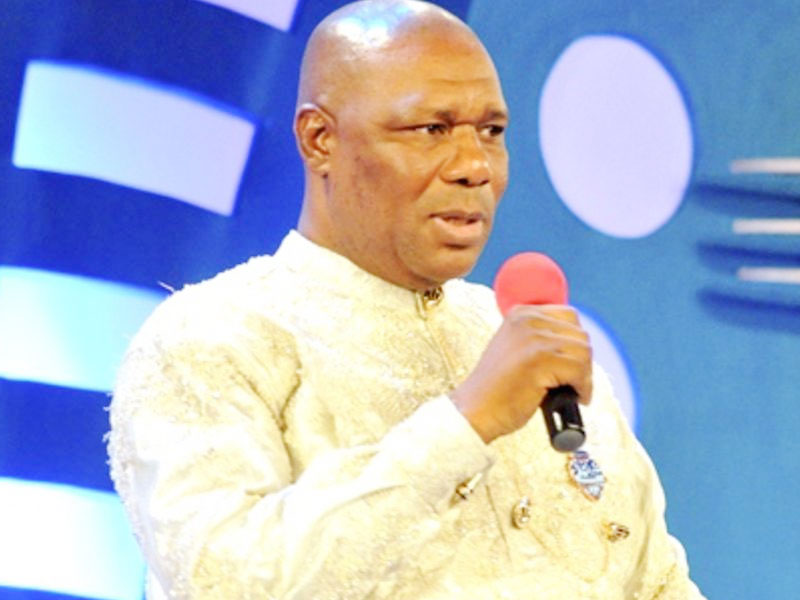
Otuaro, A Deputy Governor With Peace and Development Mindset
By Jerome-Mario Chijioke Utomi
Aside from the painful fact that public offices in Nigeria erroneously view their positions as an opportunity for private gain/personal enrichment instead of an avenue for the public good, there exist in my view, two other constraints that explain why Nigeria’s democratic experience remained nascent, socioeconomically stunted and devoid of democracy dividends after over two decades of unbroken practice.
The first and very fundamental has to do with the fact that public office seekers/holders are usually laced with set vision/agendas which are at odds with the general inspirations and motivations of the citizens. And even when such visions are in consonance with that of the masses needs, there is a colossal failure of recognition that the feasibility of a vision/agenda is not enough as visions do not make civilization nor achieve growth and progress unless the visionary in question transforms his vision into a reality within a reasonable period.
The second centres on politicians’ non-understanding that democracy works where politicians have the culture of accommodation and tolerance which makes a minority accept a majority’s right to have its way until the next, and wait patiently and peacefully for its turn to become the government by pursuing more voters to support.
Yet, from the ashes of hopelessness and bye-gone years of national leadership failures, disappointment and ‘hemorrhage’ came two capable and creative leaders that cannot be associated with any of the shortcomings/leadership ills mentioned above.
These leaders are Governor Ifeanyi Okowa and Barrister Kingsley Burutu Otuaro, Governor and Deputy Governor of Delta State respectively.
Governor Okowa’s leadership vision, agenda, inspiration and motivations have always aligned with that of the larger Deltans. This fact needs not to be over-flogged or subjected to further debate as such relentless efforts by Mr Governor, particularly in the areas of infrastructures (road), a few years ago, earned him ‘road master’ as a title.
Likewise, evidence abounds that Otuaro, judging from his actions and inactions, is not just a Deputy Governor as he is laced with attributes of a true follower and a loyal ‘party man’.
His exemplary, inspiring and heroic support to the Peoples Democratic Party (PDP) and to Governor Okowa, bears eloquent testimony to this fact. His unalloyed loyalty to both ‘instituted and constituted authorities’ in the state significantly ushered a rancour-free administration in the state. The obvious irony is that some of these silent but giant contributions of the Deputy remain hazy as they are not properly documented or well covered by the media.
This piece considers as instructive the need to look at the Deputy Governor’s contribution in this dispensation as the government of and for the people is supposed to be generally opened to scrutiny by the people.
Without much labour, there are in fact countless examples of realistic appreciation of how the Deputy Governor has demonstrated/approached the job of public leadership with a wider range of strategic alternatives that prevented bureaucratic shortcomings from becoming a bottleneck to growth and development in the state.
Beginning with his knack for truth, simplicity, love of God and humanity, the Deputy Governor has in the past seven years of being in the saddle proved beyond reasonable doubt through his actions that simplicity is always more appealing than complexity, and faith is always more comforting than doubt.
Going by commentaries, there are people in both political parties (PDP and APC) that are presently ‘worried’ that there is something deeply unique about the Deputy Governor, his relationship to reason, his love for peace, his unalloyed and ‘blind’ obedience to his boss/principal and undying love for, and development of the coastal communities of the state.
Take as an illustration, very recently, during the Delta State PDP mega rally held at the Cenotaph, Asaba, he said something remarkably striking and alien to the nation’s public leadership corridor.
“The present administration will not fail the people of the state, Delta State is a praying state, God’s state, and the government believes in the magnificence of God. We will not tell our people half-truth, we will tell you the whole truth because from the onset of this government, God has been our guide and we will not take our eyes off Him.
“We believe in God, we believe that Delta State is for God, we believe that God enthroned kings and we believe that going forward, God will enthrone the best leader.
“As a government, we will not fail you, we are determined to ensure that we finish strong and enthrone a better and secured Delta for future generations,” he said.
Away from simplicity, truth and love for God, to the area of peace, the state Deputy Governor has reputedly become a peace advocate. He is known for preaching politics without rancour.
Some years ago, Otuaro, going by reports, was used to save the nation from serious economic debacles occasioned by the threat issued by the Niger Delta Avengers (NDA). He was at the forefront of the campaign that got the Avengers to see reasons as to why they should not engage in the wanton destruction of oil facilities or plunder the nation’s economy.
In recognition of his effort in this direction, a recent report among others noted that he (the Deputy Governor) is a humane administrator and amazingly simple-minded individual.
The report further noted that nobody ever expected he would venture into the dicey and precarious nature of Nigerian politics. Barr Kingsley Otuaro, however, saw the need to boost the socio-economic prowess with the political interest of the common man as well as bridge the lacuna of the rural-urban dichotomy of his people through the provisions of social infrastructure’.
Beyond the state level, the Barrister turned public office holder cum peace ambassador has succeeded in enshrining the needed inter-states security cooperation, especially among adjoining Niger Delta coastal states.
To further illustrate his peacebuilding and conflict management competence, Deacon Kingsley Burutu Otuaro, it was reported, demonstrated an unequalled sagacity on behalf of Delta State Government, spearheading the rescue of six students of Igbonla Model College, Epe, Lagos State, from kidnappers. That was a few years ago.
To take another example of how Otuaro’s obedience and his friction-free relationship with the Governor is building peace and promoting development in the state, this piece will cast a glance at the tremendous development recently recorded in the coastal areas of the state and Gbaramatu kingdom in particular where he (Otuaro) hails from.
If a visit is made to the coastal areas of Delta State and analysis/report of such visit is placed side by side with documented accounts of deprivation, degradation and abandonment that formerly characterized the region, it will, however, reveal something fundamentally new and different about the crisis in the region; justify the belief that creative concepts of leaders can bring both disruptive and constructive aspect; and authenticate the conviction that a leader’s action and inactions is laced with the capacity to shatter set patterns of thinking, threaten the status quo, or at the very least stir up people’s anxieties.
The ongoing development of the region cannot in any way be attributed to speculation but a decision process built on right judgment and supported by rational inferences basically different from mathematical probability.
It has also shown that strategic success cannot be reduced to a formula, nor can one become a strategic thinker by reading books, but through constant demonstration of competence, connection, character and unity between the Governor and his Deputy.
Today, as a result of the present peace and unity that exists between the duo, the age-long excuse by previous administrations that the coastal region cannot be developed because the terrain is marshy, a feature that renders construction difficult if not impossible can no longer be sustained.
As recently argued by a coastal dweller, Okowa/Otuaro being God sent, used their politics of peace and development to send such an excuse to the dustbin of history. Even though the roads are yet to be connected to major cities in the state, they noted that coastal areas are now blessed with an appreciable number of pedestrian roads, a feat that qualifies the Governor and his deputy as the first to give a sense of belonging to the people of the region.
Certainly, the Governor Ifeanyi Okowa/Oturo administration has scored some good points in certain areas of life-particularly infrastructure.
This feeling came to mind following a recent media report that the Delta State Government has approved an upward review of contract cost of Ayakoromo bridge project from N6 billion to N10.5 billion, elicited two sets of reactions among Deltans, particularly those in the riverine communities of Burutu, Patani and Bomadi local government areas of the states.
This decision by the state government to complete the bridge looks good both in practical and pragmatic terms. The transport sector has a huge role in connecting populations to where the work is. Also, Infrastructure investments help stem economic losses arising from problems such as power outages or traffic congestion.
The World Bank estimates that in Sub-Saharan Africa, closing the infrastructure quantity and quality gap relative to the world’s best performers could raise gross domestic product (GDP) growth per head by 2.6 per cent annually.
Again, like the Bomadi bridge, which was executed by James Onanefe Ibori’s administration, connecting three local government areas, (Burutu, Ughele and Patani), likewise, the Ayakoromo bridge, going by commentaries, when completed, promises to promote the socioeconomic lives and wellbeing of Deltans living in over in four local governments of the state.
Take as another illustration, Bobougbene community and its environs are reputed for the production of palm oil in commercial quantity and supply to Warri metropolis and Okwuagbe markets in Ugheli South. The bridge when completed will provide easy access to these markets. Even more, it will open up the majority of communities that are yet to have access to the ‘uplands’.
This massive infrastructural development in the state, I insist, is one of the fruits of effective, peaceful and productive collaboration between Governor Okowa and his Deputy.
Jerome-Mario Utomi is the Programme Coordinator (Media and Public Policy), Social and Economic Justice Advocacy (SEJA), a Lagos-based Non-Governmental Organization (NGO). He can be reached via Je*********@***oo.com/08032725374
Feature/OPED
Nigeria’s Olodo Uprising: An Assault on Critical Thinking
By Prince Charles Dickson, PhD
A sheep was passing and saw a lion crying inside a cage, trapped and helpless. The lion begged the sheep to rescue him, promising not to kill or eat it. The sheep refused at first, knowing fully well that a lion does not become a vegetarian because of captivity. But after much persuasion, emotional blackmail, and the sheep’s own gullibility, it opened the cage.
Now the lion was very hungry, having stayed in the cage for days without food. It quickly pounced on the sheep and was about to kill and eat it, but the sheep reminded him of his promise.
They were still arguing when other animals came passing. They sought to know what had happened. Both the lion and the sheep narrated their sides of the story, but because of fear, convenience, and a desperate need to gain favour in the lion’s eyes, all the animals took sides with the lion, except the tortoise, who claimed not to understand the whole scenario.
The tortoise asked the lion to show them where exactly he was before the sheep rescued him. The lion pointed at the cage.
The tortoise asked again, “Were you inside or outside when the sheep arrived?”
The lion replied, “I was inside.”
The tortoise then said, “Okay, enter and let us see how difficult it could be inside, because I am not getting the whole scenario.”
The lion entered, and immediately, the tortoise locked the cage. The lion was trapped again.
That story is not just folklore. It is a national diagnosis.
Nigeria today is full of trapped lions, gullible sheep, frightened animals, and very few tortoises. We have many people with opinions, but few with discernment. Many with certificates, but few with comprehension. Many with titles, but few with thought. Many who can quote policy, scripture, law, and ideology, but cannot ask the simple question that prevents disaster: “Wait first, how did we get here?”
That question is the beginning of critical thinking. Sadly, it is becoming an endangered species.
The easiest and most attractive national pastime remains buck-passing, especially with the bunch of leaders we have, some of whom can hardly peel a banana or wash an already white handkerchief. Not many of us want to take responsibility for anything, from personal life to family life, from community life to national life. The blame is always on the system, as if the system descended from the sky and imposed itself on innocent citizens.
We do not need to create demons out of our leaders because, in too many instances, they have behaved like ready-made specimens of public demons. So, we hang our sins on them, sometimes appropriately, sometimes lazily. Unfortunately, their behaviour has made it easy for the critics to descend on them. They shout loudly, lie casually, perform empathy only when cameras are present, and govern as though the people are background noise in their private banquet.
But there is a deeper tragedy. The lion is not our only problem. The sheep, too, must be examined. The other animals must be questioned. Even the silence of the forest must stand trial.
This is where the Olodo Syndrome enters.
In Nigerian street language, “Olodo” is often used to describe a dull person, someone slow to understand, someone who fails where basic reasoning should have saved them. But in this essay, Olodo is not merely the person who did not go to school. No. Nigeria has produced a more sophisticated creature: the educated olodo. The certificated illiterate. The graduate who cannot reason beyond slogans. The public officer who mistakes grammar for intelligence. The citizen who forwards nonsense with confidence. The analyst who mistakes noise for insight. The leader who confuses movement with progress. The voter who sells tomorrow for rice today, then spends four years complaining that the pot is empty.
Olodo, therefore, is not the absence of schooling. It is the failure of judgment.
It is what happens when a nation rewards mediocrity and punishes thought. It is what happens when people who ask serious questions are labelled troublesome, while those who clap for madness are called loyal. It is what happens when dumb, crazy things move the needle, while wisdom is treated like an old man coughing in the corner. It is what happens when unintelligent people do not merely exist, but are celebrated, promoted, defended, and installed as gatekeepers over those who still dare to think.
This is Nigeria’s Olodo Uprising.
It is an uprising not of the poor against the rich, nor of the uneducated against the educated. It is an uprising of shallow thinking against depth. An assault on memory, logic, accountability, and consequence. It is the national habit of refusing to connect action to outcome. We open the cage, release the lion, and then begin a prayer meeting when the lion remembers its appetite.
We talk, write, and discuss the Nigerian myth with a sense of fatalism. “This is Nigeria,” we say, as if that phrase is both an explanation and an excuse. If everyone thought as much about justice and fairness, life would be better. I am a critic, yes, but I am also a critic’s critic. I remain an unrepentant believer that one of the ways to keep the government on its toes is to keep harping on its flaws so that it can improve. But criticism without self-examination becomes entertainment. It becomes pepper soup politics, the kind we enjoy at drinking joints, suya spots, WhatsApp groups, and television studios where every table has a parliament and every loud voice is mistaken for a constitution.
Often, I say I believe the things I write are important for our nation, as they are for other nations. But when it appears to me that Nigerians, especially those in authority, do not react to these issues as people in other lands do, I repeat them in new essays to remind old readers and recruit new ones to participate in the continuing dialogue.
Because repetition, sometimes, is not a lack of creativity. It is the burden of memory in a country addicted to forgetting.
Sadly, this is Nigeria, where nothing works, and no one cares. When it works, it is often because someone’s interest is about to be served or is already being served, not because the people’s interest has suddenly become sacred. We talk about our institutions despairingly. Our leaders do not watch network news except when their faces will appear at their sons’ or daughters’ weddings, birthdays, burials, thanksgiving services, or self-sponsored ceremonies of public praise. They do not need newspapers anymore because too many pages are already full of their lies, paid adverts, and noisy banters dressed as governance.
A country that destroys thinking will eventually be governed by instinct.
That is why the Olodo Syndrome is dangerous. It not only makes people ignorant. It makes them confidently ignorant. It gives stupidity a microphone and asks wisdom to apply for permission to speak. It converts public debate into shouting contests. It turns leadership recruitment into ethnic arithmetic, religious panic, stomach infrastructure, and emotional blackmail. It makes citizens defend their oppressors because the oppressor speaks their language, attends their church, worships in their mosque, comes from their zone, or once gave them transport money.
This is how the other animals sided with the lion.
Not because the lion was right. They knew he was wrong. But fear is a powerful editor of truth. Hunger is a wicked lawyer. Proximity to power is a dangerous intoxicant. In Nigeria, many people do not support injustice because they are confused. They support it because they are calculating. They are asking themselves, “What if the lion remembers me tomorrow? What if I need a favour? What if I condemn him now and he becomes minister, governor, chairman, commissioner, vice chancellor, senator, president?”
So, they betray the sheep.
Government bashing remains a national pastime, and every drinking joint and suya spot has a sitting parliament with an expert on every issue. But we forget that no matter the input, if the politicians and actors on our national scene have questionable lives both at personal and domestic levels, nothing will change. The best government policy cannot change the individual when the policies themselves are formulated on a bad foundation by people with warped thinking.
A corrupt mind cannot midwife a clean system.
When a witch proclaims her presence, and an invalid does not make away, he must have money for sacrifices at home. Nigeria has been warned too many times. We have seen the witch. We have heard the announcement. Yet we remain seated, arguing about who invited her, who offended her, which village she came from, and whether her witchcraft is constitutionally recognised.
This is not merely a leadership failure. It is civic laziness. It is moral cowardice. It is intellectual surrender.
The tortoise in the story represents the rare citizen who does not join the chorus. The one who pauses the noise. The one who asks for sequence, evidence, context, motive, and consequence. The tortoise is not the loudest animal. It is not the strongest. It does not roar. It does not bleat. It thinks.
That is what Nigeria needs now: more tortoises.
Not slow people, but thoughtful people. Not cowards hiding under shells, but citizens who understand that speed without thought is national self-harm. We need people who can ask leaders: Where were you before power? What did you promise? What have you done? Who benefits? Who pays? What happens tomorrow? We need teachers who teach children to question, not merely to cram. We need voters who examine character before currency. We need religious leaders who produce conscience, not crowds. We need journalists who investigate, not decorate. We need institutions that reward competence over loyalty, substance over noise, and courage over convenience.
Because the lion will always be hungry again.
That is the part Nigeria refuses to learn. Appeasing bad leadership does not end its appetite. Excusing mediocrity does not transform it into excellence. Rewarding foolishness does not make it wise. If we allow the lion to eat the sheep today because we are afraid, hungry, tribal, religiously sentimental, or politically invested, we have not solved the hunger problem. We have only postponed our own turn.
In amazement, the other animals asked the tortoise, “why” and the tortoise replied. “If we allow him to eat the sheep today, he will still go hungry tomorrow, and we don’t know what will be eaten tomorrow—May Nigeria win.
Feature/OPED
Stocks vs Forex: Which is Better for Beginners in 2026?
By Onah Ishioma Adaeze
As a beginner, choosing between stocks and forex for your investment goals in 2026 can feel overwhelming. Before investing your hard-earned money, it is important to understand how both markets work.
While both markets present investors with opportunities to grow their wealth, they also differ in terms of volatility, liquidity, market hours, and leverage. Stocks involve owning portions of a company, while forex has to do with trading a base currency against a quote currency.
In this article, we will be going through the basics of stocks and forex, pointing out their differences, and helping you decide which asset better suits your investment journey in 2026.
What is Stock Trading?
When it comes to stock trading, you are buying shares of a company, which makes you a shareholder of that company. As a shareholder, you may be entitled to receive dividends whenever the company decides to pay dividends.
As for those companies that do not pay dividends, there are other benefits a shareholder may enjoy, like being called upon to attend shareholder meetings and having voting rights on certain company matters.
On a global scale, over $100 trillion worth of shares are traded annually. Also, the rising popularity of AI companies and technological innovations continues to drive investor participation and market growth.
If you’re an investor looking to buy and hold capital assets, then stock trading is definitely for you, as it allows for short-term, medium-term and long-term investment goals.
When you buy shares of a company and the company performs well, your shares increase in value. Another benefit of stock trading is access to index funds and ETFs.
These funds consist of companies that are grouped under an index. They are carefully selected and monitored under the fund, sparing the investor the stress of actively tracking the fund.
They can be a way of building a long-term, diversified portfolio, and some of these funds may pay dividends.
What is Forex Trading?
Forex trading has to do with buying one currency and selling another. With a pair like USD/JPY, USD is the base currency being bought against JPY, which is the quote currency.
In order to execute a trade in the forex market, you have to analyse and make predictions based on price movement, as well as pay attention to what’s going on in the global news scene.
The forex market runs twenty-four hours every weekday, with over $9 trillion traded in the market every day. Being the largest financial market in the world, there is very high liquidity.
Forex trading involves buying one currency against another, making predictions based on price movements on the forex charts. Price moves based on the activities of large institutions like hedge funds, big banks, the government, etc.
The forex market runs 24 hours a day, every weekday, with global forex turnover reaching $9 trillion per day in the BIS 2025 survey. Being the largest financial market in the world, there is very high volatility and price fluctuations.
At the same time, there is high liquidity in the market, which means that currency pairs can easily be bought and sold without hassle. Highly liquid instruments that are traded regularly include: EUR/USD, USD/JPY, GBP/USD, and gold (XAU/USD).
As a retail trader, knowing when to enter and exit the market is important. As easy as it is to make profits from price fluctuations, it is also very easy to lose money if the market moves against you. This is why it is important to set stop losses and take profits. This helps manage your trading capital.
Major Differences Between Stocks and Forex
While investing in stocks and forex can yield great capital gains, there are lots of ways in which they differ.
As a beginner, stock trading provides opportunities for long-term investments, ensuring slow but consistent returns for wealth building. But if you are looking for an active, short-term style of investment, then forex trading is for you, as it allows you to enter and exit the market within a shorter time frame.
Which is Better in 2026?
Choosing an asset to invest in all boils down to personal preference. At the same time, if you are not averse to risk, nor opposed to asset diversification, then it’s okay to invest in both.
For beginner investors in 2026, stock trading is easier to understand and get into, especially because of mutual funds, index funds and ETFs. With those funds, you don’t have to be an expert to start investing. You can just buy a fund that suits your needs and hold it over a long period of time.
If you are an investor who enjoys technical analysis, highly volatile and liquid markets, as well as trading under short time frames, then forex trading is the right pick for you.
Conclusion
You do not need to put all your eggs in one basket. There are investors who invest in both stocks and forex simultaneously. When starting out, you can start investing in stocks while learning forex. Take calculated risks and do not invest above your means. Diversify your investments and remember, when starting out, you should prioritise acquiring knowledge over profits.
Onah Ishioma Adaeze is a finance writer who is passionate about simplifying complex concepts into easily digestible pieces. Her hobbies are reading and watching anime
Feature/OPED
Building 234 Solutions: A Response to Everyday Workforce Challenges
By Owoloye Emmanuel
Every business starts with a problem. For us, that problem was hiding in plain sight.
Across organisations, we kept seeing HR professionals, payroll teams, and business leaders spend significant time navigating processes that should be simpler. Employee records sat across multiple systems, payroll processes required manual intervention, and routine workforce tasks often became more complicated than they needed to be.
As businesses grow, workforce operations naturally become more complex. Yet many organisations still rely on disconnected tools and workflows that create unnecessary friction for both employers and employees.
The consequence is more than operational inefficiency. HR teams spend valuable time managing systems instead of supporting people. Business leaders struggle to access timely workforce insights, while employees experience delays in processes that should be seamless.
These weren’t isolated challenges. They were recurring realities across workplaces, regardless of industry or size.
That observation led us to a simple question: what if workforce management could be easier?
What if HR, payroll, and workforce operations could work together within a single, connected experience?
That question became the foundation for 234 Solutions.
We are building 234 Solutions with a clear belief that workplace technology should reduce complexity, not add to it. Our goal is to help organisations spend less time navigating processes and more time focusing on productivity, growth, and people.
As we prepare for launch, our focus remains simple: building practical solutions for real workplace challenges and helping organisations create better experiences for the people who power them every day.
Owoloye Emmanuel is the founder of 234 Solutions
-
Feature/OPED6 years agoDavos was Different this year
-
Travel/Tourism10 years ago
Lagos Seals Western Lodge Hotel In Ikorodu
-
Showbiz3 years agoEstranged Lover Releases Videos of Empress Njamah Bathing
-
Banking8 years agoSort Codes of GTBank Branches in Nigeria
-
Economy3 years agoSubsidy Removal: CNG at N130 Per Litre Cheaper Than Petrol—IPMAN
-
Banking3 years agoSort Codes of UBA Branches in Nigeria
-
Banking3 years agoFirst Bank Announces Planned Downtime
-
Sports3 years agoHighest Paid Nigerian Footballer – How Much Do Nigerian Footballers Earn