Economy
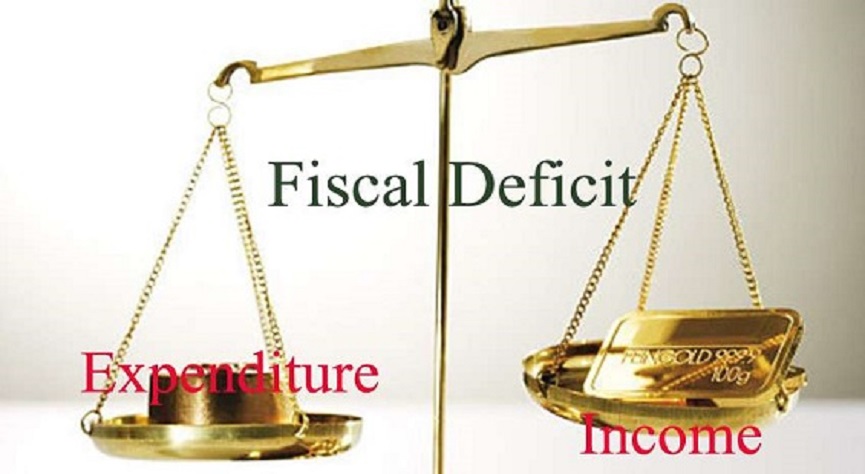
Rewane Expresses Worry over Nigeria’s Fiscal Deficit of N8.92trn
By Dipo Olowookere
Renowned economist and Managing Director of Financial Derivatives Company Limited, Mr Bismarck Rewane, has expressed worry over the fiscal deficit of Nigeria.
Speaking on Monday at a webinar hosted by Stanbic IBTC Holdings Plc, a member of Standard Bank Group, the member of the Economic Advisory Council (EAC) of President Muhammadu Buhari said Nigeria’s expenditure currently stands at N19.63 trillion while its revenue stands at N10.71 trillion. This means Nigeria’s fiscal deficit stands at N8.92 trillion.
He further disclosed at the event themed 2022 Virtual Economic Outlook- Investing and planning in an election cycle that the fiscal deficit translates to an increasing level of poverty, inflation, unemployment and the number of out-of-school children.
Mr Rewane noted that the number of fully employed Nigerians had dipped by 54.41 per cent in the last five years and the working population grew by 18.45 per cent, while 50 per cent of Nigerians remain idle.
Highlighting Nigeria’s fiscal position in five years, he noted that while oil prices increased by 62.36 per cent; currency and balance of trade weakened by 239.76 per cent and 35.95 per cent respectively, with gross external reserves gaining 39.29 per cent.
According to him, sustained supply concerns have helped to shore up global oil prices above $80 per barrel while the Central Bank of Nigeria (CBN) has continued to step up its intervention programme in the forex market as the nation’s gross external reserves continue to dwindle. Also, he said, the naira has continued to witness increased pressure due to excess liquidity.
“The nation’s economy is expected to continue its rebound as witnessed in the last quarter of 2021 while oil prices are likely to remain high as major economies re-open fully and oil demand picks up.
“Furthermore, the advent of COVID-19 vaccines has continued to discount the impact of Omicron on oil demand while the effect of the Iran nuclear deal is expected to push up the nation’s oil supply to the global market. This is expected to provide more support to Nigeria’s earnings,” said Mr Bismarck.
“To boost the manufacturing sector, the Central Bank of Nigeria (CBN) is likely to intensify its forex intervention as it seeks to increase supply to manufacturers,
“Also, the CBN is expected to step up efforts towards exchange rate convergence, increase its intervention in the forex market while the postponement of the fuel subsidy removal will dampen the anticipated spike in inflation for the year as trade policies are expected to become less protectionist,” he added.
Also speaking at the event, the Executive Director of Corporate and Investment Banking at Stanbic IBTC Bank, Eric Fajemisin, noted that the lender, through its business advisory services, has continued to help its customers make good investment decisions and provide them with business financing.
On the part of the Executive Director of Business and Commercial Clients at Stanbic IBTC Bank, Remy Osuagwu, the organisation has continued to partner with the CBN in its various intervention programmes such as the Real Sector Fund, Anchor Borrowers Fund, and the Nigeria Incentive-Based Risk Sharing System for Agricultural Lending (NIRSAL), amongst others.
Commenting, the Chief Executive of Stanbic IBTC Pension Managers, Olumide Oyetan, said the company, through its investment management vehicle, has continued to provide avenues for investors to profitably invest their funds short and long term while ensuring the safety of invested funds.
The Executive Director of Client Solutions at Stanbic IBTC, Bunmi Dayo Olagunju, in her concluding remarks, stated that the economic ecosystem can improve during the election cycle if digital technologies can be leveraged effectively.
Earlier in his opening remarks, the Chief Executive of Stanbic IBTC Holdings Plc, Mr Demola Sogunle, thanked the customers for the confidence and trust reposed in the organisation through their patronage.
He assured Nigerians of valuable and exciting opportunities despite the likely headwinds as the nation prepares for its general elections.
The event was put together to reflect on the economic trends that shaped 2021 and give projections of what to expect in 2022. It also afforded participants the opportunity to learn directly from economic experts on the importance of planning and investment.
Economy
Food Concepts Return NASD OTC Exchange to Danger Zone
By Adedapo Adesanya
Food Concepts Plc neutralized the gains recorded by three securities, returning the NASD Over-the-Counter (OTC) Securities Exchange into the negative territory with a 0.27 per cent loss on Thursday, December 4.
Yesterday, the share price of the parent company of Chicken Republic and PieXpress declined by 34 Kobo to sell at N3.15 per unit compared with the previous day’s N3.49 per unit.
This shrank the market capitalisation of the OTC bourse by N5.72 billion to N2.136 billion from N2.142 trillion and weakened the NASD Unlisted Security Index (NSI) by 9.57 points to 3,571.53 points from 3,581.10 points.
Business Post reports that Central Securities Clearing System (CSCS) Plc went down by 50 Kobo to N38.50 per share from N38.00 per share, FrieslandCampina Wamco Nigeria Plc gained 29 Kobo to sell at N55.79 per unit versus N55.50 per unit, and Geo-Fluids Plc added 5 Kobo to close at N4.60 per share compared with Wednesday’s closing price of N4.55 per share.
Trading data indicated that the volume of securities recorded at the session surged by 6,885.3 per cent to 4.3 million units from the 61,570 units posted a day earlier, the value of securities increased by 10,301.7 per cent to N947.2 million from N3.3 million, and the number of deals went up by 146.7 per cent to 37 deals from the 15 deals achieved in the previous trading session.
At the close of business, Infrastructure Credit Guarantee Company (InfraCredit) Plc was the most traded stock by value on a year-to-date basis with the sale of 5.8 billion units for N16.4 billion, trailed by Okitipupa Plc with 170.4 million units worth N8.0 billion, and Air Liquide Plc with 507.5 million units valued at N4.2 billion.
InfraCredit Plc also finished the session as the most traded stock by volume on a year-to-date basis with 5.8 billion units transacted for N16.4 billion, followed by Industrial and General Insurance (IGI) Plc with 1.2 billion units sold for N420.2 million, and Impresit Bakolori Plc with 536.9 million units traded for N524.9 million.
Economy
Investors Gain N97bn from Local Equity Market
By Dipo Olowookere
The upward trend witnessed at the Nigerian Exchange (NGX) Limited in recent sessions continued on Thursday as it further improved by 0.10 per cent.
This was despite investor sentiment turning bearish after the local equity market ended with 23 price gainers and 28 price gainers, indicating a negative market breadth index.
UAC Nigeria gained 10.00 per cent to finish at N88.00, Morison Industries appreciated by 9.94 per cent to N3.54, Ecobank rose by 8.53 per cent to N36.90, and Coronation Insurance grew by 8.47 per cent to N2.56.
On the flip side, Ellah Lakes depreciated by 10.00 per cent to N13.14, Eunisell Nigeria also shed 10.00 per cent to finish at N72.90, Transcorp Hotels slipped by 9.95 per cent to N157.50, Omatek shrank by 9.23 per cent to N1.18, and Guinea Insurance dipped by 8.46 per cent to N1.19.
Yesterday, the All-Share Index (ASI) went up by 152.28 points to 145,476.15 points from 145,323.87 points and the market capitalisation chalked up N97 billion to finish at N92.726 trillion compared with the previous day’s N92.629 trillion.
Customs Street was bubbling with activities on Thursday, though the trading volume and value slightly went down, according to data.
A total of 1.9 billion stocks worth N19.2 billion exchanged hands in 23,369 deals during the session versus the N2.3 billion valued at N21.0 billion traded in 21,513 deals a day earlier.
This showed that the number of deals increased by 8.63 per cent, the volume of transactions depleted by 17.39 per cent, and the value of trades decreased by 8.57 per cent.
For another trading day, eTranzact led the activity chart with 1.6 billion units sold for N6.4 billion, Fidelity Bank traded 31.0 million units worth N589.3 million, GTCO exchanged 28.3 million units valued at N2.5 billion, Zenith Bank transacted 27.1 million units for N1.6 billion, and Ecobank traded 21.9 million units worth N744.3 million.
Economy
Naira Loses 18 Kobo Against Dollar at Official Market, N5 at Black Market
By Adedapo Adesanya
The Naira marginally depreciated against the United States Dollar in the Nigerian Autonomous Foreign Exchange Market (NAFEM) on Thursday, December 4 amid renewed forex pressure associated with December.
At the official market yesterday, the Nigerian currency lost 0.01 per cent or 18 Kobo against the Dollar to close at N1,447.83/$1 compared with the previous day’s N1,447.65/$1.
It was not a different scenario with the local currency in the same market segment against the Pound Sterling as it further shed N15.43 to sell for N1,930.97/£1 versus Wednesday’s closing price of N1,925.08/£1 and declined against the Euro by 20 Kobo to finish at N1,688.74/€1 compared with the preceding session’s N1,688.54/€1.
Similarly, the Nigerian Naira lost N5 against the greenback in the black market to quote at N1,465/$1 compared with the previous day’s value of N1,460/$1 but closed flat against the Dollar at the GTBank FX counter at N1,453/$1.
Fluctuations in trading range is expected to continue during the festive season as traders expect the Nigerian currency to be stable, supported by intervention s by to the Central Bank of Nigeria (CBN)in the face of steady dollar demand.
Support is also expected in coming weeks as seasonal activities, particularly the stylised “Detty December” festivities, will see inflows that will give the Naira a boost after it depreciated mildly last month, according to a new report.
“As the festive Detty December season intensifies, inbound travel, tourism spending, and diaspora inflows are expected to provide moderate support for FX liquidity,” analysts at the research unit of FMDA said in its latest monthly report for November.
Traders cited by Reuters expect that the Naira will trade within a band of N1,443-N1,450 next week, buoyed by improved FX interventions by the apex bank.
Meanwhile, the crypto market was down as the US Federal Reserve’s preferred inflation gauge, core PCE, likely rose in September—moving in the wrong direction. However, volatility indices show no signs of major turbulence.
If the actual figure matches estimates, it would mark 55 straight months of inflation above the US central bank’s 2 per cent target. The sticky inflation would strengthen the hawkish policymakers, who are in favour of slower rate cuts.
Ripple (XRP) depreciated by 4.5 per cent to $2.08, Solana (SOL) went down by 3.8 per cent to $138.11, Litecoin (LTC) shrank by 3.1 per cent to $83.23, Dogecoin (DOGE) slid by 2.5 per cent to $0.1463, Cardano (ADA) declined by 2.1 per cent to $0.4368, Bitcoin (BTC) fell by 0.9 per cent to $91,975.45, Binance Coin (BNB) crumbled by 0.9 per cent to $899.41, and Ethereum (ETH) dropped by 0.7 per cent to $3,156.44, while the US Dollar Tether (USDT) and the US Dollar Coin (USDC) closed flat at $1.00 apiece.
-
Feature/OPED6 years agoDavos was Different this year
-
Travel/Tourism9 years ago
Lagos Seals Western Lodge Hotel In Ikorodu
-
Showbiz3 years agoEstranged Lover Releases Videos of Empress Njamah Bathing
-
Banking7 years agoSort Codes of GTBank Branches in Nigeria
-
Economy2 years agoSubsidy Removal: CNG at N130 Per Litre Cheaper Than Petrol—IPMAN
-
Banking3 years agoFirst Bank Announces Planned Downtime
-
Banking3 years agoSort Codes of UBA Branches in Nigeria
-
Sports3 years agoHighest Paid Nigerian Footballer – How Much Do Nigerian Footballers Earn