Connect with us

Economy

Kenya Retains Interest Rates At 10% To Boost Economy

Published

on

kenya-interest-rates-cbk

By Modupe Gbadeyanka

The Central Bank of Kenya (CBK) has announced that it is retaining its Central Bank Rate (CBR) at 10 percent.

This decision was reached after the Monetary Policy Committee (MPC) meeting held on Monday, November 28, 2016, to review the outcome of its previous policy decisions and the recent economic developments.

Business Post gathered that the MPC meeting took place against the backdrop of increased uncertainties in the domestic and global economies.

It explained that it retained the rates due to the prevailing domestic and global economic uncertainties and the need for more conclusive information on these developments.

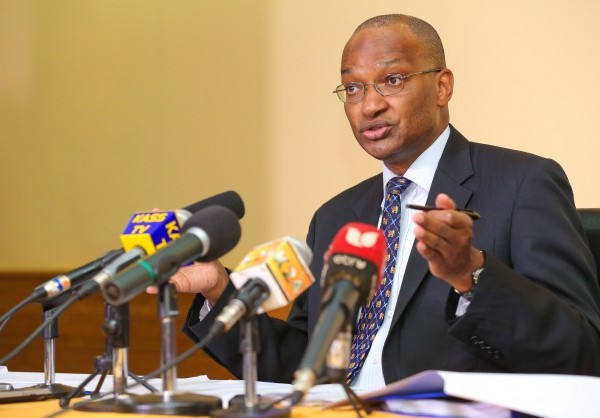
According to Chairman of the MPC, Dr Patrick Njoroge, it was noted that the country’s month-on-month overall Consumer Price Index (CPI) inflation rose to 6.5 percent in October 2016 from 6.3 percent in September.

This, it was learnt, was caused largely due to changes in the prices of food items such as tomatoes and sugar.

However, the overall inflation remained within the government target range.

Also, the month-on-month non-food-non-fuel (NFNF) increased to 5.4 percent in October from 5.1 percent in September, reflecting increases in the prices of items in the clothing and footwear CPI category and the impact of the excise tax introduced in December 2015.

The 3 month annualized NFNF inflation rose slightly in October, an indication of mild demand pressures in the economy.

The MPC further observed that the foreign exchange market has been relatively stable despite the volatility in the global financial market following the US elections and the seasonal increase in demand for foreign exchange by corporate to finance dividend payments.

It said the foreign exchange market continues to be supported by the narrowing of the current account deficit mainly due to lower imported petroleum prices, lower imports of machinery and equipment, and resilient diaspora remittances. Tourism earnings and export receipts from tea and horticulture have stabilized.

The MPC said the CBK’s foreign exchange reserves which currently stand at $7,305 million (4.8 months of import cover) together with the Precautionary Arrangements with the international Monetary Fund (equivalent to $1.5 billion) have continued to provide adequate buffers against short-term shocks.

But the CBK said it was working closely with the National Treasury to ensure coordination of monetary and fiscal policies. Execution of the government’s domestic borrowing plan for FY2016/17 continues to support stability in the market.

It was disclosed that banking system liquidity and its distribution have stabilized. The average commercial banks’ liquidity ratio increased to 43.6 percent in October from 41.9 percent in August 2016 and the average capital adequacy ratio stood at 19.1 percent in October.

The CBK continues to closely monitor credit and liquidity risks in the sector. Continued interest of foreign banks to enter the local market indicates confidence in the banking sector.

Following the introduction of interest rate caps on back lending and deposits, the Committee noted that the available data were inadequate to facilitate a conclusive analysis of their impact on monetary policy and the overall economy. The CBK will continue to closely monitor developments in this respect.

The MPC also observed that private sector credit growth had stabilized at 4.6 percent in October. The slower growth witnessed over the last several months was found to be largely an outcome of structural factors in the banking sector rather than monetary policy.

However, there is no evidence that this is having a negative impact on economic growth.

The performance of the economy in the second quarter of 2016 was strong, growing by 6.2 percent compared to 5.9 percent in a similar period of 2015.

The MPC Market Perception Survey conducted in November 2016 showed mixed expectations. While the non-bank private sector remains optimistic for higher growth in 2016, banks were cautious as they continue to monitor the potential impact of the capping of interest rates.

Also, global growth prospects remain fragile on account of uncertainties in part due to the impact of Brexit and political developments in the U.S. Uncertainty relating to the tightening of US monetary policy and its implications for global capital flows remain a concern.

The Committee concluded that inflationary pressures were mild and inflation will remain within the Government target range in the short term.


Modupe Gbadeyanka is a fast-rising journalist with Business Post Nigeria. Her passion for journalism is amazing. She is willing to learn more with a view to becoming one of the best pen-pushers in Nigeria. Her role models are the duo of CNN's Richard Quest and Christiane Amanpour.

Economy

Customs Street Chalks up 1.08% on Renewed Buying Pressure

Published

on

Customs Street NGX

By Dipo Olowookere

A 1.08 per cent growth was further printed by the Nigerian Exchange (NGX) Limited on Friday on improved appetite for Nigerian stocks.

Data showed that the insurance sector lost 0.61 per cent yesterday due to profit-taking as the energy space gave up 0.08 per cent, while the commodity counter closed flat.

However, the industrial goods landscape appreciated by 2.06 per cent, the banking index improved by 1.31 per cent, and the consumer goods sector expanded by 0.83 per cent.

At the close of business on Customs Street, the All-Share Index (ASI) increased by 1,563.92 points to 147,040.07 points from 145,476.15 points and the market capitalisation went up by N996 billion to N93.722 trillion from N92.726 trillion.

UAC Nigeria led the advancers’ log yesterday after it grew by 10.00 per cent to N96.80, Transcorp Hotels jumped by 9.71 per cent to N172.80, Royal Exchange appreciated by 8.89 per cent to N1.96, Ikeja Hotel soared by 8.74 per cent to N31.10, and Veritas Kapital leapt by 8.07 per cent to N1.74.

On the flip side, Union Dicon declined by 10.00 per cent to N6.30, ABC Transport slipped by 9.88 per cent to N3.10, AXA Mansard depreciated by 7.19 per cent to N12.90, FTN Cocoa lost 4.62 per cent to trade at N4.75, and Guinea Insurance dropped 3.36 per cent to finish at N1.15.

A total of 38 stocks ended on the gainers’ table and 17 stocks finished on the losers’ table, representing a positive market breadth index and strong investor sentiment.

Traders transacted 361.6 million equities for N14.8 billion in 21,051 deals yesterday versus the 1.9 billion equities worth N19.2 billion traded in 23,369 deals a day earlier, showing a decline in the trading volume, value, and number of deals by 80.97 per cent, 22.92 per cent, and 14.20 per cent, respectively.

The busiest stock for the session was Zenith Bank with 59.5 million units worth N3.6 billion, Access Holdings traded 46.1 million units valued at N973.0 million, Fidelity Bank exchanged 29.4 million units for N560.4 million, FCMB transacted 27.9 million units worth N293.9 million, and Tantalizers sold 13.0 million units valued at N29.8 million.

Continue Reading

Economy

Nipco, 11 Plc Crash OTC Securities Exchange by 4.76%

Published

on

NIPCO LPG Depot

By Adedapo Adesanya

Energy stocks influenced the 4.76 per cent loss recorded by the NASD Over-the-Counter (OTC) Securities Exchange on Friday, December 5.

The culprits were the duo of 11 Plc and Nipco Plc,with the former shedding N32.17 to end at N291.83 per share compared with the previous day’s N324.00 per share, and the latter down by N21.00 to sell at N195.00 per unit versus the previous session’s N216.00 per unit.

Consequently, the NASD Unlisted Security Index (NSI) slumped by 170.16 points to 3,401.37 points from 3,571.53 points and the market capitalisation lost N101.81 billion to close at N2.035 billion from the N2.136 trillion quoted in the preceding session.

The OTC securities exchange suffered the decline yesterday despite the share prices of three companies closing green.

Central Securities Clearing System (CSCS) Plc was up by N1.80 to close at N39.80 per share compared with Thursday’s price of N38.00 per share, Air Liquide Plc appreciated by N1.09 to N11.99 per unit from N10.90 per unit, and FrieslandCampina Wamco Nigeria Plc grew by 78 Kobo to N56.57 per share from N55.79 per share.

During the session, the volume of transactions rose by 6,885.3 per cent to 18.2 million units from 4.3 million units, the value of transactions ballooned by 10,301.7 per cent to N389.7 million from N347.2 million, but the number of deals declined by 29.7 per cent to 26 deals from 37 deals.

Infrastructure Credit Guarantee Company (InfraCredit) Plc ended the day as the most traded stock by value on a year-to-date basis with 5.8 billion units worth N16.4 billion, followed by Okitipupa Plc with 170.4 million units valued at N8.0 billion, and Air Liquide Plc with 507.5 million units worth N4.2 billion.

InfraCredit Plc also finished the day as the most traded stock by volume on a year-to-date basis with 5.8 billion units transacted for N16.4 billion, followed by Industrial and General Insurance (IGI) Plc with 1.2 billion units sold for N420.2 million, and Impresit Bakolori Plc with 536.9 million units worth N524.9 million.

Continue Reading

Economy

Naira Depreciates to N1,450/$1 at Official Forex Market

Published

on

Naira-Dollar exchange rate gap

By Adedapo Adesanya

The Naira depreciated further against the US Dollar in the Nigerian Autonomous Foreign Exchange Market (NAFEX) on Friday, December 5, as FX demand pressure mounts.

The Nigerian currency lost N2.60 or 0.18 per cent against the greenback to close at N1,450.43/$1 compared with the previous day’s N1,447.83/$1.

Equally, the domestic currency declined against the Pound Sterling in the official forex market during the session by N4.48 to trade at N1,935.45/£1, in contrast to Thursday’s closing price of N1,930.97/£1 and shrank against the Euro by 43 Kobo to end at N1,689.17/€1 versus the preceding session’s rate of N1,688.74/€1.

Similarly, the local currency performed badly against the US Dollar at the GTBank FX counter by N2 to close at N1,455/$1 versus Thursday’s N1,453/$1 but traded flat at the parallel market at N14.65/$1.

As the country gets into the festive period, pressure mounted on the local currency reflecting higher foreign payments and lower FX inflows.

However, there are expectations that the Nigerian currency will be stable, supported by interventions by to the Central Bank of Nigeria (CBN) in the face of steady dollar Demand and inflows from Detty December festivities that will give the Naira a boost after it depreciated mildly last month.

Traders cited by Reuters expect that the Naira will trade within a band of N1,443-N1,450/$1 next week, buoyed by improved FX interventions by the apex bank.

As for the crypto market, it was down yesterday due to profit-taking associated with year-end trading. However, the December 1-Year Consumer Inflation Expectation by the University of Michigan fell to 4.1 per cent from 4.5 per cent previously and 4.5 per cent expected. The 5-Year Consumer Inflation Expectation fell to 3.2 per cent from 3.4 per cent previously and 3.4 per cent expected.

With the dearth of official economic data of late, these private surveys have taken on a new level of significance and the market banks of them to make decisions.

Cardano (ADA) depreciated by 5.7 per cent to $0.4142, Dogecoin (DOGE) slid by 5.1 per cent to $0.1394, Ethereum (ETH) dropped by 3.9 per cent to $3,039.75, Solana (SOL) declined by 3.8 per cent to $133.24, and Litecoin (LTC) fell by 3.7 per cent to $80.59.

Further, Bitcoin (BTC) went down by 2.6 per cent to sell at $89,683.72, Binance Coin (BNB) slumped by 2.2 per cent to $883.59, and Ripple (XRP) shrank by 2.1 per cent to $2.04, while the US Dollar Tether (USDT) and the US Dollar Coin (USDC) remained unchanged at $1.00 each.

Continue Reading

Trending