Economy
Kenya Retains Interest Rates At 10% To Boost Economy

By Modupe Gbadeyanka
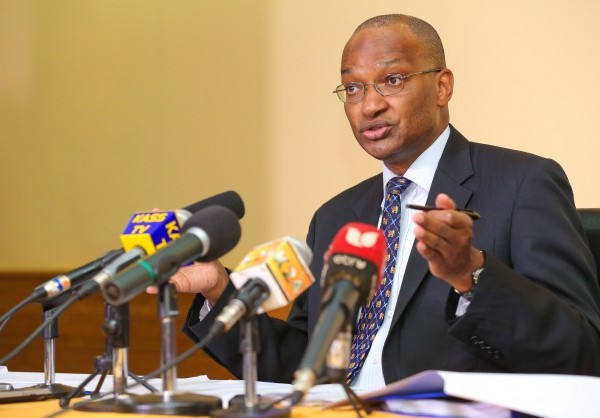
The Central Bank of Kenya (CBK) has announced that it is retaining its Central Bank Rate (CBR) at 10 percent.
This decision was reached after the Monetary Policy Committee (MPC) meeting held on Monday, November 28, 2016, to review the outcome of its previous policy decisions and the recent economic developments.
Business Post gathered that the MPC meeting took place against the backdrop of increased uncertainties in the domestic and global economies.
It explained that it retained the rates due to the prevailing domestic and global economic uncertainties and the need for more conclusive information on these developments.
According to Chairman of the MPC, Dr Patrick Njoroge, it was noted that the country’s month-on-month overall Consumer Price Index (CPI) inflation rose to 6.5 percent in October 2016 from 6.3 percent in September.
This, it was learnt, was caused largely due to changes in the prices of food items such as tomatoes and sugar.
However, the overall inflation remained within the government target range.
Also, the month-on-month non-food-non-fuel (NFNF) increased to 5.4 percent in October from 5.1 percent in September, reflecting increases in the prices of items in the clothing and footwear CPI category and the impact of the excise tax introduced in December 2015.
The 3 month annualized NFNF inflation rose slightly in October, an indication of mild demand pressures in the economy.
The MPC further observed that the foreign exchange market has been relatively stable despite the volatility in the global financial market following the US elections and the seasonal increase in demand for foreign exchange by corporate to finance dividend payments.
It said the foreign exchange market continues to be supported by the narrowing of the current account deficit mainly due to lower imported petroleum prices, lower imports of machinery and equipment, and resilient diaspora remittances. Tourism earnings and export receipts from tea and horticulture have stabilized.
The MPC said the CBK’s foreign exchange reserves which currently stand at $7,305 million (4.8 months of import cover) together with the Precautionary Arrangements with the international Monetary Fund (equivalent to $1.5 billion) have continued to provide adequate buffers against short-term shocks.
But the CBK said it was working closely with the National Treasury to ensure coordination of monetary and fiscal policies. Execution of the government’s domestic borrowing plan for FY2016/17 continues to support stability in the market.
It was disclosed that banking system liquidity and its distribution have stabilized. The average commercial banks’ liquidity ratio increased to 43.6 percent in October from 41.9 percent in August 2016 and the average capital adequacy ratio stood at 19.1 percent in October.
The CBK continues to closely monitor credit and liquidity risks in the sector. Continued interest of foreign banks to enter the local market indicates confidence in the banking sector.
Following the introduction of interest rate caps on back lending and deposits, the Committee noted that the available data were inadequate to facilitate a conclusive analysis of their impact on monetary policy and the overall economy. The CBK will continue to closely monitor developments in this respect.
The MPC also observed that private sector credit growth had stabilized at 4.6 percent in October. The slower growth witnessed over the last several months was found to be largely an outcome of structural factors in the banking sector rather than monetary policy.
However, there is no evidence that this is having a negative impact on economic growth.
The performance of the economy in the second quarter of 2016 was strong, growing by 6.2 percent compared to 5.9 percent in a similar period of 2015.
The MPC Market Perception Survey conducted in November 2016 showed mixed expectations. While the non-bank private sector remains optimistic for higher growth in 2016, banks were cautious as they continue to monitor the potential impact of the capping of interest rates.
Also, global growth prospects remain fragile on account of uncertainties in part due to the impact of Brexit and political developments in the U.S. Uncertainty relating to the tightening of US monetary policy and its implications for global capital flows remain a concern.
The Committee concluded that inflationary pressures were mild and inflation will remain within the Government target range in the short term.
Economy
Katsina Provides Additional N500m for Women-owned Businesses
By Modupe Gbadeyanka
The Katsina State government has offered additional N500 million to support women-owned businesses in the state as part of efforts to boost economic activities.
Governor Dikko Umaru Radda announced this at the Women of Influence and Investment Summit hosted by the Katsina Inner Wheel Development Initiative (KIWDI), in partnership with Access Bank Plc.
The event brought together women entrepreneurs, investors, policymakers, and development partners to advance women’s economic empowerment in the state.
The summit, themed Where Influence Meets Investment, focused on positioning women as key drivers of enterprise, leadership, and inclusive growth. It also highlighted the growing collaboration between Access Bank and the Katsina State Government on financial inclusion and SME development.
Mr Radda noted that investing in women was critical to building a productive and sustainable economy.
In her welcome address, the founder of KIWDI, Ms Amina Zayyana, said the summit was designed to connect women to opportunities, training, finance, and markets, stressing that when women-led businesses grow, families and communities benefit.
On her part, the Group Head of Women Banking at Access Bank, Mrs Nene Kunle-Ogunlusi, said the lender was proud to partner with Katsina State and KIWDI in advancing women’s economic participation.
“At Access Bank, we are committed to moving women from potential to prosperity. Through our Women Banking proposition and the ‘W’ Initiative, we provide access to finance, capacity building, and market linkages that help women start, stabilise, and scale their businesses,” she said.
She noted that the W Initiative, launched in 2014, is Access Bank’s flagship women- focused platform, designed to meet the real needs of women entrepreneurs and professionals across Nigeria and Africa.
“Our partnership with Katsina State goes beyond banking. It is about supporting economic empowerment, SME growth, and financial inclusion, especially for women,” she added.
Mrs Kunle-Ogunlusi noted that Access Bank was proud to participate not just as a financial institution, but as a long-term partner in women’s economic advancement across Nigeria and Africa.
“At Access Bank, we made a deliberate decision to change that, not with charity, but with strategy. Not with sympathy, but with solutions. The W Initiative, which was launched in 2014, is Access Bank’s flagship women-focused proposition, created to respond to the real needs of women,” she said.
The banker disclosed that through the W Initiative, the bank has disbursed over N314 billion in loans to women, supporting over 3.6 million female loan beneficiaries, and helping women-owned businesses start, stabilise, and scale up.
Economy
2026 Budget: Reps Threaten Zero Allocation for SON, NAICOM, CAC, Others
By Adedapo Adesanya
The House of Representatives Public Accounts Committee (PAC) has recommended zero allocation for the Standards Organisation of Nigeria (SON), the National Insurance Commission (NAICOM), and the Corporate Affairs Commission (CAC), among others, in the 2026 budget for allegedly failing to account for public funds appropriated to them.
The committee, at an investigative hearing, accused the affected ministries, departments and agencies (MDAs) of shunning invitations to respond to audit queries contained in the Auditor-General for the Federation’s annual reports for 2020, 2021 and 2022.
The affected MDAs include the Federal Housing Authority (FHA), the Federal Ministry of Housing and Urban Development, the Federal Ministry of Women Affairs and Social Development, the National Business and Technical Examinations Board (NABTEB), and the Nigerian Meteorological Agency (NiMet).
Others are Federal University of Gashua; Federal Polytechnic, Ede; Federal Polytechnic, Offa; Federal Medical Centre, Owerri; Federal Medical Centre, Makurdi; Federal Medical Centre, Bida; Federal Medical Centre, Birnin Kebbi; Federal Medical Centre, Katsina; Federal Government College, Kwali; Federal Government Boys’ College, Garki, Abuja; Federal Government College, Rubochi; Federal College of Land Resources Technology, Owerri; Council for the Regulation of Freight Forwarding in Nigeria; and the FCT Secondary Education Board.
The PAC chairman, Mr Bamidele Salam, while speaking on the decision of the committee to recommend a zero budget for the defaulting MDAs, stated that the National Assembly should not continue to appropriate public funds to institutions that disregard accountability mechanisms.
“Public funds are held in trust for the Nigerian people. Any agency that fails to account for previous allocations, refuses to submit audited accounts, or ignores legislative summons cannot, in good conscience, expect fresh budgetary provisions. Accountability is not optional; it is a constitutional obligation,” he said.
The panel maintained that its recommendation for a zero budget for the affected MDAs is aimed at restoring fiscal discipline and strengthening transparency across federal institutions and conforms with extant financial regulations and the oversight powers of the parliament.
Economy
SEC, NOA to Sensitize Nigerians to Illegal Investment Schemes
By Adedapo Adesanya
The Securities and Exchange Commission (SEC) and the National Orientation Agency (NOA) have partnered to enlighten Nigerians on illegal investment schemes in Nigeria.
The director-general of SEC, Mr Emomotimi Agama, stated this during a meeting with his NOA counterpart, Mr Lanre Issa-Onilu, in Abuja on Thursday, according to a statement from SEC.
Mr Agama said the capital market is an available tool for national development, but beyond all that, there is a tendency for people to do the wrong things that will lead to the impoverishment of Nigerians.
According to him, these are not supposed to be, but many people fall victim due to a lack of knowledge. He stated that these schemes are springing up daily, and those involved are defrauding Nigerians, as people are always gullible because of the need to survive.
“As a management, we decided to move out to enlighten people; we cannot assume that people know, we need to go out for mass communication, hence this collaboration. It is only by co-operation that we can achieve the purpose of our existence,” he stated.
The SEC DG solicited the co-operation of the NOA to reach Nigerians because of its capacity and vast network of mass media, in a bid to ensure that the message reaches every nook and cranny of the country.
“This collaboration is important because it will go a long way in ensuring that Nigerians are no longer victims of these fraudulent schemes. We appreciate that you value this country, and we value the work that you do,” he added.
On his part, Mr Issa-Onilu commended the SEC for the capital market’s achievements in recent times, adding that the commission has not been celebrated enough.
“We commend you and thank you on behalf of the country, but most Nigerians are not aware of the opportunities in the capital market. An ignorant society will fall victim to many things that are avoidable. It is our responsibility to enlighten people to make the right decisions.
“We request that you provide information on what you do to enable us to propagate them. Our primary assignment is to serve all government institutions as the communications arm. We do a lot of enlightenment in places like the religious houses, motor parks, town halls, among others.”
Mr Issa-Onilu said the NOA engages in civic education to create the right values that will help most Nigerians be better citizens, saying that “many Nigerians are deficient in good behaviour. Both the Ponzi scheme promoters and those who patronise them are suffering from the wrong attitude and values.
“We have to encourage people to have the right attitude so they do not fall victim to Ponzi schemes. We have created a lot of platforms to interact with Nigerians.”
-
Feature/OPED6 years agoDavos was Different this year
-
Travel/Tourism10 years ago
Lagos Seals Western Lodge Hotel In Ikorodu
-
Showbiz3 years agoEstranged Lover Releases Videos of Empress Njamah Bathing
-
Banking8 years agoSort Codes of GTBank Branches in Nigeria
-
Economy3 years agoSubsidy Removal: CNG at N130 Per Litre Cheaper Than Petrol—IPMAN
-
Banking3 years agoSort Codes of UBA Branches in Nigeria
-
Banking3 years agoFirst Bank Announces Planned Downtime
-
Sports3 years agoHighest Paid Nigerian Footballer – How Much Do Nigerian Footballers Earn