Education
Merck Partners UNESCO, AU to Reward Researchers

By Dipo Olowookere
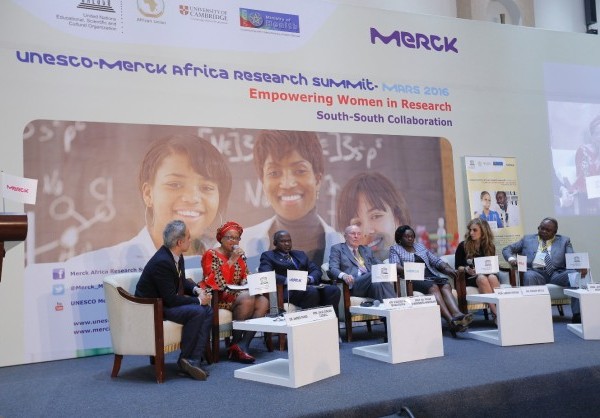
Leading science and technology company, Merck, has collaborated with UNESCO, African Union, Ethiopia Ministry of Health, University of Cambridge and Institute Pasteur International to reward the 2016 UNESCO–Merck Research Award winners.
The nine winners under two categories, ‘Best Young African Researchers Award’ and ‘Best African Women Researchers Award’, were announced during the 2nd UNESCO-MARS Summit 2016 held in Addis Ababa, Ethiopia.
“We are very happy to partner with UNESCO, African Union and Ethiopia Ministry of Health to achieve the important goals of improving women health and empowering women in research, as they are still under-represented in Africa,” Frank Stangenberg-Haverkamp, Chairman of the Executive Board and Family Board of E. Merck KG emphasized at the inauguration of the UNESCO-MARS 2016 Summit.
Yifru Berhane, Minister for Health in Ethiopia said, “We are very happy to partner with Merck, UNESCO and Africa Union to build research capacity in Africa with the focus on young researchers and women researchers and to define policies to enable high quality research in the continent”.
“This is the first time the UNESCO-MARS is launching the ‘Best African Woman Research Awards’ with the aim of promoting women in STEM (Science, Technology, Engineering and Mathematics) that has seen five women researchers from across Africa being recognised for the quality of their research.
“The awards are in line with this year’s UNESCO-MARS 2016 theme that supports empowering women in research and building research capacity in Francophone and Anglophone Africa to ultimately improve women health in the continent,” emphasized Rasha Kelej, Chief Social Officer, Merck Healthcare.
Beatrice Nyagol from Kenya Medical Research Institute was awarded the 1st Woman Researcher Award while Rogomenoma Ouedraogo from Laboratory of Biology and Molecular Genetics University, Burkina Faso received the 2nd Woman Researcher Award. The 3rd, 4th and 5th Woman Researcher Awards were granted to Sandrine Liabagui ep Assangaboua from Gabon; Maria Nabaggala from Infectious Diseases Institute, Uganda and Martha Zewdie of Armauer Hansen Research Institute, Ethiopia respectively.
The three categories of the ‘Best Young Researchers Award’ were given to two female and two male researchers with the 1st Award going to Patricia Rantshabeng from University of Botswana and the 2nd Award to Constantine Asahngwa from Cameroon. The 3rd Award were given to both; Tinashe Nyazika of University of Zimbabwe and Lamin Cham from the National Aids Control Program, Gambia.
“The awardees who are final PhD students and young investigators based at African research institutes and universities were selected based on the abstracts they submitted which were very impressive and related to Infectious Diseases with the aim to improve Women Health, which is the focus of UNESCO-MARS 2016,” emphasized Rasha Kelej.
UNESCO–MARS 2016 has brought together more than 200 researchers from more than 35 African countries to discuss the generation, sharing and dissemination of research data and to prepare for the road ahead in developing Africa as an international hub for research excellence and scientific innovation.
Of the 200 researchers attending the Summit, 60% are women. This is contributing to one of the main objectives of UNESCO-MARS, which is empowering women in research.
The Summit for the first time, is also addressing both Francophone and Anglophone Africa and has attracted researchers from 11 French speaking countries of Senegal, Rwanda, Gabon, Benin, Congo, Cameroon, Gambia, Burkina Faso, Morocco, Niger, Burundi. Researchers from English speaking countries are drawn from Namibia, South Africa, Ghana, Kenya, Zimbabwe, Nigeria, Sierra Leone, Zambia, Tanzania, Uganda, Malawi, Liberia, Botswana and Ethiopia. In addition, researchers from Arab speaking and Portuguese speaking countries such as Egypt, Angola and Mozambique are in attendance.
The 2nd UNESCO MARS Summit is providing a unique opportunity for Africa’s young and talented scientists to share their research output and findings with the top echelon of scientists from Africa and abroad. It is also an opportunity for networking and career development. The Summit is presenting a platform where young scientists are able to discuss the enabling environment for better research among others.
“The researchers attending the two-day Summit are benefiting from diverse and rich scientific sessions that are focusing on the relation between infectious diseases and cancer in women; untreated infectious diseases and the high prevalence of infertility in Africa; and participating in discussions to identify scientific research priorities for evolving health needs to address infectious diseases such as Malaria, Schistosomiasis and Zika in relation to women health,” Rasha Kelej emphasized.
The Summit theme of “Infectious Diseases and Women Health” is informed by the fact that for many infectious diseases, women are at higher risk and have a more severe course of illness than men for many reasons including biological differences, social inequities, and restrictive cultural norms. Therefore, efforts to recognize and reduce health disparities among women have particular relevance for global health,” Uganda Minister of State of Health, Sarah Opendi emphasized.
Up to 15 African ministers of Health; Education; Science and Technology and Gender & Social Development participated in two ministerial high level panels at the UNESCO-MARS 2016. The ministers in discussions committed to support the building of research capacity at country and regional level, and the development and enforcement of policies to guide and promote scientific research for the benefit of Africa. They also pledged to enhance efforts to empower women in research.
The first ministerial high level panel on “Defining interventions to advance research capacity and empower women in research to improve women health in Africa,” involved: Sarah Opendi, Minister of State of Health, Uganda; Idi Illiassou Mainassara, Minister of Public Health, Niger; Julia Cassell, Minister of Gender, Children and Social Development, Liberia; Jesús Engonga Ndong, Minister of Education & Science, Equatorial Guinea and Prof. Frank Stangenberg-Haverkamp, Chairman of Executive Board and Family Board of E.Merck KG.
The second ministerial panel on “Research and policy making gap in Africa – challenges and opportunities – Africa as a new international hub for research excellence and scientific innovation,” included: Prof. Yifru Berhane, Minister of Health, Ethiopia; Prof. Afework Kassu Gizaw, Minister of Science and Technology, Ethiopia; Dr. João Sebastião Teta, Secretary of State, Angola; Zuliatu Cooper, Deputy Minister of Health and Sanitation, Sierra Leone and Rashid Aman, Chairman, Kenya National Commission for UNESCO.
Education
Tinubu Renames PTDF College After Shehu Musa Yar’Adua
By Adedapo Adesanya
President Bola Tinubu has approved the renaming of the Petroleum Technology Development Fund (PTDF) College of Petroleum and Energy Studies, Kaduna, in honour of the late statesman, General Shehu Musa Yar’Adua, in a move aimed at preserving his legacy while strengthening Nigeria’s specialised energy education framework.
The PTDF announced that, following a presidential directive, the institution will now be known as the General Shehu Musa Yar’Adua University of Geological Sciences and Engineering Technology.
In a statement, the Fund said the renaming reflects the federal government’s recognition of Yar’Adua’s contributions to national unity and Nigeria’s democratic evolution.
The late statesman, who died in 1997, was a prominent Nigerian soldier, politician, and businessman. He served as the Chief of Staff, Supreme Headquarters, under General Olusegun Obasanjo’s military administration from 1977 to 1979. He was the elder brother of former Nigerian President Umaru Musa Yar’Adua.
“This historic renaming honours the enduring legacy of the late statesman, General Shehu Musa Yar’Adua, celebrating his profound contributions to national unity and the democratic journey of Nigeria,” the PTDF stated.
The institution, established to develop high-level manpower and technical expertise for Nigeria’s petroleum and energy industries, is expected to continue its academic and research activities without disruption despite the name change.
According to the PTDF, the university will maintain its focus on delivering advanced education, research and technology-driven solutions for the country’s oil, gas and emerging renewable energy sectors.
“The institution remains firmly committed to its mandate of delivering world-class research, specialised training, and cutting-edge engineering technology solutions to power Nigeria’s oil, gas, and renewable energy sectors,” the statement added.
The Fund further assured students, academic partners, industry stakeholders and development institutions that all existing programmes, collaborations and operational activities would continue seamlessly under the university’s new identity.
“All ongoing academic programs, partnerships, and operations continue uninterrupted under this new institutional identity,” PTDF said.
The renaming comes as Nigeria intensifies efforts to build local capacity and technical expertise to support energy transition goals, deepen indigenous participation in the petroleum industry and strengthen research-driven innovation across the energy value chain.
Education
Airtel Green Schools Initiative Births to Promote Sustainability Education in Nigeria
By Modupe Gbadeyanka
A sustainability-focused programme known as Airtel Green Schools has been launched by Airtel Africa Foundation, as part of activities to commemorate the 2026 World Environment Day, themed Climate Action.
The initiative will create environmental learning spaces in primary and secondary schools, with the spaces to be branded Airtel Garden.
Already, the company’s 10 adopted schools, located in nine states across the country’s six geopolitical zones, have been onboarded as Green Schools.
Each of the schools now features an Airtel Garden, with dedicated sections for edible crops, fruit trees and shade trees, enabling pupils to learn firsthand about food cultivation, biodiversity and the importance of increasing green cover to help mitigate the effects of climate change.
The gardens also incorporate composting stations where organic waste generated within the school environment can be converted into nutrient-rich compost. To boost circular economy practices, plastic recycling segments have also been built into repurpose common wastes such as plastic bottles and tyres.
The beneficiary schools of the programme include St. George’s Nursery and Primary School, Ipaja, Lagos; Yahaya Primary School, Zaria; Iyeru-Okin Primary School, Iyeru-Okin, Kwara; St. John Primary School, Ijebu Igbo, Ogun State, and Community Primary School, Amumara, Imo State.
Others are Presbyterian Primary School, Ediba, Cross-River; Migrant Farmers Community Primary School, Umuahia, Abia State; Gwange III Primary School, Maiduguri, Borno State; Mayflower Secondary School, Ikenne, Ogun State; and Government Day Primary School, Gombe State.
“We are excited to inaugurate Airtel Green Schools, which are designed to go beyond awareness and create real behavioural change within Nigeria’s school communities.
“Through the Restore, Reduce and Educate pillars, we are equipping young people with practical tools such as gardens, recycling awareness, and environmental learning resources.
“Our goal is to create a replicable Green School model that can be scaled and sustained over time, ensuring that environmental education becomes part of everyday learning for the children in our adopted schools,” the chairman of the foundation, Mr Segun Ogunsanya, stated.
Also speaking, the chief executive of Airtel Nigeria, Mr Dinesh Balsingh, said, “Climate action becomes meaningful when awareness is translated into action. Through the Airtel Garden, we are creating living classrooms where pupils can learn practical lessons about environmental stewardship, sustainable agriculture, waste management and the importance of protecting our planet.
“We believe that empowering young people with these experiences today will help shape a more environmentally responsible generation tomorrow.”
Education
Ex-UNILAG VC Prof Ogundipe Chairs NUC
By Modupe Gbadeyanka
A former Vice-Chancellor of the University of Lagos (UNILAG), Prof Oluwatoyin Temitayo Ogundipe, has been appointed as the chairman of the governing board of the National Universities Commission (NUC).
He was chosen for the role by President Bola Tinubu, according to a statement on Monday by the president’s Special Adviser on Information and Strategy, Mr Bayo Onanuga.
Prof Ogundipe succeeds Professor Olufemi Raphael Aina, who resigned his appointment after less than one year in office.
President Tinubu appointed Professor Aina in July last year, and the board members were inaugurated in November 2025.
As NUC Chairman, Prof Ogundipe will oversee the regulatory body of the Nigerian university system, focusing on funding, global competitiveness and academic stability.
He is expected to provide visionary leadership at the NUC and sustain the credibility of the Nigerian university system by advancing quality, access, and integrity in the education sector.
Prof Ogundipe headed the University of Lagos between 2017 and 2022. He is a professor of Botany with expertise in molecular plant taxonomy, biosystematics, ethnobotany, cytogenetics, forensic botany, and ecological conservation.
He holds a PhD in Botany from Obafemi Awolowo University and an MBA from the University of Lagos.
Currently, Prof Ogundipe, 66, serves as Pro-Chancellor of Redeemer’s University, Ede, Osun State.
He is a fellow of several professional bodies, including the Nigerian Academy of Science, the Linnaean Society of London, and the Royal Society of Biology, London. He has also served as President of the Botanical Society of Nigeria and Chairman of the Lagos State Science, Research and Innovation Council (LASRIC).
-
Feature/OPED6 years agoDavos was Different this year
-
Travel/Tourism10 years ago
Lagos Seals Western Lodge Hotel In Ikorodu
-
Showbiz3 years agoEstranged Lover Releases Videos of Empress Njamah Bathing
-
Banking8 years agoSort Codes of GTBank Branches in Nigeria
-
Economy3 years agoSubsidy Removal: CNG at N130 Per Litre Cheaper Than Petrol—IPMAN
-
Banking3 years agoSort Codes of UBA Branches in Nigeria
-
Banking3 years agoFirst Bank Announces Planned Downtime
-
Sports3 years agoHighest Paid Nigerian Footballer – How Much Do Nigerian Footballers Earn