Banking
Fidelity Bank Vows to Sustain Current Performance Trend as Share Price Jumps 35%
By Dipo Olowookere
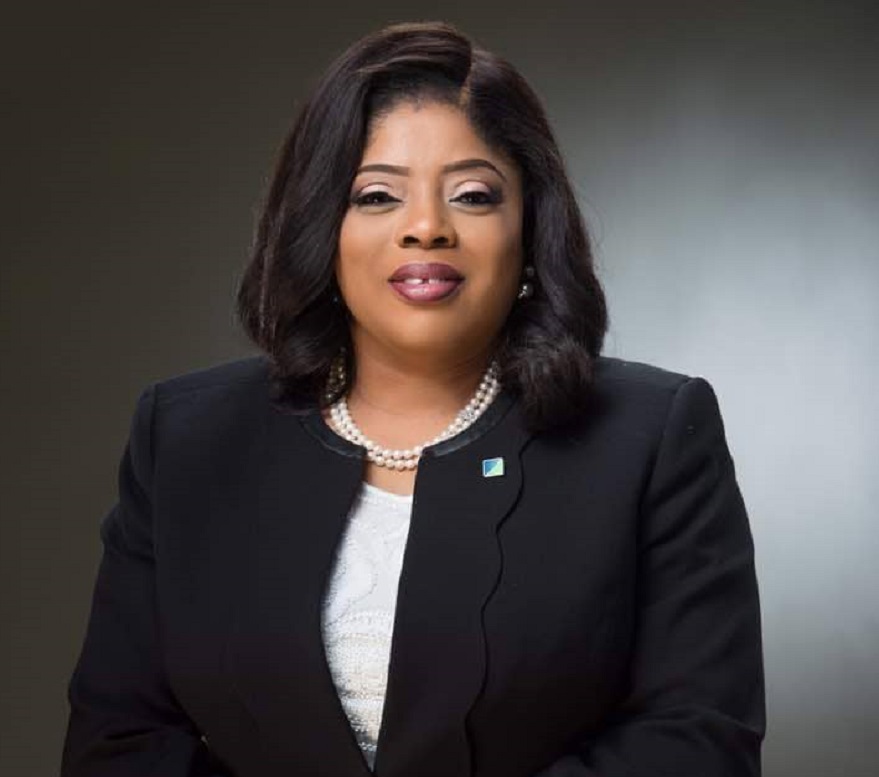
The Managing Director/Chief Executive Officer of Fidelity Bank Plc, Mrs Nneka Onyeali-Ikpe, has assured shareholders that the current performance trend of the lender would be sustained.
She gave this assurance while reacting to the sterling performance of the company in the 2021 financial year, where the firm posted double-digit growth in profit and across key balance-sheet lines.
In the year, Fidelity Bank closed with a 35.7 per cent leap in profit before tax as it reported N38.1 billion, while the gross earnings went up by 21.6 per cent to N250.8 billion, with 35 kobo proposed by the board as a dividend for shareholders.
It was observed that the increase in earnings was driven by a combination of 60.3 per cent growth in non-interest revenue (NIR) and a 15.2 per cent hike in interest and similar income.
The growth in NIR reflects the significant increase in customer transactions resulting in 84.9% growth in trade income, 48.1 per cent in account maintenance charge and 47.2 per cent increase in digital banking income.
Furthermore, the total interest and similar income increased by N26.8 billion, with total deposits rising by 19.2 per cent to N2.025 trillion from N1.699 trillion in 2020FY, and local currency deposits growing by 16.0 per cent, accounting for 80.3 per cent of the total deposits, while foreign currency deposits increased by 33.9 per cent, accounting for 19.7 per cent of the total deposits from 17.5 per cent in 2020FY.
Business Post reports that despite headwinds occasioned by the COVID-19 pandemic, the bank’s share price rose by 35 per cent between January 2021and April 01, 2022, placing it among the most actively traded stocks on the Nigerian bourse floor.
The performance of the Bank’s share price is a reflection of the high investor confidence in its strong fundamentals and leadership team.
For Mrs Onyeali-Ikpe, this “reflects the disciplined execution of our strategy and capacity to deliver superior returns to shareholders.”
She noted that in the year, “Digital Banking gained further traction driven by new initiatives in our retail business and the enhancement of existing digital banking products.
“We now have 56.0 per cent of our customers enrolled on the mobile/internet banking products and 90.0 per cent of total customer-induced transactions done on digital platforms with digital banking business contributing 27.6 per cent to net fee income.”
“My team and I are committed to achieving the long-term strategic objectives of Fidelity Bank while we look forward to sustaining the current performance trend and delivering a strong set of results for the 2022FY,” Mrs Onyeali-Ikpe promised.
Banking
We Now Pay Depositors of Failed Bank Within Days—NDIC
By Adedapo Adesanya
The Nigeria Deposit Insurance Corporation (NDIC) says depositors of failed banks in Nigeria can now access their insured funds within days.
The corporation said the development is a part of ongoing reforms aimed at strengthening confidence in the country’s financial system.
The chief executive of NDIC, Mr Thompson Sunday, disclosed this on Thursday at the NDIC Special Day of the 47th Kaduna International Trade Fair, noting that recent interventions had significantly improved the speed and efficiency of depositor compensation.
Represented by Mrs Regina Dimlong, the Assistant Director of Communications and Public Affairs, Mr Sunday said the corporation had successfully deployed the Bank Verification Number (BVN) system to facilitate prompt payments to customers of recently failed banks, including Heritage Bank Limited, Union Homes Plc and Aso Savings and Loans Plc.
“Depositors were paid within days of closure without the need to fill physical forms or visit NDIC offices.
“This is a part of our reform efforts to make depositor protection faster, simpler and more transparent,” he said.
According to him, the reforms were designed to restore public confidence in the banking system and prevent panic withdrawals, especially during periods of financial stress.
Mr Sunday explained that NDIC’s mandate spans deposit insurance, bank supervision, distress resolution and liquidation of failed banks, adding that the Corporation works closely with the Central Bank of Nigeria (CBN) to ensure early detection of risks in insured institutions.
He disclosed that in 2024, NDIC reviewed its deposit insurance framework, increasing coverage for depositors of Deposit Money Banks, Mobile Money Operators and Non-Interest Banks to N5 million, while customers of Microfinance Banks, Primary Mortgage Banks and Payment Service Banks are now covered up to N2 million.
He noted that the revised thresholds now guarantee full protection for about 99 per cent of depositors nationwide, particularly small savers and low-income earners.
The NDIC boss urged Nigerians to ensure their BVNs are properly linked to their bank accounts, stressing that this had become the primary channel for accessing insured deposits in the event of bank failure.
Banking
Nigeria Gets Permanent Seat on African Central Bank Board
By Adedapo Adesanya
Nigeria has secured a major strategic gain at the ongoing 39th African Union Summit, after securing a permanent seat on the board of the African Central Bank.
The Minister of Foreign Affairs, Mr Yusuf Tuggar, confirmed this at the summit on Friday, highlighting it as a significant milestone for both Nigeria and the West African region.
The African Central Bank (ACB) is one of the original five financial institutions and specialised agencies of the African Union (AU).
“Importantly, Nigeria has been given the hosting of the African Monetary Institute and the African Central Bank. Not only that, in today’s plenary, Nigeria was confirmed a seat on the board of the African Central Bank. This is huge,” he said.
He stated that the development represents a diplomatic breakthrough, mentioning that the move faced initial opposition from some member states.
“It is something that was initially resisted by some countries, so now we have a permanent seat on the African Central Bank board. It’s a major success,” he added.
This year’s summit carries the theme Assuring Sustainable Water Availability and Safe Sanitation Systems to Achieve the Goals of Agenda 2063, the sessions will focus on advancing continental commitments to sustainable water management and improved sanitation, critical pillars for health, agricultural productivity, and the broader development aspirations of the AU’s Agenda 2063 framework.
Beyond financial governance, Nigeria and the West African bloc also recorded progress in elections to the Peace and Security Council, the African Union’s highest decision-making body on conflict and security matters.
The delegation announced that “Côte d’Ivoire, Sierra Leone, and the Republic of Benin have been elected,” with Benin securing a fresh term while the other two countries were re-elected.
The Peace and Security Council also convened to deliberate on the situations in Sudan and Somalia. Nigeria voiced strong reservations over Sudan’s potential readmission into the continental body.
“Nigeria voiced its reservations about Sudan being readmitted because, as you know, there are two warring factions in Sudan,” Tuggar stated.
“We reminded the Peace and Security Council that we have to abide by the rules and regulations of the African Union. If there has been an unconstitutional change of government, then the country should not be allowed to participate, and that was carried.”
The summit also outlined its 2026 theme: water sustainability. The Nigerian representative underscored the country’s strategic and demographic significance in advancing that agenda.
“Nigeria was created out of the confluence of the River Niger and the River Benue. So water is very important,” he said.
“We are the largest country in Africa, with a population of 230 million people. We’re going to be 400 million in the next 24 years. So water is a source of life. It’s very important, and we’re playing a very pivotal role in implementing the programs that are being set for the theme of the year.”
Banking
Standard Bank Hosts 2nd African Markets Conference
By Modupe Gbadeyanka
The second African Markets Conference (AMC) will take place in Cape Town, South Africa, from Sunday, February to Tuesday, February 24, 2026.
The event, hosted by Standard Bank, will bring together global institutional investors, sovereign wealth funds, and African policymakers to catalyse the flow of capital into the continent’s most critical sectors.
The theme for this year’s edition is Mobilising Global Capital at Scale for Africa’s Growth and Development.
AMC 2026 will host a high-level delegation of decision-makers, ensuring that the dialogue leads to tangible commitments.
The conference will be structured around five high-impact pillars designed to move the needle on investment, including prioritising infrastructure as an asset class, accelerating the energy transition, deepening African capital markets and mobilising private capital, enabling intra-African trade and flows of capital, and addressing Africa’s sovereign debt and cost sustainability.
It is estimated that by 2050, Africa will add one billion people, more than half in cities, yet it invests only $75 billion of the $150 billion it needs annually for infrastructure. Standard Bank aims to use AMC 2026 to ensure that African priorities remain at the centre of the global financial discourse.
“This year’s engagement bridges the gap between policy ambitions and market realities. Africa urgently needs practical measures to deepen capital pools, improve market liquidity, and strengthen regulatory frameworks that give investors the confidence to deploy capital at scale.
“Mobilising capital is not just about funding projects; it is about building the foundation of a more balanced and inclusive global economy,” the chief executive of Corporate and Investment Banking at Standard Bank Group, Luvuyo Masinda, stated.
-
Feature/OPED6 years agoDavos was Different this year
-
Travel/Tourism10 years ago
Lagos Seals Western Lodge Hotel In Ikorodu
-
Showbiz3 years agoEstranged Lover Releases Videos of Empress Njamah Bathing
-
Banking8 years agoSort Codes of GTBank Branches in Nigeria
-
Economy3 years agoSubsidy Removal: CNG at N130 Per Litre Cheaper Than Petrol—IPMAN
-
Banking3 years agoSort Codes of UBA Branches in Nigeria
-
Banking3 years agoFirst Bank Announces Planned Downtime
-
Sports3 years agoHighest Paid Nigerian Footballer – How Much Do Nigerian Footballers Earn