

Economy
I’ll Change Recruitment Criteria at RUDN University—Rector

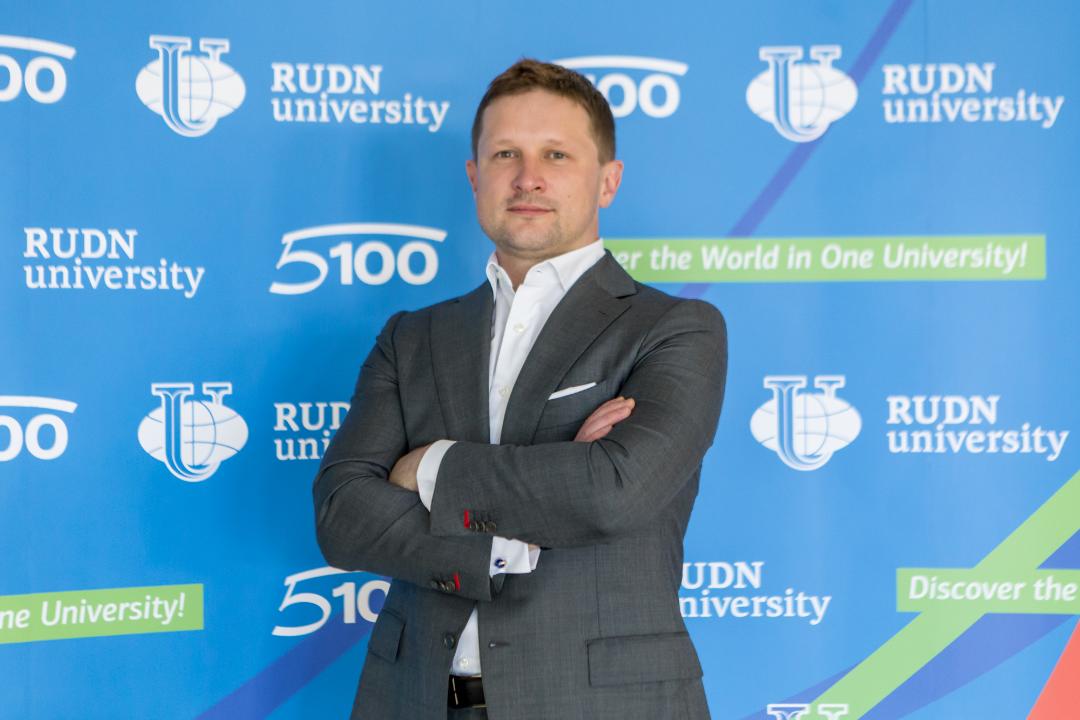
By Kester Kenn Klomegah
In an insightful long-ranging conversation, the newly appointed Rector of the RUDN University (Peoples’ Friendship University of Russia), Oleg Yastrebov, discusses the latest developments, educational reforms, and students’ enrollment as well as cultural diversity in his multinational university.
During his meeting with our Media Executive Kester Kenn Klomegah, Rector Oleg Yastrebov, particularly stressed the importance of effective monitoring and evaluation of students’ performances by the hard-working academic staff. He unreservedly argues that the university staff and academic teams provide the necessary knowledge and cutting-edge skills for young aspiring leaders and that makes the university first-class among many others in the Russian Federation.
RUDN University is an educational institution located in Moscow. Established in 1960, it primarily provides higher education to Third World students during the Soviet days. Many students, especially from developing countries, still come to this popular university from Latin America, Asia and Africa. It is Russia’s most multidisciplinary university, which boasts the largest number of foreign students and offers various academic disciplines. Here are the interview excerpts:
What are your remarks on the popular saying – a new leader, new management approach?
The previous rector of the RUDN University, who is now its president, Professor Vladimir Filippov, gathered a unique scientific and expert team. I am not a new person to them, as a graduate of the Peoples’ Friendship University of Russia – that is the full name for the RUDN University. I was the head of the Law Institute, so I am familiar with most of the teaching staff. All the administration of the university are all obliged to preserve and strengthen the achievements. We are the most international, the most multidisciplinary and the friendliest university in Russia. I am sure that with the arrival of new people in the team, the university will become even more ambitious, international, digital, and with a new approach to the quality of education. We are a modern university and we are ready to remain a dream university for many bright students.
Quite recently, you assumed the position of rector. What would you count as the marked achievements and success stories during these few years?
Over the past year, RUDN University has strengthened its position among the best universities in the world. We are the greenest university in Russia. More and more talented students are coming to us. Bright international students continue to enrol in RUDN – last year we had new students, for example, from Portugal and Lesotho. We have signed agreements with strong partners – Sistema (the largest Russian investing organization), Kaspersky Lab, and the European Medical Center. I would like to note separately that RUDN was the first in Russia to receive the right to validate and verify greenhouse gas emissions.
What are the current challenges and tasks as you take up the position of rector of the RUDN University?
The first priority is a new approach to recruitment criteria for teachers. These should be people with real professional practical achievements. A teacher who retells books is a transmitter of information, but not a source of new knowledge. We understand that it is important to move on to motivate students and to initiate startups in collaboration with employers. This direction, it creates a competitive environment among students and employers will be able to notice talented students even before their graduation.
We will continue to strengthen science at the university. We integrate successful educational technologies into the education process. We expand the network of partner universities. There is serious progress in a multilingual environment — all our graduates of bachelor’s programs speak at least one foreign language at a serious proficient level. The pan is to make two languages.
I would like to mention here that we updated the whole university environment. The campus is transformed – this is also an important factor for students. Co-working areas, sports and recreation spaces, and dormitory rooms are becoming more stylish and fashionable. It is interesting to say that 300 students have already moved into the rooms in the new design. In fact, 450 rooms are being transformed for the new semester. RUDN was the first university in Russia to open the first multifunctional student centre, where you can get all the basic documents about studying. The process will take just 5-15 minutes.
On the other hand, what do you suggest as significant steps to raise the cultural profile among students who have come from different countries?
RUDN worthily preserves long-standing traditions: weeks of national cultures for instance, and we signed the Declaration of Tolerance. We have more than 100 community organizations and international study groups. We have active students who help freshmen to adapt to the new study and living conditions. There is a volunteer centre of more than 200 volunteers — this is a kind of international student office, which helps foreign students adapt to living in Russia. Their work is based on the principle “Buddy For Each Foreigner”. Each foreign student is assigned a Russian curator friend. The curator is in touch and ready to help out a foreign ward in any situation — from “I am lost” to “help me with this home task”. In addition, students arrange informal meetings, where they get acquainted with fellow countrymen, make friends, and help each other with their academic studies.
What are the peculiarities of running an educational institution such as the RUDN University, especially in a liberal market economy?
Approximately 70% of the budget the University earns itself. This is not only educational activity but also additional professional education, and income from science. Mainly, the income is generated by physical and mathematical sciences, chemistry, mathematics, and the Institute of Innovative Engineering Technologies. Humanities mainly work on a grant basis, it provides all kinds of scientific advisory services.
What is the competitive edge of RUDN University? What advantages does it have over other similar educational institutions in the Russian Federation?
RUDN is the most multidisciplinary university in Russia. A student can choose from 446 directions. Here you can get technical, scientific, medical, economic, and humanitarian education. Engineers, lawyers, doctors, diplomats, financiers, agrarians, physicists, mathematicians, linguists, and journalists are educated at the RUDN.
RUDN has the strongest language school. By studying languages, students receive an extra diploma of a translator. A student can choose from 12 foreign languages to study: European, Oriental or Russian as a foreign language.
RUDN has all the conditions to do science. We have more than 200 laboratories, more than 40 scientific and scientific-educational centres with modern equipment, annual scientific conferences, grants, scholarships, and joint research projects with leading foreign universities.
What can you say about the system of education and training, particularly for foreigners, as well as regular educational exchanges as a means of forging closer relations with the university?
RUDN is an international university. Representatives from 160 countries study here. We have an established system for recruiting foreign students. We interact with applicants from Asia, Africa, and Latin America directly through Olympiads, our pre-university classes and training centres.
Last year, 4,395 foreigners enrolled at RUDN University. This is almost 500 people more than was previously planned. Most of all – on “Medicine”, “Dentistry”, “International Relations”. Egypt, Zambia and Nigeria were among the top three (3) African countries in terms of the numerical strength of international students.
We have exchange and internship programs, double degree programs in cooperation with foreign universities, international conferences, and summer schools. The geography of educational and scientific cooperation of the RUDN is extensive: more than 250 agreements have been signed with educational institutions of the Commonwealth of Independent States (CIS) and Europe, Asia and the Middle East, Africa and Latin America. Since 2007, graduates have received a European Diploma Supplement, which is recognized worldwide.
What keeps you motivated as a rector in this educational environment? Who are some of the most notable people, besides Russians, that you have interacted with during your work at the RUDN University?
Students motivate me a lot especially when I see their success in scientific, educational, sports and creative fields. Besides students, I am also highly motivated by my colleagues who sacrifice a lot, devote their energy and considerable time to perform their work effectively, efficiently and conscientiously.
By all appearances – education and professional skills training – are aspects of diplomacy. Do you think that the youth should be involved in this public diplomacy?
Without mincing words, the youth is our future. The whole development and technological progress depend on them – the present young generation. Therefore, at RUDN we teach them to become professional leaders in various fields, equip them with the necessary skills, and help them to acquire the knowledge of communication internationally.


