Connect with us

Economy

I’ll Change Recruitment Criteria at RUDN University—Rector

Published

on

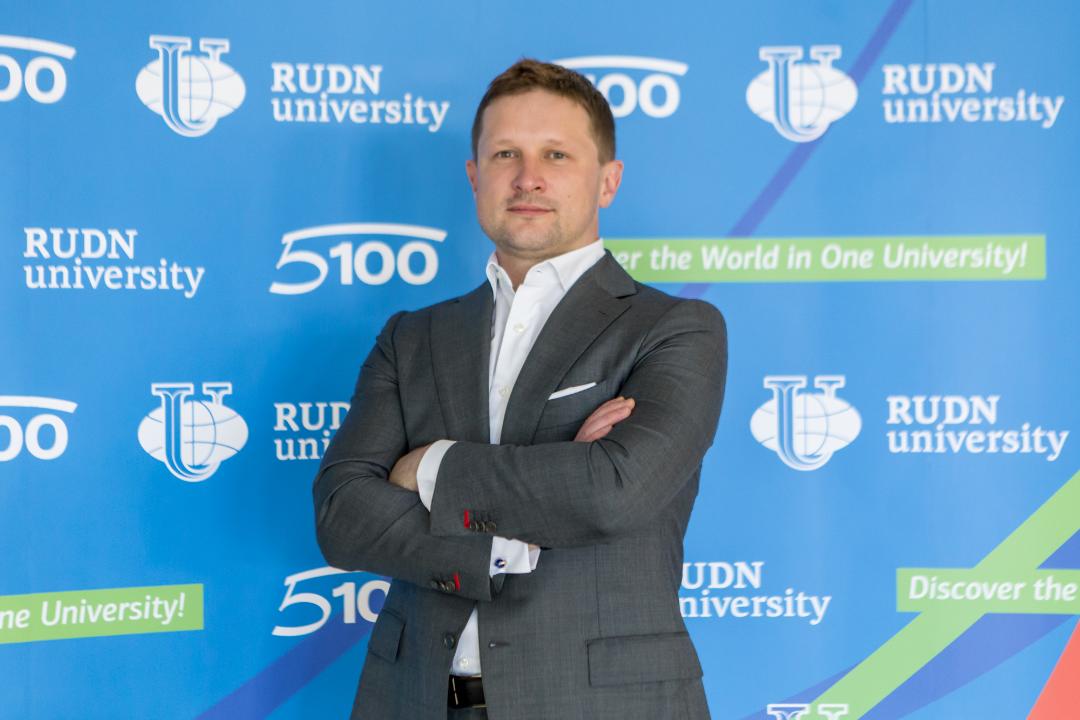
Oleg Yastrebov Rector RUDN University

By Kester Kenn Klomegah

In an insightful long-ranging conversation, the newly appointed Rector of the RUDN University (Peoples’ Friendship University of Russia), Oleg Yastrebov, discusses the latest developments, educational reforms, and students’ enrollment as well as cultural diversity in his multinational university.

During his meeting with our Media Executive Kester Kenn Klomegah, Rector Oleg Yastrebov, particularly stressed the importance of effective monitoring and evaluation of students’ performances by the hard-working academic staff. He unreservedly argues that the university staff and academic teams provide the necessary knowledge and cutting-edge skills for young aspiring leaders and that makes the university first-class among many others in the Russian Federation.

RUDN University is an educational institution located in Moscow. Established in 1960, it primarily provides higher education to Third World students during the Soviet days. Many students, especially from developing countries, still come to this popular university from Latin America, Asia and Africa. It is Russia’s most multidisciplinary university, which boasts the largest number of foreign students and offers various academic disciplines. Here are the interview excerpts:

What are your remarks on the popular saying – a new leader, new management approach?

The previous rector of the RUDN University, who is now its president, Professor Vladimir Filippov, gathered a unique scientific and expert team. I am not a new person to them, as a graduate of the Peoples’ Friendship University of Russia – that is the full name for the RUDN University. I was the head of the Law Institute, so I am familiar with most of the teaching staff. All the administration of the university are all obliged to preserve and strengthen the achievements. We are the most international, the most multidisciplinary and the friendliest university in Russia. I am sure that with the arrival of new people in the team, the university will become even more ambitious, international, digital, and with a new approach to the quality of education. We are a modern university and we are ready to remain a dream university for many bright students.

Quite recently, you assumed the position of rector. What would you count as the marked achievements and success stories during these few years?

Over the past year, RUDN University has strengthened its position among the best universities in the world. We are the greenest university in Russia. More and more talented students are coming to us. Bright international students continue to enrol in RUDN – last year we had new students, for example, from Portugal and Lesotho. We have signed agreements with strong partners – Sistema (the largest Russian investing organization), Kaspersky Lab, and the European Medical Center. I would like to note separately that RUDN was the first in Russia to receive the right to validate and verify greenhouse gas emissions.

What are the current challenges and tasks as you take up the position of rector of the RUDN University?

The first priority is a new approach to recruitment criteria for teachers. These should be people with real professional practical achievements. A teacher who retells books is a transmitter of information, but not a source of new knowledge. We understand that it is important to move on to motivate students and to initiate startups in collaboration with employers. This direction, it creates a competitive environment among students and employers will be able to notice talented students even before their graduation.

We will continue to strengthen science at the university. We integrate successful educational technologies into the education process. We expand the network of partner universities. There is serious progress in a multilingual environment — all our graduates of bachelor’s programs speak at least one foreign language at a serious proficient level. The pan is to make two languages.

I would like to mention here that we updated the whole university environment. The campus is transformed – this is also an important factor for students. Co-working areas, sports and recreation spaces, and dormitory rooms are becoming more stylish and fashionable. It is interesting to say that 300 students have already moved into the rooms in the new design. In fact, 450 rooms are being transformed for the new semester. RUDN was the first university in Russia to open the first multifunctional student centre, where you can get all the basic documents about studying. The process will take just 5-15 minutes.

On the other hand, what do you suggest as significant steps to raise the cultural profile among students who have come from different countries?

RUDN worthily preserves long-standing traditions: weeks of national cultures for instance, and we signed the Declaration of Tolerance. We have more than 100 community organizations and international study groups. We have active students who help freshmen to adapt to the new study and living conditions. There is a volunteer centre of more than 200 volunteers — this is a kind of international student office, which helps foreign students adapt to living in Russia. Their work is based on the principle “Buddy For Each Foreigner”. Each foreign student is assigned a Russian curator friend. The curator is in touch and ready to help out a foreign ward in any situation — from “I am lost” to “help me with this home task”. In addition, students arrange informal meetings, where they get acquainted with fellow countrymen, make friends, and help each other with their academic studies.

What are the peculiarities of running an educational institution such as the RUDN University, especially in a liberal market economy?

Approximately 70% of the budget the University earns itself. This is not only educational activity but also additional professional education, and income from science. Mainly, the income is generated by physical and mathematical sciences, chemistry, mathematics, and the Institute of Innovative Engineering Technologies. Humanities mainly work on a grant basis, it provides all kinds of scientific advisory services.

What is the competitive edge of RUDN University? What advantages does it have over other similar educational institutions in the Russian Federation?

RUDN is the most multidisciplinary university in Russia. A student can choose from 446 directions. Here you can get technical, scientific, medical, economic, and humanitarian education. Engineers, lawyers, doctors, diplomats, financiers, agrarians, physicists, mathematicians, linguists, and journalists are educated at the RUDN.

RUDN has the strongest language school. By studying languages, students receive an extra diploma of a translator. A student can choose from 12 foreign languages to study: European, Oriental or Russian as a foreign language.

RUDN has all the conditions to do science. We have more than 200 laboratories, more than 40 scientific and scientific-educational centres with modern equipment, annual scientific conferences, grants, scholarships, and joint research projects with leading foreign universities.

What can you say about the system of education and training, particularly for foreigners, as well as regular educational exchanges as a means of forging closer relations with the university?

RUDN is an international university. Representatives from 160 countries study here. We have an established system for recruiting foreign students. We interact with applicants from Asia, Africa, and Latin America directly through Olympiads, our pre-university classes and training centres.

Last year, 4,395 foreigners enrolled at RUDN University. This is almost 500 people more than was previously planned. Most of all – on “Medicine”, “Dentistry”, “International Relations”. Egypt, Zambia and Nigeria were among the top three (3) African countries in terms of the numerical strength of international students.

We have exchange and internship programs, double degree programs in cooperation with foreign universities, international conferences, and summer schools. The geography of educational and scientific cooperation of the RUDN is extensive: more than 250 agreements have been signed with educational institutions of the Commonwealth of Independent States (CIS) and Europe, Asia and the Middle East, Africa and Latin America. Since 2007, graduates have received a European Diploma Supplement, which is recognized worldwide.

What keeps you motivated as a rector in this educational environment? Who are some of the most notable people, besides Russians, that you have interacted with during your work at the RUDN University?

Students motivate me a lot especially when I see their success in scientific, educational, sports and creative fields. Besides students, I am also highly motivated by my colleagues who sacrifice a lot, devote their energy and considerable time to perform their work effectively, efficiently and conscientiously.

By all appearances – education and professional skills training – are aspects of diplomacy. Do you think that the youth should be involved in this public diplomacy?

Without mincing words, the youth is our future. The whole development and technological progress depend on them – the present young generation. Therefore, at RUDN we teach them to become professional leaders in various fields, equip them with the necessary skills, and help them to acquire the knowledge of communication internationally.


Click to comment

Leave a Reply

Your email address will not be published. Required fields are marked *

Economy

LCCI Urges FG to Fix Manufacturing Bottlenecks, Stabilise Economy

Published

on

Industrial Manufacturing

By Adedapo Adesanya

The Lagos Chamber of Commerce and Industry (LCCI) has urged the federal government to prioritise reforms that address constraints in the manufacturing sector as it tackles broader macroeconomic and fiscal challenges facing the Nigerian economy.

President of LCCI, Mr Leye Kupoluyi, gave the advice on Thursday in Lagos, at the chamber’s quarterly state of the nation’s economy news conference.

He stated that the manufacturing sector remained a critical driver of revenue and industrial growth, citing a strong performance in 2025.

Mr Kupoluyi noted that the sector contributed N1.17 trillion in Value Added Tax (VAT), representing a 45.61 per cent increase from N803.53 billion recorded in 2024, adding that the Company Income Tax (CIT) from the sector rose to N881.29 billion, up by 32.83 per cent from N663.46 billion in the previous year.

“This strong year-on-year growth reinforces the sector’s expanding role in generating government revenue and in Nigeria’s industrial development.

“Following these results, we call on the government to invest more in productive infrastructure and economic policies that drive growth through job creation, lower production costs, and fiscal interventions,” he said.

On the global terrain, the LCCI president noted that the global economy remained unsettled, shaped by geopolitical tensions, supply chain disruptions and monetary tightening in advanced economies.

He said these trends had sustained inflationary pressures globally, while exposing emerging markets, including Nigeria, to capital outflows and currency volatility.

Mr Kupoluyi noted that Nigeria had benefited from high crude oil prices, warned against mismanaging the resulting windfall, urging the government to channel oil revenues into the Sovereign Wealth Fund, critical infrastructure and diversification initiatives to reduce import dependence and support long-term growth.

On monetary policy, the chamber’s president commended the Central Bank of Nigeria’s Monetary Policy Committee for reducing the Monetary Policy Rate by 50 basis points to 26.5 per cent at its February meeting.

He described the move as a cautious but important shift, reflecting growing confidence amid improvements in inflation and external sector performance.

Mr Kupoluyi also highlighted improvements in the foreign exchange market, noting that the naira had shown relative stability and appreciated to about N1,350.79 to the Dollar in the official market.

He said the performance reflects improved liquidity, investor confidence and the impact of ongoing reforms, but called for stronger policy coordination, increased FX inflows and fiscal discipline to sustain stability.

On fiscal operations, the LCCI president raised concerns over weak capital budget implementation, citing the rollover of N7.71 trillion in unexecuted 2025 capital projects.

He said delays in fund releases, bureaucratic bottlenecks and inefficiencies had continued to undermine project delivery and strain contractors.

He urged the government to develop a more effective framework for capital budget releases to ensure timely funding and execution of projects.

Addressing the oil and gas sector, Mr Kupoluyi welcomed the ongoing reform efforts aimed at boosting crude oil production and improving regulatory processes.

He called for a fully digital regulatory ecosystem to enhance transparency, accelerate approvals and restore investor confidence.

The official added that high global oil prices presented an opportunity for Nigeria to strengthen its position as a major supplier, provided local production and refining capacities are improved.

The LCCI president, however, expressed concern over high import duties on paper, printing materials and related inputs, noting that the policy had increased production costs across several value chains.

“The situation is worsened by port delays, multiple regulatory checks and inconsistent tariff classifications.

The chamber also called for a review of import duties, integration of regulatory agencies into the National Single Window and measures to reduce cargo clearance timelines.

“A balanced policy mix of moderate tariffs, support for local production and stable macroeconomic conditions would enhance industrial growth and reduce business costs,” he said.

He also reiterated its commitment to continued engagement with government and stakeholders to promote policies that support a thriving business environment.

Continue Reading

Economy

NASD Index Gains 0.16% to Again Rise Above 4,000 Points

Published

on

NASD OTC securities exchange

By Adedapo Adesanya

The NASD Over-the-Counter (OTC) Securities Exchange rose by 0.16 per cent on Thursday, April 29, with the Unlisted Security Index (NSI) returning above the 4,000-point mark after chalking up 6.55 points to settle at 4,005.78 points compared with the previous day’s 3,999.23 points.

During the trading session, the market capitalisation of the platform went up by N3.92 billion to close at N2.396 trillion, in contrast to the N2.392 trillion it ended on Wednesday.

The upliftment of the alternative stock market was influenced by the gains posted by four securities, which offset the losses printed by two securities.

According to data, Central Securities Clearing System (CSCS) Plc chalked up N4.03 to close at N76.02 per share versus the preceding session’s N71.99 per share, Food Concepts Plc appreciated by 24 Kobo to N2.67 per unit from N2.43 per unit, UBN Property Plc climbed 20 Kobo to trade at N2.23 per share versus N2.03 per share, and Geo-Fluids Plc improved by 9 Kobo to N3.00 per unit from N2.91 per unit.

On the flip side, MRS Oil Plc lost N17.65 to end at N178.10 per share compared with the previous price of N195.75 per share, and FrieslandCampina Wamco Nigeria Plc dipped by N9.76 to N90.24 per unit from N100.00 per unit.

The volume of securities traded during the trading day went up by 184.3 per cent to 877,682 units from 308,698 units, the value of securities jumped 5.7 per cent to N26.7 million from N25.2 million, and the number of deals soared by 100 per cent to 56 deals from 28 deals.

Great Nigeria Insurance (GNI) Plc remained the most traded stock by value (year-to-date) with 3.4 billion units worth N8.4 billion, followed by CSCS Plc with 60.1 million units exchanged for N4.1 billion, and Okitipupa Plc with 27.8 million units traded for N1.9 billion.

GNI Plc also closed as the most active stock by volume (year-to-date) with 3.4 billion units sold for N8.4 billion, followed by Resourcery Plc with 1.1 billion units worth N415.7 million, and Infrastructure Guarantee Credit Plc with 400 million units transacted for N1.2 billion.

The market will be closed on Friday, May 1, for Workers’ Day celebration.

Continue Reading

Economy

Naira Appreciates to N1,374/$ at NAFEX

Published

on

Naira-Dollar exchange rate gap

By Adedapo Adesanya

The Naira, in the Nigerian Autonomous Foreign Exchange Market (NAFEX) on Thursday, April 3, further appreciated against the United States Dollar by N4.52 or 0.33 per cent to N1,374.94/$1 from N1,379.46/$1.

Equally, the domestic currency gained against the Pound Sterling in the official market by N3.34 during the session to close at N1,858.24/£1 compared to the previous rate of N1,861.58/£1, and against the Euro, it improved by N5.29 to sell at N1,607.58/€1 versus N1,612.87/€1.

At the GTBank FX counter, the Nigerian Naira gained N4 against the Dollar to settle at N1,384/$1 versus Wednesday’s closing price of N1,389/$1, and at the parallel market, it improved by N5 to trade at N1,385/$1 compared with the N1,390/$1 it was transacted a day earlier.

Nigeria’s external reserves, which provide the Central Bank of Nigeria (CBN) with a buffer to support the Naira, continued their downward trend, declining to $48.36 billion as of April 29, 2026, according to data.

Market activity weakened sharply, with the NAFEM recording zero deals on Thursday, down from 393 deals on Wednesday. Total turnover in the official window also dropped from $802.44 million to zero, underscoring a severe liquidity squeeze.

Thursday’s price formation was driven entirely by the interbank segment, where turnover also fell significantly to $58.03 million from $249.91 million, suggesting that liquidity pressures extended across the broader FX market.

As for the cryptocurrency market, prices were up amid looming US inflation data, while high oil prices and rising bond yields weigh on risk assets.

The appreciation faces headwinds in the form of US March PCE inflation, which lands as oil prices keep pressure on risk assets, as well as reduced traffic through the Strait of Hormuz, which has kept energy markets fragile.

Dogecoin (DOGE) rose by 1.8 per cent to trade at $0.1082, Bitcoin (BTC) appreciated to $76,987.59, Ethereum (ETH) grew by 1.2 per cent to $2,276.11, Cardano (ADA) added 1.1 per cent to close at $0.2484, and Solana (SOL) soared by 1.1 per cent to $83.89.

Further, TRON (TRX) increased by 0.7 per cent to $0.3224, Ripple (XRP) jumped 0.4 per cent to $1.37, and Binance Coin (BNB) expanded by 0.2 per cent to $616.67, while the US Dollar Tether (USDT) and the US Dollar Coin (USDC) closed flat at $1.00 each.

Continue Reading

Trending