Connect with us

Economy

Nigeria Exits Global Tax Deal over Unreliability, Profit Reallocation Issues

Published

on

Tax Waiver

By Adedapo Adesanya

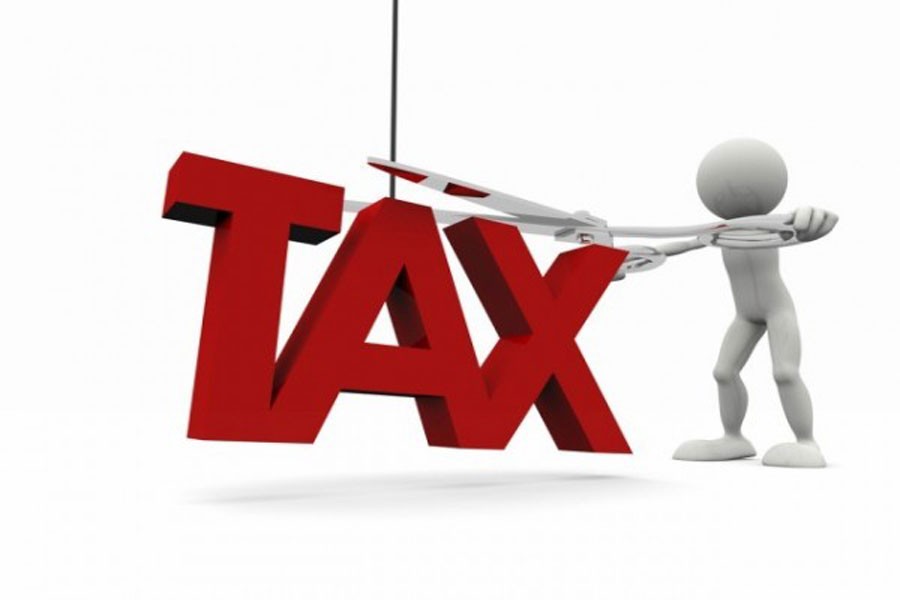
Nigeria has opted out of a global tax deal negotiated under the Organisation of Economic Cooperation and Development (OEDC)/G20 Inclusive Framework on Base Erosion and Profit Shifting (BEPS).

According to ThisDay Newspaper, Nigeria is one of the four countries alongside its African counterpart, Kenya as well as Pakistan and Sri Lanka that exited the deal.

For context, BEPS refers to corporate tax planning strategies used by multinationals to shift profits from higher tax jurisdictions to lower tax jurisdictions or no-tax locations where there is little or no economic activity, thereby eroding the tax base of the higher-tax jurisdictions using deductible payments such as interest or royalties.

Nigeria’s position was predicated, among others, on the unreliability of the economic impact of the deal for developing countries.

The OECD estimates that countries lose $100-$240 billion worth of revenue annually to BEPS practices, which is the equivalent to 4-10 per cent of the global corporate income tax revenue.

The deal set out to introduce a global minimum tax rate and new profit reallocation rules, which aim to give countries a fairer chance to collect tax revenues from multinational enterprises (MNEs) operating in or generating revenues from their jurisdictions.

In a new report titled, OECD Global Tax Deal: Key Elements, Opportunities and Challenges, Global Financial Integrity (GFI) stated that the framework represents a group of countries and jurisdictions working together to address systemic issues within the global taxation system that cause an inequitable distribution of tax revenues among countries and jurisdictions.

It operates under the leadership of the OECD, but any country or jurisdiction is allowed to join and participate.

The global tax deal represents a major reform to the rules governing the international tax system, aimed at bringing an end to tax havens and profit-shifting by multinational enterprises.

The deal specifically aims to address challenges that arise from the digitalisation of the economy and is broken down into two pillars.

Pillar 1 aims to reallocate multinationals’ profits and taxing rights to market jurisdictions while Pillar 2 introduces a global minimum tax rate.

The Inclusive Framework releases the blueprints for the two-pillar solution to address tax challenges arising from the digitalisation of the economy.

A total of 140 tax jurisdictions were part of the Inclusive Framework when the negotiations commenced, the report highlighted.

After the conclusion of the high-level agreement in October 2021, Mauritania joined the Inclusive Framework as the 141st member in November and also agreed to the two-pillar statement.

In total, 137 of the 141 member jurisdictions have agreed to the two-pillar solution while Kenya, Nigeria, Pakistan and Sri Lanka opted out.

However, Nigeria expressed concern with Pillar 1 particularly, claiming that the OECD’s assessment of the economic impact on developing countries was unreliable.

Also, the mandatory dispute resolution element was one of the reasons for Kenya and Nigeria to disapprove of the deal because of concerns around losing sovereignty due to tax issues having to be resolved in residence countries.

Although Nigeria made no disclosures of its own calculations on potential revenue, its conclusion was that it was not worth the high cost of implementation.

Some of the concerns around the deal and reasons why Nigeria and the other countries rejected it included: Lack of transparency in negotiations, exclusion of the majority of developing countries, the issue of too many MNEs out of scope, and limited impact on developing countries, among others.

According to the report, although the agreement was negotiated under the Inclusive Framework, a substantive part of the process was carried out within the G7 and G20.

This in turn made the process less transparent and gives rise to the concern that smaller and less rich countries were not given equal participation.

The newspaper also reported that the deal also excludes companies working in the extractives industry, although this sector has been flagged to be more susceptible to illicit financial flows.

Similarly, although the Inclusive Framework allows all interested jurisdictions and countries to become members, there are conditions and annual fees they have to commit to in order to join.

The majority of African (52 per cent) and Least Developed (78 per cent) countries have not joined the framework.


Adedapo Adesanya is a journalist, polymath, and connoisseur of everything art. When he is not writing, he has his nose buried in one of the many books or articles he has bookmarked or simply listening to good music with a bottle of beer or wine. He supports the greatest club in the world, Manchester United F.C.

Advertisement
Click to comment

Leave a Reply

Your email address will not be published. Required fields are marked *

Economy

Customs Street Chalks up 1.08% on Renewed Buying Pressure

Published

on

Customs Street NGX

By Dipo Olowookere

A 1.08 per cent growth was further printed by the Nigerian Exchange (NGX) Limited on Friday on improved appetite for Nigerian stocks.

Data showed that the insurance sector lost 0.61 per cent yesterday due to profit-taking as the energy space gave up 0.08 per cent, while the commodity counter closed flat.

However, the industrial goods landscape appreciated by 2.06 per cent, the banking index improved by 1.31 per cent, and the consumer goods sector expanded by 0.83 per cent.

At the close of business on Customs Street, the All-Share Index (ASI) increased by 1,563.92 points to 147,040.07 points from 145,476.15 points and the market capitalisation went up by N996 billion to N93.722 trillion from N92.726 trillion.

UAC Nigeria led the advancers’ log yesterday after it grew by 10.00 per cent to N96.80, Transcorp Hotels jumped by 9.71 per cent to N172.80, Royal Exchange appreciated by 8.89 per cent to N1.96, Ikeja Hotel soared by 8.74 per cent to N31.10, and Veritas Kapital leapt by 8.07 per cent to N1.74.

On the flip side, Union Dicon declined by 10.00 per cent to N6.30, ABC Transport slipped by 9.88 per cent to N3.10, AXA Mansard depreciated by 7.19 per cent to N12.90, FTN Cocoa lost 4.62 per cent to trade at N4.75, and Guinea Insurance dropped 3.36 per cent to finish at N1.15.

A total of 38 stocks ended on the gainers’ table and 17 stocks finished on the losers’ table, representing a positive market breadth index and strong investor sentiment.

Traders transacted 361.6 million equities for N14.8 billion in 21,051 deals yesterday versus the 1.9 billion equities worth N19.2 billion traded in 23,369 deals a day earlier, showing a decline in the trading volume, value, and number of deals by 80.97 per cent, 22.92 per cent, and 14.20 per cent, respectively.

The busiest stock for the session was Zenith Bank with 59.5 million units worth N3.6 billion, Access Holdings traded 46.1 million units valued at N973.0 million, Fidelity Bank exchanged 29.4 million units for N560.4 million, FCMB transacted 27.9 million units worth N293.9 million, and Tantalizers sold 13.0 million units valued at N29.8 million.

Continue Reading

Economy

Nipco, 11 Plc Crash OTC Securities Exchange by 4.76%

Published

on

NIPCO LPG Depot

By Adedapo Adesanya

Energy stocks influenced the 4.76 per cent loss recorded by the NASD Over-the-Counter (OTC) Securities Exchange on Friday, December 5.

The culprits were the duo of 11 Plc and Nipco Plc,with the former shedding N32.17 to end at N291.83 per share compared with the previous day’s N324.00 per share, and the latter down by N21.00 to sell at N195.00 per unit versus the previous session’s N216.00 per unit.

Consequently, the NASD Unlisted Security Index (NSI) slumped by 170.16 points to 3,401.37 points from 3,571.53 points and the market capitalisation lost N101.81 billion to close at N2.035 billion from the N2.136 trillion quoted in the preceding session.

The OTC securities exchange suffered the decline yesterday despite the share prices of three companies closing green.

Central Securities Clearing System (CSCS) Plc was up by N1.80 to close at N39.80 per share compared with Thursday’s price of N38.00 per share, Air Liquide Plc appreciated by N1.09 to N11.99 per unit from N10.90 per unit, and FrieslandCampina Wamco Nigeria Plc grew by 78 Kobo to N56.57 per share from N55.79 per share.

During the session, the volume of transactions rose by 6,885.3 per cent to 18.2 million units from 4.3 million units, the value of transactions ballooned by 10,301.7 per cent to N389.7 million from N347.2 million, but the number of deals declined by 29.7 per cent to 26 deals from 37 deals.

Infrastructure Credit Guarantee Company (InfraCredit) Plc ended the day as the most traded stock by value on a year-to-date basis with 5.8 billion units worth N16.4 billion, followed by Okitipupa Plc with 170.4 million units valued at N8.0 billion, and Air Liquide Plc with 507.5 million units worth N4.2 billion.

InfraCredit Plc also finished the day as the most traded stock by volume on a year-to-date basis with 5.8 billion units transacted for N16.4 billion, followed by Industrial and General Insurance (IGI) Plc with 1.2 billion units sold for N420.2 million, and Impresit Bakolori Plc with 536.9 million units worth N524.9 million.

Continue Reading

Economy

Naira Depreciates to N1,450/$1 at Official Forex Market

Published

on

Naira-Dollar exchange rate gap

By Adedapo Adesanya

The Naira depreciated further against the US Dollar in the Nigerian Autonomous Foreign Exchange Market (NAFEX) on Friday, December 5, as FX demand pressure mounts.

The Nigerian currency lost N2.60 or 0.18 per cent against the greenback to close at N1,450.43/$1 compared with the previous day’s N1,447.83/$1.

Equally, the domestic currency declined against the Pound Sterling in the official forex market during the session by N4.48 to trade at N1,935.45/£1, in contrast to Thursday’s closing price of N1,930.97/£1 and shrank against the Euro by 43 Kobo to end at N1,689.17/€1 versus the preceding session’s rate of N1,688.74/€1.

Similarly, the local currency performed badly against the US Dollar at the GTBank FX counter by N2 to close at N1,455/$1 versus Thursday’s N1,453/$1 but traded flat at the parallel market at N14.65/$1.

As the country gets into the festive period, pressure mounted on the local currency reflecting higher foreign payments and lower FX inflows.

However, there are expectations that the Nigerian currency will be stable, supported by interventions by to the Central Bank of Nigeria (CBN) in the face of steady dollar Demand and inflows from Detty December festivities that will give the Naira a boost after it depreciated mildly last month.

Traders cited by Reuters expect that the Naira will trade within a band of N1,443-N1,450/$1 next week, buoyed by improved FX interventions by the apex bank.

As for the crypto market, it was down yesterday due to profit-taking associated with year-end trading. However, the December 1-Year Consumer Inflation Expectation by the University of Michigan fell to 4.1 per cent from 4.5 per cent previously and 4.5 per cent expected. The 5-Year Consumer Inflation Expectation fell to 3.2 per cent from 3.4 per cent previously and 3.4 per cent expected.

With the dearth of official economic data of late, these private surveys have taken on a new level of significance and the market banks of them to make decisions.

Cardano (ADA) depreciated by 5.7 per cent to $0.4142, Dogecoin (DOGE) slid by 5.1 per cent to $0.1394, Ethereum (ETH) dropped by 3.9 per cent to $3,039.75, Solana (SOL) declined by 3.8 per cent to $133.24, and Litecoin (LTC) fell by 3.7 per cent to $80.59.

Further, Bitcoin (BTC) went down by 2.6 per cent to sell at $89,683.72, Binance Coin (BNB) slumped by 2.2 per cent to $883.59, and Ripple (XRP) shrank by 2.1 per cent to $2.04, while the US Dollar Tether (USDT) and the US Dollar Coin (USDC) remained unchanged at $1.00 each.

Continue Reading

Trending