Health
Explainer: What is Monkeypox Virus?
By Adedapo Adesanya
In a world where the coronavirus is still around, attention may shift to the Monkeypox virus – which has been found in Australia, the United States, and some top countries in Europe.
What is the Monkeypox Virus?
According to a World Health Organisation (WHO) research, the Monkeypox virus is a virus that is transmitted to humans from animals. The first case was discovered back in a small child back in 1970 in the Democratic Republic of the Congo.
It is a rare disease caused by the monkeypox virus, part of the same family as smallpox, though typically less severe. The incubation period of the newly spreading Monkeypox virus ranges from 6 to 13 days. However, it might be from 5 to 21 days.
Symptoms
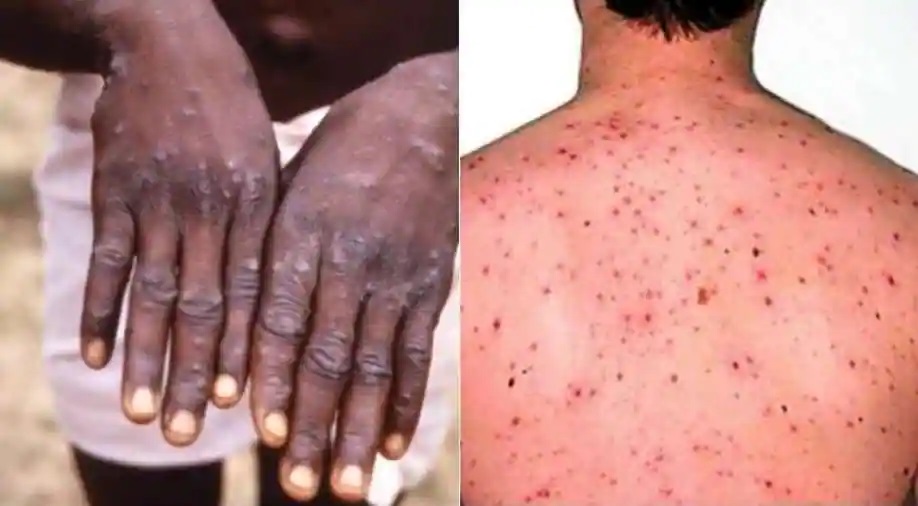
Symptoms such as fever, intense headache, lymphadenopathy, back pain, myalgia (muscle aches), and an intense asthenia (lack of energy) usually appear in the patients who test positive for the Monkeypox virus. On the other hand, skin eruption usually starts within 1-3 days of the appearance of fever. The rash appears mostly on the face and extremities rather than on the chest.
History in Nigeria
There have since been sporadic cases reported across 10 African countries, including Nigeria, which in 2017 experienced the largest documented outbreak, with 172 suspected and 61 confirmed cases. In terms of age, 75 per cent of those affected were males aged 21 to 40 years old.
Cases outside of Africa have historically been less common and typically linked to international travel or imported animals.
How Can One Catch Monkeypox?
Monkeypox spreads when someone comes into close contact with another person, animal or material infected with the virus. The virus can enter the body through broken skin, the respiratory tract or through the eyes, nose and mouth. Human to human transmission most commonly occurs through respiratory droplets, though usually requires prolonged face-to-face contact.
Animal to human transmission meanwhile may occur via a bite or scratch but the disease is not generally considered a sexually transmitted disease, though it can be passed on during sex.
Available Treatment
There are currently no proven, safe treatments for monkeypox, though most cases are mild. In the past, researchers said that vaccination against smallpox with the vaccinia vaccine was proved through several observational studies to be about 85 per cent effective in preventing the Monkeypox virus.
A newer vaccinia-based vaccine was approved for the prevention of smallpox and monkeypox in 2019 and is also not yet widely available in the public sector. Countries including the United Kingdom and Spain are now offering the vaccine to those who have been exposed to infections to help reduce symptoms and limit the spread.
Can it Kill?
Monkeypox cases can occasionally be more severe, with some deaths having been reported in West Africa. However, health authorities stress that we are not on the brink of a serious outbreak and the risks to the general public remain very low.
What are Health Regulators Saying?
WHO says it continues to closely monitor as the situation is evolving rapidly. It is supporting member states with surveillance, preparedness, and outbreak response activities for monkeypox in affected countries.
Health authorities in the United Kingdom, the United States, and Canada urged people who experience new rashes or are concerned about monkeypox to contact their healthcare provider.
WHO also clarified that does it not recommend any restrictions for travel based on available information at this time.
Health
SUNU Health Named Most Customer Focused HMO of the Year
By Modupe Gbadeyanka
The decision of the management of SUNU Health Nigeria Limited to adopt the strategy of placing the enrollee and customer at the heart of its operations has started to pay off.
The company was recently announced as Most Customer-Focused Health Insurance Company of the Year at the Customer Service Standard Magazine Awards 2025.
The recognition underscored the company’s success in translating its dedication into tangible enrollee satisfaction and superior market service at the Nigerian Health Maintenance Organisation (HMO) landscape.
It also highlights the organisation’s dedicated efforts in streamlining claims processing, enhancing access to quality healthcare providers, and maintaining transparent, responsive communication channels with its diverse client base across Nigeria.
The accolade further serves as a powerful testament to the successful integration of digital solutions and human-centric service models at SUNU Health.
It positions the firm as a leader not only in providing robust health plans but also in delivering the supportive, personalized care that enrollees truly value.
“Clinching the Most Customer-Focused Health Insurance Company of the Year award is not just an honour; it is a validation of the core philosophy that drives every member of the SUNU Health team.
“We believe that healthcare is fundamentally a service industry, and our success is measured by the well-being and satisfaction of our enrollees,” the chief executive of SUNU Health, Mr Patrick Korie, commented.
“This award reinforces our resolve to continuously innovate and set new benchmarks for customer experience in the Nigerian health insurance sector.
“Our commitment to providing accessible, high-quality, and seamless healthcare solutions remains our top priority as we move into the new year (2026),” he added.
Health
Nigeria Launches First National Antimicrobial Resistance Survey
By Adedapo Adesanya
Nigeria has launched its first nationally representative survey on antimicrobial resistance to generate critical data to guide evidence-based policies, improve patient outcomes, and strengthen health system resilience.
Antimicrobial resistance occurs when bacteria, viruses, fungi, and parasites evolve to resist treatment, making infections harder to cure.
As a result, surveillance is essential to track resistance patterns, identify priority pathogens, and guide targeted interventions and with support from the World Health Organization (WHO) and other partners, the initiative marks a milestone in the country’s public health response.
Nigeria becomes the third country globally to partner with WHO on a national antimicrobial resistance survey. having been selected based on the country’s strong commitment to AMR surveillance, its updated WHO Nigeria NAP 2.0, and readiness to expand laboratory and data systems.
Africa’s most populous country ranks 20th globally for age-standardized mortality due to antimicrobial resistance . In 2019, an estimated 263,400 deaths in Nigeria were linked to it—more than the combined deaths from enteric infections, tuberculosis, respiratory infections, maternal and neonatal disorders, neglected tropical diseases, malaria, and cardiovascular diseases.
Globally, resistant infections in tertiary care settings cost between $2,371 and $29,289 per patient episode, extend hospital stays by an average of 7.4 days, and increase mortality risk by 84 per cent.
The survey will see the establishment of a national baseline on antimicrobial resistance prevalence to monitor interventions, assess the distribution, burden (morbidity, mortality, DALYs, cost), and diversity of AMR across regions and populations, as well as contribute to the global target of reducing AMR deaths by 10 per cent by 2030, in line with the political declaration endorsed at the 79th United Nations General Assembly in 2024.
It also seeks to strengthen routine antimicrobial resistance surveillance, including diagnostics, sample referral systems, and laboratory capacity.
Using WHO’s standardized methodology, the survey will run for 12–15 months and cover 40–45 randomly selected health facilities nationwide. Patients with suspected bloodstream infections (BSIs) will be identified using standard case definitions, and blood samples will be analysed in quality-assured laboratories.
Data will be collected across all age groups, covering clinical, demographic, laboratory, financial, and outcome indicators. Follow-up will occur at discharge, 28 days, and three months post-infection. The survey will sample approximately 35,000 patients suspected of BSIs to obtain around 800 isolates of the most common pathogens.
Dr Tochi Okwor, Acting Head, Disease Prevention and Health Promotion, Nigeria Centre for Disease Control and Prevention (NCDC) said, “With WHO’s support, we are confident the survey will generate the evidence needed to protect public health.”
WHO Representative in Nigeria, Dr Pavel Ursu, reaffirmed WHO’s commitment stating that ,“Nigeria is taking a decisive step toward combating AMR with an approach grounded in data, science, and measurable impact. This survey will provide the clarity needed to drive smarter policies, stronger surveillance, and better patient outcomes. Nigeria is laying the foundations for a resilient health system, one that protects lives, strengthens trust, and ensures that essential medicines remain effective for future generations.”
Adding her input, Dr Laetitia Gahimbare, Technical Officer at WHO Regional Office for Africa, added:“Strengthening surveillance enhances Nigeria’s capacity to detect and respond to AMR threats, supporting better patient outcomes, reinforcing health security, and building a resilient system.”
Professor Babatunde Ogunbosi, Paediatric Infectious Diseases Specialist at University College Hospital, Ibadan, highlighted the broader impact:, “This survey is about more than data. It’s about building national capacity for research, diagnostics, and policy. It integrates science into public health decision-making.”
Health
Our Vision Extends Beyond Offering Health Insurance Packages—SUNU Health
By Modupe Gbadeyanka
One of the leading Health Maintenance Organisations (HMOs) in Nigeria, SUNU Health, has said its philosophy is proactive wellness, noting that this was why it recently partnered with The Divine Physician and St. Luke Catholic Chaplaincy Centre for a community health initiative.
The chief executive of the company, Dr Patrick Korie, said, “SUNU Health’s vision extends far beyond merely offering health packages and insurance.”
“We are fundamentally interested in proactive wellness—preventing illness rather than just treating it. This annual exercise is a crucial part of that commitment, and we will continue to champion it for as long as we exist,” he stressed.
The medical practitioner led the company’s annual Health Walk in Lagos on Saturday, November 8, 2025. The event drew hundreds of health enthusiasts, including the Chaplain of the centre, Rev Fr. John Okoria SJ.
His active participation reinforced the spiritual and moral commitment to holistic well-being, proving crucial in mobilizing staff and community members, thereby ensuring the vital wellness message reached a broad and deeply engaged audience.
The health walk covered several major streets in Lagos, starting from Ishaga Road and navigating through Itire Road, Randle Avenue, Akerele, Ogunlana Drive, and Workers Street before concluding back at the starting point. Following the vigorous walk, participants engaged in a session of high-energy aerobics and other outdoor exercises, reinforcing the day’s focus on fitness.
“We are delighted to champion this vital health initiative alongside the Catholic Chaplaincy Centre LUTH/CMUL. The turnout was truly delightful, reflecting the community’s deep desire to embrace wellness.
“Collaborations like this amplify our message and commitment to the Nigerian community,” the Brand and Corporate Communications Lead at SUNU Health, Mr Samuel Olayemi, stated.
-
Feature/OPED6 years agoDavos was Different this year
-
Travel/Tourism9 years ago
Lagos Seals Western Lodge Hotel In Ikorodu
-
Showbiz3 years agoEstranged Lover Releases Videos of Empress Njamah Bathing
-
Banking8 years agoSort Codes of GTBank Branches in Nigeria
-
Economy3 years agoSubsidy Removal: CNG at N130 Per Litre Cheaper Than Petrol—IPMAN
-
Banking3 years agoFirst Bank Announces Planned Downtime
-
Banking3 years agoSort Codes of UBA Branches in Nigeria
-
Sports3 years agoHighest Paid Nigerian Footballer – How Much Do Nigerian Footballers Earn