World
Mozambique’s Gas Among Alternatives for European Union
By Kestér Kenn Klomegâh
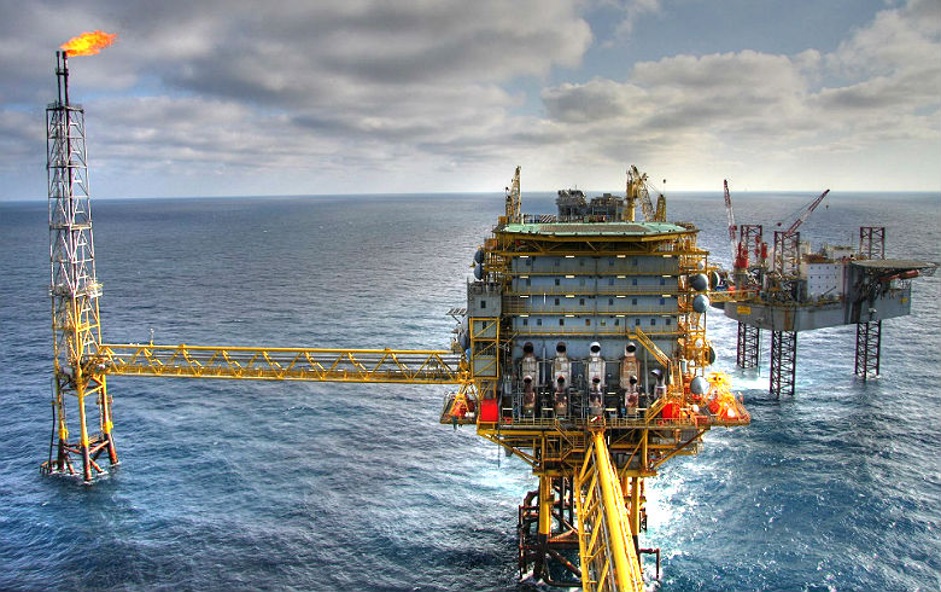
Mozambique is increasingly stepping up efforts in the production of liquefied natural gas and consequently becoming one of the suitable reliable suppliers to Europe. While it might not replace Russia which cuts its export of gas as a reciprocal action against European Union members, Mozambique seeks ultimately to earn some revenue from its natural resources.
Mozambique’s state-owned National Hydrocarbons Company (ENH) has acknowledged the chances of helping to address growing gas needs in Europe, due to uncertainty over Russian supplies following the invasion of the former Soviet republic of Ukraine.
“With the situation of the war in Ukraine, the European market has increased demand for gas. One of the ways to speed up our gas to reach the markets is to use a second floating platform similar to the one that is already here in Mozambique,” said ENH’s Executive Commercial Director, Pascoal Mocumbi Júnior, quoted by Mozambique’s Information Agency (AIM).
Mocumbi Júnior explained that a second floating liquefied natural gas production platform would join an identical infrastructure that already exists in Mozambican waters if the country were to be part of the solution to the energy deficit caused by the Russia-Ukraine crisis.
The construction time for a possible second floating unit would be three years, two years less than the time it took to build the unit that has already started loading hydrocarbons, as a way to gain time and speed up gas production.
“With the amount of gas existing in Mozambique, automatically positions itself as an alternative to supply the need that currently exists and the faster the country can get its gas on the market, the greater the possibility of taking advantage of the current crisis caused by the Russia-Ukraine conflict,” he stressed.
In late July, the outgoing European Union (EU) Ambassador to Mozambique argued that natural gas from Cabo Delgado was among the alternatives in Europe’s plan to diversify energy sources in the face of constraints caused by Russia’s invasion of Ukraine.
“Mozambique’s gas, with the presence of large European multinational companies, now has an even more important and strategic value,” Sánchez-Benedito Gaspar said in an interview with Lusa, Mozambican News Agency, in Maputo.
According to the diplomat, with Russia’s invasion of Ukraine, Europe came to the conclusion that “it cannot trust its old partner [Russia, among the world’s biggest gas exporters], which is authoritarian and uses gas as an instrument of war,” and is making efforts to secure alternative sources.
“We have adopted a new strategy in Europe, called RePower EU, which has several elements […] With regard to gas, which is considered a transitional energy, we are looking for alternative suppliers […] Mozambique is among the alternatives,” Sánchez-Benedito Gaspar stressed. The Spanish diplomat (EU Representative) ended his mission in Mozambique in July and was replaced by the Italian Ambassador Antonino Maggiore.
According to Noticias, an information portal, the government is creating the necessary conditions for a resumption of the TotalEnergies-led Mozambique LNG project, a verification team is already working in Cabo Delgado.
Minister of Mineral Resources and Energy, Carlos Zacarias, explained that the government wanted to see operations resume as soon as possible. “The security situation in the area where the TotalEnergies and ExxonMobil projects will be implemented has, in our view, improved a lot. Naturally, before resuming activities, there will be a lot of scrutiny on the part of the companies carrying out the investments,” Minister Zacarias said.
Carlos Zacarias said although the government considered the conditions for the resumption of the project were improving, it was up to the company to verify if, from its point of view, the environment to recommence activities was in place. The restoration of security in the district of Palma has permitted the return of some of the residents and the resumption of some economic activities.
According to Minister Zacarias, in the same way, that the population was gradually returning following the improvement of security conditions, economic enterprises could also do so. That it was not just the TotaEnergies project that had been suspended, but also many others such as the roads under construction in various locations.
In April last year, the multinational Total announced the withdrawal of all personnel from its LNG project in Afungi. The Mozambique LNG offshore project, valued at around $20 billion, aims to extract about 13.12 million tonnes of recoverable gas over 25 years and generate profits of US$60.8 billion, half of which will go to the Mozambican state.
Total E&P Mozambique Area 1 Limited, a wholly-owned subsidiary of Total SE, operates the Mozambique LNG project, with a 26.5% equity interest, together with ENH Rovuma Area 1, S.A. (15%), Mitsui E&P Mozambique Area 1 Limited (20%), ONGC Videsh Rovuma Limited (10%), Beas Rovuma Energy Mozambique Limited (10%), BPRL Ventures Mozambique B.V. (10%), and PTTEP Mozambique Area 1 Limited (8.5%).
In order to achieve the task of exporting to Europe, Mozambique’s National Petroleum Institute (INP) intends to maximize the use of Mozambican labour in gas extraction projects in Mozambique, generating 14,000 possible jobs in the four major projects underway.
Director of Local Content at the INP, Natália Camba, clearly pointed to the latest projects including Mozambique LNG and Rovuma LNG, which are both onshore gas liquefaction projects in the northern province of Cabo Delgado, the Coral Sul floating LNG platform, anchored some 40 kilometres off the Cabo Delgado coast, and the Inhassoro-Temane project in the southern province of Inhambane.
The Mozambique LNG project involves gas liquefaction plants on the Afungi Peninsula, in the Palma district. But it is currently interrupted and there is no firm date for the resumption of activities, due to the attacks by Islamist terrorists. But once the security issues are solved, the project should create 5,000 jobs for Mozambicans in the construction phase and 1,200 in the operational phase, with a plan to train 2,500 technicians.
In the case of the projects already underway, namely Coral Sul FLNG and Inhassoro-Temane, they have jointly made available 3,820 jobs in the construction phase alone, with a forecast of around 486 fixed jobs in the production phase, including foreign labour that will be reduced in the subsequent phases.
“These projects also have a great capacity to create indirect jobs, with foreign labour decreasing throughout the project and Mozambican labour increasing. Most of these jobs are expected to be provided by contractors and subcontractors,” she said, and it is expected that 88 per cent of those recruited would work in construction.
With its strategy to meet the demand for skilled labour for the extractive industry projects in the country, according to the director, the INP intends to develop a framework of skilled human resources to meet the demands of the market, as well as to combat the discrepancy between the investments made in the industry and its capacity to generate employment.
In the framework of Local Content, the INP’s actions with the companies operating the gas projects envisage the qualification, training and certification of about 200 Small and Medium Enterprises operating to internationally required standards.
The armed insurgency that began in 2017 in Cabo Delgado province, and the entry of foreign troops to support Mozambican forces in the middle of last year have improved the security situation, recovering important positions such as the village of Mocímboa da Praia. Since July 2021, an offensive by government troops was fixed, with the support of Rwandans and later by the Standby Joint Force consisting of forces from members of the Southern African Development Community (SADC).
Cabo Delgado province, located in northern Mozambique, is rich in natural gas. Although the gas from the three projects approved so far has a destination, Mozambique has proven reserves of over 180 trillion cubic feet, according to data from the Ministry of Mineral Resources and Energy. With an approximate population of 30 million, Mozambique is endowed with natural resources. It is a member of the Southern Africa Development Community (SADC) and the African Union.
World
TikTok Signs Deal to Avoid US Ban
By Adedapo Adesanya
Social media platform, TikTok’s Chinese owner ByteDance has signed binding agreements with United States and global investors to operate its business in America.
Half of the joint venture will be owned by a group of investors, including Oracle, Silver Lake and the Emirati investment firm MGX, according to a memo sent by chief executive, Mr Shou Zi Chew.
The deal, which is set to close on January 22, 2026 would end years of efforts by the US government to force ByteDance to sell its US operations over national security concerns.
It is in line with a deal unveiled in September, when US President Donald Trump delayed the enforcement of a law that would ban the app unless it was sold.
In the memo, TikTok said the deal will enable “over 170 million Americans to continue discovering a world of endless possibilities as part of a vital global community”.
Under the agreement, ByteDance will retain 19.9 per cent of the business, while Oracle, Silver Lake and Abu Dhabi-based MGX will hold 15 per cent each.
Another 30.1 per cent will be held by affiliates of existing ByteDance investors, according to the memo.
The White House previously said that Oracle, which was co-founded by President Trump’s supporter Larry Ellison, will license TikTok’s recommendation algorithm as part of the deal.
The deal comes after a series of delays.
Business Post reported in April 2024 that the administration of President Joe Biden passed a law to ban the app over national security concerns, unless it was sold.
The law was set to go into effect on January 20, 2025 but was pushed back multiple times by President Trump, while his administration worked out a deal to transfer ownership.
President Trump said in September that he had spoken on the phone to China’s President Xi Jinping, who he said had given the deal the go ahead.
The platform’s future remained unclear after the leaders met face to face in October.
The app’s fate was clouded by ongoing tensions between the two nations on trade and other matters.
World
United States, Russia Resolving Trade Issues, Seeking New Business Opportunities
By Kestér Kenn Klomegâh
Despite the complexities posed by Russia-Ukraine crisis, United States has been taking conscious steps to improve commercial relations with Russia. Unsurprisingly, Russia, on the other hand, is also moving to restore and normalise its diplomacy, negotiating for direct connections of air-routes and passionate permission to return its diplomats back to Washington and New York.
In the latest developments, Kirill Dmitriev, Chief Executive Officer of the Russian Direct Investment Fund (RDIF), has been appointed as Russian President’s Special Envoy to United States. This marked an important milestone towards raising bilateral investment and economic cooperation. Russian President Vladimir Putin tasked him to exclusively promote business dialogue between the two countries, and further to negotiate for the return of U.S. business enterprises. According to authentic reports, United States businesses lost $300+ bn during this Russia-Ukraine crisis, while Russia’s estimated 1,500 diplomats were asked to return to Moscow.
Strategically in late November 2025, the American Chamber of Commerce in Russia (AmCham) has awarded Kirill Dmitriev, praised him for calculated efforts in promoting positive dialogue between the United States and Russia within the framework decreed by President Vladimir Putin. Chief Executive Officer of Russian Direct Investment Fund (RDIF) Kirill Dmitriev is the Special Representative of the Russian President for Economic Cooperation with Foreign Countries. Since his appointment, his primary focus has been on United States.
“Received an American Chamber of Commerce award ‘For leadership in fostering the US-Russia dialogue,’” Dmitriev wrote on his X page, in late November, 2025. According to Dmitriev, more than 150 US companies are currently operating in Russia, with more than 70% of them being present on the Russian market for over 25 years.
In addition, Chamber President Sergey Katyrin and American Chamber of Commerce in Russia (AmCham) President Robert Agee have also been discussing alternatives pathways to raise bilateral business cooperation. Both have held series of meetings throughout this year, indicating the the importance of sustaining relations as previously. Expectedly, the Roscongress Foundation has been offered its platforms during St. Petersburg International Economic (SPIEF) for the American Chamber of Commerce (AmCham).
On December 9, Sergey Katyrin and Robert Agee noted that, despite existing problems and non-economic obstacles, the business communities of Russia and the United States proceed from the necessity of maintaining professional dialogue. Despite the worsening geopolitical conditions, Sergey Katyrin and Robert Agee noted the importance of preserving stable channels of trade and pragmatic prospects for economic cooperation. These will further serve as a stabilizing factor and an instrument for building mutual trust at the level of business circles, industry associations, and the expert community.
The American Chamber of Commerce (AmCham) will be working in the system of the Chamber of Commerce and Industry (CCI) in the Russian Federation, which currently comprises 57,000 legal entities, 130 regional chambers and a combined network of representative offices covering more than 350 points of presence.
According to reports obtained by this article author from the AmCham, promising sectors for Russian-American economic cooperation include healthcare and the medical industry, civil aviation, communications/telecom, natural resource extraction, and energy/energy equipment. The United States and Russia have, more or less, agreed to continue coordinating their work to facilitate the formation of a more favorable environment for Russian and American businesses, reduce risks, and strengthen business ties. Following the American-Russian Dialogue, a joint statement and working documents were adopted.
World
Reviewing the Dynamics of Indian–Russian Business Partnership
By Kestér Kenn Klomegâh
The Executive President of the Indian Business Alliance (IBA), Sammy Manoj Kotwani, discusses the landmark moment in deepening Russian-Indian collaboration. Kotwani explains the groundbreaking insights into President Vladimir Putin’s working visit to India, the emerging opportunities and pathways for future cooperation, especially for the two-sided economic collaboration. Follow Sammy Manoj Kotwani’s discussions here:
Interpretation of the latest development in Russian-Indian relations
From my viewpoint in Moscow, this visit has effectively opened a new operational chapter in what has always been described as a “Special and Privileged Strategic Partnership.” It did not just reaffirm political goodwill; it translated that goodwill into a structured economic roadmap through Programme 2030, a clear target to take bilateral trade to around USD 100 billion by 2030, and concrete sectoral priorities: energy, nuclear cooperation, critical minerals, manufacturing, connectivity, fertilizers, and labour mobility.
On the ground, the business community reads this summit as a strong signal that India and Russia are doubling down on strategic autonomy in a multipolar world order. Both sides are trying to de-risk their supply chains and payment systems from over-dependence on any single centre of power. This is visible in the focus on national currencies, alternative payment mechanisms, and efforts to stabilise Rupee–Ruble trade, alongside discussions on a Free Trade Agreement with the Eurasian Economic Union and the reinforcement of corridors like the INSTC and the Chennai–Vladivostok route.
In short, my interpretation is that this summit has moved the relationship from “politically excellent but structurally imbalanced” towards a more diversified, long-term economic framework in which companies are expected to co-produce, co-innovate, and invest, not just trade opportunistically.
Significance of the visit for Indian business in Russia and for the Indian Business Alliance (IBA)
For Indian business operating in the Russian Federation, the visit has three immediate effects: confidence, clarity, and continuity. Confidence, because Indian entrepreneurs now see that despite external pressure, New Delhi and Moscow have explicitly committed to deepening economic engagement—especially in energy, fertilizers, defence co-production, nuclear, and critical minerals—rather than quietly scaling it back.
Clarity, because the summit outcomes spell out where the real opportunities lie:
Energy & Petrochemicals: Long-term crude and LNG supply, but also downstream opportunities in refining, petrochemicals, and logistics, where Indian EPC and service companies can participate.
Pharmaceuticals & Medical Devices: Russia’s import substitution drive makes high-quality Indian generics, formulations, and even localized manufacturing extremely relevant.
IT, Digital & AI: There is growing appetite in Russia for Indian IT services, cybersecurity, and digital solutions that are not dependent on Western tech stacks.
Fertilizers, Agro & Food Processing: New joint ventures in fertilizers and agriculture supply chains were explicitly flagged during and around the summit, which is important for both food security and farm incomes.
Continuity, because the Programme 2030 framework and the expected EAEU FTA give businesses a medium-term policy horizon. Tariff reductions, improved market access and predictable regulation are precisely what Indian SMEs and mid-sized companies need to justify long-term investments in Russia.
For the Indian Business Alliance (IBA), this inevitably means more work and more responsibility. We already see increased incoming requests from Indian firms—from large listed companies to first-time exporters—asking very practical questions: Which Russian region should we enter? How do we navigate compliance under the sanctions environment? Which banks are still handling Rupee–Ruble or third-currency settlements? How can we structure joint ventures to align with Russia’s import substitution goals while protecting IP and governance standards?
IBA’s role, therefore, becomes that of economic diplomacy in action: translating high-level summit language into actual B2B meetings, sectoral delegations, regional partnerships, and deal-making platforms such as the India–Russia Business Dialogue in Moscow. This visit will undoubtedly stimulate and intensify IBA’s work as a bridge between the two ecosystems.
India’s current economic presence in the Russian Federation
If we look beyond the headline trade figures, India’s economic presence in Russia today is significant, but not yet commensurate with its potential. Bilateral trade has grown sharply since 2022, largely on the back of discounted Russian oil and coal, making India one of Russia’s top energy customers. However, the structure is still heavily skewed: Russian exports to India dominate, while Indian exports and investments in Russia remain relatively modest and under-diversified.
On the ground in Moscow and across the regions, we see several strong Indian footholds:
Pharmaceuticals: Indian pharma is well-established, respected for its affordability and quality, and poised to deepen localization in line with Russian import substitution policy.
Tea, Coffee, Spices & Food: Traditional segments with deep historical roots, now expanding into ready-to-eat, wellness, and ethnic food categories.
IT & Services: Still under-represented, but with growing interest as Russian entities look for non-Western software, integration, and outsourcing partners.
Diamonds, Textiles, Apparel, and Light Engineering: Present but fragmented, with enormous room to scale, especially if logistics and payment challenges are addressed.
Where India is still behind is on-the-ground investment and manufacturing presence compared to countries like China. Russian policymakers today are clearly favouring investors who help them achieve technological sovereignty and local value addition. For serious Indian companies willing to commit capital, adapt to Russian standards, and accept the complexities of the current environment, this is a period of unusual opportunity. For purely transactional players looking for quick arbitrage, it is becoming progressively harder.
So, I would characterise India’s economic presence as: strategically important, quickly growing in value, but still under-leveraged in terms of depth, diversification, and localization.
Geopolitical pressure from Washington and future predictions
Pressure from Washington—through sanctions, secondary sanctions risk, financial restrictions, and now even tariff measures linked to India’s energy purchases from Russia—is undoubtedly a real and continuing challenge. It affects everything from shipping insurance and dollar transactions to technology transfers and the risk appetite of global banks. In practical terms, it can complicate even a simple India–Russia trade deal if it touches a sanctioned bank, vessel, or technology.
However, my own assessment, based on 35 years of living and working in Russia, is that this pressure will not fundamentally derail India–Russia friendship, but it will reshape how the relationship functions. India’s foreign policy is anchored in strategic autonomy; it seeks strong ties with the United States and Europe, but not at the cost of abandoning a time-tested partner like Russia. Russia, for its part, sees India as a crucial Asian pole in an emerging multipolar world order and as a long-term market, technology partner, and political counterpart in forums like BRICS, SCO, and the G20.
Looking ahead, I see a few clear trends:
Normalization of alternative payment and logistics systems
We will see more institutionalised use of national currencies, alternative messaging systems, regional banks outside the direct sanctions line, and maybe even digital currencies for specific corridors. Rupee–Ruble trade mechanisms that are today seen as “workarounds” will gradually become part of the normal infrastructure of bilateral commerce.
Shift from pure trade to co-production and joint innovation
To reduce vulnerability to sanctions, both sides will push for manufacturing in India and Russia rather than simple exports: defence co-development, localized pharma and medical devices, high-tech and AI collaborations, and joint ventures in critical minerals and clean energy.
Greater role for regions and business associations
Regional governments in Russia (Far East, Arctic regions, industrial hubs) and Indian states will increasingly drive project-level cooperation, supported by platforms like IBA. This “bottom-up” economic diplomacy will make the relationship more resilient than if it relied only on central governments.
Managed balancing by India
India will continue to deepen technology and investment ties with the West while maintaining energy, defence and strategic cooperation with Russia. The challenge will be to manage U.S. and EU expectations without compromising its core national interests. My prediction is that India will stay firm on this course of balanced engagement, even if it means occasional friction with Washington.
In essence, external pressure may complicate the methods of Indo-Russian cooperation, but it is unlikely to overturn the foundations of trust, mutual interest, and long-term complementarity that have been built over decades.
-
Feature/OPED6 years agoDavos was Different this year
-
Travel/Tourism9 years ago
Lagos Seals Western Lodge Hotel In Ikorodu
-
Showbiz3 years agoEstranged Lover Releases Videos of Empress Njamah Bathing
-
Banking7 years agoSort Codes of GTBank Branches in Nigeria
-
Economy3 years agoSubsidy Removal: CNG at N130 Per Litre Cheaper Than Petrol—IPMAN
-
Banking3 years agoFirst Bank Announces Planned Downtime
-
Banking3 years agoSort Codes of UBA Branches in Nigeria
-
Sports3 years agoHighest Paid Nigerian Footballer – How Much Do Nigerian Footballers Earn