Connect with us

Education

Merck, UNESCO Empower Women, Girls in STEM

Published

on

By Dipo Olowookere

Following the success of Merck Cancer Access Program to empower women in oncology field where they are underrepresented, comes another successful initiative for MERCK to empower African women in research to offer better health care to women.

After receiving his ‘African Alliances HE for SHE’ award for women empowerment, Prof Frank Stangenberg-Haverkamp has successfully achieved another commitment to empower women in research in an effort to bridging the gap in gender inequality in STEM Africa.

UNESCO and Merck celebrate outstanding African Women Researchers as a historical first. Kenya, Botswana, Burkina Faso, Gabon, Uganda, Ethiopia ranked in the top five places at the ‘Merck Africa Women Research Award on women health in Africa’.

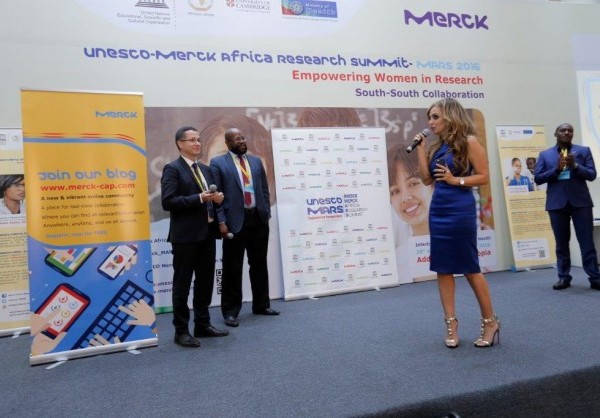
Merck announced five winners from Kenya, Burkina Faso, Gabon, Uganda and Ethiopia under the category of ‘Best African Women Researchers Award’ and four winners from Botswana, Cameroon, Gambia and Zimbabwe for ‘Best Young African Researchers Award’ during the recently held 2nd UNESCO-Merck Africa Research Summit in Addis Ababa, Ethiopia where the first ‘Best African Women Researchers Award’ was being launched.

Prof. Frank Stangenberg-Haverkamp, Chairman of Executive Board and Family Board of E. Merck KG congratulated the winners: “Merck will work together with UNESCO to empower young researchers which raises the level of scientific research in Africa and encourages in particular young women researchers to pursue their dreams, work for improving access to health solutions and make a difference in the continent.

“Moreover, I am very pleased to offer my support to motivate female researchers & healthcare providers and recognize their excellent contribution to fields where they are underrepresented”.

“Merck will provide the winners with training and mentorship opportunity to advance their capacity and helps bring them to the international standard.

“The winner of MARS Research awards will be appointed as Merck Ambassadors of Empowering Women and Girls in STEM in their own countries through several future initiatives will be announced in 2017,” explained Rasha Kelej Chief Social Officer, Merck.

Recipients of the awards who are not only PhD students and young investigators based at African research institutes and universities were selected based on the abstracts they submitted. These impressive abstracts were related to Infectious Diseases with the aim to improve Women Health, the focus of UNESCO-MARS 2016.

In her introductory remarks, Dr Rasha Kelej, Chief Social Officer, Merck Healthcare highlighted: “This is the second UNESCO-MARS we are holding after the successful one held in Geneva, Switzerland in 2015. Merck is committed to empowering women in STEM (Science, Technology, Engineering and Mathematics) which will consequently contribute to improving the quality of research and science in Africa.”

“Merck’s support for research and healthcare especially in the field of oncology where women are currently under-represented will help bridge the gender gap in STEM in Africa.  Merck have provided earlier this year Oncology fellowship program to African women doctors from Kenya, Uganda, Ghana and Tanzania. Not only that we have also supported women cancer survivors through access to information, awareness about prevention and early detection, health and economic empowerment through Merck more than a a patient initiative which focuses mainly on Cancer in women and its social misperception and stigma,” Rasha Kelej added.

“The first recipient, Patricia Rantshabeng from Botswana, was awarded for her study on cancer in women and its relation to infectious diseases. This is aligned with our objectives to empower women in both fields of research and oncology to improve women health” Rasha Kelej explained.

‘Best African Women Researchers Award’

The ‘Best African Women Researchers Awards’ with the aim of promoting women in STEM (Science, Technology, Engineering and Mathematics) went to five women researchers from across Africa, who were recognized for the outstanding quality of their research.

1st winner: Kenya

Beatrice Nyagol, Kenya Medical Research Institute for her study on:“Clinicians’ experiences and insights in conducting an intra-vaginal ring study among young women in Kisumu, Kenya, 2015 -Lessons learned” (see the video section: UNESCO-MARS 2016 ‘Best African Woman Researcher Award’ 1st place winner, Beatrice Nyagol, Kenya)

2nd winner: Burkina Faso

Rogomenoma Ouedraogo, Laboratory of Biology and Molecular Genetics University of Ouagadougou for her study on: “Molecular diagnosis of cytomegalovirus (CMV), the human herpes virus type 6 (HHV6) and Epstein-Barr virus (EBV) by real-time PCR in pregnant women infected or not infected by HIV at Ouagadougou, Burkina Faso” (see the video section: UNESCO-MARS 2016 ‘Best African Woman Researcher Award’ 2nd place winner, Alice Rogomenoma)

3rd winner: Gabon

Sandrine Liabagui ep Assangaboua Ecole Doctorale Regionale d’Afrique Centrale, Franceville for her study on: “Pro- and anti-inflammatory cytokines in children with malaria in Franceville, Gabon”

4th winner: Uganda

Maria Nabaggala, from the Infectious Diseases Institute for her study on: “Understanding outcomes of HIV positive patient tracking following a missed appointment in rural Uganda” (see the video section: UNESCO-MARS 2016 ‘Best African Woman Researcher Award’ 4th place winner, Maria Nabaggala, Uganda)

5th winner: Ethiopia

Martha Zewdie, Armauer Hansen Research Institute for her study on: “Ex-vivo characterization of regulatory T-cells in pulmonary tuberculosis patients, latently infected persons, and healthy endemic controls” (see the video section: UNESCO-MARS 2016 ‘Best African Women Researcher Award’ 5th place winner, Martha Zewdie, Ethiopia)

‘Best Young African Researchers Award’

The three categories of the ‘Best Young Researchers Award’ were given to two female and two male researchers Botswana, Cameroon, Gambia and Zimbabwe.

1st winner: Botswana

Patricia Rantshabeng, University of Botswana for her study on: “Prevalence of oncogenic Human Papillomavirus genotypes in women with vulvar and cervical squamous cell carcinoma in Botswana (see the video section: UNESCO-MARS 2016 ‘Best Young African Researcher Award’ 1st place winner, Patricia Rantshabeng, Botswana)

2nd winner: Cameroon

Constantine Asahngwa, Cameroon Centre for Evidence Based Health Care for his study on: “The experiences of women living with trachoma in Africa: A qualitative systematic review” (see the video section: UNESCO-MARS 2016 ‘Best Young African Researcher Award’ 2nd place, Constantine Asahngwa, Cameroon)

3rd winner: Zimbabwe

Tinashe Nyazika, University of Zimbabwe for his study on: “Cryptococcus neoformans population diversity is not associated with clinical outcomes of HIV-associated cryptococcal meningitis patients in Zimbabwe” (see the video section: UNESCO-MARS 2016 ‘Best Young Researcher Award’ 3rd place winner, Tinashe Nyazika, Zimbabwe)

3rd winner: Gambia

Lamin Cham, from National Aids Control Program for his study on: “Qualitative detection of proviral-DNA of HIV-1 in neonates to determine the efficacy of antiretroviral therapy in the prevention of vertical transmission of HIV-1 in the Gambia” (see the video section: UNESCO-MARS 2016 ‘Best Young Researcher Award’ 3rd place winner, Lamin Cham, Gambia)

About 2016 MARS award winners:

‘Best African Women Researchers Award’

    1st Place: Beatrice Nyagol, Kenya Medical Research Institute, Kenya

    2nd Place: Rogomenoma Ouedraogo, Laboratory of Biology and Molecular Genetics University, Burkina Faso

    3rd Place: Sandrine Liabagui ep Assangaboua, Ecole Doctorale Regionale d’Afrique Centrale, Franceville, Gabon

    4th Place: Maria Nabaggala, Infectious Diseases Institute, Uganda

    5th Place: Martha Zewdie, Armauer Hansen Research Institute, Ethiopia

‘Best Young African Researchers Award’

    1st Place: Patricia Rantshabeng, University of Botswana, Botswana

    2nd Place: Constantine Asahngwa, Cameroon Centre for Evidence Based Health Care

    3rd Place: Tinashe Nyazika, University of Zimbabwe, Zimbabwe

    3rd place : Lamin Cham, National Aids Control Program, Gambia

Meet the First candidates for Merck Oncology Fellowship Program to empower women and youth in the field of oncology

The first two candidates to attend the Merck Africa Oncology Fellowship Program at Tata Memorial Center in India have been selected from Tanzania and Ghana.

Nihad Salifu from Ghana College of Physicians and Surgeons will attend the Fellowship to train in Paediatric Oncology and Christina Malichewe from Muhimbili University of Health and Allied Sciences, Tanzania is interested in learning more about the treatment of gastro intestinal malignancies.

Dr. Christina V. Malichewe, Muhimbili University of Health and Allied Sciences (MUHAS) Dares Salaam, Tanzania

“Cancer is a growing concern in Tanzania. Limited facilities and few healthcare providers against the high rising number of patients diagnosed at advanced stages pose a great challenge to a developing country like Tanzania. Unfortunately there are only two medical oncologists in a country of approximately 50 million people. One studied in Italy and another in China. We need more specialized oncologists in this field. Thank you Merck for starting this program!! However, it is only through unique opportunities such as the Merck Africa Fellowship Program we can make needed change in our societies so as to improve patient access to cancer care,” Christina Malichewe said.

“I am thankful and proud to be among the young doctors from Tanzania to attend the Merck Africa Medical Oncology Program which I believe after completion will further help in imparting knowledge to others and increasing the access to cancer care in the larger Tanzanian population,” Christina added.

Christina is interested in learning more on the treatment of gastro intestinal malignancies. “I know a lot is changing on the management and in our country there is little interest on this area in terms of screening, management and research among the oncologists compared to cervical, breast and Kaposis sarcoma cancers”.

Dr. Nihad Salifu, Senior Residency trainee in General Pediatrics at Ghana College of Physicians and Surgeons

“Ghana has a population of about 26 million with a cancer rate of 109 per 100,000 people and yet there is no single trained medical oncologist in the whole country. The duty of medical oncologist is handled by other specialties such as radiation oncologist, general surgeons, genitourinary surgeons, and hematologists among others. This makes the care of patients very difficult because these doctors are not formally trained in medical oncology,” says Nihad Salifu, a Senior Resident trainee in general pediatrics at the Ghana College of Physicians and Surgeons.

“In addition, there are only three paediatric oncologists in the whole country and our cancer cure rate is very low in children- it is about 20% when cure rates are approaching 80% in many developed parts of the world,” adds Salifu.

Salifu, who is one of the first candidates of the Merck Africa Oncology Fellowship Program says: “This huge human resource deficit in childhood cancer care is the main motivating factor for my applying to be considered for this training. I will benefit from this great opportunity being given to our country by Merck. The Merck Fellowship Program will definitely add to the few paediatric oncologists in Ghana; ease the workload and improve quality of patient care; add to the number of voices advocating for these patients and to the number of trainers of health workers delivering services including awareness creation; and also strengthen the team effort in the area of research and improving the paediatric cancer registry.”

Dr. Angela McLigeyo

Dr. Angela McLigeyo, a medical doctor in Kenya has worked as a medical officer and consultant physician for the past 12 years and shares about the challenges oncology patients face in the country and how the Fellowship Program will impact cancer care.

“Five years ago, after a personal experience with cancer, I realized that oncology patients in Kenya have a tough time accessing healthcare because there are no programs to support the expensive treatment and there are practically no public health programs for improving health systems for cancer management. The outcomes therefore for patients with cancer in my country are very dismal,” McLigeyo says.

McLigeyo explains: “My decision to study oncology was made then. One of the goals in this decision has been to improve the quality of oncology care in Kenya. This is especially in the setting of the growing cancer burden in Kenya and the high mortality rates that accompany it. In addition, majority of cancer patients in Kenya have to travel out of the country to seek treatment due to high local treatment costs, shortage of specialists and weak health systems.”

“The decision to study oncology meant taking initiative for self-learning as well as collaborating with like–minded oncologists. To this end, I joined the hemato and medical oncology unit at the Kenyatta National Hospital as a volunteer from early 2014, and I have been working with the team there since then,” adds McLigeyo.

McLigeyo emphasizes: ‘The Merck Africa Oncology Fellowship Program’ in partnership with University of Nairobi is timely for the African continent. It aptly suits our need for increasing the number of trained oncologists in the continent, both through developing knowledge and skills as well as increasing research and leadership skills. I look forward to the two year learning period after which I hope to train others under the same program in addition to offering quality oncology services in my country, Kenya.”


Dipo Olowookere is a journalist based in Nigeria that has passion for reporting business news stories. At his leisure time, he watches football and supports 3SC of Ibadan. Mr Olowookere can be reached via [email protected]

Education

Mine Bitcoin and Dogecoin for Free With DL Mining! UK Compliance Platform Officially Opened

Published

on

Mine Bitcoin and Dogecoin

Traditional cryptocurrency mining often requires huge capital investment, complex equipment configuration, and high electricity costs. However, DL Mining is subverting this industry, providing users with simple, low-cost BTC and DOGE cloud mining services. As a legal platform certified by the British authority, DL Mining makes mining no longer limited by expensive hardware and technical barriers, and truly enables everyone to participate. With top-level security protection, minimalist operation experience, and stable daily income guarantee, DL Mining has become one of the most promising cloud mining platforms in the encryption field.

Functions of DL Mining
DL Mining is committed to creating a safe, efficient and profitable mining experience for all users. The core advantages of the platform include:

✅ Top security protection

Using McAfee® and Cloudflare® dual encryption technology to fully protect user data and asset security

✅ Completely transparent and zero fees

No management fees are charged, no hidden costs are required, and 100% of the income belongs to the user

✅ Stable mining guarantee

The server runs 100% stably, and cooperates with a 24/7 professional customer service team to ensure continuous profitability

✅ Flexible mining in multiple currencies

Supports 6+ mainstream cryptocurrencies such as USDT,USDC,BTC, LTC, DOGE, XRPand free investment portfolio selection

✅ Newcomer exclusive benefits

Sign up and get a $15 investment package, enjoy $0.6 free income every day, and start mining at 0 cost

DL Mining

How to start cloud mining for free with DL Mining?
DL Mining provides an easy-to-use cloud mining getting started guide. Users can start mining in three simple steps:

Step 1: Register an account get $15 bones

The creation process is very smooth and only requires an email address. After registration, users can immediately access DL Mining’s mining dashboard to monitor their earnings in real time.

Step 2: Select a cloud mining service provider.

DL Mining offers a $15 free mining plan to simplify the mining process without expensive mining hardware. This free plan allows users to earn $0.6 in passive income per day for free without taking any financial risk.

Step 3: Choose a mining contract

DL Mining offers a variety of contract options to meet the needs of different investment levels. Each contract guarantees a fixed return and predictable daily returns, ensuring a transparent and profitable mining experience.

LTC [basic  contract]: investment amount: $100, contract period: 2 days, daily income of $4, expiration income: $100 + $8

LTC [basic  contract]: investment amount: $500, contract period: 5 days, daily income of $8, expiration income: $500 + $37

BTC [classic contract]: investment amount: $1,000, contract period: 10 days, daily income of $16, expiration income: $1,000 + $160

BTC [classic contract]: investment amount: $3,000, contract period: 16 days, daily income of $51, expiration income: $3,000 + $816

BTC[Advanced  contract]: investment amount: $10,000,contract period: 35 days, daily income of $215, expiration income: $10,000 + $7525

BTC[Super  contract]: investment amount: $50,000,contract period: 45 days, daily income of $1250, expiration income: $52,000 + $67080

Why DL Mining stands out in the field of cloud mining

Easy to get started

DL Mining is designed for both new and experienced miners. The user-friendly interface ensures that even people who know nothing about cryptocurrency mining can seamlessly participate and earn rewards.

Profitability and flexibility:

Unlike traditional mining models that require long-term commitments and large investments, DL Mining offers flexible contract terms and guaranteed returns. Users can withdraw earnings daily, reinvest for higher returns, or exit at any time.

Worry-free experience

DL Mining handles all technical issues of mining, including equipment maintenance and energy costs. This allows users to focus on maximizing earnings without worrying about the complexity of operations.

DL Mining leads the new wave of cloud mining: a new choice for compliant, efficient and sustainable crypto income

The rise of the cloud mining platform DL Mining is completely changing the way people participate in cryptocurrency mining, and its innovative model may become a key force in promoting industry change:

Four core driving forces of industry change

Authoritative compliance guarantee

As an official British certification platform, DL Mining has established industry trust with perfect regulatory compliance, effectively solving the most concerned security and reliability issues in the field of cloud mining.

Green mining practice

With efficient and energy-saving cloud solutions, DL Mining significantly reduces the carbon footprint of traditional mining and provides a sustainable way of participation for environmentally conscious investors.

Broad market prospects

With the surge in demand for passive income, retail and institutional investors have flocked to the field of crypto mining, indicating that innovative platforms such as DL Mining will usher in explosive growth.

Disruptive cost advantage

Compared with traditional mining that requires the purchase of ASIC mining machines and high electricity bills, DL Mining has redefined industry standards with a nearly zero-threshold participation method and a stable income structure.

Future Outlook

DL Mining is driving the entire industry towards a more convenient, safer and more profitable direction through its innovative cloud mining model. The zero-cost entry, stable daily income and extremely simplified user experience provided by the platform make it an ideal choice for BTC and DOGE mining enthusiasts.

As the cryptocurrency market continues to expand, DL Mining is expected to grow into a leading platform in the cloud mining field, providing investors with a high-quality alternative to traditional mining. Whether you are a novice who is new to crypto mining or a veteran player pursuing stable returns, DL Mining deserves your attention.

Explore new opportunities in cloud mining now

Download APP or Official website: dlmining.net

Continue Reading

Education

Prodigy Finance Unveils NovaGrad AI-enabled Planning Tool for Students

Published

on

prodigy finance

By Aduragbemi Omiyale

An Artificial Intelligence (AI) platform giving LATAM and African students a clearer path to global universities known as NovaGrad has been launched by Prodigy Finance.

This tool allows users to plan their study-abroad journeys with confidence. The goal is to give every ambitious student the clarity, guidance, and confidence they need regardless of their background.

Many students still face steep tuition fees, shifting visa rules, complex admissions processes and limited access to reliable information.

The initiative has been created to make those first steps clearer and easier to manage. As interest grows across LATAM and Africa, universities have also stepped into the mission, recognising that students who arrive prepared are far more likely to succeed.

The platform is an AI-enabled planning tool that supports students throughout their study-abroad journey. It helps them explore courses, compare universities, understand their financial options and prepare strong, clear applications.

Students can research programmes across the United States, United Kingdom, Europe and many other countries, understand what each university expects and organise their plans in one place.

With visa policies evolving globally, students can also turn to the platform to make sense of timelines, documentation and opportunities in newer destinations.

The tool supports students as they prepare to apply for university and their student visa. The platform helps them understand each step of the process and gives them the confidence to submit a strong, well-planned application.

“2025 has been one of our strongest years yet. We launched several scholarship programmes globally, and the interest from students across Africa and LATAM was remarkable.

“Even though each cycle can only support a small number of winners, our recent Prodigy Finance Awards granted close to $40,000 to eight international students, including learners from Africa and Mexico. It became clear that we needed a broader solution for this region,” the Global Chief Business Officer at Prodigy Finance, Ms Sonal Kapoor, said.

”After nearly a year of work, we have launched a platform where students can explore multiple scholarship options, receive guidance on choosing universities and prepare their statements of purpose with confidence. That is why we built this service.

“It gives learners clarity about their choices and helps them plan their journey with purpose. This isn’t the kind of AI that replaces talent, it’s the kind that helps students unlock it,” she added.

Also commenting, the Head of Acquisition Strategy at Prodigy Finance and spokesperson for NovaGrad, Ms Mariana Alcocer, said, “I grew up in Colombia, and I know what it feels like to want something bigger than the place you grew up in.

“Many students across LATAM and Africa carry that same determination. They are ambitious and ready to work hard, yet the path in front of them isn’t always clear. The platform gives students the kind of guidance I wish I had in the past, a place where your options make sense and you don’t feel lost or alone.”

“Students aren’t looking for shortcuts. They want clarity. They want to know which universities align with their goals and how to present a strong application.

“The service brings all of that into one space. When students have the right tools, they move from doubt to confidence. That shift is exactly what the platform is built for,” she noted.

Prodigy Finance, a popular brand known for funding international students, has helped more than 45,000 masters students from 150 countries and has disbursed over $2.3 billion in funding.

Continue Reading

Education

Human Rights Watch Urges FG to Protect Schools from Attacks

Published

on

kebbi schoolgirls

By Adedapo Adesanya

Human Rights Watch (HRW) has called on the Nigerian government to secure the safe release of students and teachers recently kidnapped in the country’s northwest and take concrete steps to protect schools and communities from further attacks.

In a statement on Tuesday, the rights body said, “The groups responsible for the kidnappings should immediately release the students and teachers they are holding captive.”

On November 18, 2025, over 20 schoolgirls were kidnapped by unidentified armed men from the Government Girls Comprehensive Secondary School in Maga, Kebbi state.

Just three days later, on November 21, about 303 students and 12 teachers were kidnapped at St. Mary’s Catholic Primary and Secondary School in Papiri, Niger state.

“These mass school kidnappings once again lay bare the deliberate targeting of students, teachers, and schools in Nigeria’s deteriorating security environment,” said Ms Anietie Ewang, Nigeria researcher at Human Rights Watch. “The deepening crisis underscores the government’s failure to protect vulnerable communities.”

Human Rights Watch said it spoke with parents of two of the girls abducted in Kebbi state. Mrs Isa Nazifi, whose 13-year-old daughter Khadija Nazifi, a junior secondary school student, was among those abducted.

“I immediately took a motorbike and rushed to the school, where I found my second daughter, also a student at the school. She told me Khadija had been taken. We are extremely worried. My wife is in tears. I will stay here at the school until my daughter returns. If I go home without her, what will I tell my family?”

Also, Mr Sani Zimri, whose daughter, Salima Sani Zimri, is a senior secondary school student who was also abducted, said he had heard rumors from other parents of a possible attack by bandits the week before the incident.

“We developed confidence after seeing military operatives surveilling the area, only to realize that there were no security operatives on the premises for the entire three hours that the incident occurred,” he was quoted in a statement by HRW.

The rights group also noted that the development was not new and dates back as far as 2014 and has been occuring with successive governments.

Human Rights Watch said Nigerian authorities have failed to apply lessons from previous attacks to create early warning systems and other measures that could prevent these atrocities.

In response to the recent kidnappings, the government has promised to rescue the kidnapped students and hold those responsible accountable. President Bola Tinubu directed security agencies to act swiftly to bring the girls back while also urging local communities to share intelligence.

The authorities have also shut down 47 federal secondary schools known as Federal Unity Colleges, and some states including Katsina, Taraba, and Niger have also closed schools or restricted school activities, particularly boarding institutions.

The rights group lamented that while these measures are aimed at protecting students, they have disrupted learning for thousands of children, denying them access to education and the social and psychological support schools provide.

“Without concrete measures to provide alternative learning opportunities to ensure continuity in their education, the students are at risk of falling behind academically and facing long term setbacks in their development,” the statement added.

It explains that since Nigeria is a signatory to the Safe Schools Declaration, the government should move with urgency to advance a proposal to introduce legislation to implement the Safe Schools Declaration.

“Children in Nigeria have the right to go to school without fearing for their lives,” Ms Ewang said. “Nigerian authorities should prioritize the safe release of the kidnapped children and their teachers and bring those responsible for their abduction to justice.”

Continue Reading

Trending