Connect with us

General

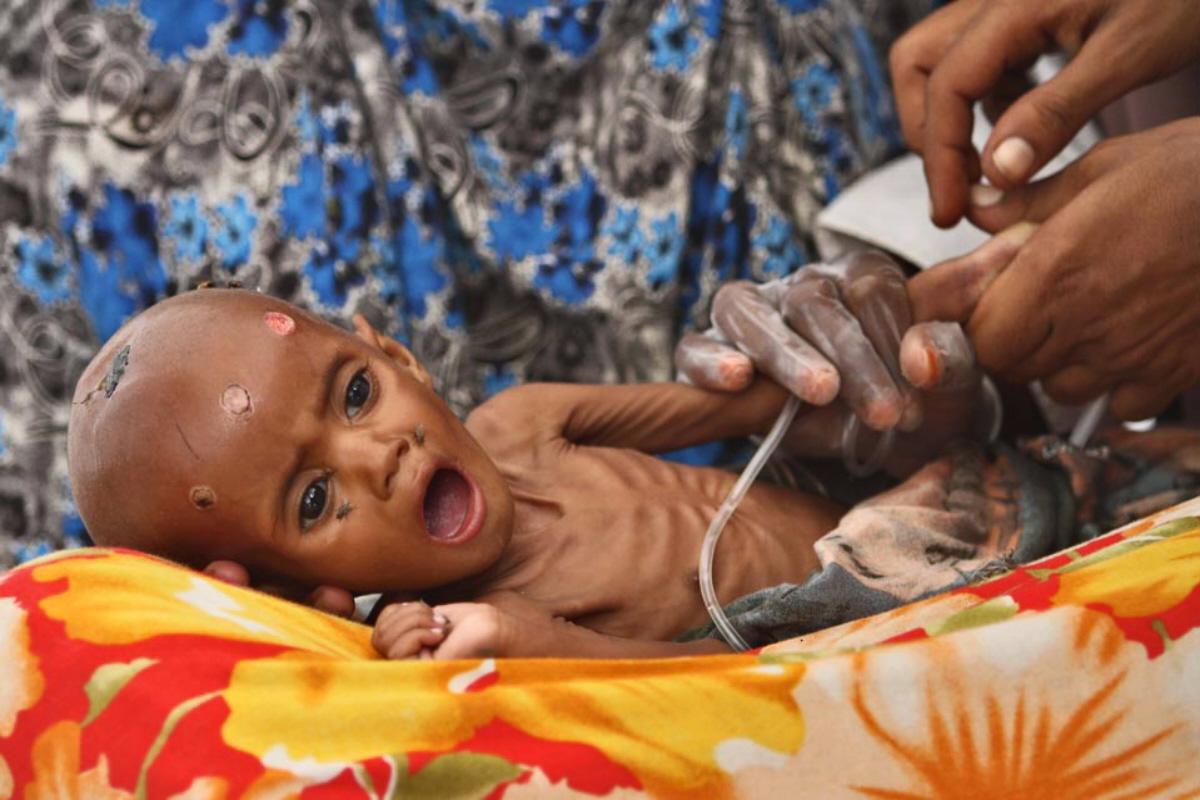
12m Need Food in Somalia, Kenya, Ethiopia

Published

on

By Dipo Olowookere

Countries in the Horn of Africa are likely to see a rise in hunger and further decline of local livelihoods in the coming months, as farming families struggle with the knock-on effects of multiple droughts that hit the region this year, FAO warned today.

Growing numbers of refugees in East Africa, meanwhile, are expected to place even more burden on already strained food and nutrition security.

Currently, close to 12 million people across Ethiopia, Kenya and Somalia are in need of food assistance, as families in the region face limited access to food and income, together with rising debt, low cereal and seed stocks, and low milk and meat production. Terms of trade are particularly bad for livestock farmers, as food prices are increasing at the same time that market prices for livestock are low.

Farmers in the region need urgent support to recover from consecutive lost harvests and to keep their breeding livestock healthy and productive at a time that pastures are the driest in years. Production outputs in the three countries are grim.

Rapid intervention

“We’re dealing with a cyclical phenomenon in the Horn of Africa,” said Dominique Burgeon, Director of FAO’s Emergency and Rehabilitation Division. “But we also know from experience that timely support to farming families can significantly boost their ability to withstand the impacts of these droughts and soften the blow to their livelihoods,” he stressed.

For this reason, FAO has already begun disbursing emergency funds for rapid interventions in Kenya and Somalia.

The funds will support emergency feed and vaccinations for breeding and weak animals, repairs of water points, and seeds and tools to plant in the spring season. FAO is also working with local officials to bolster countries’ emergency preparedness across the region.

“Especially in those areas where we know natural hazards are recurring, working with the Government to further build-up their ability to mitigate future shocks is a smart intervention that can significantly reduce the need for humanitarian and food aid further down the line,” Burgeon said.

Kenya is highly likely to see another drought in early 2017, and with it a rise in food insecurity. Current estimates show some 1.3 million people are food insecure.

Based on the latest predictions, the impacts of the current drought in the southern part of the country will lessen by mid-2017, but counties in the North – in particular Turkana, Marsabit, Wajir and Mandera – will steadily get worse.

Families in these areas are heavily dependent on livestock. Now, with their livelihoods already stressed – the last reliable rain they received was in December 2015- they will get little relief from the October-December short rains, which typically mark a recovery period but once again fell short this season.

In the affected counties, the terms of trade have become increasingly unfavourable for livestock keepers, as prices of staple foods are rising, while a flood of weakened sheep, goats and cows onto local markets has brought down livestock prices.

To ensure livestock markets remain functional throughout the dry season in 2017, FAO, is training local officials in better managing livestock markets — in addition to providing feed, water and veterinary support.

After two poor rainy seasons this year, Somalia is in a countrywide state of drought emergency, ranging from moderate to extreme. As a result, the Gu cereal harvest – from April to June – was 50 percent below average, and prospects for the October-December Deyr season are very grim.

To make matters worse, the country’s driest season – the Jilaal that begins in January- is expected to be even harsher than usual, which means Somali famers are unlikely to get a break anytime soon.

All indications are that crop farmers are already facing a second consecutive season with poor harvest. Pastoralists, meanwhile, are struggling to provide food for both their families and livestock, as pasture and water for grazing their animals are becoming poorer and scarcer by the day – in the south, pasture availability is the lowest it has been in the past five years.

Some five million Somalis are food insecure through December 2016. This includes 1.1 million people in Crisis and Emergency conditions of food insecurity (Phases 3 and 4 on the five-tier IPC scale used by humanitarian agencies). This is a 20 percent increase in just six months.

The latest analysis forecasts that the number of people in Crisis and Emergency conditions of food insecurity may further rise by more than a quarter of a million people between February and May 2017. Similar conditions in 2011 have resulted in famine and loss of lives, and therefore early action is urgently needed to avoid a repeat.

FAO calls on resource partners to urgently scale up assistance in rural areas, in the form of cash relief, emergency livestock support and agricultural inputs to plant in the April Gu season.

If farmers cannot plant during Gu – which traditionally produces 60 percent of the country’s annual cereal output — they will be left without another major harvest until 2018.

Farming families in Ethiopia, meanwhile, are extremely vulnerable as they have not been able to recover from the 2015 El Nino-induced drought. Some 5.6 million people remain food insecure, while millions more depend on livestock herds that need to be protected and treated to improve milk and meat production. Here, too, better access to feed and water is critical.

The crop situation is relatively stable after the country completed the most widespread emergency seed distribution in Ethiopia’s history. FAO and more than 25 NGOs and agencies reached 1.5 million households with drought-resistant seeds.

As a result of enabling farming families to grow their own food, the government and humanitarian community saved close to $1 billion in emergency aid, underlining that investing in farmers is not only the right thing to do but also the most cost-efficient.

FAO’s Early Warning early action work

Somalia and Kenya are among the first countries benefiting from FAO’s new Early Warning Early Action Fund (EWEA). The fund ensures quick activation of emergency plans when there is a high likelihood of a disaster that would affect agriculture and people’s food and nutrition security.

The fund will be part of a larger Early Warning Early Action System that tracks climate data and earth imaging to determine what areas are at risk of an imminent shock and will benefit from early intervention.


Dipo Olowookere is a journalist based in Nigeria that has passion for reporting business news stories. At his leisure time, he watches football and supports 3SC of Ibadan. Mr Olowookere can be reached via [email protected]

General

Ibeto Customs Command Officers Undergo Reputation Management Training

Published

on

Ibeto Customs Command

By Bon Peters

The Ibeto Seaport and Terminals Area 5 Command of the Nigeria Customs Service (NCS), Port Harcourt, Rivers State, on Friday, January 16, 2026, held a Reputation Management Cascade training for its personnel.

The seminar was aimed at strengthening ethical standards, professional conduct, and the institutional image of the service.

A statement issued by command’s spokesman, Mr Emmanuel Tangwa, a Chief Superintendent of Customs, disclosed that this was part of the service-wide driven programme to entrench integrity, accountability, and public confidence in customs operations.

The Customs Area Controller (CAC) for the command, Comptroller Usman Yahaya, described reputation as “a currency more valuable than money,” noting that “reputation like shadow follows an individual everywhere he goes.”

He said officers must consciously build their reputation with integrity and protect it with courage, as personal conduct ultimately reflects on the entire service.

Another speaker at the event, a Deputy Comptroller of Customs in charge of Revenue, Mr Jacob Onele, outlined the roles and responsibilities of leadership, senior management, public relations officers and officers at the command, zonal and field levels.

Speaking on Crisis and Reputational Risk Management, the Acting Deputy Comptroller for Administration of the command, Assistant Comptroller OE Ita, cited instances where officers’ actions negatively affected the image of the agency and explained practical steps for managing such situations to prevent reputational damage and restore public confidence.

The other speakers, including the chief examiner of the command, Assistant Comptroller MS Abdullahi; the team manager of the Customs Intelligence Unit, Deputy Comptroller HA Barka; and Deputy Comptroller BA Lawson Wadike, also aired their views on the topic of discussion, with the training providing an opportunity to a question-and-answer segment.

The participants commended the initiative and acknowledged its positive impact on their understanding of what reputation management is all about as officers noted that a single act of misconduct could stain the uniform of a thousand honest others reinforcing the lesson that reputation management begins with individual accountability.

Continue Reading

General

Discos Restore Power Supply After First National Grid Collapse of 2026

Published

on

Ikeja Electric

By Adedapo Adesanya

Gradual electricity restoration has began across the nation after the country’s national grid recorded its first collapse in 2026 on Friday.

The first collapse in 2026 on January 23 came after a similar incident on December 29, 2025, which had caused widespread power outages across the country.

The prevalent grid collapse in the country has been attributed to a combination of technical faults, inadequate maintenance of transmission lines, and fluctuations in generation capacity.

Earlier today, electricity generation dropped sharply from over 4,500 megawatts to as low as 24 megawatts as of 1:30 pm.

Checks showed that all 23 power generation plants connected to the grid reportedly lost output during the incident, resulting in zero power allocation to each of the 11 electricity distribution companies from Lagos to Kano to Abuja.

Officials of the Transmission Company of Nigeria (TCN) had yet to issue a detailed statement at the time of filing this report by 4:40 p.m.

However, a notice from Abuja Electric Distribution Company (AEDC) to customers noted that “gradual restoration of supply” has commenced.

In Lagos State, several streets in the Orelope area of Alimosho Local Government also reported power restoration.

Continue Reading

General

Google Search Shows Nigerians Prioritizing Ambition, Self-Growth in 2026

Published

on

google search Nigeria

By Aduragbemi Omiyale

A Google Search report has revealed that Nigerians are deploying the platform to make findings on how to get better in 2026 so as to navigate the year seamlessly.

Data showed that in the first two weeks of January, there has been a 40 per cent spike in searches related to self-improvement, entrepreneurial growth and “becoming better” as they search for the tools needed to succeed in every area of life.

A few of the most searches on Google by Nigerians this year have been Starting a blog, Launching a podcast, How to start a business, and Opening a YouTube channel, among others.

For example, How to start a business emerged as the top-searched how to start query this month, seeing a significant 80 per cent increase as Nigerians look to build new ventures and drive economic opportunity.

Investing in the Better Me

Personal growth is a top priority for Nigerians this year, with searches for how to be a good/better person increasing by 20 per cent. This desire for improvement extends into the heart of the home and community, with people searching for ways to be better partners, husbands, wives, and listeners.

A Healthy Start to 2026

Well-being is at the forefront of the national conversation. Nigerians are forming new habits to stay energized, with searches for how to eat healthy and healthy diet rising by 40 per cent. Mental wellness is also gaining momentum, as searches for “how to meditate” spiked by 40 per cent during the same period.

The Quest for Mastery

Whether it is professional development or personal hobbies, the quest for mastery is on. Top mind for many are searches on how to improve communication skills, memory, and even English proficiency. In the world of leisure and skill-based learning, Nigerians are looking to get better at everything from chess and running to singing and even Fortnite.

“These trends are a powerful reflection of Nigeria’s collective ambition and our shared desire to grow.

“We see Search as a cultural mirror that captures the pulse of the nation, and remain committed to ensuring our tools, from Search to Gemini, provide the relevant and helpful insights Nigerians need to navigate their daily journeys and build a more prosperous future,” the Communications and Public Affairs Manager for Google West Africa, Mr Taiwo Kola-Ogunlade, said.

The full list of Searches is below.

Top “how to be a better…” searches

Top “how to improve…” searches

1. How to be a better person

2. How to be a better lover

3. How to be a better girlfriend

4. How to be a better boyfriend

5. How to be a better husband

6. How to become a better writer

7. How to become a better singer

8. How to be a better wife

9. How to be a better kisser

10. How to be a better listener

1. How to improve English

2. How to improve memory

3. How to improve credit score

4. How to improve communication skills

5. How to improve handwriting

6. How to improve eyesight

7. How to improve posture

8. How to improve gut health

9. How to improve concentration

10. How to improve circulation

Top “how to get better at…” searches

Top “how to start…” searches

1. How to get better at Fortnite

2. How to get better at chess

3. How to get better at basketball

4. How to get better at warding League

5. How to get better at singing

6. How to get better at drawing

7. How to get better at pull ups

8. How to get better at math

9. How to get better at running

10. How to get better at soccer

1. How to start a business

2. How to start a blog

3. How to start a conversation

4. How to start a podcast

5. How to start a YouTube channel

6. How to start running

7. How to start an essay

8. How to start a speech

9. How to stop worrying and start living

10. How to start a letter

Continue Reading

Trending