Connect with us

Economy

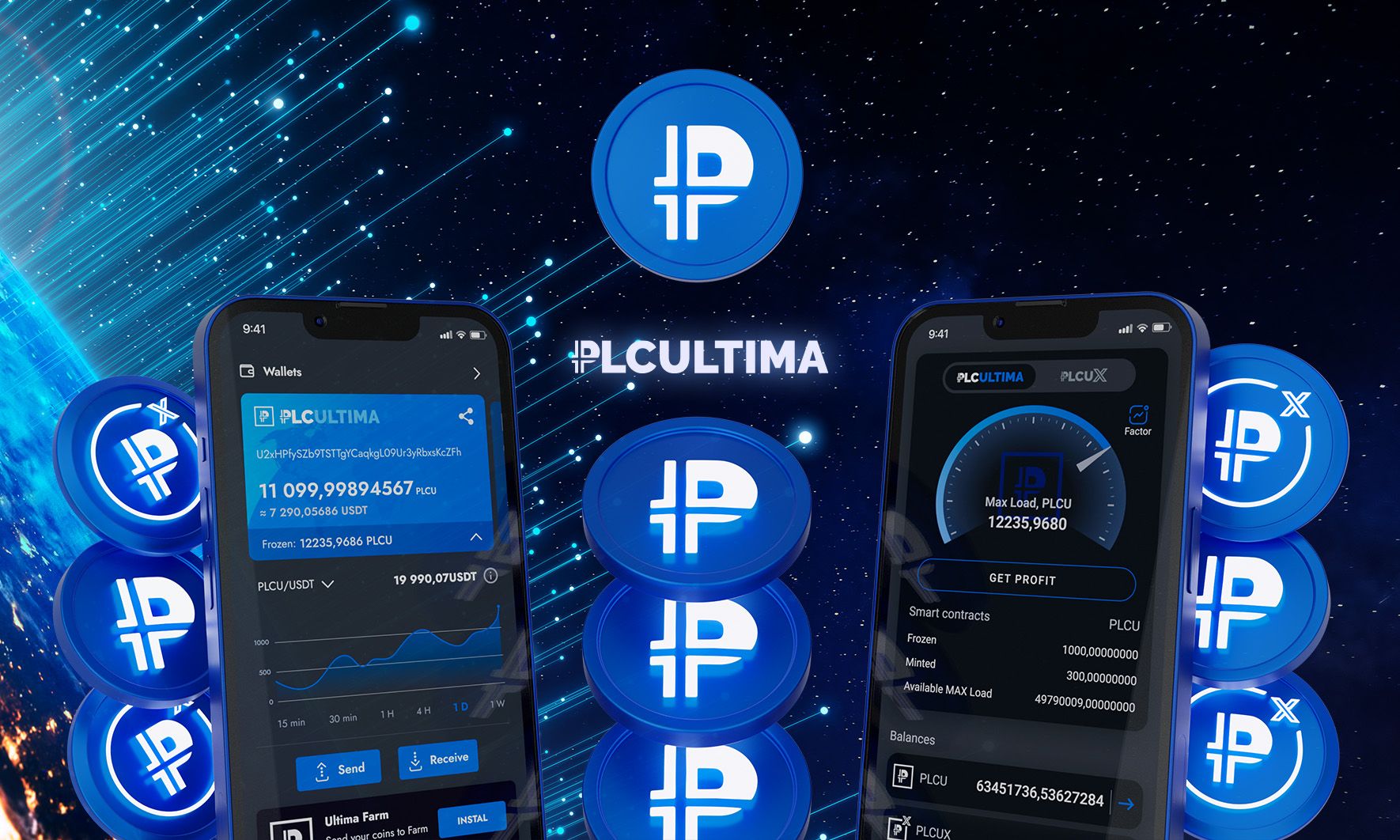
PLC Ultima Revolutionizes Crypto Mining with Mobile App

Published

on

PLC Ultima

It’s a far cry from the days when almost anyone could participate in crypto mining just using his computer. Nowadays, crypto mining is something not affordable to the majority as it needs either expensive computing machines or deep technical knowledge or both of them. This situation leads to higher risks of centralization of mining in the hands of those who can afford it. PLC Ultima, a blockchain-based ecosystem for e-commerce services, rethinks crypto mining and makes it possible to create new coins using mobile apps.

Mining Vs Minting

Opposed to centralized systems, all decentralized ones bear on the community of their supporters who actively participate in the life of the system, i.e. running nodes that check transactions or launching mining farms which write blocks of transactions in the blockchain. In return, active participants are rewarded with a certain number of digital coins for their work. Mining is essential in maintaining decentralized systems alive. Decentralized systems keep its level of decentralization while its users benefit financially from their roles.

In theory, everyone could try crypto mining. But those times when anyone with a decent home computer could easily earn new coins have long gone. Starting investments in mining exceeded several thousand dollars. If talking about bitcoin, one cannot even dream of mining if having less than $10,000 in his pocket. Furthermore, all this mining on computing machines or using GPU is extremely energy consuming and makes crypto mining an unfriendly process to the environment.

The crypto industry entered a post-Bitcoin era when new decentralized systems have to find new ways of creating coins and stimulate users to play an active role in the network. PLC Ultima proposes its innovative solution to this challenge called minting.

Minting is a more energy-effective way to produce new coins via computing power. Instead of buying expensive and energy-consuming GPU or ASICs, minting is available via apps on smartphones. This approach gives millions of persons an access to a profitable participation in decentralized systems.

Mobile Minting

Users who want to be active participants of the PLC Ultima ecosystem just need to register new accounts and download special apps (Ultima Farm and Ultima Wallet) on their smartphones. The PLC Ultima operates two native coins called PLCU and PLCUX. PLCU serves as a tool when sending transactions, while PLCUX is focused on generating new coins. PLCU is also based on a deflationary model. That means, fees paid in PLCU for transactions are burnt. By withdrawing coins forever from circulation, the ecosystem reduces market supply of burnt coins and increases shortage and raises demand for PLCU on the secondary market.

To start minting, users are required to freeze a certain number of PLCUX for a certain period. In order to buy PLCUX, users have to buy PLCU first as PLCUX is traded on exchanges only for PLCU. And PLCU is traded on dozens of exchanges, including Gate.io.

Users are rewarded on a monthly basis for storing and freezing coins in their wallets. The amount of the reward corresponds to the number of frozen coins in the wallet.

PLC Ultima, Ecosystem for Future Fintech

The PLC Ultima is a blockchain-based ecosystem focused on a wide range of fintech services, from an everyday payment system to a crowdfunding platform and marketplace, all of them already used by 1.5 million of users around the globe. The project was run by Alex Reinhardt, a venture investor, economist, entrepreneur who launched dozens of startups and fintech platforms. Its mission is to give people around the world access to the financial instruments of the ecosystem and improve their quality of life by lowering barriers to financial services.

Its blockchain is an updated version of Litecoin blockchain strengthened by the CryptoNight hashing algorithm used by Bitcoin and Monero. The PLC Ultima blockchain is fast, with one block signed every 1.5 minutes.

The PLC Ultima ecosystem hosts dozens of actively used fintech services. Its most popular ones are a blockchain-empowered crowdfunding platform called Platin Hero with smart contracts, a global e-commerce marketplace called PlatinDeal with cryptocurrency payment method available, and PLC Card, a banking-analog card for everyday payment in digital assets with exceptionally high daily limits (up to €150,000).


Economy

NASD Exchange Gains 0.88% as CSCS, FrieslandCampina Lead Advancers

Published

on

NASD securities exchange

By Adedapo Adesanya

Four price gainers extended kept the NASD Over-the-Counter (OTC) Securities Exchange in the green territory by 0.88 per cent on Wednesday, April 22.

The advancers were led by Central Securities Clearing System (CSCS) Plc, which went up by N3.33 to close at N66.48 per share compared with the preceding day’s N63.15 per share. FrieslandCampina Wamco Plc added N1.79 to sell at N99.00 per unit versus N97.21 per unit, Afriland Properties Plc appreciated by 16 Kobo to N16.00 per share from N15.84 per share, and UBN Property Plc rose by 7 Kobo to N2.25 per unit from N2.18 per unit.

Consequently, the market capitalisation chalked up N12.99 billion to close at N2.375 trillion compared with Tuesday’s N2.354 trillion, and the NASD Unlisted Security Index (NSI) increased by 34.69 points to 3,969.96 points from 3,935.27 points.

At midweek, the value of securities traded by investors surged by 11,468.9 per cent to N21.5 million from N5.7 million, the volume of securities ballooned by 708.1 per cent to 49.5 million units from 185,420 units, and the number of deals soared by 21.7 per cent to 28 deals from 23 deals.

At the close of business, Great Nigeria Insurance (GNI) Plc was the most traded stock by value on a year-to-date basis with 3.4 billion units sold for N8.4 billion, trailed by CSCS Plc with 58.9 million units exchanged for N3.9 billion, and Okitipupa Plc with 27.8 million units traded for N1.9 billion.

GNI Plc also ended the trading session as the most traded stock by volume on a year-to-date basis with 3.4 billion units worth N8.4 billion, followed by Resourcery Plc with 1.1 billion units transacted for N415.7 million, and Infrastructure Guarantee Credit Plc with 400 million units valued at N1.2 billion.

Continue Reading

Economy

Naira Rebounds to N1,348/$ at Official Market

Published

on

Official FX Market

By Adedapo Adesanya

The Naira halted its recent depreciations against the US Dollar in the Nigerian Autonomous Foreign Exchange Market (NAFEX) on Wednesday, April 22.

According to data, the domestic currency chalked up 0.17 per cent or N2.29 against the greenback at midweek to exchange for N1,348.45/$1 compared with the previous day’s rate of N1,350.74/$1 despite concerns over liquidity pressures, policy transparency, and confidence in Nigeria’s FX market, especially as the country’s foreign reserves are expected to decline further amid fluctuations in crude oil prices in the global commodity market.

However, the Naira appreciated against the Pound Sterling yesterday in the official market by N4.72 to trade at N1,821.75/£1 versus Tuesday’s price of N1,826.47/£1, and gained N7.42 against the Euro to sell at N1,582.00/€1 versus N1,589.12/€1.

The Nigerian currency maintained stability against the Dollar in the parallel market during the session at N1,375/$1, but depreciated by N9 at the GTBank forex counter to N1,363/$1 from N1,354/$1.

The Central Bank of Nigeria (CBN) announced a decline in interbank liquidity to N66.084 million across 87 deals from N91.866 million across 106 deals the previous day, a signal that FX payment requests eased on Wednesday.

Traders say weak fiscal discipline and budget overlaps are key drivers of pressure on the Naira in the black market. They raised worries, including excessive spending, delayed budgets, and the running of overlapping budget cycles.

Meanwhile, Bitcoin briefly touched $79,388 the cryptocurrency market on Wednesday before easing back to about $78,201.31.

The rally’s concentration in BTC, alongside negative funding rates that have persisted for roughly 47 days, suggests a narrow, derivatives-sceptical bid rather than broad-based enthusiasm across digital assets.

Geopolitical tensions, including a U.S. naval blockade near Iran, Iranian gunboat fire in the Strait and stalled cease-fire diplomacy, are feeding market uncertainty, with Cardano (ADA) down by 3.2 per cent to $0.2474.

Further, Solana (SOL) fell by 2.5 per cent to $85.97, Ripple (XRP) slipped by 2.3 per cent to $1.42, Ethereum (ETH) shrank by 1.7 per cent to $2,352.18, TRON (TRX) slid by 1.4 per cent to $0.3281, Dogecoin (DOGE) tumbled by 1.1 per cent to $0.0961, and Binance Coin (BNB) dropped 0.8 per cent to sell for $637.46, while the US Dollar Tether (USDT) and the US Dollar Coin (USDC) traded flat at $1.00 each.

Continue Reading

Economy

IGR of N1.3trn Accounts for 60% of Lagos Budget—Governor

Published

on

Lagos N1.3trn IGR budget

By Dipo Olowookere

Governor Babajide Sanwo-Olu of Lagos State has revealed that the annual budget of the state is now being funded largely by Internally Generated Revenue (IGR).

Speaking on Wednesday at the State House in Marina, Lagos, the Governor said revenue generated in the state from taxes specifically accounts for over 60 per cent of the appropriation act.

He also disclosed that in 2024, Lagos State earned over N1.3 trillion from IGR, allowing the government to provide basic amenities and others to residents.

Governor Sanwo-Olu attributed this achievement to the stable leadership at the Lagos State Inland Revenue Service (LIRS), charging his colleagues to emulate this.

“Governors need to give revenue agencies clear space to work. They need to give them that independence. They need to give them full tenure to do their work.

“It should not be a situation where a governor comes and wants to disrupt the tenure of the chairman. It is only when they do all of this that the confidence of taxpayers, the confidence of workers and subordinates in the system will be enhanced.

“I will be pushing my brother governors again for them to understand and appreciate that it is only when they give you what you need to work that they can get the benefits of the expertise that you all have,” Mr Sanwo-Olu said at the 159th meeting of the Joint Revenue Board (JRB) in the state.

The JRB, formerly known as the Joint Tax Board (JTB), is made up of the chairman of the Nigeria Revenue Service (NRS), chairmen of the 36 State Internal Revenue Services and the Chairman of the Federal Capital Territory (FCT), as well as representatives of key agencies including the Federal Ministry of Finance, National Identity Management Commission, Revenue Mobilisation, Allocation and Fiscal Commission, Nigeria Customs Service, Nigeria Immigration Service and the Federal Road Safety Corps.

Speaking further, the Governor said the 45 per cent increase in the IGR for 2024 was driven by reforms spearheaded by the LIRS, sustained investment in digital tax systems, expansion of the tax base, and improved engagement with taxpayers.

“We can say that our internally generated revenues now account for well over 60 per cent of our budget. It has not happened by sheer luck. It is the result of years of investment in digital tax systems, a push to expand our tax net, and building trust with our taxpayers,” he stated.

“For us, it is really about our citizens. It is about the people who have given us the trust to believe in us and to pay these taxes. My deputy and I are consistently committed to ensuring that we leave this place a lot better than we met it,” he added.

The chairman of LIRS, Mr Ayodele Subair, noted that Lagos’ hosting of the meeting again after five years reflected its economic importance.

“After a five-year interval, Lagos State is once again honoured to host this important gathering. This reflects the state’s leadership as Nigeria’s economic nerve centre,” he said.

On his part, the chairman of JRB, Mr Zacch Adedeji, represented by the Executive Secretary of JRB, Mr Olusegun Adesokan, commended Lagos for its revenue performance and governance reforms, noting that, “Prior to this, the state’s annual internal revenue was less than N94 billion. But today, Lagos generates over N1.7 trillion annually.”

“These achievements clearly demonstrate how strong revenue performance, when effectively managed, translates into tangible development outcomes for citizens,” he added.

Continue Reading

Trending