Connect with us

Economy

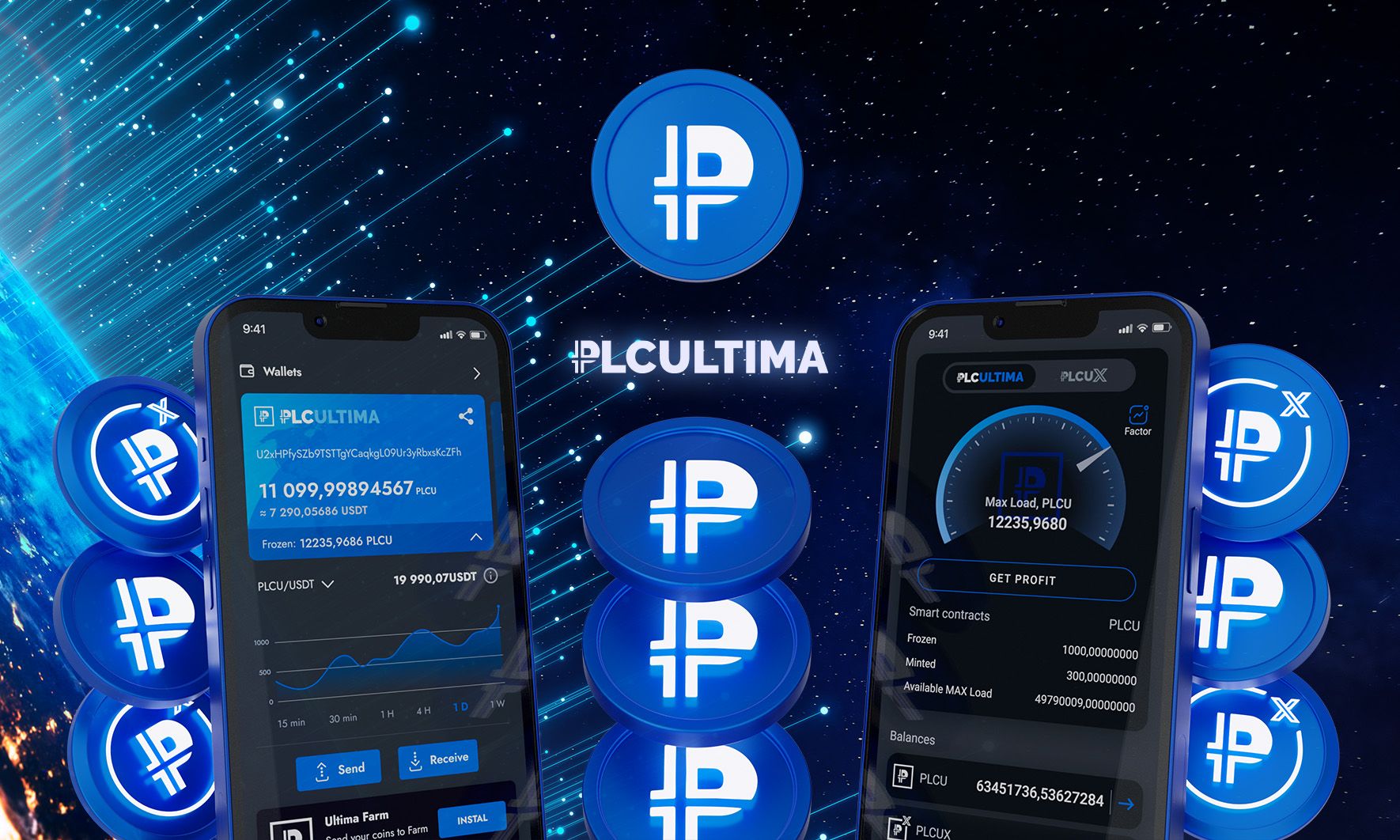
PLC Ultima Revolutionizes Crypto Mining with Mobile App

Published

on

PLC Ultima

It’s a far cry from the days when almost anyone could participate in crypto mining just using his computer. Nowadays, crypto mining is something not affordable to the majority as it needs either expensive computing machines or deep technical knowledge or both of them. This situation leads to higher risks of centralization of mining in the hands of those who can afford it. PLC Ultima, a blockchain-based ecosystem for e-commerce services, rethinks crypto mining and makes it possible to create new coins using mobile apps.

Mining Vs Minting

Opposed to centralized systems, all decentralized ones bear on the community of their supporters who actively participate in the life of the system, i.e. running nodes that check transactions or launching mining farms which write blocks of transactions in the blockchain. In return, active participants are rewarded with a certain number of digital coins for their work. Mining is essential in maintaining decentralized systems alive. Decentralized systems keep its level of decentralization while its users benefit financially from their roles.

In theory, everyone could try crypto mining. But those times when anyone with a decent home computer could easily earn new coins have long gone. Starting investments in mining exceeded several thousand dollars. If talking about bitcoin, one cannot even dream of mining if having less than $10,000 in his pocket. Furthermore, all this mining on computing machines or using GPU is extremely energy consuming and makes crypto mining an unfriendly process to the environment.

The crypto industry entered a post-Bitcoin era when new decentralized systems have to find new ways of creating coins and stimulate users to play an active role in the network. PLC Ultima proposes its innovative solution to this challenge called minting.

Minting is a more energy-effective way to produce new coins via computing power. Instead of buying expensive and energy-consuming GPU or ASICs, minting is available via apps on smartphones. This approach gives millions of persons an access to a profitable participation in decentralized systems.

Mobile Minting

Users who want to be active participants of the PLC Ultima ecosystem just need to register new accounts and download special apps (Ultima Farm and Ultima Wallet) on their smartphones. The PLC Ultima operates two native coins called PLCU and PLCUX. PLCU serves as a tool when sending transactions, while PLCUX is focused on generating new coins. PLCU is also based on a deflationary model. That means, fees paid in PLCU for transactions are burnt. By withdrawing coins forever from circulation, the ecosystem reduces market supply of burnt coins and increases shortage and raises demand for PLCU on the secondary market.

To start minting, users are required to freeze a certain number of PLCUX for a certain period. In order to buy PLCUX, users have to buy PLCU first as PLCUX is traded on exchanges only for PLCU. And PLCU is traded on dozens of exchanges, including Gate.io.

Users are rewarded on a monthly basis for storing and freezing coins in their wallets. The amount of the reward corresponds to the number of frozen coins in the wallet.

PLC Ultima, Ecosystem for Future Fintech

The PLC Ultima is a blockchain-based ecosystem focused on a wide range of fintech services, from an everyday payment system to a crowdfunding platform and marketplace, all of them already used by 1.5 million of users around the globe. The project was run by Alex Reinhardt, a venture investor, economist, entrepreneur who launched dozens of startups and fintech platforms. Its mission is to give people around the world access to the financial instruments of the ecosystem and improve their quality of life by lowering barriers to financial services.

Its blockchain is an updated version of Litecoin blockchain strengthened by the CryptoNight hashing algorithm used by Bitcoin and Monero. The PLC Ultima blockchain is fast, with one block signed every 1.5 minutes.

The PLC Ultima ecosystem hosts dozens of actively used fintech services. Its most popular ones are a blockchain-empowered crowdfunding platform called Platin Hero with smart contracts, a global e-commerce marketplace called PlatinDeal with cryptocurrency payment method available, and PLC Card, a banking-analog card for everyday payment in digital assets with exceptionally high daily limits (up to €150,000).


Economy

NGX Index Rallies 0.61% Amid Weak Investor Sentiment, Market Activity

Published

on

NGX 30 Index

By Dipo Olowookere

Weakened market activity and bearish investor sentiment were not enough to bind the Nigerian Exchange (NGX) to the Philistines on Wednesday as it rallied by 0.61 per cent.

The sterling performance put up by the major sectors of the bourse ensured that the upward trajectory was maintained, with the news of the removal of Mr Wale Edun as Finance Minister not causing panic among traders, ostensibly because his replacement, Mr Taiwo Oyedele, a tax expert, is known to the capital market.

Business Post reports that the banking segment grew by 2.03 per cent, the insurance counter firmed up by 1.07 per cent, the consumer goods sector appreciated by 0.45 per cent, the industrial goods space improved by 0.15 per cent, and the energy industry expanded by 0.02 per cent.

As a result, the All-Share Index (ASI) surged by 1,336.39 points to 219,586.20 points from 218,249.81 points, and the market capitalisation soared by N861 billion to N141.384 trillion from N140.523 trillion.

The market breadth index remained negative after Customs Street ended with 33 price losers and 28 price gainers, led by the quintet of UAC Nigeria, CAP, Vitafoam Nigeria, Transcorp Hotel, and Trans-Nationwide Express, which gained 10.00 per cent each to sell for N121.00, N110.00, N143.00, N223.30, and N7.92, respectively.

Neimeth ended the session on top of the losers’ chart after it shed 10.00 per cent to quote at N9.00. Abbey Mortgage Bank lost 9.85 per cent to settle at N5.95, Living Trust Mortgage Bank declined by 8.94 per cent to N3.36, ABC Transport crashed by 8.65 per cent to N5.70, and Haldane McCall tumbled by 6.23 per cent to N3.61.

A total of 683.7 million stocks valued at N36.2 billion were traded in 51,694 deals yesterday versus the 842.5 million stocks worth N44.9 billion transacted in 61,617 deals a day earlier, representing a drop in the trading volume, value, and number of deals by 18.85 per cent, 19.38 per cent, and 16.10 per cent, respectively.

The activity chart was led by First Holdco, which transacted 76.6 million shares worth N5.8 billion, UBA exchanged 55.3 million stocks valued at N2.8 billion, Access Holdings traded 52.4 million equities for N1.6 billion, GTCO sold 37.4 million shares worth N4.9 billion, and Japaul exchanged 30.2 million equities valued at N94.4 million.

Continue Reading

Economy

FAAC Disburses N2.036trn to FG, States, LGs in April 2026 from March Earnings

Published

on

faac allocation

By Dipo Olowookere

The sum of N2.036 trillion has been disbursed to the three tiers of government from the total gross revenue of N2.364 trillion generated in March 2026 by the nation.

The amount shared by the federal government, the 36 state governments, and the 774 local government areas of the federation in April 2026 comprised distributable statutory revenue of N1.320 trillion, distributable Value Added Tax (VAT) revenue of N515.391 billion, and an augmentation of N200 billion.

At the Federation Account Allocation Committee (FAAC) meeting held in Abuja, participants were informed that a gross statutory revenue of N1.699 trillion was received for last month, higher than the N1.561 trillion earned in the preceding month, while the gross revenue from VAT stood at N664.425 billion in March 2026 versus N668.450 billion available in February 2026.

A statement issued on Wednesday from the Office of the Accountant General of the Federation revealed that last month, Companies Income Tax (CIT), CGT, SDT, and excise duty increased significantly, while Petroleum Profit Tax (PPT), Hydrocarbon Tax (HT), Oil and Gas Royalty, Import Duty, and CET decreased considerably.

In the statement signed by the Director of Press and Public Relations, Bawa Mokwa, it was stated that, “Total deduction for cost of collection was N81.084 billion, while total transfers, refunds, and savings were N246.872 billion and an augmentation of N200 billion.”

From the N2.036 trillion distributable revenue, the federal government received N789.159 billion, the state governments got N657.596 billion, while the councils shared N468.826 billion, with the benefiting states given N120.759 billion as 13 per cent of mineral revenue derivative.

It was stated that on the N1.320 trillion distributable statutory revenue, the central government was given N632.260 billion, the states shared N320.691 billion, the local government councils got N247.239 billion, and the oil-producing states received N120.759 billion as 13 per cent derivation revenue.

Further, from the N515.391 billion distributable VAT, the national government took N51.539 billion, the states went away with N283.465 billion, and the local councils shared N180.387 billion.

Lastly, from the N200.000 augmentation, N105.360 billion was given to the federal government, N53.440 billion was disbursed to the state governments, and N41.200 billion was received by the councils.

Continue Reading

Economy

Nigeria Imports 61.7 million Barrels of US Crude in Two Years

Published

on

Cawthorne crude oil

By Adedapo Adesanya

Nigeria imported about 61.7 million barrels of crude oil from the United States between January 2024 and January 2026, according to data from the US Energy Information Administration (EIA).

This came even as the country continued to export significantly larger volumes within the same period, exposing a growing imbalance in the country’s oil supply chain.

Data from the US agency showed a sharp shift in trade flows, with American crude now flowing steadily into Nigeria after nearly a decade of negligible transactions. Before 2024, the only notable supply came in 2016, when exports averaged just 19,000 barrels per day.

The trend changed in 2024 with the start of operations at the Dangote refinery, which industry players say has increasingly turned to foreign crude to bridge gaps in domestic supply.

Within the first six months of that year alone, Nigeria imported 15.7 million barrels from the US, with June recording the highest inflow at 3.96 million barrels.

Imports accelerated further in 2025, accounting for the bulk of the two-year volume. Between February and December, inflows reached 41.06 million barrels, peaking in June at 305,000 barrels per day, equivalent to 9.15 million barrels in one month.

However, volumes dropped sharply towards the end of the year, reflecting fluctuating supply dynamics.

In January 2026, imports rose again to 159,000 barrels per day, translating to 4.93 million barrels, bringing the total volume over the two-year period to 61.7 million barrels.

The figures stand in contrast to Nigeria’s export profile.

According to data from the Central Bank of Nigeria (CBN), the country exported about 306.7 million barrels of crude between January and October 2025, representing roughly 69 per cent of total production during the period. In the first two months of 2026 alone, exports reached 55.39 million barrels.

Despite producing over 443 million barrels within the first 10 months of 2025, only about 137 million barrels were retained for domestic use, leaving local refineries struggling to secure adequate feedstock.

Operators say the Dangote Refinery requires over 19 million barrels monthly to run at optimal capacity, a demand that local supply has failed to meet consistently. This shortfall has forced the facility to source crude not only from the US but also from Ghana and other African producers.

Imports became necessary to stabilise the 650,000 barrels per day refinery operations amid inconsistent domestic allocations, despite the introduction of the Naira-for-crude arrangement. According to the management of the company, only about four to five cargoes were distributed, but this has since changed.

Alongside Dangote Refinery, other smaller operators were also affected, since the country’s crude allocation is tied to joint ventures with International Oil Companies (IOCs).

The development underscores a persistent structural challenge in Nigeria’s oil sector, exporting large volumes of crude while struggling to supply domestic refineries, raising fresh concerns about policy coordination, upstream allocation, and the long-term viability of local refining.

Continue Reading

Trending