Feature/OPED
Resource Curse and Niger Delta Unending Discourse
By Jerome-Mario Chijioke Utomi
Gong by information at the public domain, a Warri, Delta State-based newspaper, GbaramatuVoice, in furtherance of its Niger Delta Economic Discourse Series, will on Tuesday, November 29, 2022, by 10 am, at the BON Hotel, Warri, Delta State, hold a focused group discussion that centres on two separate but related typical and topical issues – the recently extended Presidential Amnesty Programme and the federal government proposed but abandoned modular refineries in the region.
The dialogue, which has as a theme Presidential Amnesty Programme and Modular Refineries: Towards sustainable human capital relations, will bring together to deeply appraise the programmes and come up with useful recommendations, critical stakeholders comprising of Niger Delta region ex-agitators, policymakers from both state and federal levels, agencies and commissions, development professionals, media professionals, traditional rulers from the oil producing communities, representatives of different security agencies and apparatus in the country among others,
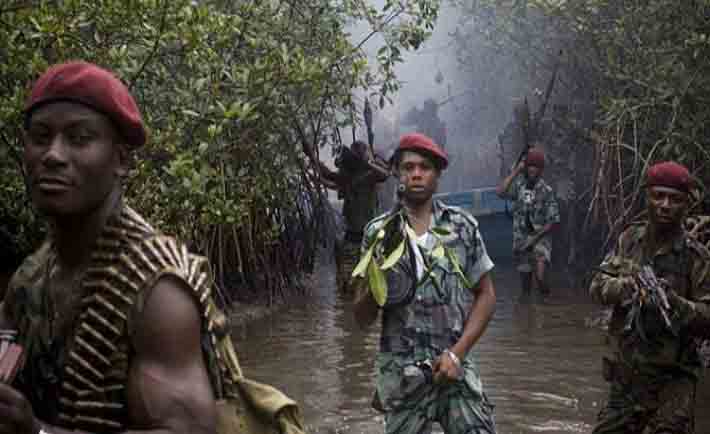
While the newspaper’s effort/decision to bring to the surface major issues/ills confronting the Niger Delta region to where they could be seen and treated is well understood and appreciated, it again raises the questions as to why Niger Delta region challenges have become an unending commentary that has defied every solution proffered in recent past by individuals, specialized groups and professionals? Is it not an absurdity of the sort that instead of shared prosperity and national cohesion, oil has brought Nigeria conflict and poverty, inequality and oppression, dependency, recurrent economic recession, and environmental dilapidation? How do we explain the fact that despite the abundance of oil and gas, hydro and energy resources, guarantees, for the most part, Nigerians live in darkness, and businesses atrophy for lack of power supply?
Is the Niger Delta region situation a case of resource curse (Dutch Disease), also known as the paradox of plenty or the poverty paradox, where countries with an abundance of natural resources have less economic growth, less democracy, or worse development outcomes than countries with fewer natural resources?
Indeed, there are many reasons why the above questions/fears cannot be described as unfounded.
Very fundamental, like other News and development-focused organizations, GbaramatuVoice has, in the past, through its Niger Delta Economic Discourse Series, facilitated research, publications, and partner relevant agencies of government and private sector on issues that are critical to the development of the oil-rich Nigeria’s Niger Delta region. Yet, none of the policymakers in the country articulated such recommendations in their national or state policy frameworks.
Again, aside from dwelling in details on sustainable actions that could consistently be taken by the federal government and other interventionist agencies to project the Niger Delta region in good light, some agencies, particularly Non-Governmental Organizations (NGO), have, in recent times, provided platforms for all to ventilate their concerns about the now extended Presidential Amnesty Programme as well as the federal government proposed modular refineries to be sited in the Niger Delta region.
Other Niger Deltans with critical interests have also, at one time or the other, offered road maps for restoring the health and vitality of the Niger Delta region and particularly proposed strategies for sustainable development, empowerment and reintroduction/re-integration of the youths of the region to their proper pride of place.
But successive administrations in the country viewed these propositions as a prank.
Regrettably, failure to adjust, adapt and incorporate these calls by the nation’s policymakers has characterized the region, in the estimation of the watching world, as an ‘unfinished project’, worse than a ‘work-in-progress’.
This has gone so bad that even at 62, no nation best typifies a country in dire need of peace and social cohesion among her various socio-political groups than Nigeria. Over the years, myriads of socio-political contradictions have conspired directly and indirectly to give the unenviable tag of a country in constant search of social harmony, justice, equity, equality, and peace.
Today, the petroleum sector, without going into specifics, doubles as a centre for the primitive accumulation of wealth as well as a platform for petro-rentier crimes. Within this sector, petroleum rents, according to reports, have been the object of an opportunistic scramble by corrupt political elites and their counterparts. In effect, the significance of oil wealth in Nigeria has been contradictory: it has been a blessing as well as a curse by generating both revenue and criminality.
This pain visited the Niger Delta, and the nation as a whole is deepened by the fact that it was avoidable.
Making the above awareness a crisis is the report that there are huge solid mineral deposits across the length and breadth of the country, yet Nigeria depends on 95% of oil income for foreign exchange earnings. Every part of the country is blessed with immense agricultural potential, yet the vast majority of our youths remain unemployed while we spend billions annually importing food staples and industrial raw materials. We are quick to boast of a huge population. It is true that one in every four black persons in the world may be Nigerian, but a significant number are more of a human liability than a human resource.
As the nation continues to brood over the above revelations, the truth must be told about the fact that the current challenge was heightened by the nation’s refusal to learn from history, which continues to teach humanity invaluable lessons about life.
To move forward, the present administration must recognize that any personality who wants to grow in leadership must almost always scale and be open to learning. They must be moulded by new experiences to improve their leadership.
Most importantly, even as stakeholders will at the meeting put together GbaramatuVoice highlight in detail urgent steps needed to support through training, financing, and other technical equipment of operators of modular refineries in the region particularly, as available evidence has shown that most of their refined products assure more quality assurance when compared with products refined abroad, this piece believes and still believes that President Muhammadu Buhari’s led Federal Government must articulate for consideration modalities for revamping the nation’s refineries.”
This must be done not for political reasons but because Nigeria’s Vice President, Professor Yemi Osinbajo, at a function in Lagos, told the gathering that the federal government is determined to see through the completion of all the critical projects that had been embarked upon in the Niger region.
In his words, “we have invested significantly in the Niger Delta as the region that holds the energy resources that have powered our progress for six decades as well as the keys to an emergent gas economy.
“In 2017, following my tour of the Niger Delta, which involved extensive consultations with key stakeholders in the region, the New Vision for the Niger Delta was birthed in response to the various challenges which had been plaguing our people. The objective of this New Vision is to ensure that the people of the region benefit maximally from their wealth through promoting infrastructural developments, environmental remediation and local content development.”
Without a doubt, the above point appears welcoming, but again, the truth must be said to the effect that the people of the region are particularly not happy with the paltry three per cent allocation to host communities by the Petroleum Industry Act (PIA).
In the interim, this piece applauds Gbaramatuvoice for keeping the flag on the Niger Delta discourse flying.
Utomi Jerome-Mario is the Programme Coordinator (Media and Policy), Social and Economic Justice Advocacy (SEJA), Lagos. He can be reached via [email protected]/08032725374
Feature/OPED
When Stability Matters: Gauging Gusau’s Quiet Wins for Nigerian Football
By Barr. Adefila Kamal
Football in Nigeria has never been just a sport. It is emotion, argument, nationalism, and sometimes heartbreak wrapped into ninety minutes. That passion is a gift, but it often comes with a tendency to shout down progress before it has the chance to grow. In the middle of this noise sits the Nigeria Football Federation under the leadership of Ibrahim Musa Gusau, a man who has chosen steady hands over loud speeches, structure over drama, and long-term rebuilding over chasing instant applause.
When Gusau took office in 2022, he understood one thing clearly: the only way to fix Nigerian football is to repair its foundations. He said it openly during the 2025 NNL monthly awards ceremony — you cannot build an edifice from the rooftop. And true to that conviction, his tenure has taken shape quietly through structural investments that don’t trend on social media but matter where the future of the game is built. The construction of a players’ hostel and modern training pitches at the Moshood Abiola Stadium is one of the clearest signs of this shift. Nigeria has gone decades without basic infrastructure for its national teams, especially youth and age-grade squads. Gusau’s administration broke that pattern by delivering the first dedicated national-team hostel in our history, a project that signals an understanding that success is not luck — it is preparation.
The same thread runs through grassroots football. The maiden edition of the FCT FA Women’s Inter-Area Councils Football Tournament emerged under this administration, giving young female players a structured platform instead of the token attention they usually receive. These initiatives are not flashy. They do not dominate headlines. But they form the bedrock of any footballing nation that wants to be taken seriously.
Gusau’s leadership has also focused on lifting the domestic leagues out of years of decline. The NFF has revamped professional and semi-professional competitions, working to create consistent scheduling, fair officiating, and marketable competition structures. The growing number of global broadcasting partnerships — something unheard of in the old NPFL era — has brought more eyes, more credibility and more opportunities for clubs and players. Monthly awards for players, coaches and referees have introduced a culture of performance and merit, something our domestic game has needed for years. These are reforms that reshape the culture of football far beyond one season.
Internationally, Nigeria regained a powerful seat at the table when Gusau was elected President of the West African Football Union (WAFU B). This is not a ceremonial achievement. In football politics, influence determines opportunities, hosting rights, development grants, international appointments and the respect with which nations are treated. For too long, Nigeria’s voice in the region was inconsistent. Gusau’s emergence changes that, and it places Nigeria in a position where its administrative competence cannot be dismissed.
His administration has also made it clear that women’s football, youth development and academy systems are no longer side projects. There is a renewed intention to repair the broken pathways that once produced global stars with almost predictable frequency. If Nigeria is going to remain a powerhouse, development must become a machine, not an afterthought.
Still, for many observers, none of this seems to matter because the yardstick is always a single match, a single tournament or a single disappointing moment. Public criticism often grows louder than the facts. Fans want instant results, and when they don’t come, the instinct is to blame whoever is in office at the moment. But this approach has repeatedly sabotaged Nigerian football. Constant leadership changes wipe out institutional memory and scatter reform efforts before they mature. No nation becomes great by resetting its football house every time tempers flare.
Gusau’s leadership is unfolding at a time when FIFA and CAF are tightening their expectations for professionalism, financial transparency and infrastructure. Nigeria cannot afford scandals, disarray or combative politics. We need the kind of administrative consistency that global football bodies can trust — and this is exactly the lane Gusau has chosen. He has not been perfect; no administrator is. But he has been consistent, measured and focused. In an ecosystem that often rewards noise, this is rare.
For progress to hold, Nigeria must shift from the culture of outrage to a culture of constructive contribution. The media, civil society, ex-players, club owners, fan groups — everyone has a role. The truth is that Nigerian football’s biggest enemy has never been the NFF president, whoever he might be at the time. The real enemies are impatience, instability and emotional decision-making. They derail strategy. They kill reforms. They weaken institutions. And they turn football — our greatest cultural asset — into a battlefield of blame.
Gusau’s effort to reposition the NFF is a reminder that real development is rarely glamorous. It is slow, disciplined and often misunderstood. But it is the only route that leads to the future we claim to want: a football system built on structure, modern governance, infrastructure, youth development and global influence. Nigeria will flourish when we start protecting our institutions instead of tearing them down after every misstep.
If we truly want Nigerian football to rise, we must recognise genuine work when we see it. We must support continuity when it is clearly producing a roadmap. And we must resist the temptation to substitute outrage for analysis. Ibrahim Musa Gusau’s tenure is not defined by noise. It is defined by groundwork — the kind that elevates nations long after the shouting stops.
Barr. Adefila Kamal is a legal practitioner and development specialist. He serves as the National President of the Civil Society Network for Good Governance (CSNGG), with a long-standing commitment to transparency, institutional reform and sports governance in Nigeria
Feature/OPED
Unlocking Capital for Infrastructure: The Case for Project Bonds in Nigeria
By Taiwo Olatunji, CFA
Nigeria’s infrastructure ambition is not constrained by vision, but by the financing architecture. The public sector balance sheet, which has been the primary source of financing, has become very tight, while financing from the private sector is available and increasing, with a focus on long-term, naira-denominated assets. Hence, the challenge lies in effectively connecting this capital to bankable projects at scale and with discipline. Project bonds, created, structured and distributed by investment banks, are the instruments required to bridge the country’s infrastructure needs.
The scale of the need is clear. Nigeria’s Revised NIIMP (2020–2043) estimates ~US$2.3 trillion, about US$100bn, a year is required annually for the next 30 years to lift infrastructure to 70% of GDP. Africa’s pensions, insurers and sovereign funds already hold over US$1.1 trillion that can be mobilised for this purpose, but they require new and innovative approaches to enhance their participation in addressing this challenge.
What is broken with the status quo?
Nigeria continues to finance inherently long-dated assets through the issuance of local currency public bonds, Sukuk and Eurobonds. This approach creates a heavy burden on the government’s balance sheet while sometimes causing refinancing risk and FX exposures, where naira cash flows service dollar liabilities. It has also led to the slow conversion of the pipeline of identified projects because many infrastructure projects have not been prepared, appraised and structured to attract the private sector.
Why project bonds and where they sit in the stack
Project bonds are debt securities issued by project SPVs and serviced from project cash flows, typically secured by concessions, offtake agreements, or availability payments. Unlike typical bonds (corporate or government), which are backed by the sponsor’s balance sheets, project bonds are backed by the cash flow generated by the financed project. They often have longer duration, are tradeable, aligned with the long operating life of infrastructure projects and best suited for pension and insurance investors.
Globally, this type of instrument has been used to finance major projects such as toll roads, power plants, and social infrastructure. For example, in Latin America, transportation and energy projects have been financed through project bonds from local and international investors, through the 144A market, a U.S. framework that allows companies to access large institutional investors without going through a full public offering. Similarly, in India, rupee-denominated project bonds have benefited from partial credit guarantees provided by institutions like Crédit Agricole Corporate and Investment Bank, which help lower investment risk and attract more investors.
In practice, project bonds can be structured in two ways: (i) as a take-out instrument, refinancing bank or DFI construction loans once an asset has reached operational stability; or (ii) as a bond issued from day one for brownfield or late-stage greenfield projects where revenue visibility is high, often supported by credit enhancements such as guarantees.
In both cases, the instrument achieves the same outcome: aligning long-term, project cash flows with the long-term liabilities of domestic institutional investors.
The enabling ecosystem is already emerging
1. Nigeria is not starting from zero. Regulatory infrastructure is already in place. The Securities and Exchange Commission (SEC) has issued detailed rules governing Project Bonds and Infrastructure Funds, creating standardized issuance structures aligned with global best practice and familiar to institutional investors. The SEC is also mulling the inclusion of the proposed rules on Credit Enhancement Service Providers in the existing rules of the Commission.
2. Market benchmarks are already available. The sovereign yield curve, published by the Debt Management Office (DMO) through its regular monthly auctions, provides a transparent reference point for pricing. This curve serves as the base risk-free rate, against which project bond spreads can be calibrated to reflect construction, operating, and sector-specific risks.
3. The National Pension Commission (PenCom) has revised its Regulation on the investment of Pension Fund Assets, increasing the amount of the country’s N25.9 trillion pension assets to be allocated to infrastructure.
4. InfraCredit has established a robust local-currency guarantee framework, supporting an aggregate guaranteed portfolio of approximately ₦270 billion. The portfolio carries a weighted average tenor of ~8 years, with demonstrated capacity to extend maturities up to 20 years. (InfraCredit 2025)
Why merchant banks should lead
Merchant banks sit at the nexus of origination, structuring, underwriting, and distribution, and they need to work with projects sponsors, financiers and government to develop a pipeline of bankable infrastructure projects. A pipeline of bankable infrastructure projects is important to attract investors as they prefer to invest in an economy with a recognizable pipeline. A pipeline also suggests that a structured and well-thought-out approach was adopted, and the projects would have identified all the major risks and the proposed mitigants to address the identified risks.
This “banks-as-catalysts” model, an economic framework that states banks can play an active and creative role in promoting industrialization and economic development, particularly in emerging markets, can be adopted to structure and mobilise domestic private finance into Infrastructure projects.
Coronation Merchant Bank’s role and vision
At Coronation, we believe the identification, structuring and testing of bankable infrastructure projects are the constraints to mobilization of private capital into the infrastructure space. We bring an integrated platform across Financial Advisory, Capital Mobilization, Commercial Debt, Private Debt and Alternative Financing to identify, structure, underwrite and distribute infrastructure debt into domestic institutions. The Bank works with DFIs, guarantee providers and other banks to scale issuance. Our franchise has supported infrastructure debt issuances via the capital markets, likewise Nigerian corporates and the Government.
From Insight to Execution
If you are considering the issuance of a project bond or you want to discuss pipeline readiness, kindly contact [email protected] or call 020-01279760.
Taiwo Olatunji, CFA is the Group Head of Investment Banking at Coronation Merchant Bank
Feature/OPED
Nigeria’s “Era of Renewed Stability” and the Truths the CBN Chooses to Overlook
By Blaise Udunze
At the Annual Bankers’ Dinner, when the Governor of the Central Bank of Nigeria, Yemi Cardoso, recently stated that Nigeria had “turned a decisive corner,” his remark aimed to convey assurance that inflation was decelerating with headline inflation eased to 16.05percent and food inflation retreating to 13.12 percent, the exchange rate was stabilizing, and foreign reserves ($46.7 billion) had climbed to a seven-year peak. However, beneath this announcement, a grimmer and conflicting economic situation challenges households, businesses, and investors daily.
Stability is not announced; it is felt. For millions of Nigerians, however, what they are facing instead are increasing difficulties, declining abilities, diminished buying power, and susceptibilities that dispute any assertion of a steady macroeconomic path.
The 303rd MPC gathering was the most significant in recent times, revealing policies and statements that prompt more questions than clarifications. It highlighted an economy striving to appear stable, in theory, while the actual sector struggles to breathe.
This narrative explores why Cardoso’s assertion of “restored stability” is based on a delicate and partial foundation, and why Nigeria continues to be distant from attaining economic robustness.
Manufacturing: The Core of Genuine Stability Remains Struggling to Survive
A strong economy is characterized by growth in production, increased investment, and competitive industries. Nigeria lacks all of these elements.
The Manufacturers Association of Nigeria (MAN) expressed this clearly in its response to the MPC’s choice to keep the Monetary Policy Rate at 27 percent. MAN stated that elevated interest rates are now” hindering production, deterring investment, and weakening competitiveness.
Producers are presently taking loans at rates between 30-37 percent, an environment that renders growth unfeasible and survival challenging. MAN’s Director-General, Segun Ajayi-Kadir, emphasized that although stable exchange rates matter, no genuine industry can endure borrowing expenses to those charged by loan sharks.
The CBN’s choice to maintain elevated interest rates is based on drawing foreign portfolio investors (FPIs) to support the naira’s stability. However, FPIs are well-known for being short-term, speculative, and reactive to disturbances. They do not signify long-term stability. Do they represent genuine economic development?
Genuine stability demands assurance, in manufacturing beyond financial tightening. Manufacturers are expressing, clearly and persistently, that no progress has been made.
Oil Output and Revenue: The Engine Behind Nigeria’s Stability Is Misfiring
Nigeria’s oil sector, which is the backbone of its fiscal stability, is underperforming. The 2025 budget presumed:
- $75 per barrel oil price
- 2.06 million barrels per day production
Both objectives have fallen apart. Brent crude lingers near $62.56 under the benchmark. Contrary to the usual explanations, experts attribute the decline not mainly to external shocks but to poor reservoir management, outdated models, weak oversight, and delayed technical decisions.
Engineer Charles Deigh, a regarded expert in reservoir engineering, clearly expressed that Nigeria is experiencing production losses due to inadequate well monitoring, obsolete reservoir models, and technical choices lacking fundamental engineering precision. These shortcomings result directly in decreased revenue. By September 2025:
– Nigeria had accumulated N62.15 trillion from oil revenue
– instead of the N84.67 trillion budgeted.
– In September, the Federal Inland Revenue Service reported a startling 49.60 percent deficit in revenue from oil taxes.
A nation falling short of its main revenue goals by 50 percent cannot assert stability. Instead, it will take loans. Nigeria has taken loans.
A Stability Built on Debt, Not Productivity
Nigeria is now Africa’s largest borrower, and the world’s third-biggest borrower from the World Bank’s IDA, with $18.5 billion in commitments. By mid-2025, the total public debt amounts to N152.4 trillion, marking a 348.6 percent rise since 2023.
From July to October 2025, the government secured contracts for: $24.79 billion, €4 billion, ¥15 billion, N757 billion, and $500 million Sukuk loans. Nevertheless, in spite of these acquisitions, infrastructure continues to be manufacturing remains limited, and social welfare is still insufficient.
Uche Uwaleke, a finance and capital markets professor, cautions that Nigeria’s debt service ratio is “detrimental to growth.” Currently, the government spends one out of every four naira it earns on servicing debts. Taking on debt is not harmful in itself, provided it finances projects that pay for themselves. In Nigeria, it supports subsistence. A country funding today, through the labour of the future, cannot assert restored stability.
The Naira: A Currency Supported by Fragile Pillars
The CBN contends that elevated interest rates and enhanced market confidence have contributed to the naira’s stabilisation. However, this steadiness is based on grounds that cannot endure even the slightest global disturbance. The pillars of a stable currency are:
– Rising domestic production
– Expanding exports
– Reliable energy supply
– Strong security
– A thriving manufacturing base
None of these is Nigeria’s current reality. What Nigeria actually receives is capital from portfolio investors, and past events (2014, 2018, 2020, 2022) have demonstrated how rapidly these funds disappear.
Unemployment: “Stable” Figures Mask a Rising Youth Crisis
The CBN touts a reported unemployment rate of 4.3 percent. However, the International Labour Organisation (ILO), along with economists, cautions that the approach conceals more serious issues in the labour market.
Youth joblessness has increased to 6.5 percent, and the Nigerian Economic Summit Group cautions that Nigeria needs to generate 27 million formal employment opportunities by 2030 or else confront a disastrous labour crisis. The employment crisis is a ticking time bomb. A country cannot maintain stability when its youth are inactive, disheartened, and financially marginalized.
FDI Continues to Lag Despite CBN’s Positive Outlook
During the 2025 Nigerian Economic Summit, NESG Chairman, Niyi Yusuf stated that Nigeria’s efforts to attract direct investment (FDI) continue to be sluggish despite the implementation of reforms. FDI genuinely reflects investor trust, not portfolio inflows. FDI signifies enduring dedication, manufacturing plants, employment, and generating value. Nigeria does not have any of this as of now. An economy unable to draw long-term investments lacks stability.
139 Million Nigerians in Poverty: What Stability?
The recent development report from the World Bank estimates that 139 million Nigerians are living in poverty, and more than half of the population faces daily struggles. This is not stability. It is a humanitarian and economic crisis.
Food inflation continues to stay structurally high. The cost of a food basket has risen five times since 2019. Low-income families currently allocate much, as 70 percent of their earnings to food. A government cannot claim stability when its citizens go hungry.
A Fragile, Failing Power Sector
The power sector, another cornerstone of economic stability, is failing. Over 90 million Nigerians are without access to electricity, which is one of the highest figures globally. Even homes linked to the grid get 6.6 hours of electricity daily. Companies allocate funds to generators rather than to technology, innovation, or growth. Nigeria has now emerged as the biggest importer of solar panels in Africa, not due to environmental goals but because the national power grid is unreliable.
A country cannot achieve stability if it is unable to supply electricity to its residences, industrial plants, or medical centers.
Insecurity: The Silent Pillar Undermining All Economic Policy
Banditry, terrorism, abduction, and militant attacks persist in agriculture, manufacturing, logistics, and investment. Nigeria forfeits $15 billion each year due to insecurity and resources that might have fueled industrial development.
Food price increases are mainly caused by instability, and farmers are unable to cultivate, gather, or deliver their products. Nevertheless, the MPC approaches inflation predominantly as an issue of policy. In a country where insecurity fundamentally hinders the economy tightening policy cannot ensure stability.
Inflation Figures Under Suspicion
Questions have also emerged regarding the reliability of inflation data. Dr. Tilewa Adebajo, an economist, affirmed that the CBN might not entirely rely on the NBS inflation figures, highlighting increasing apprehension. A sharp decrease to 16 percent inflation clashes with market conditions.
Families are facing the food costs in two decades. Costs, for transport, housing rent, education fees, and necessary items keep increasing. Food prices cannot decline when farmers are abandoning their farmlands and fleeing for safety. If inflation figures are manipulated or partial, the stability story based on them becomes deceptive. There is, quite frankly, a significant disconnect between governance and the lived experience of ordinary Nigerians.
Foreign Reserves: A Story of Headlines vs Reality
Even Nigeria’s celebrated foreign reserves require scrutiny. The CBN reported $46.7 billion in reserves. However, a closer examination shows:
– Net usable reserves are only $23.11 billion
– The remainder is connected to commitments, swaps, and debts
Gross reserves make the news. Net reserves protect the currency. The difference is too large to assert that the naira is stable.
Nigeria’s Economic Contradiction: Stability at the Top, Volatility at the Bottom
In reality, Nigeria is caught between official proclamations of stability and lived experiences of volatility. The disparity between the CBN’s account and the actual experiences of Nigerians highlights a reality:
– Macroeconomic changes have failed to convert into improvements in human well-being.
– Nigeria might appear stable officially. Its citizens are experiencing instability in truth.
– Taking on debt is increasing
– Poverty is worsening
– Manufacturing is contracting
– Jobs are scarce
– Authority is breaking down
– Feelings of insecurity are growing stronger
– Inflation is undermining dignity
– Companies are struggling to breathe
– Capital is escaping
– Misery, among humans, is expanding
A strong economy is one where advancement is experienced, not announced.
What Genuine Stability Demands
To move from paper stability to real stability, Nigeria must:
- Support domestic production. Cut interest rates for manufacturers, reduce borrowing costs, and provide targeted credit.
- Fix oil production technically. Revamp reservoir engineering, implement surveillance. Allocate resources to adequate technical oversight.
- Prioritize security. Secure farmlands, highways, and industrial corridors.
- Reform the power sector. Invest in grid reliability, renewable integration, and private-sector-led transmission.
- Attract real FDI. Streamline rules, enhance the framework, and maintain consistent policy guidance.
- Anchor debt on productive projects. Take loans exclusively for infrastructure projects that produce income.
- Prioritize reforms in welfare. Adopt crisis-responsive, domestically funded safety nets.
- Improve transparency. Ensure inflation, employment, and reserve data reflect reality.
Stability Is Not Given; It Has to Be Achieved
The CBN Governor’s statement of “renewed stability” is hopeful. It remains unproven. The inconsistencies are glaring, the statistics too. The real-world experiences are too harsh. Nigerians require outcomes, not slogans. Stability is gauged not through statements on policy but by whether:
– Manufacturing plants are creating (factories operate at full capacity),
– Food is affordable,
– Young people have jobs
– The naira is strong without artificial props,
– Electricity is reliable,
– Security is assured,
– Poverty rates are decreasing.
Unless these conditions are met, Nigeria is not experiencing a period of restored stability. Instead, it is going through a phase of recovery, one that will collapse if the actual economy keeps worsening while decision-makers prematurely applaud their successes. The CBN must rethink its approach. Nigeria needs productive stability, not statistical stability.
Blaise, a journalist and PR professional, writes from Lagos, can be reached via: [email protected]
-
Feature/OPED6 years agoDavos was Different this year
-
Travel/Tourism9 years ago
Lagos Seals Western Lodge Hotel In Ikorodu
-
Showbiz3 years agoEstranged Lover Releases Videos of Empress Njamah Bathing
-
Banking7 years agoSort Codes of GTBank Branches in Nigeria
-
Economy2 years agoSubsidy Removal: CNG at N130 Per Litre Cheaper Than Petrol—IPMAN
-
Banking3 years agoFirst Bank Announces Planned Downtime
-
Banking3 years agoSort Codes of UBA Branches in Nigeria
-
Sports3 years agoHighest Paid Nigerian Footballer – How Much Do Nigerian Footballers Earn