Connect with us

Banking

Finclusion Group Rebrands to Enhance Offerings, Market Footprint

Published

on

Finclusion Group

By Adedapo Adesanya 

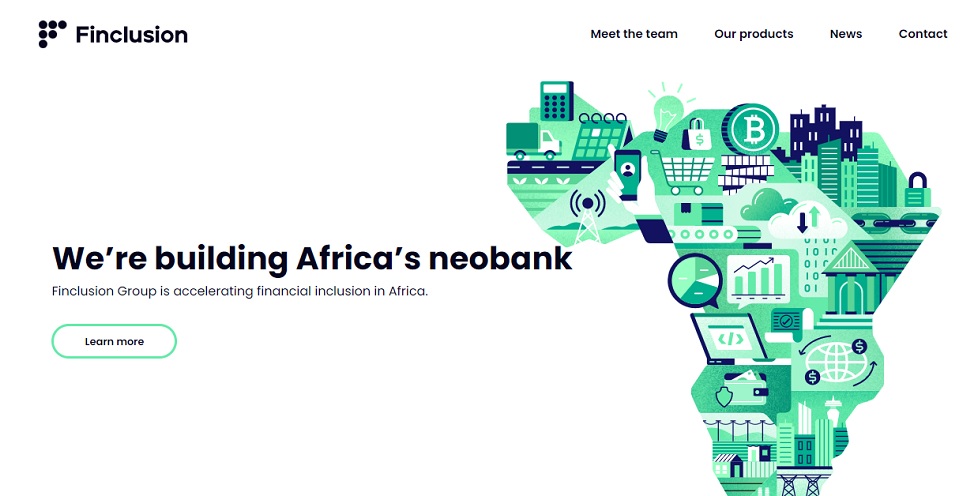
Finclusion Group has announced a brand integration across its markets to Fin, which will facilitate Fin’s planned expansion into new markets in 2022 and 2023.

As it gets a rebrand, subsidiaries in its core markets will also follow suit, including Fin Kenya (formerly: TrustGro); Fin Tanzania (formerly: Fikia Finance) and Fin South Africa (with its products now being SmartAdvance by Fin, NiftyCredit by Fin, NiftyCover by Fin, MediFin and e-Fin).

With this step, the company is consolidating its footprint across Africa under one identity and highlighting its ambition to be the leading international neobank across Eastern and Southern Africa.

The company is also announcing a further equity injection to fuel growth as it is adding $2 million in equity funding to its $20 million round raised earlier in the year. This funding is led by existing investors Mr Leonard Stiegeler, who is also joining the board of the company, as well as Mr Sudeep Ramnani and Mr Jai Mahtani.

The funding will be used to add new, fully-integrated territories to its business and develop new offerings, specifically in support of microfinance banks wanting to offer more financial services with the help of Fin.

In a statement, Fin said its mission is to enhance the quality of life of its customers through simple, convenient, and appropriate financial services. This is why the Fin team across Africa has chosen its new slogan, Simply Smarter Finance.

Speaking on this, Mr Tonderai Mutesva, Co-Founder and co-CEO of Fin, said, “This brand integration is an important step in cementing Fin as the leader in the neobanking space in East & Southern Africa. We have fantastic leadership and a strong team across our markets, and with our joint brand and platform, we will continue to expand.”

Like other neobanks, Fin is already active across the credit, insurance, BNPL and other financial services space and by presenting its services under one name, the company says it will ensure that its quality offering and customer support are instantly recognized.

Also, this brand integration will facilitate Fin’s planned expansion into new markets in 2022 and 2023 and highlight its quality services to microfinance banks in its markets. Fin will soon offer services to these microfinance banks to enhance their value proposition to customers by allowing for higher credit or better saving tools. The technology behind this offering will be known as Fin Connect and is supported by Fin’s earlier acquisition of the microfinance technology services provider, Awamo.

Fin will also continue to support adjacent businesses in the space through its venture portfolio. Fin Ventures is focused on funding entrepreneurs and startups in Africa within the credit and banking space. These ventures are independently run but can benefit from the company’s expertise. One such venture is mTek-Services, a leading digital insurer in Kenya.

Adding his input, Mr Timothy Nuy, co-founder and co-CEO of Fin, noted that “Fin has been created by a team with proven experience in the African fintech space. I am delighted that our platform can extend this expertise and useful financial tools to our partners.”


Adedapo Adesanya is a journalist, polymath, and connoisseur of everything art. When he is not writing, he has his nose buried in one of the many books or articles he has bookmarked or simply listening to good music with a bottle of beer or wine. He supports the greatest club in the world, Manchester United F.C.

Click to comment

Leave a Reply

Your email address will not be published. Required fields are marked *

Banking

Zenith Bank Opens Branch in Osubi Community in Delta

Published

on

Zenith Bank Osubi branch

By Aduragbemi Omiyale

To deepen financial inclusion and bring financial services to underserved persons in the country, Zenith Bank Plc has opened a new branch in Osubi in the Okpe Local Government Area of Delta State.

This has made Zenith Bank the first commercial bank to establish a presence in the Osubi community. The branch is the 19th of Zenith Bank in the Niger Delta state.

The chief executive of Zenith Bank, Ms Adaora Umeoji, during the commissioning of the branch on Wednesday, June 24, 2026, thanked Governor Sheriff Oborevwori of Delta State for supporting business operators.

She described the Osubi branch as a milestone in Zenith Bank’s enduring relationship with the state, reiterating the company’s commitment to serving underserved communities and to empowering individuals, businesses, women entrepreneurs, and SMEs through innovative banking solutions, access to finance, and capacity-building initiatives.

The banker expressed optimism that the new branch would serve as a catalyst for economic activity in Osubi and its surrounding communities, supporting the broader development of Delta State and Nigeria at large.

“We are deeply grateful to Governor Sheriff Oborevwori for his unwavering support and partnership, and for finding time to personally commission the branch today.

“His generous donation of the land on which this branch is built is a testament to his administration’s commitment to fostering private sector investment and creating an enabling environment for businesses to thrive.

“Since assuming office, the Governor has driven significant infrastructure and socio-economic development across the state, and Zenith Bank is proud to contribute to that progress through this new branch in Osubi,” Ms Umeoji stated.

In his remarks, Mr Oborevwori described the new branch as “a clear vote of confidence in the economic potential of our state, pointing out that it shows that the investments we have made in infrastructure, economic development, and ease of doing business are producing tangible results.

“When a leading financial institution such as Zenith Bank expands its presence in Delta State, it sends a powerful message that Delta State is open for business and ready for greater investment.”

He also underscored the branch’s significance to the host community, noting that “this branch is the only bank in the whole of Okpe Local Government as it is today. The significance of this bank to our people cannot be overemphasised, because of the impact it will have on the economy of this local government.”

Continue Reading

Banking

How to Get a Quick Loan in Nigeria With No Collateral

Published

on

Smart loan Collateral

Needing money fast is a common problem in Nigeria. Rent is due, or a small business runs short on stock money before the next sale. In the past, getting a loan from a bank meant paperwork, a guarantor, and sometimes property as collateral. That process could take weeks. Today, things have changed. Several licensed digital lenders in Nigeria now offer personal loans without collateral, and the entire process can be completed from a phone in under an hour.

This article explains how no collateral loans work in Nigeria, what lenders actually check before approving you, and how to avoid the mistakes that get loan applications rejected or, worse, land borrowers with apps that are not properly registered.

What “No Collateral” Really Means

A collateral loan asks you to pledge something of value, like land, a car, or a fixed deposit, as security. If you fail to repay, the lender has a legal right to seize that asset. Most working Nigerians do not have assets like this sitting idle, which is exactly why no collateral loans exist.

Instead of asking for property, digital lenders look at other signals to judge whether you can repay:

  • Your Bank Verification Number (BVN) or National Identification Number (NIN), used to confirm your identity
  • Your bank account history, which shows whether money moves in and out regularly
  • Your mobile money or airtime usage in some cases, which hints at your financial activity
  • Your repayment history with other lenders, if you have borrowed digitally before

This is why an app like LendSafe can approve a loan in minutes. There is no waiting for a bank manager to review your file. The decision is based on data you provide once, during registration.

Steps to Get a Quick Loan Without Collateral

The process is fairly similar across most reputable Nigerian loan apps, though the details differ slightly.

  1. Download a licensed loan app: Always check that the app is registered with the Federal Competition and Consumer Protection Commission (FCCPC) before installing it. Unregistered apps are the ones most often linked to harassment and hidden charges.
  2. Register with your phone number and basic details: Most apps ask for your name, phone number, and BVN or NIN to verify who you are.
  3. Answer a few simple questions: This usually covers your employment status, income range, and sometimes your address.
  4. Wait for your credit limit: Based on the information provided, the app calculates how much you qualify to borrow. This step typically takes a few minutes.
  5. Choose your loan amount and repayment plan: Pick an amount you are confident you can repay on time, not the maximum offered.
  6. Receive the funds: Once approved, money is sent directly to your bank account, often within minutes.

What to Check Before You Borrow

Before accepting any loan offer, confirm the following:

  • The interest rate and total repayment amount: A lender should show you exactly how much you will repay, not just how much you will receive.
  • The repayment date and any penalty for late payment: Missing a date by accident should not lead to extreme charges.
  • The lender’s registration status: Reputable lenders, such as those operating under the FCCPC’s Digital, Electronic, Online and Non-Traditional Consumer Lending Regulations, are required to disclose their licensing details. If an app cannot show this, treat it as a warning sign.
  • What permissions the app is requesting: A lender does not need access to your entire photo gallery or contact list to process a personal loan. Be cautious of apps that ask for more access than necessary.

Why ‘No Collateral’ Does Not Mean No Responsibility

Some borrowers assume that because no asset is on the line, a missed payment carries no real consequence. This is not true. Digital lenders report repayment behaviour to credit bureaus in Nigeria, including CRC Credit Bureau and CreditRegistry. A pattern of late or missed payments can affect your ability to borrow in the future, even from a different lender entirely.

The safest approach is to borrow only what you need and only when you are sure of your repayment date. A loan app should support a short-term need, not become a constant source of stress.

Conclusion

No collateral loans have made it possible for ordinary Nigerians, salaried or self-employed, to access quick cash without the long process traditional banks require. The key is choosing a lender that is properly licensed, transparent about costs, and respectful of your data and privacy. Apps that are upfront about their fees and regulatory status, like LendSafe by SmartLoans, are generally a safer place to start than apps with no clear company information behind them.

Before your next financial emergency arrives, it is worth knowing which licensed apps you can trust and how the no-collateral process actually works. That knowledge alone can save you from a costly mistake.

Continue Reading

Banking

Paystack Rolls Out Small Business Programme with Funding, Growth Support

Published

on

Paystack

 By Adedapo Adesanya

African payments technology giant, Paystack, has launched the Paystack Small Business Programme to support Nigerian small businesses through a range of initiatives designed to help them grow, connect with relevant opportunities, and access funding for their next stage of growth.

The initiative will support businesses as they start, manage and grow their operations, starting with the Paystack Small Business Bundle.

The bundle gives eligible Nigerian merchants access to up to N4 million in discounts on tools and services from selected partners across key areas of business operations, including commerce, bookkeeping, logistics, design, workspace, customer communication, and digital tools.

In the pilot phase, Paystack is targeting 2,000 Nigerian SMBs for the Small Business Bundle, with additional partner offers expected over time.

According to the company, in a statement on Monday, small businesses play a significant role in Nigeria’s economy, but many still face everyday operational challenges, from managing sales and records, reaching customers, handling deliveries, and accessing affordable tools.

As a result, the programme has been developed to provide practical support for these businesses as they manage daily operations and plan for their next stage of growth. Through the Small Business bundle, eligible merchants can access offers from partners including Bumpa, Ijeworks, Wiicreate, Flowcart, Simplebks, Africaworks, Paystack, Kindlybook, FezDelivery, Gamp, Pressone, Mercurie, Shuttlers and Canva.

The Paystack Small Business Programme will commence with three key initiatives designed to support the growth and sustainability of small businesses. These include the Paystack Small Business Bundle, which offers a range of tools, services, resources, and partner benefits to help businesses operate more efficiently and scale sustainably; the Paystack Small Business Launchpad, which provides dedicated, hands-on support to high-potential businesses, enabling them to maximize the value of Paystack’s solutions and accelerate growth; and the Paystack Small Business Grant, which offers financial support to promising businesses to help fund their next phase of expansion and development.

The Bundle is available to eligible Nigerian merchants with a live Paystack account, at least 10 Paystack transactions in the last 30 days, and operations in Nigeria.

Eligible merchants can visit the Small Business Bundle Page to browse available partner offers, submit their business details and receive redemption instructions once their eligibility has been confirmed.

Continue Reading

Trending