Connect with us

Economy

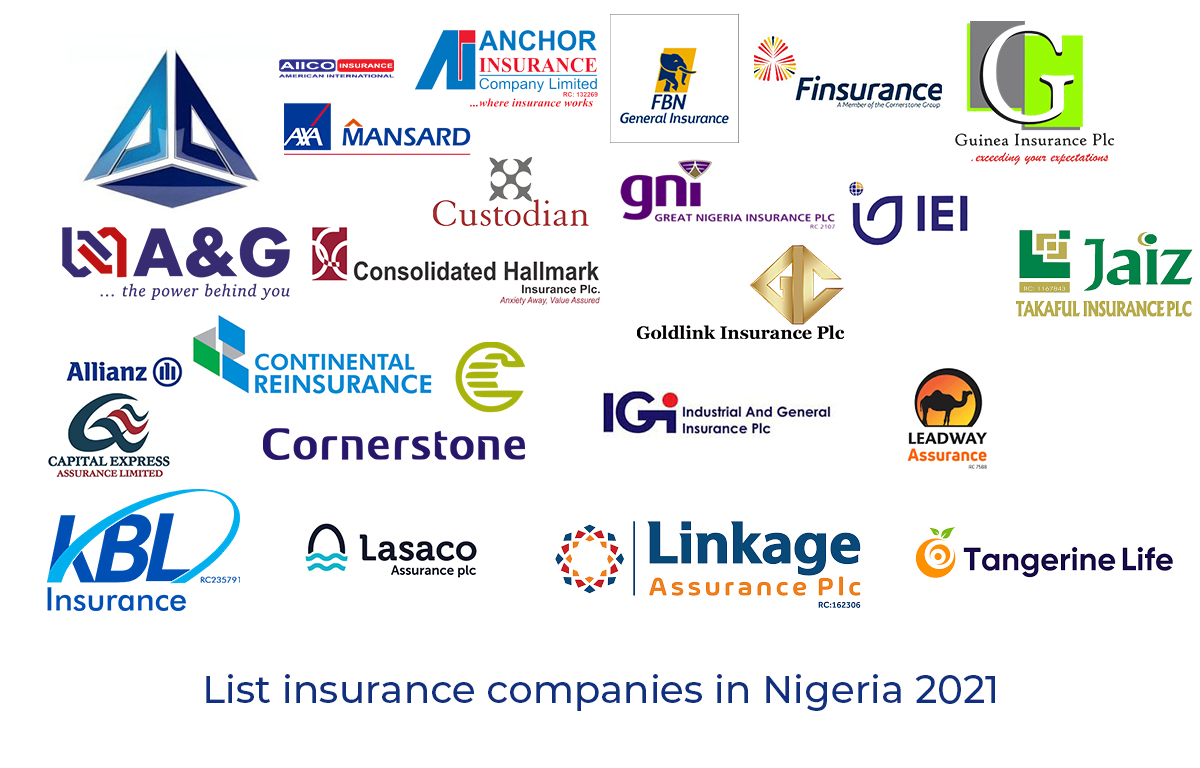
NAICOM Advocates Environmental Footprint for Insurance Companies

Published

on

Insurance companies

By Adedapo Adesanya

The National Insurance Commission (NAICOM) has encouraged insurance companies to reduce their environmental footprint through internal operations and business activities.

This call was made by the Commissioner for Insurance, Mr Sunday Thomas, at the recent 2022 Insurance Directors’ Conference organised by the College of Insurance and Financial Management (CIFM) and NAICOM in Lagos.

He added that this has become necessary as insurance remains the industry that ensures the survival of other industries.

He noted that the world is going through rapid changes economically, socially, and environmentally and this has spurred the need to bring directors of insurance entities to speed on these developments to enable sustainability.

He maintained that role of the board of directors in the survival and transformation of their establishments could never be overemphasized, and programmes like the conference were meant to apprise the directors of the developments in the industry and also equip them with the necessary knowledge that will enhance the value of their companies.

“We want to further encourage insurance companies to reduce their environmental footprint through their internal operations and business activities. I want to borrow the words of my dear sister, Dr Yeside Oyetayo, Rector of the College of Insurance and Financial Management, when she said, and I quote, Insurance is the industry that ensures the survival of other industries, it has always risen to the risks associated with human challenges in the past, and climate risks require that insurers must be part of the solution,” he said.

Mr Thomas said the insurance industry globally is continuously undergoing profound changes, adding that “we must admit that the disruption we are faced with is not just digital but also harsh market conditions, demanding customers, innovative new market entrants, and regulations which are also some of the forces transforming the insurance industry.

However, wherever there is a challenge, there is an opportunity. And all the sources of disruptions can be harnessed to become a source of growth for insurers. While no one can predict exactly what insurance might look like in a decade, insurers can take several steps now to prepare for these changes.

He noted that each of the four Principles for Sustainable Insurance has actions in the areas of company strategy, risk management and underwriting, product, and service development, claims management, sales, and marketing, investment management, clients and suppliers, insurers, reinsurers and intermediaries, government regulators, policymakers and stakeholders.

“It is imperative that as an industry, we take precautionary measures by raising awareness within ourselves on the potential sustainability impacts of business transactions and integrating these considerations into pre-emptive and holistic risk management processes,” he submitted.

He advised the directors as leaders of their respective companies that it is instructive that they take deliberate steps at reconciling long-term with short-term goals, global expansion with local objectives, and workplace, and community issues, all of which must be united, while not losing sight of the basic goals of profitable operations and increasing shareholder value.

He said to facilitate economic prosperity and ensure environmental sustainability and social development; we must join forces with identified stakeholders to drive long-term sustainable growth in the insurance sector for lasting benefits to all stakeholders.

“As an industry, we should draw on external knowledge and partnerships to keep pace with wider trends affecting not just the local but also the global insurance market. We must discover strategies to adapt and overcome further changes in the near future that may arise as a result of entrenching Economic, Social, and Governance principles,” he submitted.


Adedapo Adesanya is a journalist, polymath, and connoisseur of everything art. When he is not writing, he has his nose buried in one of the many books or articles he has bookmarked or simply listening to good music with a bottle of beer or wine. He supports the greatest club in the world, Manchester United F.C.

Advertisement
Click to comment

Leave a Reply

Your email address will not be published. Required fields are marked *

Economy

Lokpobiri Begs Lawmakers to Reschedule Oil Revenue Executive Order Probe

Published

on

Heineken Lokpobiri oil fields dispute

By Adedapo Adesanya

A joint National Assembly probe into President Bola Tinubu’s new oil revenue executive order was stalled on Thursday following a request for more time by the Minister of Petroleum Resources, Mr Heineken Lokpobiri.

The hearing was convened to scrutinise the executive order directing that royalty oil, tax oil, profit oil, profit gas and other revenues due to the Federation under various petroleum contracts be paid directly into the Federation Account.

Mr Lokpobiri told lawmakers that although he attended out of respect for parliament, he had been notified of the hearing only a day earlier and had not obtained all the relevant documents needed to defend the policy adequately.

He appealed for the session to be rescheduled.

Co-chairman of the joint committee and Chairman of the Senate Committee on Gas, Mr Agom Jarigbe, put the request to a voice vote, and lawmakers approved the adjournment.

A new date is expected to be communicated to the minister.

The executive order signed last week also scrapped the 30 per cent Frontier Exploration Fund created under the Petroleum Industry Act (PIA) and discontinued the 30 per cent management fee on profit oil and profit gas previously retained by the Nigerian National Petroleum Company (NNPC) Limited.

Anchored on Sections 5 and 44(3) of the Constitution, the presidency said the directive was aimed at safeguarding oil and gas revenues, curbing excessive deductions and restoring the constitutional entitlements of federal, state and local governments to the

However, the order has sparked criticism within the industry, one of which was from the Petroleum and Natural Gas Senior Staff Association of Nigeria (PENGASSAN), whose president, Mr Festus Osifo, called for an immediate withdrawal of the order, warning that it could undermine the PIA and erode investor confidence.

Meanwhile, at another session, the Chairman of the Senate Committee on Finance, Senator Mohammed Sani Musa, disclosed that President Tinubu would soon transmit proposals to amend certain provisions of the PIA to align with current economic realities.

He noted that while many expect the executive order to boost revenue automatically, Nigeria has yet to achieve its desired income levels.

He did not specify which sections of the law would be targeted, but suggested that the drive to enhance revenue generation would necessitate legislative adjustments.

The PIA, signed into law in 2021 by the late ex-President Muhammadu Buhari, overhauled the governance, regulatory and fiscal framework of Nigeria’s oil and gas sector, commercialised the NNPC and restructured revenue-sharing arrangements.

Continue Reading

Economy

NGX Group Declares N2 Final Dividend, 1-for-3 Bonus Issue for FY’25

Published

on

NGX Group Shares

By Aduragbemi Omiyale

Shareholders of Nigerian Exchange (NGX) Group Plc will receive one new share for every three held as of April 10, 2026, as a bonus, according to a proposal from the board.

This is in addition to a final dividend of N2.00 proposed by the board to shareholders for the 2025 fiscal year, which raised the total dividend for the year to N3.00, according to the financial statements of the company filed with NGX Limited.

Last year, NGX Group recorded a sterling performance, with its earnings growing by 36.0 per cent to N22.9 billion from N16.9 billion due to sustained growth across core business segments, improved customer penetration on the back of increased investor activity and rising investor confidence.

The operating profit in the year increased by 44.4 per cent to N11.8 billion, while pre-tax profit jumped to N15.6 billion from N13.6 billion in 2024, with the earnings per share (EPS) at N4.75.

As for its balance sheet, total assets increased to N71.0 billion from N68.0 billion, while shareholders’ equity strengthened to N55.2 billion

The improved debt-to-equity position reflects a conservative capital structure, enhanced solvency profile, and strong retained earnings growth.

“Our 2025 performance demonstrates the resilience of our business model and the effectiveness of disciplined strategic execution. Strong revenue growth, improved operating margins and a strengthened balance sheet reinforce our commitment to delivering sustainable long-term shareholder value.

“The increased dividend and bonus issue reflect the Board’s confidence in the sustainability of our earnings and the robustness of our capital position as we continue to deepen Nigeria’s capital markets.

“We are confident that the momentum that we have built in 2025 will be sustained, given investor confidence in the Nigerian capital market and a pipeline of exciting new listings that will broaden and deepen the market,” the chairman of NGX Group, Mr Umaru Kwairanga, said.

On his part, the chief executive of the organisation, Mr Temi Popoola, said, “We delivered strong top-line growth and enhanced profitability in 2025 despite macroeconomic headwinds.

“Our 36 per cent core revenue growth, improved operating efficiency and successful deleveraging have strengthened our capital base and financial flexibility, supporting the increased dividend and bonus issuance.

“As regulatory standards evolve, including the recent upward review of minimum capital requirements by the Securities and Exchange Commission (SEC), our robust balance sheet positions us to meet new thresholds seamlessly while continuing to invest in liquidity expansion, product innovation and market infrastructure to build a resilient, globally competitive exchange group.”

Continue Reading

Economy

FG Targets Credit Access For 50% Workers By 2030

Published

on

Workers' Day

By Adedapo Adesanya

The Vice President, Mr Kashim Shettima, inaugurated the Board of the Nigerian Consumer Credit Corporation (CREDICORP) and gave a 50 per cent access target for workers, saying consumer credit was critical to Nigeria’s ambition of becoming a one-trillion-dollar economy by 2030.

According to him, President Bola Tinubu established the CREDICORP to build a trusted credit infrastructure, provide catalytic capital to lower borrowing costs, and help Nigerians overcome long-standing cultural resistance to credit.

Speaking on Thursday in Abuja when he inaugurated the board on behalf of the President, the Vice President, in a statement by his spokesman, Mr Stanley Nkwocha, said that the quality of life of Nigerians cannot improve without closing the gap between access to capital and human dignity.

“A civil servant who earns honestly does not have to chase sudden wealth just to buy a vehicle, or save for ten years to buy one. A young professional should not remain in darkness simply because solar power must be paid for all at once,” the Vice President said.

VP Shettima disclosed that in just one year of operations, CREDICORP has disbursed over ₦37 billion in consumer credit to more than 200,000 Nigerians, with over half of them accessing formal credit for the first time.

The Vice President said the organisation was specifically tasked with building credit infrastructure to bridge the trust gap between lenders and borrowers, providing wholesale capital and credit guarantees through its portfolio company.

“Ultimately, these critical jobs of CREDICORP will enable access to consumer credit to at least 50 per cent of working Nigerians by 2030,” he said.

The Vice President explained that the new board’s role was not ceremonial as they are custodians of the organisation’s mission, adding that the long-term strength of the institution would depend on their “vigilance, integrity, sacrifice, and commitment.”

He directed Board members to uphold Public Service Rules, the Board Charter, and all applicable governance frameworks, warning that accountability and stewardship of public resources were non-negotiable.

The Chairman of CREDICORP, Mr Aderemi Abdul, expressed appreciation to President Tinubu for his vision behind the formation of CREDICORP and for the confidence reposed in them, noting that the establishment of the corporation marked an important step towards strengthening the nation’s financial architecture.

He assured President Tinubu that the board understands its responsibility and will guide the institution to deliver meaningful benefits to Nigerians.

For his part, Mr Uzoma Nwagba, Managing Director/CEO of CREDICORP, recalled watching President Tinubu say 20 years ago that consumer credit is one of the major tools that will improve the lives of Nigerians.

He noted that over the past 18 months, the institution has benefited more than 200,000 Nigerians, including students.

He assured that the presidential vision behind CREDICORP would not be taken lightly, as the team considers their appointments a unique, once-in-a-lifetime opportunity.

Other members of the board inaugurated include Mrs Olanike Kolawole, Executive Director, Operations; Mrs Aisha Abdullahi, Executive Director, Credit and Portfolio Management; Mr Armstrong Ume-Takang (MD, MoFI), Representative of MoFI; Mrs Bisoye Coke-Odusote (DG, NIMC), Representative of NIMC; and Mr Mohammed Naziru Abbas, Representative of FMITI.

Others are Mr Marvin Nadah, Representative of FCCPC; Mrs Chinonyelum Ndidi, Representative of the Federal Ministry of Finance; Mr Mohammed Abbas Jega, Independent Director; and Mrs Toyin Adeniji, Independent Director.

Continue Reading

Trending