Connect with us

Economy

UPDATED: Nigerians at Crossroads Over Old Naira Notes Deadline as CBN Website Goes Off

Published

on

stop dispensing old Naira notes

By Aduragbemi Omiyale

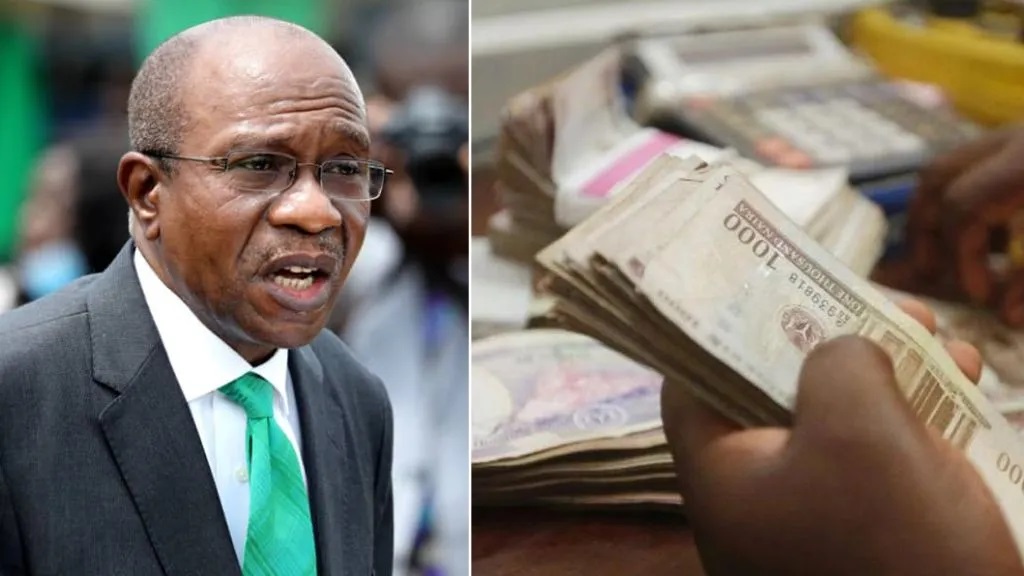
Residents of Nigeria are currently at a point where they must make a decision quickly on what to do with the old Naira notes in their possession.

The Central Bank of Nigeria (CBN), in October 2022, announced that it was redesigning the N200, N500, and N1,000 currency notes. It then gave January 31, 2023, as the deadline to swap the old notes for new ones. This was later moved to February 10.

On Wednesday, February 8, 2023, the Supreme Court granted an interim injunction sought by the Governors of Kaduna, Kogi, and Zamfara States to force the federal government to suspend the implementation of the old Naira notes deadline and fixed Wednesday, February 15, for hearing of the matter by the Governors, who want the old and new banknotes to co-exist until the former is naturally phased out of circulation.

The deadline for the return of the old currency notes ends today, and the CBN is yet to make any announcement on what the next line of action would be.

There have been reports that the apex bank may not obey the court order because it was not joined in the suit and that the dispute is between the federal government and the state governments.

But the Attorney-General of the Federation (AGF) and Minister of Justice, Mr Abubakar Malami, was quoted as saying on Thursday that the government would adhere to the directive of the apex court.

“The order was granted by the Supreme Court, and the order was to lapse on Wednesday, which is the day of the hearing. With that position in mind, we have taken steps to file an objection challenging the jurisdiction of the court to entertain the matter.

“Jurisdiction on the grounds that when you talk of monetary policy regardless of the characters they take, the central bank is an indispensable and a necessary party for that matter.

“What we have at hand is a situation where the Central Bank is not joined as a party, and if the central bank as an institution is not joined as a party, the position of the law is clear that the original jurisdiction of the Supreme Court cannot be properly invoked.

“So, we have given consideration to diverse issues, inclusive of the issue of jurisdiction and come Wednesday; we will argue the case from that perspective amongst others.

“I think what we are talking about is not whether the ruling is binding or not binding; we are talking about what we intend to do.

There is no doubt the fact that the ruling of the Supreme Court, regardless of the prevalent circumstances, is binding and then within the context of the rule of law, you can equally take steps that are available to you within the context of the spirit and circumstances of the rule of law.

“What we are doing, in essence, is compliance with the rule of law both in terms of obedience to the ruling and in terms of challenging the ruling by way of putting our own side of the story, putting across our case, challenging jurisdiction.

“So, the issue of obedience to the ruling of the Supreme Court is out of it we are wholeheartedly in agreement that naturally, we are bound by it and will comply accordingly, but within the context of compliance, we shall challenge the ruling by way of filing an application seeking for it to be set aside, it is all about the rule of law.

“The rule of law provides that there has to be obedience to the judgment and orders of the Supreme Court; the rule of law provides that when you are not happy with a ruling, you can file an application for setting aside and in compliance with the rights and privileges vested in us as a government we are equally looking at challenging the order and seeking for it to be set aside,” the AGF said when he appeared on Arise TV.

As of Thursday night, the website of the CBN had not changed the deadline for the old Naira notes from February. However, at the time of filing this report, the platform was done with the error message “Service Unavailable. HTTP Error 503. The service is unavailable.”

At the moment, some Nigerians with old currency notes do not know what to do, but they have an escape route provided by the central bank. The bank had earlier given them a grace period elapsing February 17, to return their banknotes to the CBN through their banks.
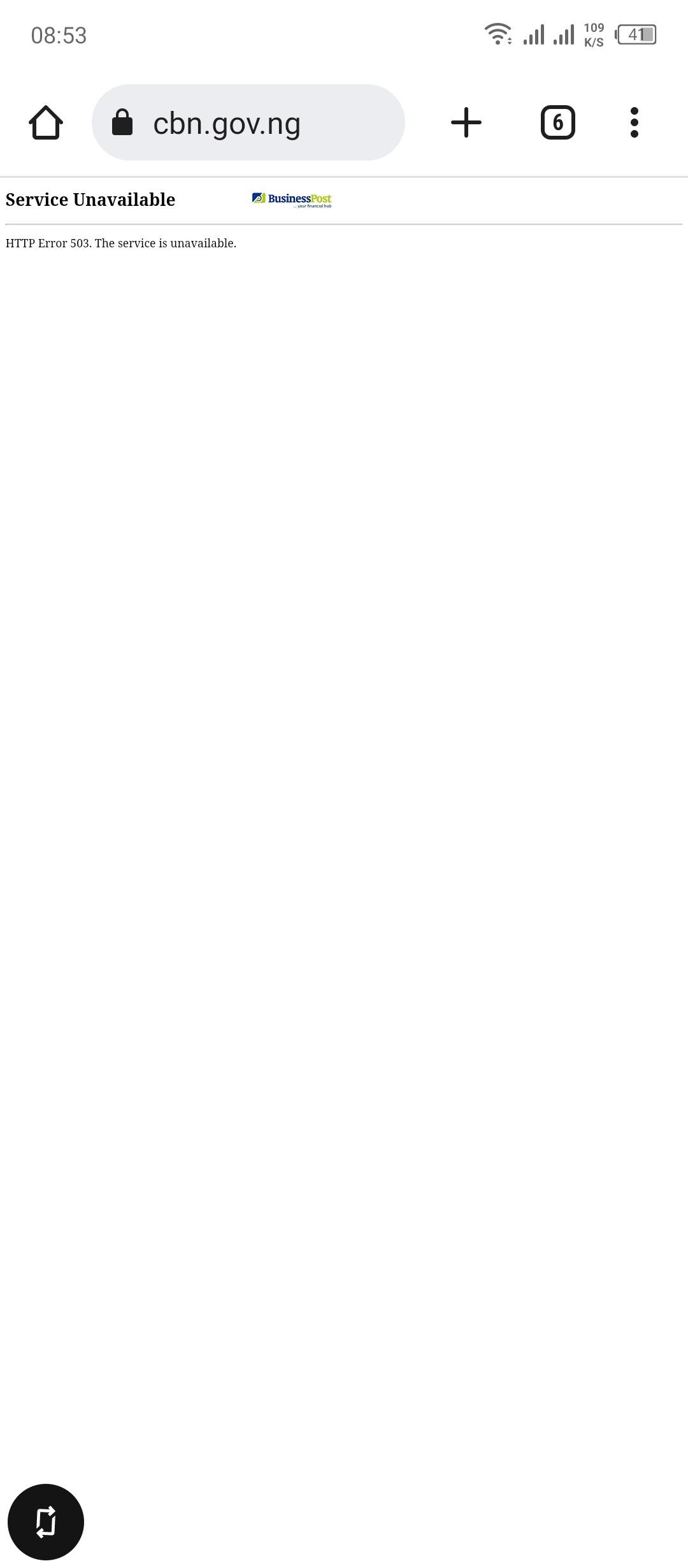
CBN Website goes off

UPDATE:

The CBN website is now back online. We were informed that the platform went live again at about 9:00 am, a few minutes after our article was published.


 

Economy

Selective Buying in Bellwether Stocks Further Raises NGX by 1.28%

Published

on

domestic investors NGX

By Dipo Olowookere

The decision of investors to cherry-pick stocks with sound fundamentals across categories further lifted the Nigerian Exchange (NGX) Limited by 1.28 per cent on Wednesday.

This selective buying of equities was inspired by the earnings season, as companies that have already released their 2025 financial statements have impressed market participants.

However, the insurance sector experienced profit-taking yesterday, causing its index to go down by 0.84 per cent at the close of business.

But this loss was offset by the 2.33 per cent growth achieved by the banking index, with the other remaining sectors also closing in green. The energy industry appreciated by 1.52 per cent, the industrial goods landscape expanded by 1.20 per cent, and the consumer goods counter improved by 1.09 per cent.

As a result, the All-Share Index (ASI) went up by 2,128.61 points to 168,030.18 points from 165,901.57 points and the market capitalization rose by N1.366 trillion to N107.861 trillion from the previous day’s N106.495 trillion.

Yesterday, 53 equities ended on the advancers’ chart and 26 equities finished on the laggards’ table, indicating a positive market breadth index and strong investor sentiment.

DAAR Communications led the gainers’ group after it surged by 10.00 per cent to sell for N1.87, Berger Paints appreciated by 10.00 per cent to N66.00, Fortis Global Insurance advanced by 10.00 per cent to 22 Kobo, RT Briscoe also jumped by 10.00 per cent to N10.45, and First Holdco improved by 9.92 per cent to N48.75.

Conversely, Red Star Express led the losers’ gang after it went down by 9.97 per cent to N17.15, Deap Capital also fell by 9.97 per cent to N6.86, Union Homes REIT slipped by 9.95 per cent to N69.25, McNichols dipped by 9.93 per cent to N6.53, and eTranzact lost 9.89 per cent to trade at N16.85.

At the midweek’s session, traders transacted 694.8 million shares worth N20.6 billion in 42,095 deals compared with the 736.4 million shares valued at N24.7 billion traded in 46,026 deals a day earlier, showing a shortfall in the trading volume, value, and number of deals by 5.65 per cent, 16.60 per cent, and 8.54 per cent, respectively.

Chams ended the day as the busiest stock after trading 57.4 million units worth N256.3 million, Universal Insurance transacted 56.2 million units valued at N88.8 million, First Holdco exchanged 35.3 million units for N1.7 billion, Deap Capital traded 26.8 million units valued at N187.0 million, and Wema Bank sold 26.7 million units worth N674.6 million.

Continue Reading

Economy

Oil Prices Climb 3% on US-Iran Talk Jitters

Published

on

Oil Prices fall

By Adedapo Adesanya

Oil prices surged about 3 per cent on Wednesday after it was reported that planned talks between the United States and Iran on Friday could collapse.

Brent futures grew by $2.13 or 3.16 per cent to $69.46 a barrel, while the US West Texas Intermediate (WTI) futures gained $1.93 or 3.05 per cent to trade at $65.14 per barrel.

The US and Iran had agreed to meet on Friday in Istanbul, with other Middle Eastern countries participating as observers.

However, the Iranians said on Tuesday that they wanted to move the talks to Oman and hold them in a bilateral format, to ensure that they focused only on nuclear issues and not other matters like missiles that are priorities for the US and countries in the region.

US officials were at first open to the request to change the location but then rejected it.

Later, the talks scheduled for Friday were back on, after several Middle Eastern leaders urgently lobbied the Trump administration on Wednesday afternoon not to follow through on threats to walk away.

The talks will be held in Muscat, the capital of Oman, on Friday.

The tensions between the US and Iran and heightened fears of potential disruption to oil flows through the Strait of Hormuz, where 20 per cent of the world’s oil supply passes through.

Members of the Organisation of the Petroleum Exporting Countries (OPEC) such as Saudi Arabia, Iran, the United Arab Emirates, Kuwait and Iraq export most of their crude via the strait.

Recall that the US military on Tuesday shot down an Iranian drone that aggressively approached a US aircraft carrier in the Arabian Sea. Separately, a group of Iranian gunboats approached a US-flagged tanker north of Oman.

The US Energy Information Administration (EIA) said on Wednesday that US crude stocks fell last week as a winter storm gripped large swaths of the country.

US crude oil inventories fell by 3.5 million barrels to 420.3 million barrels last week, as oil output slid to the lowest level since November 2024, the EIA said.

The EIA’s data release follows figures by the American Petroleum Institute (API) that were released a day earlier, which suggested that crude oil inventories fell by a colossal 11.1 million barrels.

Continue Reading

Economy

Dangote Refinery Denies Importing Petrol, Diesel into Nigeria

Published

on

Dangote refinery import petrol

By Modupe Gbadeyanka

Dangote Petroleum Refinery and Petrochemicals has described reports making the rounds that it was importing finished petroleum products like premium motor spirit (PMS), otherwise known as petrol, diesel, and others into Nigeria as false and misleading.

In a chat with newsmen on Wednesday, the company clarified that what it brought into the country were merely intermediate or semi‑processed materials, which it emphasized is a standard practice within the global refining industry.

Intermediate materials—such as naphtha, straight‑run gas oil, vacuum gas oil (VGO), reformate, alkylate and isomerate—serve as feedstock for additional refining into finished fuels like petrol and diesel, as well as petrochemicals.

The chief executive of the facility, Mr David Bird, told journalists in Lagos that as a state‑of‑the‑art and large‑scale merchant refinery, DPRP refines crude oil and processes intermediate feedstocks into premium petroleum products and petrochemicals that meet the highest international standards, noting that this practice does not amount to importing finished petroleum products.

Mr Bird highlighted that Dangote Refinery operates using a European and Asian merchant refinery model, which integrates advanced refining, blending and trading systems designed to meet modern quality and environmental benchmarks.

“DPRP produces high‑quality fuels aligned with international environmental and health standards. Our gasoline is lead‑free and MMT‑free with 50 parts per million sulphur, while our diesel meets ultra‑low sulphur specifications. These standards help reduce emissions, protect engines, and safeguard public health,” the chief executive stated.

Mr Bird reaffirmed that the Dangote Refinery supplies only fully refined, market‑ready products, adding that semi‑finished fuels are unsuitable for vehicles and are therefore not released into the Nigerian market. Samples of both intermediate feedstocks and fully refined products were displayed to journalists during the briefing.

He further noted that the refinery was established to end years of exposure to substandard fuel in Nigeria by providing products that meet stringent global standards, adding that DPRP’s products are now exported to international markets, highlighting their quality and competitiveness.

The refinery chief stressed the company’s commitment to transparency in its operations and engagements with regulators, urging the media to help properly educate the public on the clear distinction between intermediate products and finished fuel.

“It is unfortunate that some individuals are deliberately spreading misleading narratives about a refinery that has transformed Nigeria and the West African region from a dumping ground for substandard fuels into a hub for high‑quality products,” he said, adding that the refinery’s flexible design allows it to process a diverse mix of crude oils and intermediate feedstocks into premium finished fuels.

Mr Bird assured Nigerians of sustained product availability, noting that the refinery has contributed significantly to easing fuel scarcity, stabilising the naira, and reducing pressure on foreign exchange.

On his part, the Chief Brand and Communications Officer of Dangote Industries Limited, Mr Anthony Chiejina, urged journalists to be precise in their choice of terminology, warning that inaccurate reporting could misinform the public and create unnecessary panic.

Continue Reading

Trending