Connect with us

Economy

Supreme Court Extends Validity of Old Naira Notes Beyond December 31

Published

on

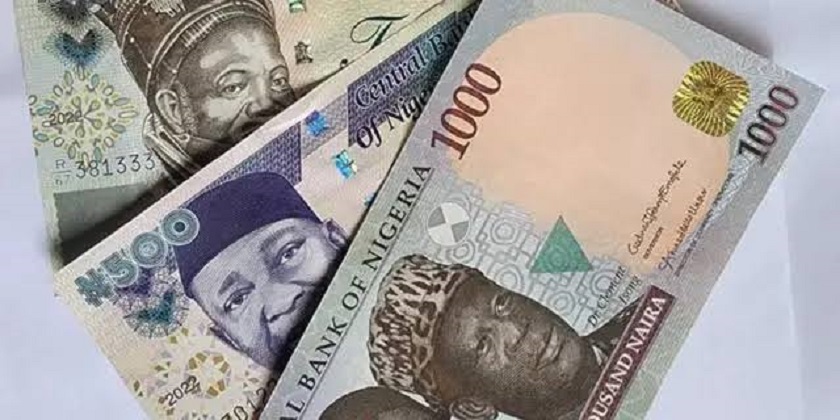
Old N1000 notes

By Adedapo Adesanya

The Supreme Court has ordered that the old N200, N500, and N1,000 notes should continue to co-exist with the new banknotes beyond the earlier December 31, 2023, deadline.

The apex court ruled on Wednesday that both old and new notes should continue to remain legal tender until the federal government puts a process in place for its replacement or redesign after due consultation with relevant stakeholders.

The seven-man panel led by Justice Inyang Okoro gave the ruling following an application by the central government asking the court to grant an extension of time for old naira notes to remain in circulation as legal tender.

The national government also asked the court to lift its March 3 order, noting that the extension of time is necessary as it has not been able to print the volume of new notes that would enable a phase-out of the old currency before the December 31 order.

In the fresh application by the Attorney-General of the Federation (AGF), Mr Lateef Fagbemi, the Federal Government further explained that should the Supreme Court decline its request to extend the period of circulation of old notes, the country stands the risk of descending into another national, economic and financial crisis as witnessed in the first quarter of the year when the Naira redesign policy was being implemented under the former Central Bank of Nigeria (CBN) Governor, Mr Godwin Emefiele.

The government asked the court to allow the old notes to be in use with the new notes until after it consults with stakeholders, pointing out that the economy may be in jeopardy once again because some Nigerians have started hoarding the old and new naira notes ahead of the December 31st timeline.

In a unanimous decision, the seven-man panel allowed the country’s application.

Business Post had reported earlier this month that the central bank announced that the old N200, N500, and N1,000 notes would remain legal tender indefinitely.

The redesign policy, introduced in October last year, brought about chaos as Nigerians experienced difficulty in accessing cash from the bank.

The policy was met with criticism by many Nigerians, including President Bola Tinubu, who was then the presidential candidate of the All Progressives Congress (APC), saying the policy was intended to disrupt his ambition to occupy the Presidential Villa in Abuja.

There was a scramble by many Nigerians to meet the initial January 31 deadline as many of them flooded banking halls with huge amounts of cash in old notes to exchange them with new ones.

Amid this rush, there were long queues at the few ATM points having the new Naira notes in different parts of the country. This spurred protests and demonstrations as Nigerians took out their anger on the banking staff of some lenders.


Adedapo Adesanya is a journalist, polymath, and connoisseur of everything art. When he is not writing, he has his nose buried in one of the many books or articles he has bookmarked or simply listening to good music with a bottle of beer or wine. He supports the greatest club in the world, Manchester United F.C.

Economy

CAC Deregisters 400,000 Inactive Businesses in 2025

Published

on

CAC

By Adedapo Adesanya

The Corporate Affairs Commission (CAC) has deregistered more than 400,000 inactive companies from the corporate registry in 2025 as part of reforms aimed at strengthening transparency, protecting the economy and restoring investor confidence.

The Registrar-General of the CAC, Mr Hussaini Magaji, disclosed this on Saturday in Abuja during the commission’s monthly fitness walk, which was organised as part of the activities marking its 35th anniversary.

Mr Magaji said the affected entities were largely companies that had failed to file statutory annual returns for years and were no longer operational, warning that such firms posed serious risks to economic integrity.

He said, “In 2025 alone, we deregistered over 400,000 companies from our records. These were largely companies that had become inactive and failed to meet statutory obligations, including filing annual returns.

“Such entities pose threats to economic operations. Cleaning up the register was necessary to build confidence and ensure that Nigeria has a credible and reliable corporate registry,” he stated.

Mr Magaji explained that a transparent and up-to-date register was critical to attracting both local and foreign investment, as well as preventing the misuse of corporate structures for illicit activities.

The CAC boss described the anniversary fitness walk as symbolic, noting that it reflected the commission’s resilience, teamwork and institutional evolution since its establishment in 1991.

He recalled that the commission began operations as a largely manual agency, once confined to a single office in Garki, Abuja, but has since evolved into a fully digital, end-to-end service provider with global reach.

“The CAC has come a long way, from manual operations in one location to a fully digital organisation. Today, our services are available anywhere, anytime, 24/7. We are the only government agency providing end-to-end digital services,” he stated.

According to him, the commission’s digital transformation has significantly supported the Federal Government’s ease-of-doing-business reforms, eliminating the need for physical visits to CAC offices to register or manage businesses.

“You can register and manage your business from your room without stepping into any CAC office. That is what ease of doing business truly means,” he added.

As part of its support for small businesses, Mr Magaji disclosed that the commission partnered with the Small and Medium Enterprises Development Agency of Nigeria to facilitate the free registration of 250,000 MSMEs in 2025.

He explained that the registrations were deliberately channelled through SMEDAN to ensure beneficiaries also received training and capacity-building support, adding that improved welfare, timely payment of entitlements and clear career progression had boosted staff morale and service delivery.

Continue Reading

Economy

NGX Market Cap Surpasses N110trn as FY 2025 Earnings Impress Investors

Published

on

creative economy capital market

By Dipo Olowookere

Investors at the Nigerian Exchange (NGX) Limited have continued to show excitement for the full-year earnings of companies on the exchange so far.

On Friday, Customs Street further appreciated by 1.01 per cent as more organization released their financial statements for the 2025 fiscal year.

During the session, traders continued their selective trading strategy, with the energy sector going up by 2.47 per cent at the close of business despite profit-taking in the banking counter, which saw its index down by 0.11 per cent.

Yesterday, the insurance space grew by 2.16 per cent, the industrial goods segment expanded by 1.70 per cent, and the consumer goods industry jumped by 0.42 per cent.

Consequently, the All-Share Index (ASI) increased by 1,722.13 points to 171,727.49 points from 170,005.36 points, and the market capitalisation soared by N1.106 trillion to N110.235 trillion from the N109.129 trillion it ended on Thursday.

Business Post reports that there were 59 appreciating stocks and 19 depreciating stocks on Friday, representing a positive market breadth index and strong investor sentiment.

The trio of Omatek, Deap Capital, and NAHCO gained 10.00 per cent each to sell for N2.64, N6.82, and N136.40 apiece, as Zichis and Austin Laz appreciated by 9.98 per cent each to close at N6.72 and N5.40, respectively.

Conversely, The Initiates depreciated by 9.74 per cent to N19.45, DAAR Communications slumped by 7.32 per cent to N1.90, United Capital crashed by 6.55 per cent to N18.55, Coronation Insurance lost 5.71 per cent to quote at N3.30, and First Holdco shrank by 5.53 per cent to N47.00.

The activity chart showed an improvement in the activity level, with the trading volume, value, and number of deals up by 33.77 per cent, 93.27 per cent, and 10.63 per cent, respectively.

This was because traders transacted 953.8 million shares worth N43.1 billion in 51,005 deals compared with the 713.0 million shares valued at N22.3 billion traded in 46,104 deals a day earlier.

Fidelity Bank was the most active with 92.4 million units sold for N1.8 billion, Chams transacted 69.2 million units valued at N310.9 million, Deap Capital exchanged 59.1 million units worth N382.7 million, Access Holdings traded 57.2 million units valued at N1.3 billion, and Tantalizers transacted 48.6 million units worth N228.2 million.

Continue Reading

Economy

Naira Retreats to N1,366.19/$1 After 13 Kobo Loss at Official Market

Published

on

naira street value

By Adedapo Adesanya

The value of the Naira contracted against the United States Dollar on Friday by 13 Kobo or 0.01 per cent to N1,366.19/$1 in the Nigerian Autonomous Foreign Exchange Market (NAFEX) from the previous day’s value of N1,366.06/$1.

According to data from the Central Bank of Nigeria (CBN), the Nigerian currency also depreciated against the Pound Sterling in the same market window yesterday by N2.37 to N1,857.75/£1 from the N1,855.38/£1 it was traded on Thursday, and further depleted against the Euro by 57 Kobo to close at N1,612.52/€1 versus the preceding session’s N1,611.95/€1.

In the same vein, the exchange rate for international transactions on the GTBank Naira card showed that the Naira lost N8 on the greenback yesterday to N1,383/$1 from the previous day’s N1,375/$1 and at the black market, the Nigerian currency maintained stability against the Dollar at N1,450/$1.

FX analysts anticipate this trend to persist, primarily influenced by increasing external reserves, renewed inflows of foreign portfolio investments, and a reduction in speculative demand.

In the short term, stability in the FX market is expected to continue, supported by policy interventions and improving market confidence.

Nigeria’s foreign reserves experienced an upward trajectory, increasing by $632.38 million within the week to $46.91 billion from $46.27 billion in the previous week.

The Dollar appreciation this week appears to be largely technical, serving as a correction to the substantial losses experienced from mid- to late January.

Meanwhile, the cryptocurrency market slightly appreciated, with Bitcoin (BTC) climbing near $68,000, up nearly 5 per cent since hitting $60,000 late on Thursday after investor confidence in crypto’s utility as a store of value, inflation hedge, and digital currency faltered.

The sell-off extended beyond crypto, with silver plunging 15 per cent and gold sliding more than 2 per cent. US stocks also fell.

The latest recoup saw the price of BTC up by 4.7 per cent to $67,978.96, as Ethereum (ETH) appreciated by 6.3 per cent to $2,021.10, and Ripple (XRP) surged by 9.5 per cent to $1.42.

In addition, Solana (SOL) grew by 7.3 per cent to $85.22, Cardano (ADA) added 6.1 per cent to trade at $0.2683, Dogecoin (DOGE) expanded by 5.4 per cent to $0.0958, Litecoin (LTC) rose by 5.2 per cent to $53.50, and Binance Coin (BNB) jumped by 2.3 per cent to $637.79, while the US Dollar Tether (USDT) and the US Dollar Coin (USDC) traded flat at $1.00 each.

Continue Reading

Trending