Connect with us

Economy

CBN Indefinitely Extends Validity of Old Naira Notes as Cash Scarcity Reappears

Published

on

deposit old Naira notes

By Modupe Gbadeyanka

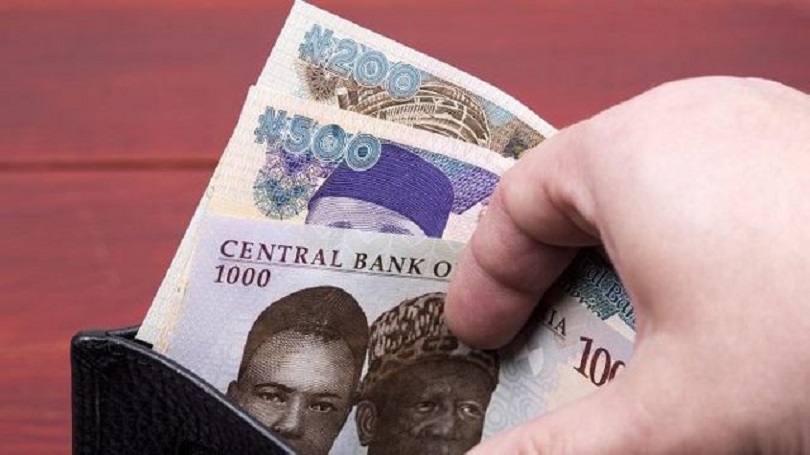
The Central Bank of Nigeria (CBN) has announced the indefinite extension of the December 31, 2023, deadline for the validity of the old N200, N500, and N1,000 currency notes.

The central bank confirmed this development in a statement issued on Tuesday night by its Director of Corporate Communications, Mr Isa AbdulMumin.

In 2022, the CBN, under the leadership of its former Governor, Mr Godwin Emefiele, introduced a Naira redesign policy, which changed the outlook of the N200, N500, and N1,000 notes.

The apex bank then said the old currency notes would no longer be legal tender in the country from January 31, 2023. This deadline was later shifted to February 10, and because of a case instituted by some state governors, the Supreme Court extended the deadline to December 31, 2023.

Before the apex court ruled on the matter, the economy was down due to the scarcity of the Naira notes, sparking violent protests across the nation.

As the December 2023 deadline draws closer, Nigerians are again finding it difficult to access their money from banks, which are rationing cash to their customers.

To avert another crisis, the central bank earlier assured Nigerians that it had enough cash to go around, cautioning against panic withdrawals.

However, this seems not to have worked, forcing the bank to announce an indefinite extension of the deadline for the swapping of old notes to new currency notes.

“The Central Bank of Nigeria wishes to inform the general public of its desire to extend the legal tender status deadline of the old design of N200, N500 and N1,000 denominations, ad infinitum. This is in line with international best practices and to forestall a repeat of earlier experiences.

“Thus, all banknotes issued by the Central Bank of Nigeria (CBN), in accordance with Section 20(5) of the CBN Act 2007, will continue to remain legal tender, ad infinitum, even beyond the initial December 31, 2023, deadline.

“The Central Bank of Nigeria is working with the relevant authorities to vacate the subsisting court ruling on the same subject,” the statement issued last night said.

The CBN urged members of the public “to continue to accept all Naira banknotes (old or redesigned) for day-to-day transactions and handle these banknotes with utmost care, to safeguard and protect the lifecycle of the banknotes.

“Also, the general public is encouraged to embrace alternative modes of payment, e-channels, for day-to-day transactions.”


Economy

NGX Loses N4.641trn in One Day as Investors Sell Off Stocks in Panic

Published

on

NGX investors

By Dipo Olowookere

The Nigerian Exchange (NGX) Limited suffered its first heaviest single day loss in a while after it closed lower by 5.01 per cent on Tuesday.

This was triggered by panic selling by investors, who are swayed by threats by the United States President, Mr Donald Trump, to carry out a military action in Nigeria over the killing of Christians by terrorists.

Since he posted about this some days ago, the markets in Nigeria have been unstable, with traders taking precautionary measures.

Customs Street was in red yesterday, with all the major segments of the bourse encountering heavy losses.

The industrial goods counter shed 8.55 per cent, the banking space lost 7.27 per cent, the energy index declined by 4.65 per cent, the insurance industry slipped by 4.33 per cent, the consumer goods sector shrank by 2.20 per cent, and the commodity space drowned by 2.07 per cent.

As a result, the All-Share Index (ASI) significantly decreased by 7,454.60 points to 141,327.3 points from 148,781.90 points and the market capitalisation fell by N4.641 trillion to N89.885 trillion from N94.526 trillion.

Business Post observed that only four stocks ended on the gainers’ table during the session, with NCR Nigeria up by 9.82 per cent to N21.25, Berger Paints gained 2.56 per cent to close at N36.00, FCMB appreciate by 0.96 per cent to N10.50, and AXA Mansard jumped 0.25 per cent to N12.10.

However, 61 stocks finished on the losers’ table led by the quintet of Academy Press, MTN Nigeria, BUA Cement, Deap Capital, and Oando, which crashed by 10.00 per cent each to sell for N6.75, N429.30, N162.00, N1.71, and N36.00, respectively.

Yesterday, market participants bought and sold 656.0 million shares for N29.4 billion in 29,558 deals versus the 364.4 million shares worth N11.4 billion transacted in 32,564 deals a day earlier, showing a decline in the number of deals by 9.23 per cent and a surge in the trading volume and value by 80.02 per cent and 157.90 per cent apiece.

First Holdco was the busiest equity for the session, trading 68.3 million units worth N2.1 billion, Access Holdings traded 56.3 million units valued at N1.2 billion, Zenith Bank exchanged 41.9 million units for N2.3 billion, Fidelity Bank sold 38.5 million units valued at N693.7 million, and Stanbic IBTC transacted 31.6 million units worth N3.2 billion.

Continue Reading

Economy

15% Import Tax on PMS, Diesel Good for Economic Growth—ECCIMA

Published

on

Return of Fuel Queues

By Aduragbemi Omiyale

The federal government has again been commended for the introduction of a 15 per cent tax on petroleum products imported into the country.

This latest applause came from the Enugu Chamber of Commerce, Industry, Mines and Agriculture (ECCIMA), which submitted that the levy aligns with the country’s Nigeria First policy aimed to promote locally made goods.

The group described the 15 per cent fuel tax as a bold and strategic move that would stimulate economic growth, encourage local production, and create employment opportunities for Nigeria’s growing youth population.

The importation of refined petroleum products dates to the 1990s—a period that marked the beginning of Nigeria’s gradual economic decline. Since then, the naira has consistently been depreciated.

The inability of the Nigerian National Petroleum Company (NNPC) Limited to revive the nation’s three government-owned refineries, coupled with indiscriminate issuance of fuel import licenses, has deepened these economic challenges.

Globally, leading economies such as the United States and China have adopted strict policies to discourage the importation of goods that can be produced locally. These nations prioritize domestic production to meet internal demand and drive exports, thereby strengthening their balance of trade. Nigeria must embrace similar strategies to achieve sustainable economic transformation.

For ECCIMA, it has long maintained that the Naira cannot appreciate while over 80 per cent of the nation’s needs remain import dependent.

Excessive importation of finished goods continues to weaken the currency, especially when these goods can be produced locally.

By imposing higher tariffs on products that can be manufactured within Nigeria, the government is taking a critical step toward protecting and revitalizing local industries.

The organisation said it was happy with the foresight of the chairman of the Dangote Group, Mr Aliko Dangote, to build the Dangote Petroleum Refinery in Lagos to meet the fuel demands of Nigeria.

The facility, located in the Lekki area of Lagos, currently has the capacity to refine about 650,000 barrels per day. But there are plans to expand this to 1.4 million barrels per day.

ECCIMA noted that Dangote Refinery and others should be supported to survive, tasking the federal government to issue more licenses to indigenous companies for refinery development.

It stressed that oil remains the country’s primary source of foreign earnings, and stakeholders with the capacity to transform the country from a net exporter of crude oil to a net exporter of refined products should receive full government support.

Continue Reading

Economy

Oil Jumps Amid Oversupply, Russian Sanctions Worries

Published

on

Oil Licensing Round

By Adedapo Adesanya

Oil gained about $1 on Tuesday on the impact of the latest US sanctions on Russian oil and the optimism over a potential end to the U.S. government shutdown, although oversupply concerns limited gains.

Brent crude increased its value by $1.10 or 1.72 per cent to $65.16 per barrel and the US West Texas Intermediate (WTI) crude climbed 91 cents or 1.51 per cent to $61.04 a barrel.

Investors continued to assess the fallout from the US sanctions on Russia, and their impact on both crude oil and refined fuel markets.

Russia’s Lukoil declared force majeure at an Iraqi oilfield it operates, marking the biggest fallout yet from the sanctions imposed last month.

Restricted fuel exports due to the sanctions are propping up oil prices in the face of a crude oil glut.

Following the October 22 US sanctions on Lukoil and Rosneft, Iraq has stopped all cash and crude payments to Lukoil. Last week, reports emerged that Iraq’s state oil marketing company SOMO had canceled three crude loadings from Lukoil this month after the US sanctioned the second-biggest Russian oil producer last month.

Following the US sanctions on Lukoil and Rosneft, oil traders and operators globally are steering clear of any cargoes of these two biggest Russian oil firms to avoid drawing the attention of the Donald Trump Administration and being slapped with secondary sanctions.

After the US sanctions on Lukoil and Rosneft, “as a result of Russia’s lack of serious commitment to a peace process to end the war in Ukraine,” Lukoil announced it would sell all of its international assets, and reached a preliminary agreement with Switzerland-based commodity trader Gunvor to sell these.

Reuters also reported that Middle Eastern producers Saudi Arabia, Iraq, and Kuwait will raise crude oil supplies to India in December as Indian refiners seek alternatives to Russian barrels.

The markets also saw support as the longest government shutdown in US history could end this week after the Senate approved a compromise that would restore federal funding. The Republican-controlled House of Representatives is due to vote on the deal later on Wednesday.

Worries about crude oversupply are curbing price gains with the main cause of this being the significant expansion of supply by the Organization of the Petroleum Exporting Countries and allies (OPEC+).

Earlier this month, OPEC+ agreed to increase December output targets by 137,000 barrels per day, but also agreed to a pause in increases in the first quarter of next year.

Market analysts noted that the alliance which also Russia, has added 2 million barrels per day of output since April, and a willingness within the group to reverse voluntary production cuts further after the first quarter pause could add an extra 1 million barrels per day in the coming year.

Continue Reading

Trending