Economy
UPDATED: Nigerians at Crossroads Over Old Naira Notes Deadline as CBN Website Goes Off
By Aduragbemi Omiyale
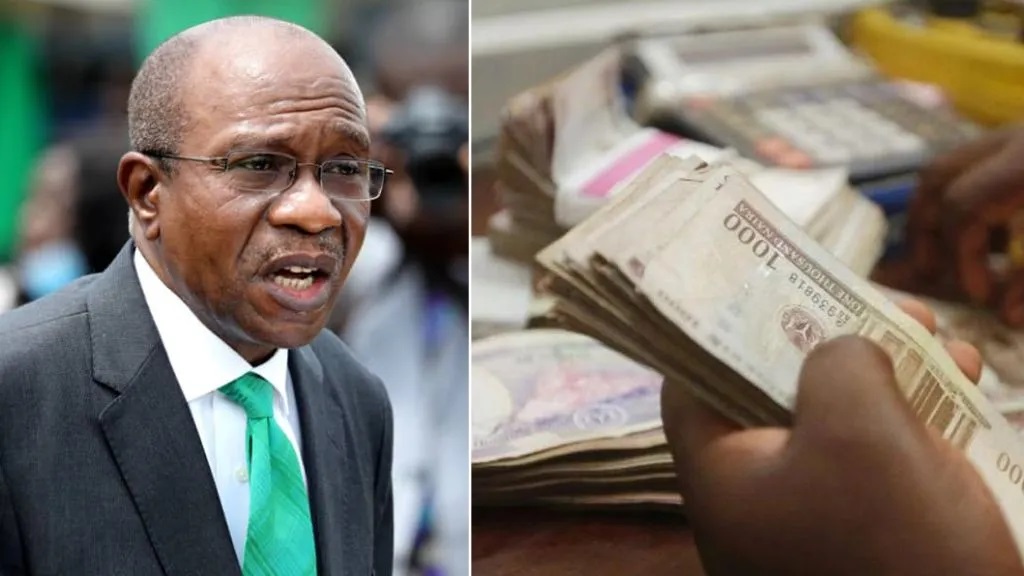
Residents of Nigeria are currently at a point where they must make a decision quickly on what to do with the old Naira notes in their possession.
The Central Bank of Nigeria (CBN), in October 2022, announced that it was redesigning the N200, N500, and N1,000 currency notes. It then gave January 31, 2023, as the deadline to swap the old notes for new ones. This was later moved to February 10.
On Wednesday, February 8, 2023, the Supreme Court granted an interim injunction sought by the Governors of Kaduna, Kogi, and Zamfara States to force the federal government to suspend the implementation of the old Naira notes deadline and fixed Wednesday, February 15, for hearing of the matter by the Governors, who want the old and new banknotes to co-exist until the former is naturally phased out of circulation.
The deadline for the return of the old currency notes ends today, and the CBN is yet to make any announcement on what the next line of action would be.
There have been reports that the apex bank may not obey the court order because it was not joined in the suit and that the dispute is between the federal government and the state governments.
But the Attorney-General of the Federation (AGF) and Minister of Justice, Mr Abubakar Malami, was quoted as saying on Thursday that the government would adhere to the directive of the apex court.
“The order was granted by the Supreme Court, and the order was to lapse on Wednesday, which is the day of the hearing. With that position in mind, we have taken steps to file an objection challenging the jurisdiction of the court to entertain the matter.
“Jurisdiction on the grounds that when you talk of monetary policy regardless of the characters they take, the central bank is an indispensable and a necessary party for that matter.
“What we have at hand is a situation where the Central Bank is not joined as a party, and if the central bank as an institution is not joined as a party, the position of the law is clear that the original jurisdiction of the Supreme Court cannot be properly invoked.
“So, we have given consideration to diverse issues, inclusive of the issue of jurisdiction and come Wednesday; we will argue the case from that perspective amongst others.
“I think what we are talking about is not whether the ruling is binding or not binding; we are talking about what we intend to do.
There is no doubt the fact that the ruling of the Supreme Court, regardless of the prevalent circumstances, is binding and then within the context of the rule of law, you can equally take steps that are available to you within the context of the spirit and circumstances of the rule of law.
“What we are doing, in essence, is compliance with the rule of law both in terms of obedience to the ruling and in terms of challenging the ruling by way of putting our own side of the story, putting across our case, challenging jurisdiction.
“So, the issue of obedience to the ruling of the Supreme Court is out of it we are wholeheartedly in agreement that naturally, we are bound by it and will comply accordingly, but within the context of compliance, we shall challenge the ruling by way of filing an application seeking for it to be set aside, it is all about the rule of law.
“The rule of law provides that there has to be obedience to the judgment and orders of the Supreme Court; the rule of law provides that when you are not happy with a ruling, you can file an application for setting aside and in compliance with the rights and privileges vested in us as a government we are equally looking at challenging the order and seeking for it to be set aside,” the AGF said when he appeared on Arise TV.
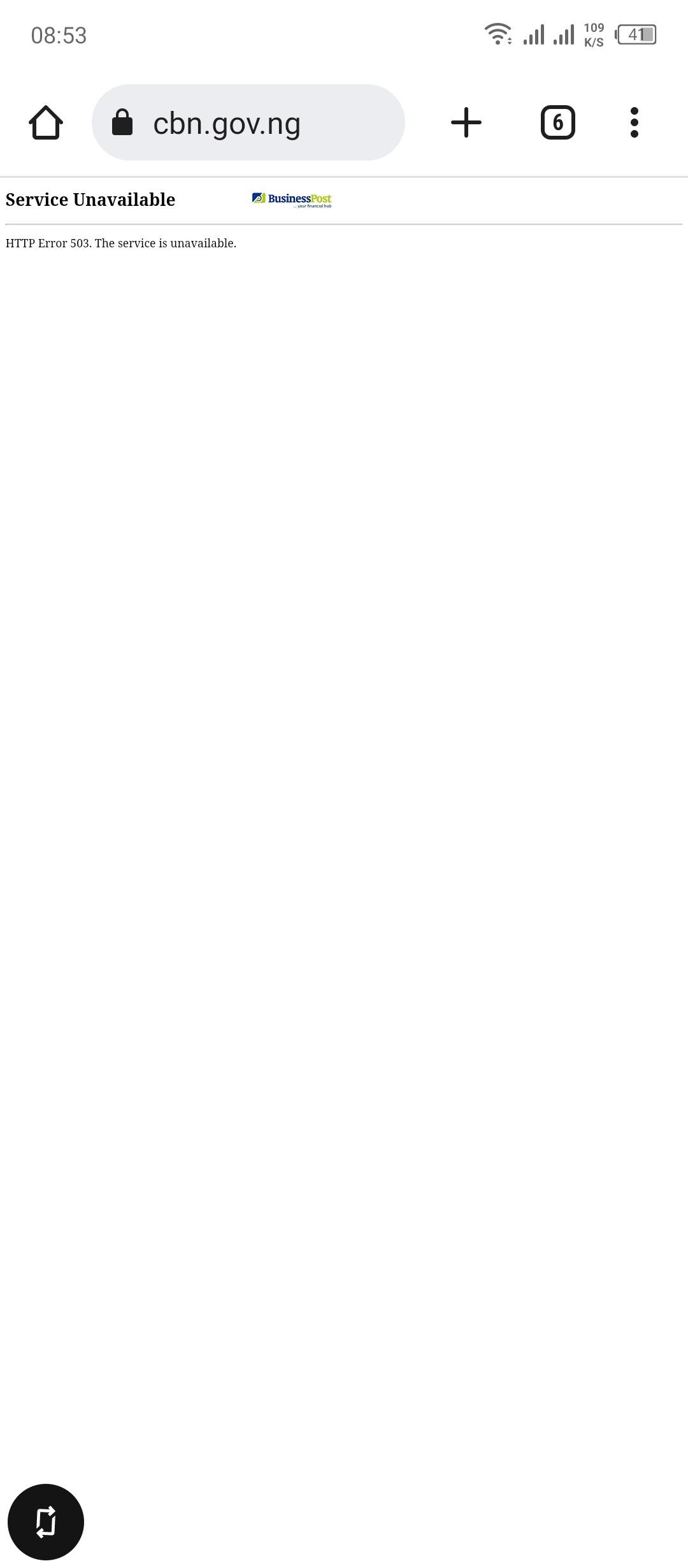
As of Thursday night, the website of the CBN had not changed the deadline for the old Naira notes from February. However, at the time of filing this report, the platform was done with the error message “Service Unavailable. HTTP Error 503. The service is unavailable.”
At the moment, some Nigerians with old currency notes do not know what to do, but they have an escape route provided by the central bank. The bank had earlier given them a grace period elapsing February 17, to return their banknotes to the CBN through their banks.
UPDATE:
The CBN website is now back online. We were informed that the platform went live again at about 9:00 am, a few minutes after our article was published.
Economy
FG Floats N590bn Bond to Repay N4trn GenCos Debt
By Adedapo Adesanya
The federal government has begun the process of repaying the N4 trillion debt owed to Power Generation Companies (GenCos) with the launch of a N590 billion first-tranche bond issuance.
The initial tranche, part of the wider N4 trillion Nigerian Bulk Electricity Trading (NBET) Finance Company Plc Bond Programme, comprises N300 billion in cash bonds to be issued to the market and N290 billion in non-cash bonds to be directly allotted to GenCos on identical terms.
The bond term sheet revealed that the Series 1 bond will be issued between November and December 2025 with CardinalStone Partners Limited serving as the lead issuing house and financial adviser.
The seven-year bond has a coupon range of 16.25 per cent to 16.75 per cent and carries a full sovereign guarantee and will be listed on both the Nigerian Exchange Limited and FMDQ Securities Exchange, making it eligible for investment by pension fund administrators, banks, asset managers, insurers and high-net-worth investors.
According to the term sheet, “Series 1 Tranche A involves N300bn issued to the market for cash, while N290bn under Tranche B is allotted to the GenCos on identical terms. The bond will be issued between November and December, with a seven-year tenor on a fixed-rate coupon, redeemed on an amortising basis and paid semi-annually in arrears.”
The bond issuance marks a major step by President Bola Tinubu’s administration to resolve what experts describe as one of the most crippling financial crises in Nigeria’s power sector. The Series 1 bond carries a seven-year tenor, a fixed coupon rate, and semi-annual interest payments, and will be amortised over its lifespan.
The issuer also retains the discretion to absorb oversubscription of up to N1.23tn, creating room for additional non-cash bond allocations to GenCos if required.
The term sheet added, “Pricing will be based on the yield of the seven-year FGN bond plus a spread, and the issuance will be conducted through a book-build process. The minimum subscription is N5m, representing 5,000 units at N1,000 each, with additional subscriptions in multiples of N1,000.
“Proceeds from the issuance will be used to settle outstanding liabilities owed to GenCos. The instrument is guaranteed by the full faith and credit of the Federal Government, enjoys CBN liquidity status, meets PenCom compliance requirements, qualifies under the Trustee Investment Act, and will be listed on both the Nigerian Exchange Limited and the FMDQ OTC Securities Exchange.”
It further noted that “oversubscription may be absorbed at the discretion of the issuer up to a maximum of N1,230,000,000,000 approved for Phase 1 of this transaction. The issuer reserves the right to increase the size of the non-cash bonds to be issued to the GenCos under any Series or accommodate additional allotments as may be required.”
Economy
NNPC, Heirs Energies to Monetize Flared Gas, Reduce Oilfield Flaring
By Adedapo Adesanya
The Nigerian National Petroleum Company (NNPC) Limited and Heirs Energies have signed a deal to capture and use the gas flared at their onshore OML 17 joint venture in a bid to monetize the resource and reduce flaring.
The state oil company and Heirs Energies have signed the Gas Flare Commercialisation Agreements under the Nigerian Gas Flare Commercialisation Programme (NGFCP), a deal that will see both entities capture the gas flared across OML 17 and deploy it for use in power generation, industrial applications, liquefied petroleum gas (LPG), and compressed natural gas (CNG).
The agreements bring together Heirs Energies, as operator of the OML 17 Joint Venture, and approved flare gas offtakers – AUT Gas, Twems Energies, Gas & Power Infrastructure Development Limited (GPID), PCCD and Africa Gas & Transport Company Limited (AGTC) – under frameworks designed to eliminate routine flaring while converting previously wasted resources into economic value. The move is aligned with Nigeria’s gas development priorities and energy transition goals, Heirs Energies said in a statement.
Gas flaring has been a major issue at Nigeria’s oilfields where it is wasted instead of used for many industrial purposes, and holds back the country’s targets to reduce emissions.
Last year, World Bank data showed that Nigeria saw flaring volumes jump by 12 per cent, the second largest increase globally behind Iran.
Flaring at oil and gas facilities operated by the national oil company and several smaller companies, likely with limited expertise or funding for gas utilization, accounted for 60 per cent of Nigeria’s gas flaring and 75 per cent of the increase in 2024, the report found.
Commenting on the deal to monetize gas at OML 17, Heirs Energies CEO, Mr Osa Igiehon said that “Through disciplined investment, partnership with regulators and credible offtakers, and a clear execution focus, we are converting waste into value, strengthening domestic energy supply and supporting responsible operations across OML 17.”
On his part, the Chief Upstream Investment Officer of NNPC Upstream Investment Management Services (NUIMS), Mr Seyi Omotowa, representing NNPC Limited, described the milestone as a practical demonstration of Nigeria’s commitment to gas-based development.
“Flare gas commercialisation is not a compliance exercise; it is a strategic pathway to improving energy availability, deepening gas-based industrialisation and strengthening Nigeria’s position as a responsible energy producer. OML 17 has become a practical model of this vision, moving decisively from approval to delivery.”
He commended Heirs Energies for disciplined execution and investment, noting that the JV continues to set benchmarks for operational delivery and gas development within Nigeria’s upstream sector.
Economy
Nigeria’s Daily Petrol Consumption Drops 6.8% to 52.9 million Litres
By Adedapo Adesanya
Data sourced from the latest Fact Sheet released by the Nigerian Midstream and Downstream Petroleum Regulatory Authority (NMDPRA) has revealed that daily petrol consumption in Nigeria dropped by 6.8 per cent to an average of 52.9 million litres in November 2025.
The November figure marked a decline from the 56.74 million litres per day recorded in October 2025.
Of the total petrol consumed last month, 19.5 million litres per day were supplied by local refineries, higher than the 17.08 million litres per day recorded a month earlier.
A major driver of this increase was the Dangote Refinery, supplying an average of 23.52 million litres per day, up from 18.03 million litres daily in the previous month.
The Fact Sheet showed that imports accounted for 52.1 million litres per day of total consumption, showing an increase from 27.6 million litres per day in October.
The NMDPRA described Dangote’s current output as a significant milestone in reducing Nigeria’s reliance on imported fuel.
In contrast, the NNPC-operated Port Harcourt, Warri, and Kaduna refineries recorded zero petrol output during the period, and all three facilities remained in various states of rehabilitation or shutdown.
According to the regulator, the surge in imports was triggered by low supply levels in September and October 2025, which fell short of national demand, the need to shore up national stock ahead of end-of-year peak consumption, NNPC’s importation efforts to rebuild inventory and ensure supply security, and delayed offloading of 12 vessels initially scheduled for October but discharged in November.
October 2025 recorded the highest consumption within the one-year review period, followed by November 2024 (56 million litres) and April 2025 (55.2 million litres), the report noted.
The data showed that Nigerians also consumed an average of 15.4 million litres/day of diesel daily in November, alongside 2.5 million litres/day of aviation fuel and 3,992 million litres/day of cooking gas.
-
Feature/OPED6 years agoDavos was Different this year
-
Travel/Tourism9 years ago
Lagos Seals Western Lodge Hotel In Ikorodu
-
Showbiz3 years agoEstranged Lover Releases Videos of Empress Njamah Bathing
-
Banking7 years agoSort Codes of GTBank Branches in Nigeria
-
Economy3 years agoSubsidy Removal: CNG at N130 Per Litre Cheaper Than Petrol—IPMAN
-
Banking3 years agoFirst Bank Announces Planned Downtime
-
Banking3 years agoSort Codes of UBA Branches in Nigeria
-
Sports3 years agoHighest Paid Nigerian Footballer – How Much Do Nigerian Footballers Earn