Connect with us

Showbiz

Cuba in Africa Wins Thomas Sankara Prize at Burkina Faso Festival

Published

on

Film Festival Burkina Faso Cuba in Africa FESPACO

By Kestér Kenn Klomegâh

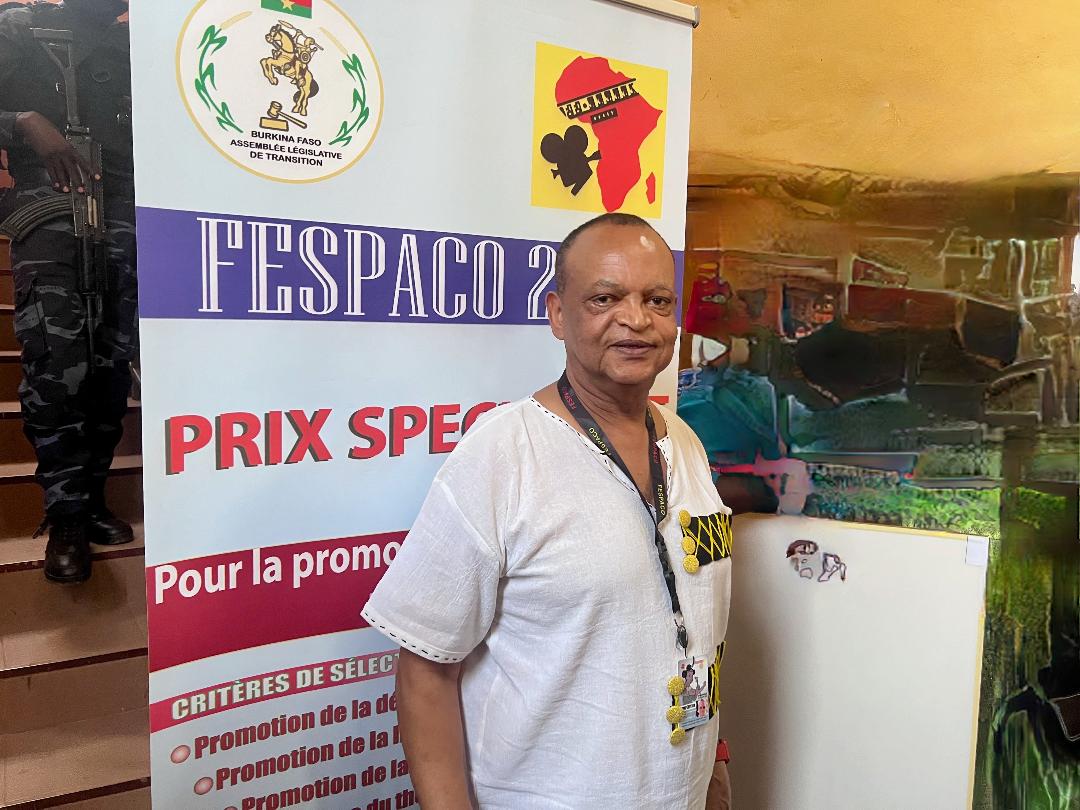
From late February to early March, in Ouagadougou, the capital of Burkina Faso, there was the week-long Africa’s largest film festival FESPACO.

In fact, FESPACO was launched in 1969. This festival provided some kind of entertainment, but the most important aspect was the platform created a show screening different films with diverse themes. The competition was very keen, with rewards for winners delivering excellent results.

Wolfram Vetter, the European Union ambassador in Burkina Faso, called the film festival “an important contribution to peace and reconciliation in Burkina Faso and beyond.” The EU was the event’s largest funder after the Burkinabe government and has contributed approximately €250,000, an equivalent of ($265,000).

Records showed that there were more than 15,000 people, including cinema celebrities from African countries such as Nigeria, Senegal and Ivory Coast, and from abroad, including France and the United States. Some 1,300 films were submitted for consideration, and 100 were selected to compete from 35 African countries and the diaspora, including movies from the Dominican Republic and Haiti. Nearly half of those in the fiction competition this year were directed by women.

Among them was Burkinabe director and producer Apolline Traore, whose film “Sira” – considered a front-runner in this year’s competition – emblematic of many Burkinabes’ suffering. It tells the tale of a woman’s struggle for survival after being kidnapped by jihadis in the Sahel, as her fiancé tries to find her.

An interesting film, “Cuba in Africa”, has received a warm, emotional response all over the world. Most people never heard of this story. Screening this film, people were touched by the altruism of Cubans who sacrificed their sons and daughters on behalf of Africa.

Negash Abdurahman, producer of Cuba in Africa, told us that his film had won the Thomas Sankara Prize. Abdurahman is an Ethiopian-American filmmaker and an educational technology specialist. He is also the Founder of RI Systems Inc.

His award-winning film Cuba in Africa was years in the making, overcoming many challenges. Cuba in Africa told the story of Cuban volunteers who gave everything to win the independence of Angola and Namibia and contributed to the fall of apartheid in South Africa.

Abdurahman spoke briefly with us from Ouagadougou. Here are the interview excerpts:

How would you interpret the film festival that took place in Burkina Faso? What are the key features of this gathering?

FESPACO is the biggest, oldest and most prestigious film festival in Africa. FESPACO is the French acronym for the Pan-African Film and Television Festival of Ouagadougou. The 28th edition of FESPACO took place from February 24 to March 5 in Ouagadougou, the capital city of Burkina Faso.

The festival opened with much fanfare and cultural pageantry. The heads of state of both Burkina Faso and Mali attended the opening ceremonies. For me, one of the emotional moments of the opening ceremonies was the Sidiki Diabate of Mali playing the mesmerizing Kora, a traditional string instrument of several West African countries.

In your critical assessment, what were some of the messages translated to the audience there? Are these related to Africa’s political culture, traditions and history?

FESPACO celebrates African cinema and tells African stories through the eyes of Africans. This was very clear at this year’s festival as well.  This year’s theme was “African Cinema and Culture of Peace.”

Before the festival, there was much tension because of the conflict going on in the northern part of Burkina Faso. Some people feared that it might not even be held at all. Playing on this fear, according to a few Burkinabe I spoke to, the French threatened not to protect the festival if they did not get their way.

French troops did, in fact, depart a few days before the opening of the festival. Fortunately, the Burkinabe were able to provide their protection. The festival and all associated music and cultural celebrations concluded without a hitch.

What place was the film “Cuba in Africa” in the festival? What other films have similar themes to this film during the demonstration (show) in Burkina Faso?

My film, Cuba in Africa, was an official selection in the short documentary category. Cuba was the only country in history that came to Africa’s aid without expecting anything in return. An Island nation of roughly 8 million people at the time sent over 400,000 people – military as well as civilians – to help Africans in their fight for freedom.

This was unprecedented. I am honoured to report that we won the much-coveted Thomas Sankara Prize. You can watch a two-minute trailer for Cuba in Africa at http://www.cubainafrica.com.

How was the final conclusion, in spite of the challenges and setbacks, of the festival?

The best films won trophies and monetary awards in their respective categories. The mood was celebratory. FESPACO is a truly African institution with its own warm, unique characteristics.


Advertisement
1 Comment

Leave a Reply

Your email address will not be published. Required fields are marked *

Showbiz

Afreximbank-Backed CCInc Invests in Nigerian Feature Film Clarissa

Published

on

Clarissa Esiri brothers

By Adedapo Adesanya

The intellectual property investment subsidiary backed by Afreximbank’s Fund for Export Development in Africa (FEDA), CANEX Creations Incorporated (CCInc), has announced an investment in the feature film Clarissa, a Nigerian-produced drama directed by twin filmmakers, Arie and Chuko Esiri.

A contemporary reimagining of Virginia Woolf’s novel, relocated to Lagos, Clarissa was shot on 35mm in Lagos and Delta States. The film follows society woman Clarissa as she prepares to host a party at her home, only to encounter once-intimate friends from her youth. Over the course of a single night, memories of intricate relationships, passionate love, hidden desires, and lost aspirations give rise to a bittersweet reckoning.

The film has been acquired for worldwide distribution by NEON, which will oversee theatrical release in the United States and international markets, with NEON International handling foreign sales.

Clarissa features an acclaimed ensemble cast including Sophie Okonedo (Academy Award and Emmy Award nominee), David Oyelowo (Golden Globe and BAFTA nominee), Emmy Award winner Ayo Edebiri, alongside India Amarteifio (Bridgerton), Toheeb Jimoh (Ted Lasso), Nikki Amuka-Bird (Knock at the Cabin), and a broader cast of distinguished performers.

The film is written, directed, and produced by Arie and Chuko Esiri, whose debut feature Eyimofe (This Is My Desire) premiered at the Berlinale, won multiple African Movie Academy Awards, and was subsequently released by Janus Films before being selected for the Criterion Collection, a rare distinction that signals enduring artistic significance.

The Esiri brothers produce Clarissa alongside Theresa Park (Per Capita Productions) and Nicholas Weinstock (Invention Studios), with co-producers Nina Gold and Thomas Bassett. Executive producers include Sophie Okonedo, Dolly Omodolapo Kola-Balogun, Osahon Okunbo, and Jason Reif.

Commenting on the investment, Mr Osahon Akpata, Chief Executive Officer of CCInc. said, “Clarissa exemplifies the type of globally resonant, IP-driven storytelling that CANEX Creations Inc (CCInc) was established to support. The film combines literary heritage, world-class filmmaking, and African production capacity, while remaining firmly rooted on the continent. Its acquisition by NEON validates both the creative ambition of the filmmakers and the viability of Africa-backed financing structures for internationally scalable film content.”

Reflecting on the film’s creative vision, Mr Chuko Esiri, writer, director and producer, said, “From the beginning, it was important to us that Clarissa be both rooted and resourced on the continent where it is set. Having African institutions back a film of this scale reflects a growing confidence that our stories can be produced from within.

“Clarissa is a story centred on time and memory, and in bringing it to life, we chose to shoot on 35mm in the hope it will first feel, then stand next to the great films of modern cinema”.

Production financing for filming in Nigeria was provided entirely by Africa-based institutions, led by CCInc. alongside MBO Capital, underscoring the growing capacity of African capital to support globally competitive film projects.

The acquisition was negotiated by NEON’s Kate Gondwe, with UTA Independent Film Group representing the filmmakers.

According to a statement, CCInc. said Clarissa marks its continued commitment to investing in high-quality Global Africa intellectual property with clear pathways to international markets, in line with its mandate to catalyse export-ready creative assets across film, television, music, fashion, and other IP-intensive sectors.

Continue Reading

Showbiz

Spotify Reports 163.5% Average Streaming Growth in Nigeria

Published

on

Spotify 5 Years Infographic Header

By Adedapo Adesanya

Spotify says music streaming in Nigeria has grown at an average rate of 163.5 per cent, underscoring the speed at which the country has emerged as a global streaming force since it launched here in 2021.

In a statement, the music streaming company reported triple-digit year-on-year growth in its early years and sustained momentum through 2025.

The platform, which entered the Nigerian market in February 2021, described the journey as one marked by rapid cultural acceleration.

Spotify said at the heart of that growth was Afrobeats, which recorded a 5,022 per cent increase in streams locally between 2021 and 2025.

It added that other genres also witnessed remarkable expansion. According to the platform, Amapiano surged by 10,330 per cent; Gospel and Praise grew by 5,499 per cent; Hip-hop and Rap rose by 3,020 per cent; while R&B climbed by 2,602 per cent.

Spotify further said language had become another growth engine, with indigenous-language listening increasing by 554 per cent in 2024 and 87 per cent in 2025 within Nigeria.

Globally, indigenous-language streams rose by 141 per cent in 2024 and 41 per cent in 2025, reflecting what the company described as a growing appetite for local-language storytelling and sound.

According to Spotify, listening habits reflected global curiosity from day one. The first track streamed in Nigeria at launch was “到此為止” by Shiga Lin, reinforcing the platform’s view that Nigerian users are eclectic and open to discovery.

Over the five-year period, the most-streamed artists in Nigeria include Burna Boy, Davido, Asake, Wizkid and Seyi Vibez.

Among the most replayed songs are ‘Remember’ and ‘Lonely At The Top’ by Asake; ‘Kese (Dance)’ by Wizkid; ‘Doha’ by Seyi Vibez; and ‘With You’ by Davido featuring Omah Lay.

The platform said the number of Nigerian artists on Spotify has grown by 158 per cent since launch, while users have created more than 25 million playlists within the period.

According to the company, in 2025 alone, Nigeria recorded over 1.4 million play hours on the platform.

Spotify also noted that podcast consumption is expanding, with more than 59 billion total podcast hours streamed since its launch.

The platform added that user behaviour reflects a young and adventurous market, with the average listener aged 26. In recent months, Nigerians streamed an average of 150 different artists, which Spotify described as evidence of a discovery-driven audience.

Continue Reading

Showbiz

Court Freezes N1.2bn Copyright Levy Funds in Record Labels, MCSN Rift

Published

on

Go to court

By Adedapo Adesanya

The Federal High Court in Lagos has ordered the freezing of N1.2 billion in copyright levy funds payable to the Musical Copyright Society of Nigeria (MCSN), pending the determination of a substantive application before the court.

Justice Ambrose Lewis-Allagoa granted an interim Mareva injunction restraining the Central Bank of Nigeria (CBN) and no fewer than 20 commercial banks from disbursing or releasing the disputed funds.

The order followed an ex parte application filed on February 5, 2026, in Suit No. FHC/L/CS/207/2026 by the Record Label Proprietors’ Initiative and 11 leading record labels and music companies.

The plaintiffs include Mavin Records Ltd, Davido Music Worldwide Ltd, Premier Music Publishing Limited, Chocolate City Music Limited, Hypertek Digital Limited, Digital Music Commerce & Exchange Limited (DMCE), Beggars Group Media Limited, Universal Music Group, Sony Music Entertainment Africa, Warner Music South Africa (Pty) Ltd and Gamma Media Middle East DMCC.

The second to 12th plaintiffs instituted the action through their lawful attorney, Record Label Proprietors’ Initiative.

In the motion ex parte, filed and argued by their counsel, Oragwu Nnamdi, the applicants sought an order restraining the CBN from disbursing, releasing, transferring or otherwise paying out any copyright levy funds attributable to sound recordings and intended for MCSN, pending the hearing and determination of a Motion on Notice.

They further prayed the court to restrain MCSN, its agents, servants or privies from receiving, accessing, withdrawing, transferring, dissipating or otherwise dealing with the levy funds, whether paid directly by the CBN or routed through commercial banks.

The plaintiffs also requested that the apex bank and the affected financial institutions be directed to preserve the funds and file affidavits of compliance within three days of service of the order, disclosing the sums standing to the credit of MCSN in respect of the levy payments.

Ruling on the application, Justice Lewis-Allagoa restrained the CBN, its officers, agents or any person acting under its authority from disbursing any copyright levy funds attributable to sound recordings and payable to MCSN, pending the determination of the Motion on Notice.

The court equally barred MCSN from receiving, accessing, utilising, withdrawing, transferring, converting, dissipating or otherwise dealing with the funds, whether already received or yet to be disbursed.

In addition, the judge directed the CBN and the listed banks to preserve the disputed sums and file affidavits of compliance within three days of being served with the order, disclosing the amounts standing to MCSN’s credit in respect of levy payments earmarked for disbursement or already disbursed.

The court further ordered that any copyright levy funds already received by MCSN and attributable to sound recordings owned by the 2nd to 12th plaintiffs — after they had validly opted out of the collective management and administration of their rights — must be preserved intact.

MCSN was also directed to render an account of such funds and refrain from further dealings with them pending the hearing of the Motion on Notice.

Dr Chinedu Chukwuji of Lekki, Lagos, deposed to the supporting affidavit.

After hearing submissions from counsel to the plaintiffs, the court granted the orders as prayed and adjourned the matter to March 12, 2026, for hearing of the Motion on Notice.

Continue Reading

Trending