

Economy
Behind the Collapse of Russia-EU Partnership

By Kestér Kenn Klomegâh
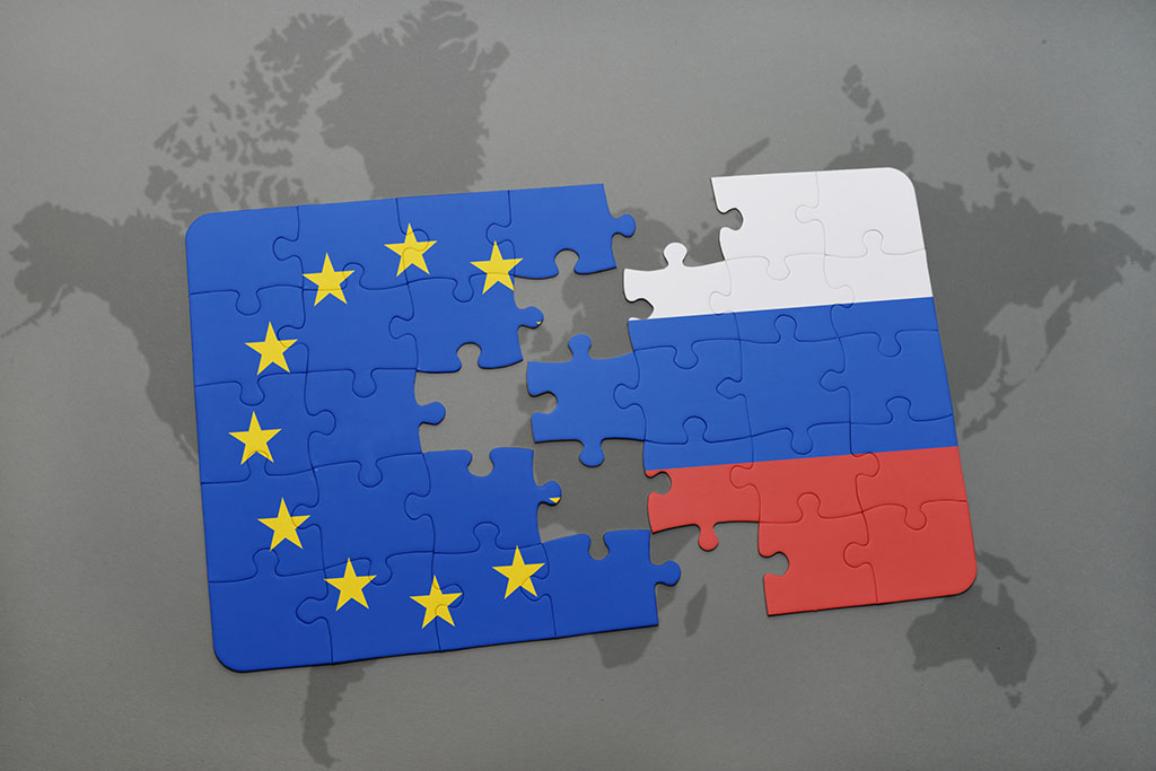
With the current geopolitical developments and the new re-configuration processes seriously affecting the landscape of economic cooperation, the basic question many researchers and observers are monitoring is to understand why Russia, after the Soviet collapse, aspired to transform into a European country.
These three decades, it was, in practical terms, the dream. Russia wanted to develop and extend Europe down to the Pacific. In official speeches, phrases appeared in the direction, such as “developing solid economic cooperation from Lisbon to Vladivostok” and transforming the entire vast region into European.
On different occasions, Kremlin has held several exclusive interactive meetings with European corporate business people. Those meetings raised various issues of fundamental importance for broadening economic cooperation. From 2000 to 2010, at one point, Russian and EU businesspeople called on the Russian and EU authorities to resolve the issue of Russia’s accession to the World Trade Organisation (WTO) and began work on that basic new agreement. President of the European Commission, Jose Manuel Barroso, participated in the discussions.
Interesting and worthy to note that during his presidency, Dmitry Medvedev sent his greetings to the participants in the second European-Russian Forum held on December 8, 2008.
The message read in part: “This big event has an important role in resolving issues concerning Russia and Europe. I am sure that this forum will help to bring Russia and Europe closer together and create opportunities for promising new business and humanitarian projects.”
The forum participants, which took place in Brussels, included associations of Russians living abroad, Russian public organisations, and representatives of the European Parliament, the European Commission and the European Council.
The forum’s theme was ‘The European Union and Russia: New Challenges’, underlining Russia’s European dream.
As far back on November 24, 2006, President Vladimir Putin and the European Union leadership held an extensive meeting with the participation of members of the Russia-EU Business Cooperation Council. Taking part in the meeting with Russian and EU business community leaders were Finnish Prime Minister Matti Vanhanen, President of the European Commission Jose Manuel Barroso, and Javier Solana, secretary general of the EU Council and EU high representative for the common foreign and security policy.
The meeting between Putin, the European Union leadership and the business leaders took place behind closed doors just before the start of the Russia-European Union summit. The Russia-EU Business Cooperation Council was created in October 2005 and brought together the Russian and EU business leaders most interested in developing economic relations between Russia and the EU.
The Business Cooperation Council acts as a coordinator for practical action to develop new forms and vectors for cooperation between Russian and European businesspeople. The Council sets the objective of ensuring that the business community plays an active part in the work to draft new agreements between Russia and the European Union to replace the old partnership and cooperation agreement that expired in 2007.
The Council is responsible for coordinating work by industry and business associations to implement the project for creating a common economic space between Russia and the EU and advancing major forward-looking projects that can have a considerable impact on the structure and level of economic relations between Russia and the European Union.
Projects of this kind include cooperation in the energy sector, a joint operation of satellite communications and navigation systems and the formation of mechanisms for cooperating in sectors such as aviation, car making, metals production, energy and machine building.
The Business Cooperation Council is considered a ‘union of equals’ and has no strong link to any organisation. The principles on which the Council is formed enable it to expand and involve interested parties in its work. At that time, the Council was co-chaired by Anatoly Chubais, chairman of the board of RAO Unified Energy Systems for Russia, and by Jukka Harmala, head of Finnish company Stora Enso, for Finland.
There have been high-level meetings upon meetings – all directed at developing the Russia-EU relationship. The focus was simply on Europe, to be irreversibly part of the Global North. In 2015, Vladimir Putin took part in the plenary session of the Delovaya Rossiya celebrating the 10th year of Russian Entrepreneurs’ Day and praised the skylined level European business presence in the Russian Federation.
Precisely that same year, on May 26, Putin said, “Entrepreneurship has come to be considered one of the most important factors of Russia’s confident development. We clearly need to ensure the influx of the largest possible number of self-motivated business-minded people to production companies ready to take on responsibility for both the work of their companies and their employees. Society and the state are interested in the appearance of a large number of successful, promising foreign companies. Their creation will become a worthy response to the challenges currently facing the Russian economy.”
Nevertheless, it would be important to note that during these years, both Medvedev and Putin spoke at the plenary session of the Saint Petersburg International Economic Forum (SPIEF). On this platform, Medvedev and Putin have seriously paid special focus on European businesses compared to their Asian counterparts. Within the context of foreign economic cooperation, Africa was completely not known during those earliest formative years of SPIEF.
Not long ago, on June 17, 2016, Putin, at the plenary session of the 20th St Petersburg International Economic Forum, emphasized that the platform served as a venue for discussing strategic issues. In his views on Russia in the changing world, he explained the systemic problems besetting the global economy and practically all countries.
According to him, the world’s leading economies are looking for sources of growth, and they are looking to capitalise on the enormous existing and growing potential of digital and industrial technologies, robotics, energy, biotechnology, medicine and other fields. Discoveries in these areas can lead to true technological revolutions and explosive growth of labour productivity. This is already happening and will happen inevitably; there is an impending restructuring of entire industries and the devaluation of many facilities and assets. This will alter the demand for skills and competencies, and competition will escalate in traditional and emerging markets.
Putin underlined the fact that it was necessary to proceed from a network of bilateral and multilateral trade agreements that envisage a varying pace, extent and level of interaction and the extent of market openness, depending on specific national economies’ readiness for teamwork, with an understanding on joint research, educational and high-tech projects. All these agreements should be future-oriented and provide the basis for harmonious joint development resting on equal and effective cooperation.
“As early as June, we, along with our Chinese colleagues, are planning to start official talks on the formation of comprehensive trade and economic partnership in Eurasia with the participation of the European Union states and China. I expect that this will become one of the first steps toward the formation of a major Eurasian partnership. We will certainly resume the discussion of this major project at the Eastern Economic Forum in Vladivostok in early September. Colleagues, I would like to take this opportunity to invite all of you to take part in it,” he said at the forum.
The “Greater Eurasia” project – is, of course, open for Europe, and such cooperation is mutually beneficial. Despite all of the well-known problems in the relations, the European Union remains Russia’s key trade and economic partner, Putin said and added: “It (EU) is our next-door neighbour, and we are not indifferent to what is happening in the lives of our neighbours, European countries and the European economy.”
The challenge of the technological revolution and structural changes are no less urgent for the EU than for Russia. I also understand our European partners when they talk about the complicated decisions for Europe that were made at the talks on the formation of the Trans-Atlantic partnership. Obviously, Europe has vast potential, and a stake in just one regional association clearly narrows its opportunities. Under the circumstances, it is difficult for Europe to maintain balance and preserve space for a gainful manoeuvre.
As the recent meetings with representatives of the German and French business circles have shown, European business is willing and ready to cooperate with this country. Politicians should meet businesses halfway by displaying wisdom and a far-sighted and flexible approach. It is necessary to return trust to Russian-European relations and restore the level of cooperation.
He, however, acknowledged there were some pitfalls. Russia did not initiate the current breakdown, disruption, problems and sanctions. “All our actions have been exclusively reciprocal. But we don’t hold a grudge, as they say, and are ready to meet our European partners halfway. In this context, let me repeat that we are interested in Europeans joining the project for a major Eurasian partnership. This can, by no means, be a one-way street,” Putin added in his speech.
In closing, the plenary session moderator, CNN host Fareed Zakaria, offered Putin his last remarks.
Putin said: “We agree on some points and disagree on others, but there are still more things that unite us – this is absolutely clear. After all, Europe is Europe. The foundations of its economy don’t give us reason to believe that Europe will come to an end at any point, no matter what internal processes are playing out. It is our leading trade and economic partner. We have here the leader of a European country – Italy, and the leader of Kazakhstan – our closest partner and ally with which we are building an integration association. Today, we have gathered everyone together.”
Quite recently, Putin rained praises on French businesses in the Russian Federation. It was precisely on April 29, 2021, Putin held a videoconference with leaders of several French companies – members of the Franco-Russian Chamber of Commerce and Industry (CCI France-Russia) to discuss some aspects of Russian-French trade, economic and investment cooperation, including the implementation of large joint projects as well as the prospects for collaborative work.
From the historical records, France has been and remains a key economic partner for Russia, holding the 6th place among EU members in the amount of accumulated investment in the Russian economy and 5th place in the volume of trade. Despite a certain decline in mutual trade in 2020 (it went down by 14 per cent compared to 2019), the ultimate figure is quite acceptable, at $13 billion. French investment in Russia was hovering around $17 billion, while Russian investment in France was meagre at $3 billion.
Over 500 companies with French capital were operating in various sectors of the Russian economy. French business features especially prominently in the Russian fuel and energy complex, automobile manufacturing and, of course, the food industry. “It could have been more if the French regulatory and state authorities treated Russian businesses as Russia is treating French businesses. We appreciate that in a difficult economic environment, French companies operating in Russia have not reduced their activity,” Putin pointed out in the speech, addressing them.
“We are interested in involving foreign companies that want to invest in Russia and projects we consider high priority. In order to do this, we will continue to use preferential investment regimes and execute special investment contracts, as you know. A lot of French companies successfully use these tools in the Russian market. For example, more than one-third of 45 special investment contracts have been signed with European, including French, partners,” he explained during the meeting.
He further mentioned continuous efforts to attract foreign companies to localise their production to state purchases and to implement the National Development Projects, as well as existing opportunities for French businesses in special economic zones. Today, there are 38 such zones created throughout the Russian Federation.
Russia pays particular attention to attracting high-quality foreign specialists. Their employment is being fast-tracked, and their families can now obtain indefinite residence permits, with plans to launch a special programme of ‘golden visas’ whereby to issue a residence permit in exchange for investment in the real economy, a practice that is used in many other countries.
Taking his turn, Co-Chair of the CCI France-Russian Economic Council, Gennady Timchenko, noted that the pandemic had changed the world, people and business and that French companies in Russia are responsible employers and socially responsible members of Russian society.
Despite the crisis and the geopolitical situation, a number of French companies launched production in 2020–2021. Despite the current geopolitical conditions and information field, there are important signals for French business and the Russian side to strengthen economic cooperation, attract investment, and create partnerships on a new mutually beneficial basis.
Co-Chair of the CCI France-Russian Economic Council, Patrick Pouyanne, noted that the meeting had become an excellent tradition; the presence of 17 CEOs and deputy CEOs of French companies showed the importance of these joint meetings further reflected the deep interest of French business in Russia.
In addition to the above, Foreign Minister Sergey Lavrov has several times held meetings with European Union members. With the same perception, despite the challenges today, that diplomacy has to continue playing an important role in settling differences and that businesses could convincingly create bridges to strengthen investment and economic cooperation between Russia and the European Union.
Lavrov has often reiterated Russia’s recognition of the enormous significance and invaluable contributions of European businesses. The stark reality is that Russians simply adore European brands at the expense of their local brands. That makes European businesses, their products and services sold in the Russian Federation. European enterprises have prominently made their presence always at the St Petersburg International Economic Forum. As an association, it adheres to the principle of cooperation. It marked 25 years in 2020 in Russia.
Over the years, the Association of European Business has held corporate meetings with the participation of top Russian politicians and business stalwarts. In St. Petersburg, Foreign Minister Sergey Lavrov has always been the guest speaker during special panel sessions, with the participation of the Association of European Business, highlighting with an appreciation their various efforts in promoting economic, investment and trade ties, laying the solid foundation for building good relations between Europe and Russia.
The last time Lavrov addressed the gathering, he stressed the fact there were alarming geopolitical trends that have also affected Russia-EU relations. “We regret that trade and economic cooperation is becoming increasingly politicized. Trade and economy have been viewed as a safety net in relations among nations. Nowadays, though, things seem to have shifted into a somewhat different phase,” Lavrov told the business gathering.
“Politicized energy cooperation is yet another blow at the foundations of what we call European security. Energy is an area of cooperation dating back over 50 years. Protectionism and other barriers and restrictions will only aggravate the economic situation, which is already complicated. By the way, we noted that the Confederation of European Business published recommendations to protect European businesses amidst sanctions-related restrictions,” he added.
Nevertheless, Lavrov suggested the discussions become a global economic driver, firmly believing that it is in common interests to prevent the appearance of undesirable dividing lines in the new economic spheres created by the new technological paradigm. It is a strong conviction that this calls for combining efforts rather than trying to play zero-sum games again, as was the case in the past. Russia is ready for cooperation on the broadest possible basis.
Obviously, the future Russia and European business relations can still be consolidated despite the current political differences, Lavrov said with high optimism. Russia is ready to build its relations with the European Union along with some principles. The European Union remains its important trade partner. As before, there is optimism that both are open to cooperation; European partners are keen on building businesses in the economic space from Lisbon to Vladivostok, this vast country and in the Eurasian region.
The interest in strengthening and diversifying trade and economic ties has grown since the Soviet collapse. According to statistics, Russia’s trade with the European Union reached almost $300 billion in 2019. The Association of European Business, which unites European companies, believes that both business circles and business diplomacy can and should make a useful contribution to restoring mutual trust and confidence in the business sphere. Under its aegis, European businesses show readiness to expand cooperation and implement mutually beneficial joint projects across Russia.
Here is a bit of an interesting point about Russia’s demography. Records show that European Russia accounts for about 75% of Russia’s population. But the documents further indicate that 1.8 million Russians live in the European Union (the majority in Britain, Germany and France). But then, the rhetorical questions are: Can Russia lead the emerging global economic order? Is Moscow a financial hub and host to international organizations’ offices as in New York and Washington, and in Europe? Is this the end of Russia’s European dream?
During the past several years, Putin’s meetings with EU members included those such as Germany, Italy, France, Spain, et cetera. In addition to Putin’s meetings, Foreign Minister Sergey Lavrov and the Economic and Development Minister held a series of high-level meetings, and both the Federation Council and the State Duma consistently discussed multiple issues relating to the cooperation between Russia and European Union. With the global changes and the war on Ukraine that necessitated the imposition of stringent sanctions, Russia has gunned down its post-Soviet dream of becoming purely European. In this emerging new world, despite the sharp differences among the former Soviet republics, Russia might only and eventually remain part of Greater EurAsian instead of European Union.


