Connect with us

Technology

15 Exciting Highlights from Google I/O 2023

Published

on

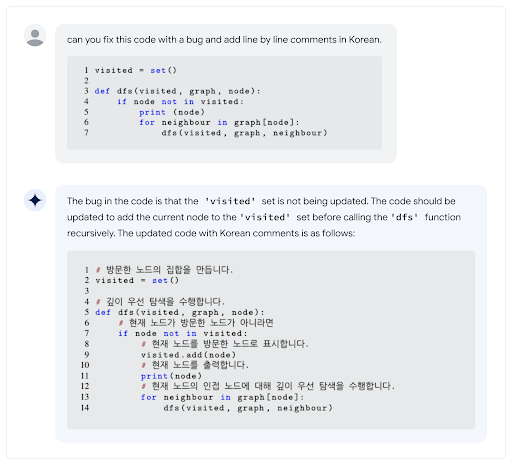
Bard Prompt with images Google

At the annual Google I/O developer conference, a wide array of cutting-edge technologies and updates were showcased, all aimed at enhancing user experiences across various platforms. Google emphasised its commitment to improving search experiences and ensuring user safety by introducing new generative AI capabilities for search and implementing advanced tools for online protection.

Significant updates were also announced for Android, Pixel devices, and Google Photos. A standout moment of the conference was the unveiling of PaLM 2, Google’s latest generative language model. This breakthrough model surpasses previous language models in areas such as maths, coding, reasoning, multilingual translation, and natural language generation.

In addition to these advancements, Google reiterated its commitment to responsible AI, striving to address pressing societal challenges like climate change and flood forecasting while maintaining ethical AI practices.

Here are the 15 significant announcements made at Google IO that we thought would be of interest to you:

  1. PaLM 2, next generation language model: Google has unveiled PaLM 2, a next-generation language model designed to improve language translation, reasoning, and coding capabilities. The model is more heavily trained on multilingual text, demonstrating advanced proficiency in logic, common sense reasoning, and mathematics. Additionally, PaLM 2 was pre-trained on publicly available source code datasets, making it more efficient and faster than previous models. PaLM 2 will be available in four sizes, from smallest to largest: Gecko, Otter, Bison, and Unicorn, making it versatile for a range of use cases. The model is set to power 25 new Google products and features, including Bard and Med-PaLM 2, a medical competency model that can answer questions and summarise insights from dense medical texts. Learn more about PaLM 2 here.

  1. Expansion of Bard: The waitlist has now been removed, making Bard available in English in over 180 countries and territories, with the addition of Japanese and Korean languages, and planning to support the world’s top 40 languages. As the platform expands, Google will focus on maintaining high standards for quality, local nuances and adherence to AI principles. More here. Bard Prompt with images Google

  2. Image Capabilities:  Google is making it easier to prompt Bard with images, using Google Lens.  This integration of images with text in Bard aims to enrich the user experience by providing visually informative responses to queries. Users can also include images in their prompts, offering new possibilities for creativity and imagination. More here

  1. Developer Features for Bard: Google is introducing three new ways to use Bard based on developer feedback: Making code citations even more precise by showing you the source of specific blocks of code. This also applies to citing narrative content from across the web; by adding export to Replit and by making Bard friendlier on the eyes in low-light conditions by introducing Dark theme. More heregoogle developers

  2. Export to Docs and Gmail: Google is making it easier and more seamless for users to continue their work by exporting Bard’s responses to Google Docs or Gmail. Formatting stays intact so users can continue editing directly in Docs or Gmail without needing to copy, paste, and reformat Bard’s responses.

  1. Integration into Apps:: Bard will be integrating with various Google apps and services like Docs, Drive, Gmail, Maps, and more, while maintaining user control over privacy settings. The platform will also connect with external services and partners, such as Adobe Firefly for image creation, Kayak for travel, Instacart for groceries, Wolfram for computational knowledge, and Khan Academy for education, offering a wide range of possibilities for users.

  2. Integrating generative AI across all the Workspace apps: The new features help one write, organise, visualise, accelerate workflows, have richer meetings, and much more. This powerful new way of working is what Google calls Duet AI for Workspace.  Google is bringing the generative AI experience to Gmail on mobile and embedding generative AI into Slides so one can easily create unique visuals with a few words. The generative AI will help one analyse and act on data in Sheets, with automated data classification and the creation of custom tables.

  1. Simplifying Shopping with Generative AI: Google is using generative AI to make shopping faster and much easier, providing users with a snapshot of noteworthy factors to consider when searching for a product. Built on Google’s Shopping Graph, this new generative AI shopping experience will offer a seamless and informed decision-making process for users.

  1. Search Labs: Google’s advanced generative AI capabilities are now accessible through Search Labs, an innovative platform that allows users to explore and engage with early-stage experiments in Search. By registering for Search Labs, users have the opportunity to experience the Search Generative Experience (SGE) on Chrome desktop and the Google App in the US (available in English at launch).

  2. Magic Compose: Magic Compose, a new Messages by Google feature powered by generative AI, can help you add an extra spark of personality to your conversations. The feature offers suggested responses based on the context of your messages and can even transform your writing into different styles. Release set for July.

  1. New AI features in Android: Google’s upcoming Android 14 update (expected later this year) promises to change the way users personalise their smartphone experience, taking customization to the next level. Material You customization enables users to personalise their lock screen with new shortcuts, clocks, and a monochrome colour theme. The update also offers diverse wallpaper options, including emoji, cinematic, and generative AI wallpapers that allow users to generate unique designs based on their preferences. To enhance social media, Google is bringing Night Mode and 10-bit HDR video support to popular social apps like Instagram. The Android 14 update introduces Ultra HDR, promising stunning photo quality and raising the bar for smartphone photography.

  1. Reimagine Your Photos with Magic Editor in Google Photos: The new experimental editing feature, Magic Editor, powered by generative AI, will enable users to make complex photo edits effortlessly without requiring professional editing skills. Users can selectively edit specific parts of an image, such as the subject, sky, or background, for more control over the final appearance of their photos.

  1. Features and Updates to Enhance Online Safety and Trust: Google’s new suite of features and updates aims to improve online safety and provide users with reliable access to trustworthy content and information. The “About This Image” tool helps users evaluate the reliability of visual content found online by providing important contextual information, such as when an image was first indexed by Google, its original appearance, and other online occurrences. Google is also expanding its Content Safety API to include potential child sexual abuse material in video content, addressing a critical safety concern as video files account for nearly 50% of all files reported to the National Center for Missing and Exploited Children (NCMEC).

  2. Spam view in Drive: Google’s ongoing efforts to protect Gmail users from unwanted messages, which currently block over 99.9% of spam, phishing, and malware, are now being extended to Google Drive with “Spam View”, a new feature that simplifies the process of separating and reviewing files, allowing users to identify potential spam and stay safe from unwanted or abusive content. Google Drive will automatically classify content into the Spam View, similar to Gmail’s current system, ensuring that users are protected from encountering dangerous or unwanted files.

  3. New additions to the Pixel family: Google’s Pixel product line continues to expand with the introduction of three new devices: the Pixel 7a, Pixel Fold, and Pixel Tablet. The Pixel 7a is Google’s latest A-series phone, featuring Face Unlock, 8GB RAM, a 90 Hz display, and wireless charging for the first time, making it an affordable package with the best of Google’s hardware and software. The Pixel Fold is Google’s first foldable phone, boasting a 7.6-inch screen when opened, offering a large, immersive display, and the best camera on a foldable phone, ensuring high-quality photography. Additionally, the 11-inch Pixel Tablet is designed for entertainment and gaming, comes with a Charging Speaker Dock, and functions as a helpful smart home device.


Technology

Simplify Your Mobile Life with eSIM and Virtual Numbers

Published

on

eSIM Plus

Managing phone numbers used to be a constant hassle. Between personal lines, work numbers, online registrations, and international travel, people often juggled multiple SIM cards, devices, or expensive roaming plans just to stay reachable. Today, eSIMs and virtual phone numbers offer a smarter way to handle communication. One device can manage multiple lines, switch between them instantly, and keep work and personal contacts separate—all without a physical SIM. For travelers, remote workers, and tech professionals, this setup offers efficiency, control, and flexibility that traditional SIM cards simply cannot match.

A virtual phone number is a digital line that exists independently of any physical SIM. Calls and messages are routed through the cloud, meaning the same number can function across multiple devices: smartphone, tablet, or computer. You can pick a local number in another country without actually being there, or maintain separate lines for freelance projects while keeping your personal number private. Virtual numbers also help protect privacy and streamline online activity. They are perfect for temporary projects, online sign-ups, or situations where you do not want to share your main number.

When paired with eSIM technology, virtual numbers become extremely convenient. Platforms like eSIM Plus let users download multiple numbers onto a single device, switch between them instantly, and manage personal and business lines without touching a physical SIM card. Travelers can maintain local numbers abroad, freelancers can manage multiple client contacts, and tech-savvy users gain complete control over their connectivity. eSIM Plus simplifies this process, allowing for seamless integration of digital numbers and minimizing the complications associated with traditional SIMs.

Businesses also find virtual numbers invaluable. They enable companies to create a local presence in multiple regions without the need for physical offices. Calls can be forwarded to employees anywhere, while integration with CRM tools allows monitoring and analytics of communication. For individuals, virtual numbers enhance privacy and simplify digital life. Whether signing up for online services, running a side business, or protecting personal information, virtual numbers provide flexibility and control that traditional numbers cannot offer.

Everyday Scenarios for Virtual Numbers

Virtual numbers are not just a tech gimmick—they solve real problems.

  • International Travel: A traveler can maintain a local number in multiple countries, avoiding expensive roaming fees while staying reachable by family, friends, and colleagues.
  • Remote Work and Freelancing: A consultant or freelancer can separate client communications from personal calls without carrying multiple phones. Multiple virtual lines can support different projects simultaneously.
  • Privacy Protection: Individuals can use temporary numbers for online registrations, dating apps, or marketplace accounts, significantly reducing spam and unwanted contacts.
  • Small Businesses and Startups: Companies can create local contact points in different regions, forward calls to employees, and integrate with communication software for better workflow management.

With eSIMs, managing these numbers becomes effortless. Instead of swapping physical SIM cards, users download the eSIM profile to their device, and virtual numbers become instantly available. This combination provides unparalleled flexibility for modern digital lifestyles.

How Virtual Numbers Work

Getting a virtual number is straightforward. Providers allow you to select a number online, link it to your smartphone or VoIP service, and manage it through an app. Common features include:

  • Call forwarding to any device
  • Text messaging and multimedia messaging

  • Voicemail management

  • Temporary numbers for short-term projects or verification purposes

When integrated with eSIM, the activation process is even faster. Download the eSIM profile to your device, and all your virtual numbers are ready to go. This approach is ideal for travelers, remote workers, and anyone managing multiple lines on a single phone without extra hardware.

Leading eSIM Providers

Several providers lead the market in combining eSIM technology with virtual numbers:

  • eSIM Plus: Offers digital SIMs integrated with virtual numbers, allowing multiple lines on one device. Users can manage personal, business, and international numbers seamlessly, making it perfect for remote workers, travelers, and freelancers.
  • Truphone: Provides global coverage with quick activation. Users can switch numbers without changing SIM cards, ideal for business professionals moving across regions.
  • Airalo: Focused on international travelers, offering cost-effective eSIMs for data and voice in over 190 countries. Airalo simplifies connectivity for tourists and remote workers abroad.
  • GigSky: Offers pay-as-you-go and subscription eSIM plans suitable for frequent travelers and digital nomads. GigSky supports multiple virtual lines on one device.
  • Ubigi: Enterprise-focused, enabling companies to deploy eSIMs and virtual numbers to distributed teams. Employees maintain local numbers across regions without physical SIM swaps.
  • Nomad: Travel-oriented eSIM provider supporting multiple virtual lines on one device. Ideal for digital nomads, remote professionals, and long-term travelers.

These services show how eSIMs and virtual numbers have evolved from niche tech to mainstream tools for managing modern communication efficiently.

Advantages Over Traditional Numbers

Virtual numbers have several key advantages over regular SIM-based numbers:

  • Multiple lines on one device: Manage work, personal, and international numbers without carrying multiple phones.
  • Privacy and control: Easily change or deactivate numbers for temporary projects, online registrations, or spam prevention.
  • Global accessibility: Make and receive calls from anywhere without costly roaming charges.
  • Integration with software: Works with VoIP apps, cloud platforms, and CRMs. Supports automated call routing, analytics, and communication tracking.

Traditional numbers cannot match this flexibility, efficiency, or convenience. Virtual numbers are built for modern workflows and digitally connected lifestyles.

Combining eSIM and Virtual Numbers

The combination of eSIMs with virtual numbers creates a flexible communication system. One device can handle multiple lines for home, work, or international use. Businesses can provide employees with local numbers in multiple regions without physical offices. Travelers can maintain home and foreign numbers without swapping SIM cards.

Consider a freelance consultant traveling across Europe: a virtual number in France, one in Germany, and a personal line—all on a single device. Clients reach local numbers, costs are minimized, and management happens from one interface. This setup highlights the efficiency eSIMs and virtual numbers provide.

Real-World Examples

  1. Remote Work Across Time Zones: An employee in Asia receives calls from North American clients using a local virtual number, avoiding international fees. eSIM profiles allow switching lines based on work hours.
  2. Maintaining Local Presence While Traveling: A business owner visiting multiple countries can maintain virtual local numbers. Clients call local numbers, but calls are forwarded seamlessly.
  3. Privacy and Online Security: Individuals use temporary virtual numbers for online registrations, reducing spam to their primary number.

These examples show why eSIMs combined with virtual numbers are essential for modern digital workflows.

The Future of Connectivity

With the rise of 5G, cloud communications, and AI-powered tools, eSIMs and virtual numbers will become increasingly integral to daily life. Expect tighter integration with business applications, enhanced security features, and instant switching between personal and professional lines.

For travelers, remote workers, and anyone managing multiple contacts, eSIMs paired with virtual numbers are more than a convenience—they’re a smarter, more efficient way to control communication in today’s digital world.

Continue Reading

Technology

Lagos’ Team Nevo Wins 3MTT Southwest Regional Hackathon

Published

on

Lagos 3MTT Hackathon Team Nevo

By Adedapo Adesanya

Lagos State’s representative, Team Nevo, won the 3 Million Technical Talent (3MTT) South-West Regional Hackathon, on Tuesday, December 9, 2025.

The host state took the victory defeating pitches from other south west states, including Oyo, Ogun, Osun, Ekiti, and Ondo States.

This regional hackathon was a major moment for the 3MTT Programme, bringing together young innovators from across the South-West to showcase practical solutions in AI, software development, cybersecurity, data analysis, and other key areas of Nigeria’s digital future.

Launched by the Federal Ministry of Communications, Innovation, and Digital Economy, the hackathon brought together talented young innovators from across the Southwest region to showcase their digital solutions in areas such as Artificial Intelligence (AI)/Machine Learning, software development, data analysis, and cybersecurity, among others.

“This event not only highlights the potential of youth in South West but also advances the digital economy, fosters innovation, and creates job opportunities for our young people,” said Mr Oluwaseyi Ayodele, the Lagos State Community Manager.

Winning the hackaton was Team Nevo, made up of Miss Lydia Solomon and Mr Teslim Sadiq, whose inclusive AI learning tool which tailors academic learning experiences to skill sets of students got the top nod, with N500,000 in prize money.

Team Oyo represented by Microbiz, an AI business tool solution, came in second place winning N300,000 while Team Ondo’s Fincoach, a tool that guides individuals and businesses in marking smarter financial decisions, came third with N200,000 in prize money.

Others include The Frontiers (Team Osun), Ecocycle (Team Ogun), and Mindbud (Team Ekiti).

Speaking to Business Post, the lead pitcher for Team Nevo, Miss Solomon, noted, “It was a very lovely experience and the opportunity and access that we got was one of a kind,” adding that, “Expect the ‘Nevolution’ as we call it, expect the transformation of the educational sector and how Nevo is going to bring inclusion and a deeper level of understanding and learning to schools all around Nigeria.”

Earlier, during his keynote speech, the chief executive officer (CEO) of Sterling Bank, Mr Abubakar Suleiman, emphasised the need for Nigeria’s budding youth population to tap into the country’s best comparative advantage, drawing parallels with commodities and resources like cocoa, soyabeans, and uranium.

“Tech is our best bet to architect a comparative advantage. The work we are doing with technologies are very vital to levelling the playing field.”

Continue Reading

Technology

re:Invent 2025: AWS Excites Tech Enthusiasts With Graviton5 Unveiling

Published

on

AWS Graviton5

By Aduragbemi Omiyale

One of the high points of the 2025 re:Invent was the unveiling of Graviton5, the fifth generation of custom Arm-based server processors from Amazon Web Services (AWS).

Many tech enthusiasts believe that the company pushed the limits with Graviton5, its most powerful and efficient CPU, frontier agents that can work autonomously for days, an expansion of the Amazon Nova model family, Trainium3 UltraServers, and AWS AI Factories suitable for implementing AI infrastructure in customers’ existing data centres.

Graviton5—the company’s most powerful and efficient CPU

As cloud workloads grow in complexity, organizations face a persistent challenge to deliver faster performance at lower costs and meet sustainability commitments without trade-offs.

AWS’ new Graviton5-based Amazon EC2 M9g delivers up to 25% higher performance than its previous generation, with 192 cores per chip and 5x larger cache.

For the third year in a row, more than half of new CPU capacity added to AWS is powered by Graviton, with 98 per cent of the top 1,000 EC2 customers—including Adobe, Airbnb, Epic Games, Formula 1, Pinterest, SAP, and Siemens—already benefiting from Graviton’s price performance advantages.

Expansion of Nova family of models and pioneers “open training” with Nova Forge

Amazon is expanding its Nova portfolio with four new models that deliver industry-leading price-performance across reasoning, multimodal processing, conversational AI, code generation, and agentic tasks. Nova Forge pioneers “open training,” giving organizations access to pre-trained model checkpoints and the ability to blend proprietary data with Amazon Nova-curated datasets.

Nova Act achieves breakthrough 90% reliability for browser-based UI automation workflows built by early customers. Companies like Reddit are using Nova Forge to replace multiple specialized models with a single solution, while Hertz accelerated development velocity by 5x with Nova Act.

Addition of 3 frontier agents, a new class of AI agents that work as an extension of your software development team

Frontier agents represent a step-change in what agents can do. They’re autonomous, scalable, and can work for hours or days without intervention. AWS announced three frontier agents—Kiro autonomous agent, AWS Security Agent, and AWS DevOps Agent. Kiro autonomous agent acts as a virtual developer for your team, AWS Security Agent is your own security consultant, and AWS DevOps Agent is your on-call operational team.

Companies, including Commonwealth Bank of Australia, SmugMug, and Wester Governors University have used one or more of these agents to transform the software development lifecycle.

Unveiling Trainium3 UltraServers

As AI models grow in size and complexity, training cutting-edge models requires infrastructure investments that only a handful of organizations can afford.

Amazon EC2 Trn3 UltraServers, powered by AWS’s first 3nm AI chip, pack up to 144 Trainium3 chips into a single integrated system, delivering up to 4.4x more compute performance and 4x greater energy efficiency than Trainium2 UltraServers.

Customers achieve 3x higher throughput per chip while delivering 4x faster response times, reducing training times from months to weeks. Customers including Anthropic, Karakuri, Metagenomi, NetoAI, Ricoh, and Splash Music are reducing training and inference costs by up to 50 per cent with Trainium, while Decart is achieving 4x faster inference for real-time generative video at half the cost of GPUs, and Amazon Bedrock is already serving production workloads on Trainium3.

Continue Reading

Trending