Connect with us

General

Grid Crux Unveils New Solutions to Reduce Energy Bills  

Published

on

Grid Crux

By Adedapo Adesanya

Contemporary technology and power company, Grid Crux Energy Solutions, recently launched with a mission to develop, finance, and deploy alternative energy solutions to the underserved segments of the African continent.

The company aims to eradicate energy poverty, promote energy equity, and ensure ease of access to energy for all.

According to the International Energy Agency (IEA), over 580 million people in Africa lack access to electricity, and this has led to negative impacts on the continent’s economic growth, health,  education, and social well-being.

In this regard, Grid Crux says it is committed to addressing this challenge by providing innovative, sustainable, and affordable energy solutions to African communities, starting with its indigenous country, Nigeria.

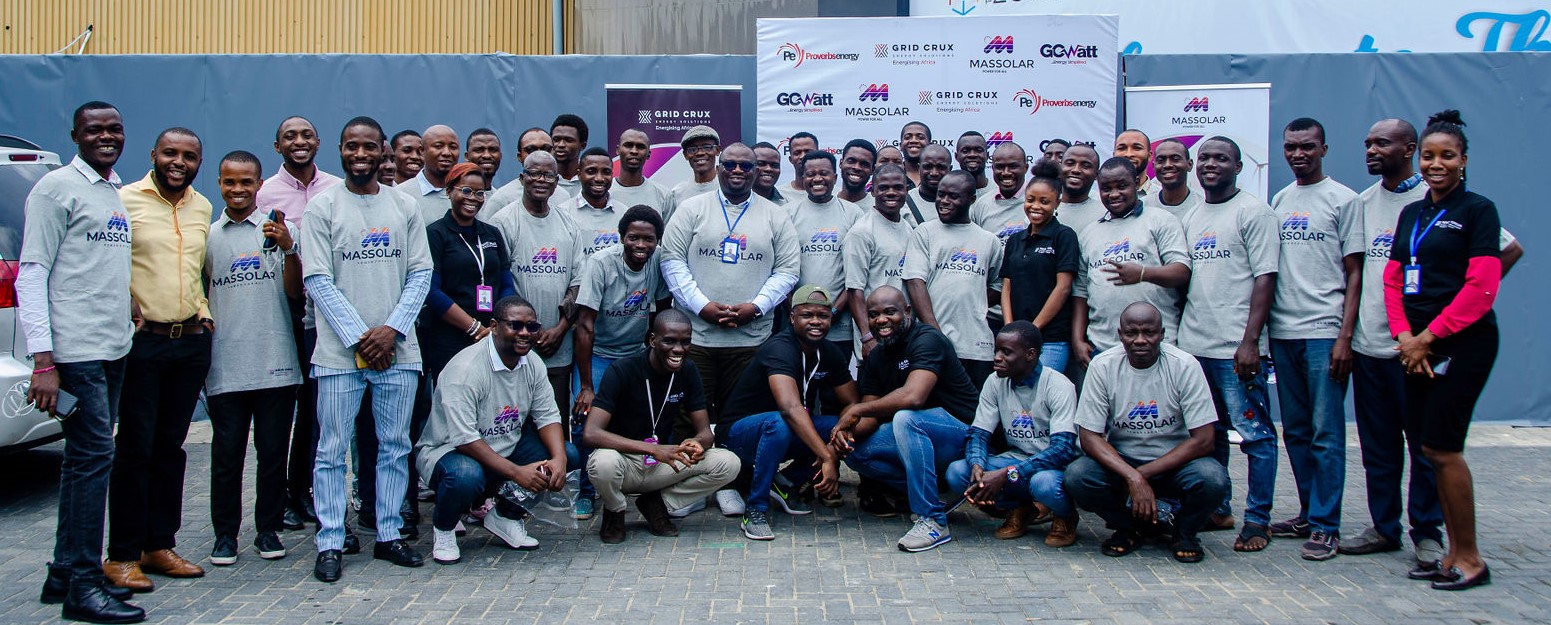
At a recent pre-launch event with partners and key players in the tech and energy space, Grid Crux introduced MasSolar an initiative of the company which is tailored to provide easy access to sustainable energy via a digital, easy, paperless, and seamless credit approach to the residential and small and medium-scale enterprise (SME) segments.

The solution leverages technological advancements in consumer credit, unique customer identification, and a robust fintech backbone infrastructure to provide consumers with the easiest and quickest means to access credit for residential and SME renewable solutions in the market.

Speaking at the event, Grid Crux CEO, Mojola Ola, stated that “Creating this solution was borne out of a passion for aiding individuals and small businesses of all works of life across Africa access sustainable energy without the hassle of paperwork or collateral burden. We believe this  solution will provide answers to Africa’s energy pain point.”

Asides MasSolar, Grid Crux also unveiled other innovative solutions which are set to revolutionize energy management while offering energy consumers several options which will not only reduce their electrical bills but also monitor and manage energy consumption.

Grid Crux offers an array of solutions across the energy value chain, including renewable energy solutions, energy management, utility and industrial storage solutions, microgrids, and more. Aside from access to energy, these solutions are designed to improve network reliability and promote energy equity while optimizing costs and, consequently, alleviating energy poverty in Africa.


Adedapo Adesanya is a journalist, polymath, and connoisseur of everything art. When he is not writing, he has his nose buried in one of the many books or articles he has bookmarked or simply listening to good music with a bottle of beer or wine. He supports the greatest club in the world, Manchester United F.C.

Click to comment

Leave a Reply

Your email address will not be published. Required fields are marked *

General

Atiku Abubakar Secures ADC Ticket for Seventh Presidential Bid

Published

on

Atiku Abubakar press conference

By Adedapo Adesanya

Former Vice President, Mr Atiku Abubakar, has won the presidential ticket of the African Democratic Congress (ADC), setting up his seventh presidential run for the 2027 general elections.

He defeated former Minister of Transportation, Mr Rotimi Amaechi, and businessman, Mr Mohammed Hayatu-Deen, in the party’s primary election held on Monday.

The returning officer, Mr Tunde Ogbeha, declared Mr Abubakar as the winner after the final collation of the results from the 36 states and the Federal Capital Territory (FCT).

He said Mr Abubakar emerged after polling 1,846,370 votes to defeat Mr Amaechi, who came second with 504,117 votes, and Mr Hayatu-Deen, who secured 177,120 votes.

The primary election was conducted through direct voting across the country. The collation began on Tuesday and continued on Wednesday at the Transcorp Hilton in Abuja.

Mr Amaechi and Mr Hayatu-Ddeen rejected the process on Tuesday, alleging widespread irregularities before the final collation of results began.

Mr Amaechi described the results as “concocted,” alleging massive voter disenfranchisement and manipulation during the exercise. Mr Hayatu-Deen also accused party officials of rigging and compromising the credibility of the process.

Despite the protests, the ADC proceeded with the collation and declaration of results in Abuja, formally returning Atiku as the party’s presidential candidate for the 2027 general election.

The victory marks another presidential bid for the former vice president, who previously contested under the platform of the Peoples Democratic Party in the 2019 and 2023 elections.

Mr Abubakar dominated the contest across many northern states, recording landslide victories in Adamawa, Kano, Gombe, Bauchi, Kaduna, Borno, Sokoto, Kebbi, and Zamfara.

In Adamawa State, his home state, he polled 177,141 votes against Mr Amaechi’s 1,896 votes and Mr Hayatu-Deen’s 18,949 votes. He also secured 155,595 votes in Kano, 136,933 in Gombe, 115,410 in Bauchi, and 108,784 in Kaduna.

Mr Amaechi, however, performed strongly in parts of the South-south, winning Rivers, Bayelsa, Delta, Akwa Ibom, and Ebonyi states.

In Rivers State, the former Rivers governor recorded one of the biggest margins of the election, polling 115,650 votes against Atiku’s 912 votes. He also defeated the former vice president in Bayelsa with 21,404 votes to 1,470 and in Delta with 35,325 votes to 10,023.

Mr Hayatu-Deen failed to win any state but posted notable numbers in Borno, Benue, Adamawa, Katsina, and Niger states.

With Mr Abubakar’s emergence, this will be his seventh opportunity to win the coveted presidency after running in 1993 under the Social Democratic Party (SDP) presidential primaries, 2007 as the Action Congress (AC) presidential candidate, and 2011 under the Peoples Democratic Party (PDP).

In 2015, he contested the All Progressives Congress (APC) presidential primaries, losing to the late eventual winner Muhammadu Buhari, and then returned as the PDP presidential candidate in 2019 and 2023.

Continue Reading

General

CBN Reveals Loans to FG Surge 65.6% Amid 2026 Budget Financing Needs

Published

on

Nigerian government

By Adedapo Adesanya

The Central Bank of Nigeria (CBN) has revealed that credit extended to the government rose by 65.6 per cent year-on-year to N39.6 trillion in April 2026 from N23.9 trillion in April 2025, driven by increased borrowing to finance the 2026 budget deficit.

In its latest Money and Credit Statistics, the apex bank showed that the federal government increased borrowing from domestic investors by 7.4 per cent to N8.1 trillion in the first quarter of 2026 from N7.5 trillion in the same period of 2025.

The CBN data also showed that credit to the private sector rose by 3.25 per cent to N80.6 trillion in April 2026 from N78.06 trillion in April 2025.

Consequently, net domestic credit rose by 17.8 per cent to N120.2 trillion in April 2026 from N102 trillion in the corresponding period last year.

Following the same trend, Nigeria’s broad money supply (M2) increased by 4.8 per cent YoY to N124.98 trillion in April 2026 from N119.2 trillion recorded in April 2025, reflecting improved liquidity in the financial system.

Further breakdown of the money supply components showed that currency outside banks declined by 12.2 per cent to N5.08 trillion in April 2026 from N5.7 trillion in the corresponding period of 2025, indicating increased use of banking channels and electronic payment systems.

However, demand deposits (current accounts) increased by 6.3 per cent to N38.7 trillion from N36.4 trillion during the review period.

Also, quasi-money increased by 3.8 per cent to N81.2 trillion in April 2026 from N78.2 trillion in April 2025. Quasi money includes money in savings accounts, time deposits, treasury bills and other money market instruments.

Narrow money, which includes currency in circulation and current accounts, also grew by 7.09 per cent to N43.8 trillion from N40.9 trillion.

This comes as the federal government plans to borrow N29.2 trillion to fund the gap between the revenue of N68.32 trillion and expenditure of N36.87 trillion, according to the Appropriation Act 2026.

Continue Reading

General

Lagos Boosts Creative Economy With Training for 1,000 Artists

Published

on

Lagos government

By Adedapo Adesanya

The Lagos State government said it has empowered over 1,000 creatives through the Skill Up Lagos initiative to build sustainable livelihoods for the upcoming artists and accelerate economic growth in the state.

The Special Adviser to the Lagos State Governor on Tourism, Arts and Culture, Mr Idris Aregbe, disclosed this while fielding questions from journalists during the 2026 Ministerial Press Briefing in Alausa, noting that over the last 24 months, his office has empowered more than 1,000 creatives through the Skill Up Lagos Initiative, channelled through the Lagos Cultural Mission.

He explained that the programme creates a structured platform for upcoming artists, designers, performers, and cultural entrepreneurs to acquire skills, gain visibility, and build sustainable livelihoods from their creativity.

‘’This is governance with a human face, investing directly in the people who give Lagos its soul,” Mr Aregbe said.

He said the Cook Lagos, Eat Lagos, a landmark gastronomy initiative, conceived and driven by his office, has helped to redefine how the world experiences Lagos through food.

Mr Aregbe added that, “The Lagos Cultural Mission is the overarching framework through which the Office of the Special Adviser drives cultural diplomacy, arts development, and creative economy programming.

“From international partnerships to domestic cultural celebrations, from art tours to diplomatic engagements, every programme feeds into the singular mission of establishing Lagos as Africa’s cultural capital.

“This initiative places Lagos cuisine on the global tourism map, celebrating local culinary traditions while creating economic opportunities for food vendors, chefs, agro-entrepreneurs, and hospitality businesses.

“Structured across three integrated pillars: Cook Lagos, Eat Lagos, and Grow Lagos. The initiative drives culinary education, food tourism, and agricultural enterprise simultaneously.’’

The Special Adviser said in the year under review, the ancient and beloved Kayo-Kayo Festival of Epe returned in full colour in July 2025, drawing over 1,000 participants in celebration of the community’s cultural heritage, ancestral pride, religious identity, and communal unity.

“The festival stands as one of Lagos’s most authentic cultural expressions, a symbol of resilience and harmony that has endured across generations.

“The Office of the Special Adviser brought fresh energy to the occasion by mobilising travel enthusiasts and tourism influencers to shine a spotlight on Oja Chief, the historic fish market at the heart of the festival.

“In a remarkable community-centred intervention, the office coordinated free fish delivery to the doorsteps of customers, directly boosting the commercial earnings of the women traders at the market and demonstrating the ministry’s commitment to inclusive tourism that uplifts livelihoods.’’

He mentioned that the Beauty in Motherland programme brought a celebration of Africa’s beauty industry at its most ambitious state.

According to him, the Beauty in Motherland positioned the African beauty sector on the global map, drawing over 500 vendors and beauty professionals to an electrifying B2B session that generated real commercial connections and industry momentum.

“The Office of the Special Adviser also proudly supported the extraordinary three-day Beauty Festival and Guinness World Record attempt by Natacha Akide, who achieved the remarkable feat of completing 82 makeovers in 8 hours and 143 makeovers in 24 hours. This was Lagos at its most boundary-breaking.

“The office also threw its weight behind the Adekunle Gold Fuji Album Launch, a cultural moment that bridged contemporary Afrobeats with the classical roots of Fuji music, celebrating the richness of Lagos’s musical heritage.’’

He said in March 2026, the ministry, through the Office of the Special Adviser, celebrated 19 remarkable women who have shaped the arts and cultural landscape of Lagos.

“Each recipient received a formal commendation letter acknowledging their trailblazing contributions to the creative space. This gesture was not ceremonial; it was a deliberate act of governance that uplifts the women who form the backbone of Lagos’s cultural identity,’’ he said.

Mr Aregbe added that one of the most defining features of this office’s approach is its conviction that culture and commerce are not competing forces.

He said under his watch as the special adviser, the ministry built a series of powerful public-private partnerships that use the energy of Lagos culture to drive real economic outcomes for traders, entrepreneurs, and small businesses.

Continue Reading

Trending