General
I Delayed Subsidy Removal to Enable Tinubu Become President—Buhari
By Modupe Gbadeyanka
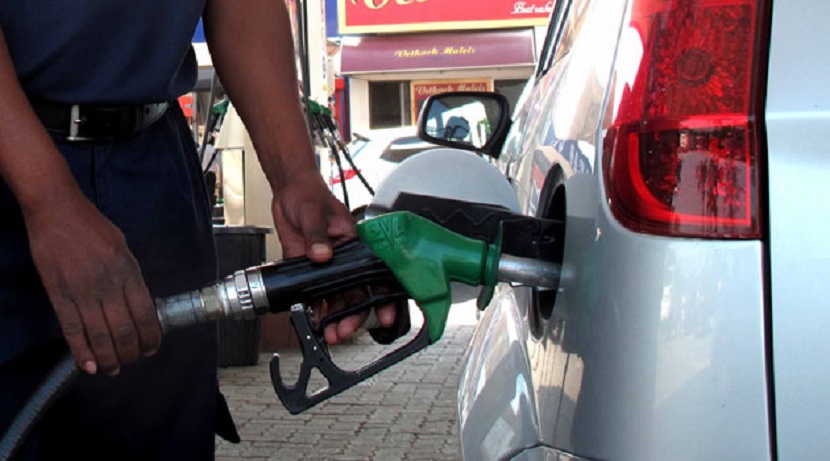
The immediate past president of Nigeria, Mr Muhammadu Buhari, has explained why he did not remove the payment of subsidy on the premium motor spirit (PMS), commonly known as petrol when he was in power.
The government of Mr Buhari paid several trillions of Naira in fuel subsidy despite describing it as a fraud before he took over from former President Goodluck Jonathan in 2015.
After signing the Petroleum Industry Bill into law, Mr Buhari delayed its implementation, especially because of the part which made it illegal to pay petrol subsidy. Instead, he passed this on to his successor.
On May 29, 2023, when he handed over power to Mr Bola Tinubu, the new leader declared that subsidy for fuel was gone because his predecessor did not make provision for its payment in the 2023 budget.
On Monday, June 26, 2023, Mr Buhari, through his spokesman, Mr Garba Shehu, explained that the decision to delay the removal of the petrol subsidy was purely political.
In a note titled Buhari Didn’t Fail To Remove Subsidy, he explained that Mr Tinubu and the ruling All Progressives Congress (APC) would have lost the presidential election if it had been removed before the exercise.
“Poll after polls showed that the party would have been thrown out of office if the decision as envisaged by the new Petroleum Industry Act was made,” he said.
Read the full statement below:
Why did it take the new Tinubu/ Shettima presidency weeks to remove the petrol subsidy when Buhari didn’t do so for years fails to ask the right question.
The massive electricity subsidy. The fraudulent fertilizer subsidy. Hajj/Christian Pilgrim subsidies. Remember them?
The diesel subsidy. The aviation fuel subsidy. LPFO. Kerosene. Cooking gas and the other subsidy policies we found in place, and put them firmly on the ground. Remember them?
For those with short memories, many of those subsides were all in place when president Buhari was elected to office in 2015: all those in place were gone by May 2023 – including the annual fertilizer subsidy that weighed 60-100 billion Naira (that’s trillion naira in about 10 years – yes you read that right) heavy on the federal budget each year.
So no, Buhari didn’t remove the petrol subsidy – but in vitally important stages he removed every other budget-busting, egregious, economic-growth-crushing subsidy along the way.
So far, I have refrained from answering these repeated questions on the removal in Nigeria of subsidies on Premium Motor Spirit, PMS and that arising from the dual rates of the Naira in the Central Bank and the parallel market: Why did Buhari “fail” to do these?
First of all, my thinking is that instead of the former President answering this question, it is the Party, the All Progressives Congress, APC that is best suited to speak and failing to do this, we are forced to say what will follow here.
Secondly, we are mindful of the fact that with a Tinubu/Shettima presidency now in place and for which there is a “New Sheriff in Town.”
We do not want to distract them from the onerous tasks facing them and the nation. Neither is it our wish to take the spotlight away from them in any way.
In terms of the timings of the decisions to remove fuel subsidy and unify the currency, the Tinubu/Shettima administration has done overwhelmingly well. Even more importantly, they have been most dexterous in managing the aftermath of the decisions by successfully avoiding any crisis.
To this extent, our wish and prayers are that fellow countrymen will continue to support the new leadership in these very laudable decisions and, in particular, for the Labour leadership and civil society to work with them to ensure that the palliative efforts as promised are successfully implemented.
The decision to remove subsidies, as in our case – and we believe in all situations – was not for the President to take all by himself.
That’s why it’s important to remind ourselves – and all those who have conveniently forgotten – that Buhari administration had been on this pathway from the very beginning in 2015.
Removing subsidies for the Naira and PMS was cued and put on hold. Look for example in the Petroleum Industry Act. The important decision was kept for a better time.
It could not have come at a time when tensions were high in the country and no responsible leader would have added fuel to the fire.
In the view of many-including those in the security circles- only a new administration with a goodwill that fills a warehouse can attempt this, and here now comes in the wit and grit of the Tinubu government.
Finally, we must be politically honest with ourselves. The Buhari administration in its last days could not have gone the whole way because the APC had an election to win. And that would have been the case with any political party that was seeking election for another term with a new principal at its head.
Poll after polls showed that the party would have been thrown out of office if the decision as envisaged by the new Petroleum Industry Act was made.
With the election now behind us, a capable leader as we now have in place is best positioned to move forward. We have nothing but confidence that the new administration will carry the nation and all its constituents into a stable future in the aftermath of these major economic and financial decisions.
As they say, there are times when you have to lose in order to win.
Garba Shehu
General
Nigeria Confirms US Airstrikes On ISWAP Targets in Sokoto
By Adedapo Adesanya
Nigeria’s Ministry of Foreign Affairs has confirmed that the latest United States airstrikes on Islamic State West African Province (ISWAP) targets in northwest Nigeria were conducted at the request of the Nigerian government.
According to reports, the US struck at ISWAP targets in Jabo, Sokoto State, on Christmas night.
The ministry described the operation as a product of established counterterrorism cooperation between both countries.
In a press statement issued on Friday, the Ministry said the strikes were “undertaken following formal engagement and with the full knowledge and coordination of the Government of the Federal Republic of Nigeria.”
“The Government of Nigeria wishes to clarify that the airstrikes conducted by the United States against Islamic State elements in parts of northwest Nigeria were carried out at the request of Nigerian authorities and in line with existing bilateral security cooperation frameworks,” the statement said.
The Ministry stressed that Nigeria “remains firmly in control of all counterterrorism operations within its sovereign territory,” adding that international partners only provide support “where such assistance aligns with Nigeria’s national security objectives.”
According to the statement, the strikes form part of Nigeria’s broader strategy to “degrade terrorist capabilities, disrupt logistics networks, and protect civilian populations from violent extremist threats.”
The Foreign Ministry further emphasised that the federal government “will continue to work with trusted international partners to confront terrorism, banditry, and transnational criminal networks that threaten national and regional stability.”
Reacting to concerns around sovereignty, the Ministry said:
“At no time was Nigeria’s sovereignty compromised. All actions were conducted with due respect for Nigeria’s laws, institutions, and command structures.”
The statement also cautioned against mischaracterising Nigeria’s security challenges, noting that extremist violence “has affected communities across religious and ethnic lines and should not be framed in sectarian terms.”
Nigeria reaffirmed its commitment to a multi-layered response combining military operations, intelligence sharing, community engagement, and socio-economic interventions, adding that counterterrorism efforts remain focused on protecting lives and restoring stability.
The US Africa Command (AFRICOM) said the strikes were carried out in Sokoto State and that multiple militants were killed.
US President Donald Trump described the strikes as “powerful and deadly,” saying they were directed at Islamic State militants responsible for violent attacks on Christians in Nigeria.
The Nigerian government has clearly denied that only Christians are affected by the killings, saying the terror spread across all faiths.
Meanwhile, US Defence Secretary Pete Hegseth has warned that “more to come” as part of sustained efforts against extremist groups.
General
US Strikes Terrorists in Sokoto on Trump’s Directive (VIDEO)
By Aduragbemi Omiyale
The United States government gave some terrorists in Nigeria a Christmas gift that sent many of them to the great beyond.
On Thursday, December 25, 2025, the United States President, Mr Donald Trump, directed his country’s military to launch air strikes on camps of members of the dreaded Islamic State in Iraq and Syria (ISIS) in Sokoto State.
According to Mr Trump, the military action, which he threatened to carry out a few weeks ago if the Nigerian government does not stop the killing of Christians in the country, occurred on Thursday night.
“Tonight, at my direction as Commander in Chief, the United States launched a powerful and deadly strike against ISIS Terrorist Scum in Northwest Nigeria, who have been targeting and viciously killing, primarily, innocent Christians, at levels not seen for many years, and even Centuries!
“I have previously warned these Terrorists that if they did not stop the slaughtering of Christians, there would be hell to pay, and tonight, there was.
“The Department of War executed numerous perfect strikes, as only the United States is capable of doing.
“Under my leadership, our country will not allow radical islamic terrorism to prosper. May God bless our military, and Merry Christmas to all, including the dead terrorists, of which there will be many more if their slaughter of Christians continues,” Mr Trump wrote on his Truth Social platform.
In a video on X, formerly known as Twitter, the Department of War of the United States posted the below video of the air strikes;
https://twitter.com/DeptofWar/status/2004351717131903272
General
Gbajabiamila Remains President Tinubu’s Chief of Staff—Presidency
By Modupe Gbadeyanka
The presidency has reacted to speculations that Mr Femi Gbajabiamila has been removed as the Chief of Staff to President Bola Tinubu.
It was alleged that Mr Gbajabiamila has been replaced with the President’s Principal Private Secretary, Mr Hakeem Muri-Okunola.
Mr Muri-Okunola went to Abuja to take up this role after leaving as the Head of Service of the Lagos State Civil Service.
Reacting to the reports on social media on the purported removal of Mr Gbajabiamila, a former Speaker of the House of Representatives, the presidency said no such change has been made.
In a statement signed on Thursday by the Special Adviser to the President on Information and Strategy, Mr Bayo Onanuga, members of the public were advised to disregard the report as “there is absolutely no truth to this story.”
“The Chief of Staff remains in his position. The Principal Private Secretary likewise remains in his role. Hakeem Muri-Okunola has not replaced Femi Gbajabiamila as Chief of Staff.
“The viral claim is a fabrication by mischievous purveyors of fake news whose sole aim is to create disharmony within the government.
“We reiterate that news media should always verify their information before publishing or sharing on social media,” the statement said.
-
Feature/OPED6 years agoDavos was Different this year
-
Travel/Tourism9 years ago
Lagos Seals Western Lodge Hotel In Ikorodu
-
Showbiz3 years agoEstranged Lover Releases Videos of Empress Njamah Bathing
-
Banking8 years agoSort Codes of GTBank Branches in Nigeria
-
Economy3 years agoSubsidy Removal: CNG at N130 Per Litre Cheaper Than Petrol—IPMAN
-
Banking3 years agoFirst Bank Announces Planned Downtime
-
Banking3 years agoSort Codes of UBA Branches in Nigeria
-
Sports3 years agoHighest Paid Nigerian Footballer – How Much Do Nigerian Footballers Earn