

World
South Africa Values its Relations with Russia and BRICS

By Kestér Kenn Klomegâh
This insightful interview offers an understanding of the current relations between South Africa and Russia and BRICS. It focuses on bilateral economic cooperation between South Africa and Russia and some aspects of the BRICS.
With an estimated 58 million population, South Africa is the 25th largest country in the world. It has friendly relations dating from the Soviet times and now with the Russian Federation. It joined BRICS, an organisation of five emerging economies, in December 2010 in line with the country’s foreign policy to strengthen South-South relations.
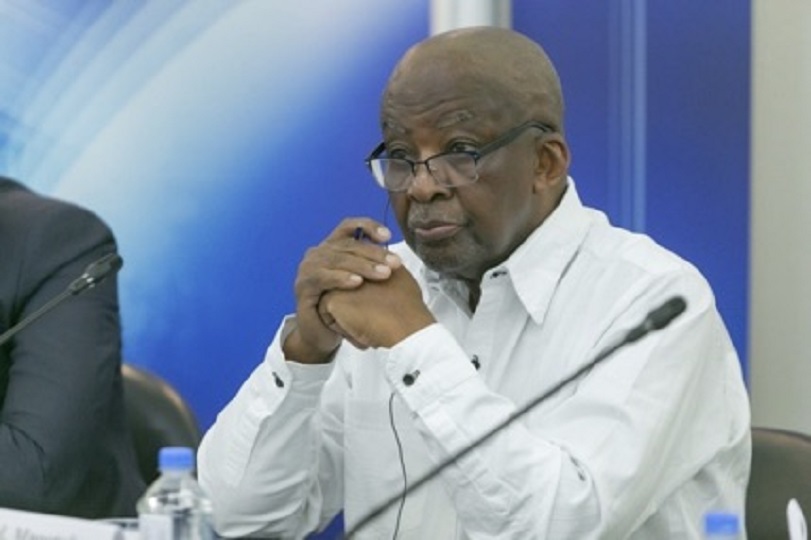
Ambassador Extraordinary and Plenipotentiary of the Republic of South Africa to the Russian Federation and the Republic of Belarus, Mzuvukile Maqetuka, who has been in this current post since 2021, gave this interview to our media executive Kestér Kenn Klomegâh in Moscow. Here are the interview excerpts:
First, what are your Government’s position and your thoughts on the emerging world order? Do you think the absolute neutral position by a majority of African countries helps push the evolutionary process of this new world order?
South Africa’s neutral position is consistent in all military conflicts around the world, and the international community needs to work together to bring peace.
South Africa is committed to the articles of the United Nations (UN) Charter, including the principle that all members shall settle their international disputes by peaceful means. Since the dawn of democracy in South Africa almost 30 years ago, we have called for the reform of the United Nations and multilateral organisations to make such structures more representative, inclusive of African representation.
South Africa is a sovereign state governed by a democratic Constitution and committed to the consistent application of international law. We will continue to fulfil our obligations in terms of the various international agreements and treaties to which we are signatories.
In the Russia-Ukraine conflict, the international community needs to achieve a cessation of hostilities urgently and to prevent further loss of life and displacement of civilians in Ukraine. It needs to support meaningful dialogue towards lasting peace, ensuring all nations’ security and stability. We support the principle that members should refrain from the threat or use of force against other states’ territorial integrity or political independence. The South African position seeks to contribute to the creation of conditions that make the achievement of a durable resolution of the conflict possible.
What are the key results from the last June meeting of the Russia-South African Business Council at the Russian Chamber of Commerce and Industry? What challenges have been identified as hindering economic cooperation between the two countries?
Russia and South Africa are known to be closely cooperating in the mining and energy sectors. What efforts is your country making to diversify investment opportunities into other sectors for Russian business people?
In what areas do you think the Russia-South African bilateral relations could be improved, and what do you suggest to be done, promoting relations both ways?
South Africa–Russia Business Council submits the reports of their meetings to the Joint Intergovernmental Committee on Trade and Economic Cooperation (ITEC) chaired by the Minister of International Relations and Cooperation of South Africa and the Minister of Natural Resources and Environment of the Russian Federation. The last session of ITEC was held in Pretoria on 30 March 2023.
Russia and South Africa are focusing on intensifying trade relations and economic development. Both countries aspire to strengthen cooperation within the Russian-South African business community.
One of the current priorities of the SA-Russia Business Council is to develop a joint programme of cooperation which would involve relevant authorities on both sides to facilitate business-to-business meetings in identified sectors.
Some of the subcommittees in the Business Council continue to perform exceptionally well. For example, the Agricultural Subcommittee has maintained high levels of agricultural exports to the Russian Federation. South African citrus fruit exports to Russia are of top quality and fall within the top 3 of citrus fruit exporter countries for the Russian market.
Another example is South African wines exported to the Russian Federation, such as KWV wines which have recently achieved a spot in the top 50 and are one of four South African wine brands in the “World’s Most Admired Wine Brand in Africa & Middle East”.
According to the South African Department of Trade and Competition (dtic) statistics, total trade (export + import) between South Africa and Russia in March 2023 was R638,945,978 South African Rand.
In March 2023, total exports from South Africa to Russia were R392,335,607. In comparison to February 2023, the total exports increased by 38%. In comparison to the same period of 2022 (March 2022), exports increased by 298%.
Now that you have arrived as the South African ambassador, what would you say are your Government’s priorities then? What are, generally, the investment opportunities for external countries and foreign investors in South Africa?
South Africa has one of the biggest economies on the continent, and it is still rapidly developing. South Africa is the most diversified as well as the most industrialised economy on the continent.
The South African economy is essentially based on private enterprise, but the state participates in many ways. Economic policy has been aimed primarily at sustaining growth and achieving a measure of industrial self-sufficiency. Agriculture is of major importance to South Africa. It produces significant exports and contributes greatly to the domestic economy.
South Africa is rich in a variety of minerals. In addition to diamonds and gold, the country also contains iron ore, platinum, manganese, chromium, copper, uranium, silver, beryllium, and titanium reserves. Not many deposits of petroleum have been found that may be commercially exploitable, but there are moderate quantities of natural gas located off the southern coast, and synthetic fuel is made from coal at two large plants in the provinces of Free State and Mpumalanga. South Africa is the world’s largest producer of platinum and chromium, mined at centres such as Rustenburg and Steelpoort in the northeast and becoming increasingly significant economically.
The major manufacturing sectors are food processing and the production of textiles, metals, and chemicals. Agriculture and fisheries provide the basis for substantial activity in meat, fish, and fruit canning, sugar refining, and other processing; more than half of these products are exported.
A large and complex chemical industry has developed from early beginnings in the manufacture of explosives for use in mining. A coal-based petrochemical industry produces a wide range of plastics, resins, and industrial chemicals.
South Africa has a well-developed financial system centred on the South African Reserve Bank, which is the sole issuing authority for the rand, the national currency. There are many registered banking institutions, a number of which concentrate on commercial banking, as well as merchant, savings, investment, and discount banks. One such bank, the Development Bank of Southern Africa, is a quasi-governmental company created to promote development projects. Private pensions, provident funds, and more than two dozen insurance companies play significant roles in the financial sector.
Tourism is becoming increasingly important to South Africa’s economy, and this sector, which is an economic driver, is finally making a positive recovery post-Covid-19. While the majority of tourists still come from African countries, an increasing number of arrivals are from Europe, the Americas and Russia. Since SA and Russia signed the visa waiver agreement in 2017, which allows for 90-day visa-free travel between our two countries, we have seen a steady increase in Russian tourists visiting South Africa.
South Africa welcomed and fully supported the adoption by African nations of the African Continental Free Trade Agreement (AfCFTA), which we believe will contribute tremendously in pursuit of the economic integration of our continent towards the attainment of our vision: Agenda 2063, the Africa We Want.
Through the implementation of AfCFTA, African states are determined to increase manufacturing and industrial capacity so that we trade in African goods and products produced in Africa.
As the largest African investor in other African countries, South Africa hopes to build on this and mobilise resources for industrial investment.
How comparable is Russia to those external investors in South Africa? Why are China and India so popular with economic diplomacy there in your country?
South Africa was the first member of an expanded BRICS in 2010 when the group of four (Brazil, Russia, India and China) was already holding its 3rd Summit in China that year. We consider it an honour to have been invited to form part of this partnership of leading emerging markets and developing countries.
Together, the Federative Republic of Brazil, the Russian Federation, the Republic of India, the People’s Republic of China and the Republic of South Africa represent over 42% of the global population, 30% of the world’s territory, 23% of GDP and 18% of global trade.
The BRICS partnership has grown in scope and depth, with BRICS members exploring practical cooperation in a spirit of openness and solidarity to find mutual interests and common values. Around 150 meetings are held annually across the three pillars of BRICS cooperation: political and security cooperation, financial and economic cooperation, and cultural and people-to-people cooperation. Over 30 agreements and memoranda of understanding provide a legal foundation for cooperation in areas as diverse as the Contingent Reserve Arrangement, customs, tax, interbank cooperation, culture, science, technology and innovation, agricultural research, energy efficiency, competition policy and diplomatic academies.
The South African Minister of International Relations and Cooperation, Dr Naledi Pandor, hosted the most recent Meeting of BRICS Ministers of Foreign Affairs and International Relations on 1 June 2023 in Cape Town. The mid-term meeting provided an opportunity for BRICS Foreign Ministers to reflect on regional and global developments. The ministerial meeting was preceded by the meeting of Sherpas and Sous-Sherpas from 29 – 30 May 2023, and the Russian delegation attended all these meetings in Cape Town; Minister Lavrov was leading the delegation.
As chair of BRICS, South Africa practices the policy of inclusive engagement and invited 15 Foreign Ministers from Africa and the global south to a “Friends of BRICS” meeting held on 2 June 2023.
From 22 to 24 August 2023, all BRICS Leaders are expected to attend the 15th BRICS Summit in South Africa at the Sandton Convention Centre (SCC) in Johannesburg, Gauteng.
BRICS Leaders will engage with business during the BRICS Business Forum and engage with the New Development Bank, BRICS Business Council and other mechanisms during the Summit. South Africa will also continue its Outreach to Leaders from Africa and the global South and hold a BRICS Outreach and BRICS Plus Dialogue during the 15th BRICS Summit.
Do you also think that Russia can engage in the transfer of its science and technology in different sectors to Africa? What else do you have on the agenda in the Russian Federation?
In May 2023, a delegation from South Africa’s Department of Science and Innovation (DSI) and the Technology Innovation Agency (TIA) travelled to Moscow to attend the annual Skolkovo Startup Village. During the delegation’s visit to Russia, Memoranda of Understanding were signed in the field of innovation and technology.
TIA is a national public entity in South Africa that serves as the key institutional intervention to bridge the innovation chasm between research and development from higher education institutions, science councils, public entities, and the private sector, and commercialisation. The Organization’s focus is on technological development, from proof of concept to pre-commercialisation.
The Russian Federation has identified the expansion of science and technology cooperation, as spearheaded by the Russian Academy of Science, as an important part of its renewed engagement with the African Continent; this is witnessed in the theme of the Economic and Humanitarian Forum that forms part of the 2nd Russia-Africa Summit scheduled for July 2023, i.e., Technology and Security for Sovereign Development that Benefits People. The Summit is scheduled to discuss very important themes, including Infrastructure, Innovation, and Improvements to the Urban Environment; Nuclear Technologies for African Development; Building Independent Systems for Assessing and Promoting National Science Programmes in Russia and Africa: Opportunities for Mutual Support; Achieving Technological Sovereignty Through Industrial Cooperation; Improving the Reliability of Africa’s Energy Infrastructure with Low Emission Technologies; How Russian Digital Technologies Can Boost Africa’s Industrial Potential; Bringing Russian Prospecting and Development Technologies to Africa; Effective Healthcare Cooperation: Technologies, Innovations, Human Capital; Bringing Russian Shipbuilding to Africa: A Modern Fleet to Develop the Entire Continent; An Emerging Global Order as Seen by African and Russian Researchers: Alternatives to Western Models.
What is your assessment of the possibilities of a joint, coordinated foreign trade policy within the BRICS? What do you think about the proposal to introduce national currency trade settlement arrangements within the BRICS?
The South African Reserve Bank will give consideration to possible national currency trade settlement arrangements amongst BRICS countries following extensive and detailed work on the matter.
Key questions will include its intended arrangement, and consideration will be given to any related risk, including, though not limited to, any sanctions risk to South Africa.


