Feature/OPED
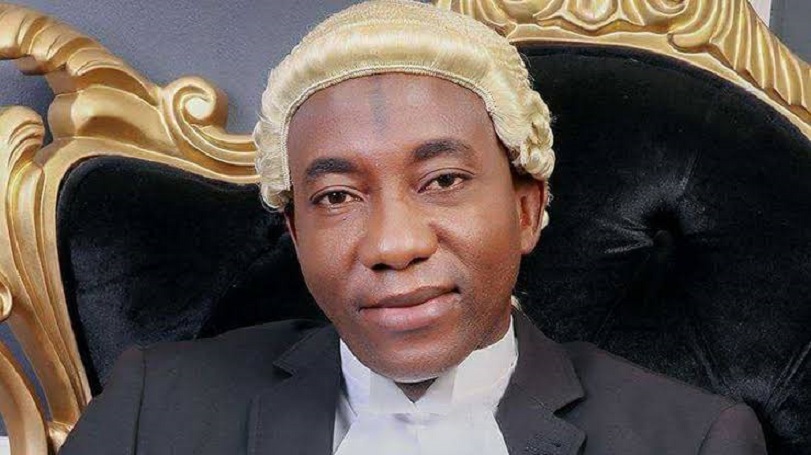
Eze Chikamnayo: The Archetypal Chichidodo
By Okechukwu Ukpabi
The more things change, the more they stay the same, the French writer, Jean-Baptiste Alphonse Karr, wrote in 1849. It is, therefore, not surprising that nine years after he was fuming in the mouth in political fits, he will resort to the same crass tactics of name-calling, absolute falsehood, and dubious claims to be noticed in 2023, barely two months of he and his ilk falling from power.
Like the typical bird, chichidodo, in Ayi Kwei Armah’s novel, The Beautiful Ones Are Not Yet Born, that screams its lungs out in protestation of shit, yet feasts on maggots so is the fate of Eze Chikamnayo, a failed commissioner of (mis)information under the calamitous rule of the immediate past administration in Abia state.
Chikamnayo is regarded in many quarters as a metaphor for confusion, ironic hypocrisy, a wolf in sheep’s clothing, a ghost in human flesh, a doppelganger and a political maggot who grows best in the foul-smelling lavatory of hypocrisy and patronizing intrusiveness.
For clarity and for those who may not be in the know of the character and content of the roguish and tout-like Mr. Chikamnayo, he once postured as a rabid vuvuzela of decency and accountability. He was up in arms against some of the people who were in government in Abia state but ended up being a diseased defender of the same ruinous years in the state as Commissioner of Information.
Owing to the fact that proverbs (ilu) are “the salt with which words are eaten,” it is appropriate to remind Mr. Chikamnayo, whose law practice remains at best a charge and bail affairs that, Ijiji na-enweghi onye ndumodu na-eso ozu ala n’inyi (A fly that has no counsellor follows the corpse to the grave.)
In the event he fails to grasp the import of the above, then it is instructive that he knows that, O bulu na i taa m aru n’ike, ma i zeghi nshi; mu taa gi aru n’isi, agaghi m ezere uvulu (If you bite me on the butt, despite the danger of sinking your teeth into the faecal matter, then if I bite you on the head, I will disregard the danger of sinking my teeth into the cerebral matter.)
On July 25, the propagandist of the last locust era went caustic in a piece of lies, conjectures and insidious intrusiveness against not just the Office of the Governor of Abia State but the person of His Excellency, Dr Alex Otti. Ordinarily, it is a piece borne of inherent mischief and pathological disorder. But like in all situations of aru (madness), it requires a potent, no less corrosive, but effective in curing.
Otti the democrat
We no longer live in an age without meaning and where there is a struggle for definition. But unfortunately, Mr. Chikamnayo is unaware of this when he sounded like a bad record player that Governor Otti is not a democrat for insisting that those who presided over the Abia patrimony in the immediate past eight years should account for their years in office.
Unlike those he served, Dr Otti has always trusted in the sacredness of the ballot as a veritable means of electing leaders. And on each occasion he ran for the governorship, he worked in consonance with the laid down guidelines, shrugging off thuggery, ballot snatching and attempting to induce electoral officials, which are hallmarks of Chikamnayo’s horde.
Regrettably, for the purveyors of the ancien regime in Abia, the democratic credentials of Governor Otti remain unassailable. When they were trying to undermine the people’s wish, especially in Obingwa Local Government Area in the last election, Candidate Otti, as he then was, trusted in the integrity of the electoral umpire to do what was right by law, and the INEC did, and the whole shroud of an attempt to manipulate, induce and subvert the credibility of the ballot by Mr Chikamnayo’s crowd of the indolent failed, and the rest is their being of office and power.
What manner of democrat did Mr Chikamnayo serve under who hires and fires Local Government Area Transition Committee Chairmen barely after 20 days? So much for a democrat who failed to hold council polls until the dying embers of a pathetic period in office. Because the madman knows no shame, he prances about in the marketplace with his phallus dangling proudly to the shame of his kith and kin. Such is the folly of Chikamnayo!
No brainer on accounts
It is a surprise that Mr. Chikamnayo is adept at finances yet could not offer such services in the administrations he served. Well, his financial ability is but a stinking lavatory of moral excrement. His claims of how much the Abia statement government has garnered is rusty and pale into the pitiable pit the government he served left it.
For the avoidance of doubt, the Okezie Ikpeazu empire, which he was a part of, left a humongous debt burden of N191.24bn and an empty treasury when he handed over the affairs of the state to Dr. Otti on May 29.
It is an incontrovertible fact that the sum of N77,927,939,042.82 was owed banks in the country, N71,022,162,441.01 was owed as domestic debt while external debts liabilities was put at N42,289,206, 109.84. A further breakdown of the indebtedness shows that of the N77,927,939,042.82 owed banks, United Bank for Africa accounted for N8,012,830,371.44; Zenith Bank N21,557,168,761.71; Union Bank N597,637,399.55 and Central Bank of Nigeria N47,760,302,510.12.
For the domestic debt obligation, salaries and subvention arrears stand at N18,162,102,692.92; pension arrears N21,283,876,789.80; gratuity arrears N27,012,996,061.64; and contractors arrears N4,563,186,896.65.
The good news is that Dr Otti towers above the mediocrities of Chikamnayos in financial mileage, business acumen and governance provenance. Blocking leakages in the area of ghost workers and revenue loss in the scatter-gun administration of parks will not be sacrificed on the altar of political expediency. The former (mis)information commissioner can be forgiven since the order and lawful means are anathema to him and his congress of baboons. The hard work of resetting the Abia Project will not be mortgaged for those who have no scruples.
The failed SDP political hawker without scruples can bray from now till eternity; his shenanigans to be noticed is what it is –nothing!
Dr Otti is leading a team of dedicated men and women working with surgical precision to diagnose the Abia predicament and unleash the creative and industrious energies of Abians; there is a sense of a powerful current tearing down an old decrepit system; he is building a new ordered freedom based on the rule of law and human rights. And not a thousand clanging cymbals of Chikamnayo and the tribe of the aggrieved will stop the Abia Renaissance.
Mr Ukpabi, a public affairs commentator, wrote in from Ohafia, Abia State
Feature/OPED
How Nigeria’s Financial Sector is Transitioning to Domestic Cloud
Nigeria’s financial services industry stands at a decisive crossroads as technology leaders prepare for the January 1, 2027, data residency deadline set by the Central Bank of Nigeria. The regulatory mandate requiring all payment transaction records, customer personally identifiable information (PII), and account ledgers to reside within domestic data centres is forcing a structural re-evaluation of banking IT architectures. For executive teams across the country, navigating this transition without interrupting daily banking operations is becoming the ultimate test of leadership.
For years, the industry’s reliance on foreign hyperscale providers delivered quick elasticity and global tools. However, transferring entire production stacks – encompassing real-time transaction processing, API gateways, and fraud scoring engines – back to local infrastructure requires significant engineering effort. With the country handling billions of electronic transactions annually, CIOs are seeking to preserve system uptime while severing deep operational dependencies on foreign data centres.
Experts have opined that the core challenge confronting financial technology teams is the lack of empirical, vendor-neutral benchmarks for domestic cloud platforms. Evaluating whether local data centres can sustain mission-critical financial traffic requires rigorous stress testing rather than relying on theoretical SLAs. The risk of potential downtime during a live migration makes vendor vetting the most crucial phase of the compliance roadmap.
To mitigate these operational risks, infrastructure partners like MTN are mobilising domestic capacity and technical insights tailored for the financial sector. By offering sovereign cloud solutions and collaborative engineering frameworks, MTN is helping CIOs and startups navigate the migration path with minimal disruption. Their localised infrastructure serves as an operational bridge, providing the uptime and data sovereignty assurances that both institutions and regulators require.
Lynda Saint-Nwafor, the Chief Enterprise Business Officer for MTN Nigeria, put it succinctly when she explained the upside of hosting data locally: “Hosting locally means lower latency, faster response times, and compliance with Nigeria’s data regulations. More importantly, it gives Nigerian businesses control, keeping sensitive financial, health, and government data within national borders.”
As the January 2027 benchmark approaches, the metric for success will depend on technical execution and operational discipline across companies.
Feature/OPED
Five Practical Holiday Saving Habits for Nigerian Households
By Osasikemwen Ighile
For many Nigerian families, the summer holiday is a season of fun, relaxation, and spending quality time together. But with the kids at home, more outings, higher electricity consumption, and extra entertainment costs, it’s also a period when expenses can quietly pile up.
The good news? You don’t have to choose between making memories and managing your finances. With a few smart habits, you can enjoy the holidays while keeping your savings goals on track.
Here are five practical ways to save smarter this summer.
1. Ditch Cash and Spend Smarter
Ever noticed how cash disappears faster than you expected? Whether it’s buying snacks for the kids, paying for transport, or making quick market runs, spending cash can make it difficult to track where your money goes.
Using a debit card can make it easier to track transactions and monitor spending. FairMoney customers can use their debit card for eligible transactions, subject to applicable terms and conditions. You can make payments conveniently at stores, shop online, and easily monitor your transactions. Instead of carrying cash everywhere, you get a clearer picture of your expenses and can avoid unnecessary impulse purchases.
Small changes like this can make a big difference over the course of the holiday.
2. The Kids Are Home—Stay Ahead of Your Utility Bills
School holidays often mean one thing: the TV is almost always on. From cartoons in the morning to football matches in the evening, your cable subscription becomes more important than ever. Add fans, air conditioners, gaming consoles, and other appliances, and it’s easy to see why electricity bills tend to increase during this period.
Rather than waiting until services are disconnected, planning and paying bills on time help households avoid unnecessary late-payment or reconnection charges. FairMoney customers can pay eligible bills and services through the platform, subject to applicable terms and service availability. You can conveniently pay for Cable TV subscriptions, Electricity bills, Internet subscriptions, Airtime and data for the entire family.
Paying bills on time can help reduce the risk of late payment consequences or applicable reconnection charges. Summer is filled with birthdays, outings, family visits, and spontaneous spending. While these moments are worth enjoying, your savings shouldn’t take a holiday.
3. Enjoy the Holidays—but Don’t Pause Your Savings
A simple strategy is to save first before spending. FairMoney customers can also use eligible savings products, such as FairSave and FairTarget, to set aside money towards specific financial goals, subject to the applicable product terms, conditions and eligibility requirements, even if it’s in small amounts. Already planning for the next school term? FairMoney customers can also use eligible savings products, such as FairSave and FairTarget, to set aside money towards specific financial goals, subject to the applicable product terms, conditions and eligibility requirements. Already planning for the next school term? Consider setting aside money regularly towards your school-fee goal. FairTarget can be used to help you organise savings around specific financial goals, subject to the applicable product terms, conditions and eligibility requirements. By starting early and saving consistently, you can better prepare for school-related expenses when the new term begins.
4. Plan Weekly Family Activities Instead of Daily Spending
The holidays don’t have to be expensive to be memorable. Instead of spending money every day on outings, cinemas, or restaurants, create a simple weekly activity plan. One weekend could be a family movie night at home. Another could be a picnic in a nearby park, a cooking competition, indoor games, or a visit to relatives.
Planning activities ahead helps you control spending while still giving everyone something to look forward to. Sometimes, the best memories cost very little.
5. Buy Household Essentials in Bulk
With everyone at home, groceries seem to disappear twice as fast. Instead of making frequent trips to the store, which often lead to impulse purchases, consider buying regularly used items in bulk.
Depending on the retailer and quantity purchased, some household essentials may offer better value when purchased in bulk.. You’ll spend less on transportation, reduce unplanned shopping, and avoid running out of important items.
Summer should be about creating happy memories not financial headaches. By spending more intentionally, paying your bills on time, planning ahead, and staying committed to your savings goals, you can enjoy everything the season has to offer without putting unnecessary pressure on your finances.
A few smart habits today can make the months ahead much easier. And that’s a win for every household.
Osasikemwen Ighile is the Brand Manager for FairMoney Microfinance Bank
Feature/OPED
Beyond the Screen: How Sports and Entertainment Keep Nigeria’s Economy Moving
When we talk about Nigeria’s economy, the conversation usually centres on oil and gas, banking, agriculture, manufacturing and technology. But there is another industry quietly creating jobs and driving economic activity: entertainment and sports. Most times, we only see the finished product. We watch the show, cheer during the match and move on to the […]
When we talk about Nigeria’s economy, the conversation usually centres on oil and gas, banking, agriculture, manufacturing and technology. But there is another industry quietly creating jobs and driving economic activity: entertainment and sports. Most times, we only see the finished product. We watch the show, cheer during the match and move on to the next thing. What we do not always see is the amount of work that happens before those moments reach our screens.
Take Big Brother Naija
When viewers tune in and see the housemates moving around the Big Brother house, it is easy to forget that the house itself is a product of many people’s work. From the interior designers and set builders who create the spaces to the electricians, carpenters, painters and technicians who bring them to life, an entire team works behind the scenes before the first episode even begins.
Once the cameras start rolling, the list gets even longer. Producers, directors, camera operators, sound engineers, editors, stylists, makeup artists, caterers, production assistants and security personnel all have a role to play. Then there is everything that happens outside the house. Publicists, photographers, videographers, digital teams, content creators and media platforms all contribute to keeping the conversation going. The housemates may be the faces audiences remember, but they are only one part of a much bigger entertainment ecosystem.
Sports have a similar impact
When the Super Falcons play a major game, the focus is naturally on the players and what happens on the pitch. But outside the stadium, the game can mean business for viewing centres, food vendors, restaurants and bars. Sports analysts and commentators have more to cover, content creators have something new to create around and businesses selling jerseys and football merchandise get an opportunity to make sales.
A major sporting event can turn an ordinary evening into a busy one for businesses that have little to do with what happens on the pitch. That is the part of sports and entertainment that is easy to overlook. The value is not only in the stars we see or the content we consume. It is also in the network of people whose skills and businesses keep these industries moving.
And this is where DStv and GOtv become an important part of the picture. They do more than give audiences access to the shows, matches and moments they care about. They connect the people producing this content with millions of viewers who keep the industry going.
Every time someone tunes in to Big Brother Naija, follows the Super Falcons or settles in for a major sporting event, they are engaging with an industry that supports producers, creatives, technicians, businesses and other professionals.
The impact of sports and entertainment, therefore, goes beyond what happens on the screen. By bringing some of the biggest entertainment and sporting moments to Nigerian audiences, DStv and GOtv help keep this ecosystem active, visible and working. Because sometimes, when we sit down to watch, we are not just consuming entertainment. We are also supporting an industry that provides jobs.