Connect with us

Economy

2017 Tax & Fiscal Policy Prospects

Published

on

taiwo oyedele tax policy

By Taiwo Oyedele

Now that 2017 is here

We often have new hopes and high expectations at the turn of new events including the turn of a new year regardless of past experiences and notwithstanding our current reality.

As a country Nigeria has expectations for tax and so are individuals and organisations. To a large extent and under normal circumstances, tax should be relatively more predictable given that the rules, and administration are totally within the control of appropriate authorities. Unlike attempting to predict the weather for a whole year or other natural and supernatural events.

In any case, here are my key predictions for the tax environment in 2017 based on instinct, observable trends, behaviour of key actors in the tax system, and analysis of past patterns.

Tax Policy

There is a revised National Tax Policy awaiting government approval for implementation. It is expected that the Policy will be approved and implementation will commence but with very little traction due to vested interests and insufficient buy-in from those who need to make the required changes.

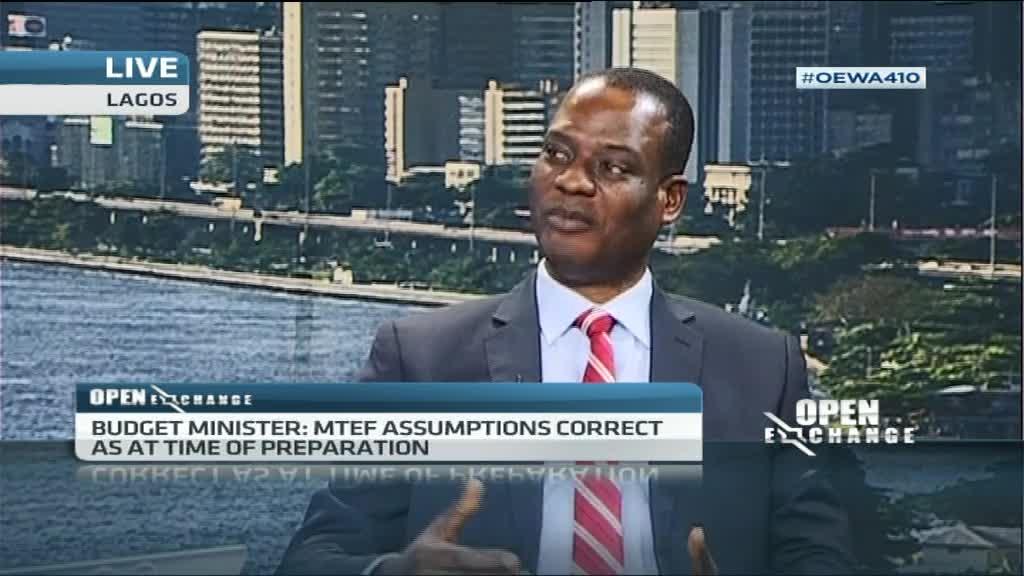
The 2017 Budget of the Federal Government of Nigeria and the 2017-2019 Medium Term Expenditure Framework have no specific proposals to increase tax rates or impose new taxes in 2017. The budget speech was silent on key tax policies but stated a commitment to align fiscal, monetary and trade policies. There are plans to revive the Export Expansion Grant scheme.

Government will focus on measures to discourage imports which suggest that import duties and waivers may be revised. Already we have seen a revision in some duty rates announced towards the end of 2016 partly designed towards the implementation of the new ECOWAS Common External Tariffs regime.

The ongoing review of tax incentives will be completed and should have a positive impact on government revenue if it addresses current abuse and plug existing leakages.

Tax Administration

Government is less bullish about non-oil revenue in 2017 compared to 2016 given the recent abysmal performance. It is expected that due to losses being reported by many companies in addition to other tax attributes such as unutilised capital allowances, the government tax take will be lower than anticipated especially from Companies Income Tax.

VAT collection is likely to improve partly due to the impact of the government social welfare scheme of conditional cash transfer and increased enforcement of compliance by FIRS but will still perform much below its potentials.

The aggressive stance by government at all levels will continue and intensify. In addition to imposition of stiff penalty and interest there is likely to be criminal prosecutions. Guidelines from the FIRS will continue to be hazy and request for rulings and direction by taxpayers may not receive prompt attention.

Internally generated revenue drive will continue to be on the front burner but still only an insignificant progress will be made due to the haphazard approach and the prevailing harsh economic condition.

It is counter-intuitive that many politicians play politics with revenue generation by placing political considerations ahead of professionalism. Unfortunately many lawmakers, administrators and policymakers lack proper understanding of the tax system. This coupled with undue political interference and vested interests mean that tax revenue will continue to be disappointingly low.

The FCT Internal Revenue Service will make some progress towards the full implementation of its mandate. Adoption and implementation of e-tax systems by various tax authorities will continue to be slow and ineffective.

More stakeholders will trigger the necessary provisions of the Freedom of Information Act to request for relevant information on tax administration, spending and expenditure control.

Some of the initiatives by the FIRS such as joint audit and use of consultants will continue to face implementation hurdles and unlikely to yield any major results. A number of tax authorities will introduce tax amnesty in order to expand the tax net and encourage voluntary compliance.

Tax Regulation

There will be some progress with the restructured Petroleum Industry Bill (PIB) with a high possibility for the governance framework being passed into law but other aspects of the Bill which are more controversial including the fiscal regime, derivation formula and host community issues will remain unresolved.

The proposed 9% Communication Service Tax will not see the light of day in its current form due to public resistance, bad timing which may be considered as insensitive and poor articulation of the justifications for the tax.

There will be some efforts to begin a comprehensive tax law review in 2017. The attempt to broaden the scope of stamp duty to cover savings account deposits, among others, will not yield any positive result as well as the plan to charge VAT on international passports.

Nigeria will sign more tax treaties for the avoidance of double taxation but ratification at the National Assembly necessary to domesticate the treaties will continue to be slow.

Tax Justice

The Tax Appeal Tribunal will be reconstituted. The aggressive level of tax audits by tax authorities especially the progress being made by the FIRS regarding transfer pricing reviews will lead to more disputes and hence a rise in tax appeal cases.

More tax disputes will be resolved in favour of taxpayers due to untenable positions taken by the tax authorities. The judiciary will generally continue to struggle with proper and timely dispensation of tax cases due to lack of in-depth tax knowledge especially in more complex situations and evolving areas.

The Global Tax Space

The OECD’s Base Erosion and Profit Shifting (BEPS) action plan will continue to be a major area of focus for tax authorities around the world. Many countries will enact new laws or amend existing ones to provide a legal framework for its implementation. However, there will be very little progress in Africa including Nigeria as many countries will be unable to make the necessary legal changes. Many more countries will subscribe to the Common Reporting Standards and join the multilateral treaties for collaboration, and exchange of information but implementation will be sketchy.

There will be some tax leaks but not at the same level and magnitude of the 2016 Panama Papers. The scrutiny of tax havens will increase and tax ‘sweetheart deals’ will be challenged both legally but more importantly from a morality standpoint.

The new ECOWAS Common External Tariff scheme will continue to experience poor implementation by member countries thereby undermining the regional integration efforts.

2017 Tax Resolutions

Just in case you do not have any New Year resolutions for tax, you need to commit to paying your taxes correctly and on time. Tax will not just be a compliance matter but a business continuity and sustainability issue. More importantly, as a taxpayer you must hold government accountable for the taxes paid. This will create more tax awareness and citizen engagement.

Overall, the tax journey in 2017 will be bumpy but I am cautiously optimistic that it will end in safe landing albeit with some bruises.


Modupe Gbadeyanka is a fast-rising journalist with Business Post Nigeria. Her passion for journalism is amazing. She is willing to learn more with a view to becoming one of the best pen-pushers in Nigeria. Her role models are the duo of CNN's Richard Quest and Christiane Amanpour.

Economy

Customs Street Chalks up 1.08% on Renewed Buying Pressure

Published

on

Customs Street NGX

By Dipo Olowookere

A 1.08 per cent growth was further printed by the Nigerian Exchange (NGX) Limited on Friday on improved appetite for Nigerian stocks.

Data showed that the insurance sector lost 0.61 per cent yesterday due to profit-taking as the energy space gave up 0.08 per cent, while the commodity counter closed flat.

However, the industrial goods landscape appreciated by 2.06 per cent, the banking index improved by 1.31 per cent, and the consumer goods sector expanded by 0.83 per cent.

At the close of business on Customs Street, the All-Share Index (ASI) increased by 1,563.92 points to 147,040.07 points from 145,476.15 points and the market capitalisation went up by N996 billion to N93.722 trillion from N92.726 trillion.

UAC Nigeria led the advancers’ log yesterday after it grew by 10.00 per cent to N96.80, Transcorp Hotels jumped by 9.71 per cent to N172.80, Royal Exchange appreciated by 8.89 per cent to N1.96, Ikeja Hotel soared by 8.74 per cent to N31.10, and Veritas Kapital leapt by 8.07 per cent to N1.74.

On the flip side, Union Dicon declined by 10.00 per cent to N6.30, ABC Transport slipped by 9.88 per cent to N3.10, AXA Mansard depreciated by 7.19 per cent to N12.90, FTN Cocoa lost 4.62 per cent to trade at N4.75, and Guinea Insurance dropped 3.36 per cent to finish at N1.15.

A total of 38 stocks ended on the gainers’ table and 17 stocks finished on the losers’ table, representing a positive market breadth index and strong investor sentiment.

Traders transacted 361.6 million equities for N14.8 billion in 21,051 deals yesterday versus the 1.9 billion equities worth N19.2 billion traded in 23,369 deals a day earlier, showing a decline in the trading volume, value, and number of deals by 80.97 per cent, 22.92 per cent, and 14.20 per cent, respectively.

The busiest stock for the session was Zenith Bank with 59.5 million units worth N3.6 billion, Access Holdings traded 46.1 million units valued at N973.0 million, Fidelity Bank exchanged 29.4 million units for N560.4 million, FCMB transacted 27.9 million units worth N293.9 million, and Tantalizers sold 13.0 million units valued at N29.8 million.

Continue Reading

Economy

Nipco, 11 Plc Crash OTC Securities Exchange by 4.76%

Published

on

NIPCO LPG Depot

By Adedapo Adesanya

Energy stocks influenced the 4.76 per cent loss recorded by the NASD Over-the-Counter (OTC) Securities Exchange on Friday, December 5.

The culprits were the duo of 11 Plc and Nipco Plc,with the former shedding N32.17 to end at N291.83 per share compared with the previous day’s N324.00 per share, and the latter down by N21.00 to sell at N195.00 per unit versus the previous session’s N216.00 per unit.

Consequently, the NASD Unlisted Security Index (NSI) slumped by 170.16 points to 3,401.37 points from 3,571.53 points and the market capitalisation lost N101.81 billion to close at N2.035 billion from the N2.136 trillion quoted in the preceding session.

The OTC securities exchange suffered the decline yesterday despite the share prices of three companies closing green.

Central Securities Clearing System (CSCS) Plc was up by N1.80 to close at N39.80 per share compared with Thursday’s price of N38.00 per share, Air Liquide Plc appreciated by N1.09 to N11.99 per unit from N10.90 per unit, and FrieslandCampina Wamco Nigeria Plc grew by 78 Kobo to N56.57 per share from N55.79 per share.

During the session, the volume of transactions rose by 6,885.3 per cent to 18.2 million units from 4.3 million units, the value of transactions ballooned by 10,301.7 per cent to N389.7 million from N347.2 million, but the number of deals declined by 29.7 per cent to 26 deals from 37 deals.

Infrastructure Credit Guarantee Company (InfraCredit) Plc ended the day as the most traded stock by value on a year-to-date basis with 5.8 billion units worth N16.4 billion, followed by Okitipupa Plc with 170.4 million units valued at N8.0 billion, and Air Liquide Plc with 507.5 million units worth N4.2 billion.

InfraCredit Plc also finished the day as the most traded stock by volume on a year-to-date basis with 5.8 billion units transacted for N16.4 billion, followed by Industrial and General Insurance (IGI) Plc with 1.2 billion units sold for N420.2 million, and Impresit Bakolori Plc with 536.9 million units worth N524.9 million.

Continue Reading

Economy

Naira Depreciates to N1,450/$1 at Official Forex Market

Published

on

Naira-Dollar exchange rate gap

By Adedapo Adesanya

The Naira depreciated further against the US Dollar in the Nigerian Autonomous Foreign Exchange Market (NAFEX) on Friday, December 5, as FX demand pressure mounts.

The Nigerian currency lost N2.60 or 0.18 per cent against the greenback to close at N1,450.43/$1 compared with the previous day’s N1,447.83/$1.

Equally, the domestic currency declined against the Pound Sterling in the official forex market during the session by N4.48 to trade at N1,935.45/£1, in contrast to Thursday’s closing price of N1,930.97/£1 and shrank against the Euro by 43 Kobo to end at N1,689.17/€1 versus the preceding session’s rate of N1,688.74/€1.

Similarly, the local currency performed badly against the US Dollar at the GTBank FX counter by N2 to close at N1,455/$1 versus Thursday’s N1,453/$1 but traded flat at the parallel market at N14.65/$1.

As the country gets into the festive period, pressure mounted on the local currency reflecting higher foreign payments and lower FX inflows.

However, there are expectations that the Nigerian currency will be stable, supported by interventions by to the Central Bank of Nigeria (CBN) in the face of steady dollar Demand and inflows from Detty December festivities that will give the Naira a boost after it depreciated mildly last month.

Traders cited by Reuters expect that the Naira will trade within a band of N1,443-N1,450/$1 next week, buoyed by improved FX interventions by the apex bank.

As for the crypto market, it was down yesterday due to profit-taking associated with year-end trading. However, the December 1-Year Consumer Inflation Expectation by the University of Michigan fell to 4.1 per cent from 4.5 per cent previously and 4.5 per cent expected. The 5-Year Consumer Inflation Expectation fell to 3.2 per cent from 3.4 per cent previously and 3.4 per cent expected.

With the dearth of official economic data of late, these private surveys have taken on a new level of significance and the market banks of them to make decisions.

Cardano (ADA) depreciated by 5.7 per cent to $0.4142, Dogecoin (DOGE) slid by 5.1 per cent to $0.1394, Ethereum (ETH) dropped by 3.9 per cent to $3,039.75, Solana (SOL) declined by 3.8 per cent to $133.24, and Litecoin (LTC) fell by 3.7 per cent to $80.59.

Further, Bitcoin (BTC) went down by 2.6 per cent to sell at $89,683.72, Binance Coin (BNB) slumped by 2.2 per cent to $883.59, and Ripple (XRP) shrank by 2.1 per cent to $2.04, while the US Dollar Tether (USDT) and the US Dollar Coin (USDC) remained unchanged at $1.00 each.

Continue Reading

Trending