Economy
Oyedele Responds to KPMG’s Observations on Nigeria’s New Tax Laws
By Modupe Gbadeyanka
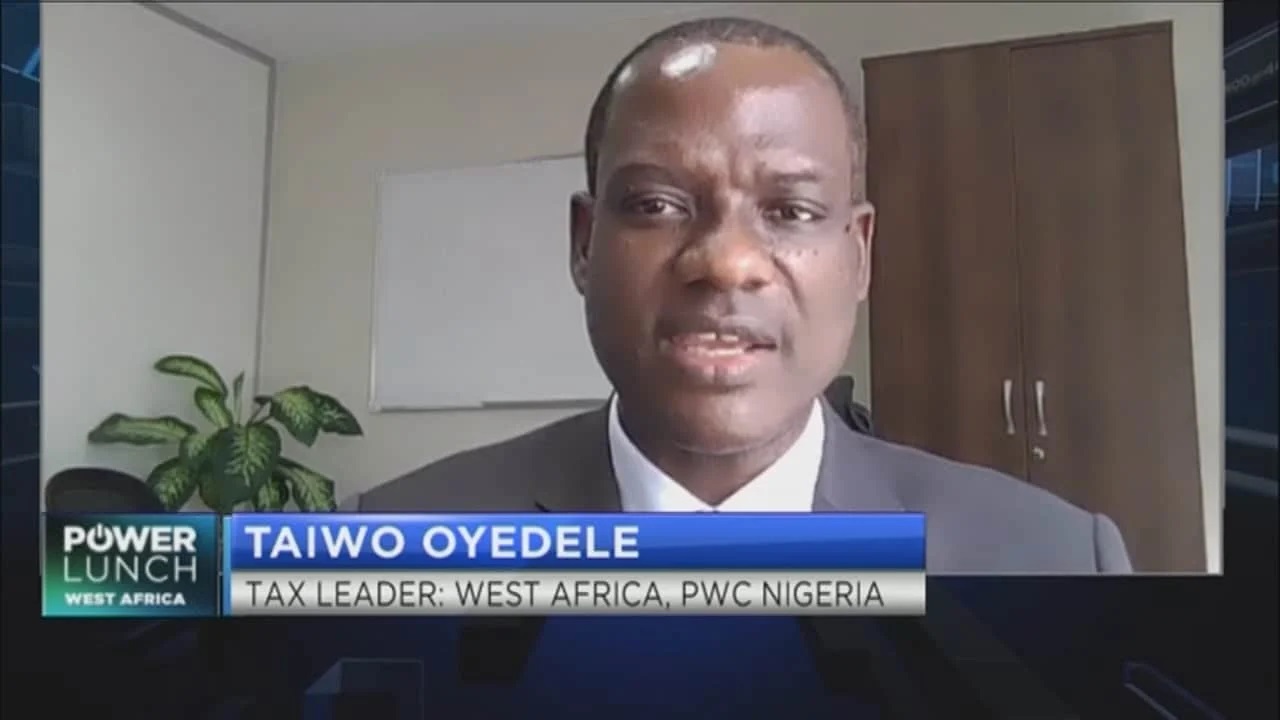
The chairman of the Presidential Fiscal Policy and Tax Reforms Committee, Mr Taiwo Oyedele, has responded to the alleged errors and others observed in the controversial tax laws of Nigeria, which fully became effective January 1, 2026.
In an analysis posted in a newsletter posted on its website, the Nigerian arm of a global consultancy firm, KPMG, highlighted some sections of the laws that look confusing, making some recommendations.
The company disclosed that if the errors were not addressed, they could discourage investors from the country.
But responding to these observations, Mr Oyedele, who acknowledged that a few points raised by KPMG were useful, particularly where they relate to implementation risks and clerical or cross-referencing issues, stressed that the majority of the publication reflected a misunderstanding of the policy intent, a mischaracterisation of deliberate policy choices, and, in several instances, repetitions and presentation of opinion and preferences as facts.
According to him, a significant proportion of the issues described as “errors,” “gaps,” or “omissions” by KPMG are either the firm’s errors and invalid conclusions or the issues are not properly understood by them.
The tax expert also noted that KPMG may have missed context on broader reforms objectives, or are areas where KPMG prefer different outcomes than the choices deliberately made in the new tax laws.
“While it is legitimate to disagree with policy direction, disagreements should not be framed as errors or gaps. KPMG would have been more effective if the firm adopted a similar approach like other professional firms who engaged directly providing the opportunity for clarifications and mutual-learning.
It is equally important to distinguish between policy choices designed to achieve the reform objectives and proposals that merely represent a firm’s preference,” he added.
Speaking on the taxation of shares and the stock market, the former PwC man said, “Contrary to the presumption that the new tax provisions on chargeable gains would trigger a sell-off on the stock market, the fact is that the applicable tax rate on share gains is not a flat 30 per cent. The tax framework is structured from zero per cent to a maximum of 30 per cent, which is set to reduce to 25 per cent. Furthermore, a significant majority of investors (99 per cent) are entitled to unconditional exemption, with others qualifying subject to reinvestment.
“The market’s performance, which is at an all-time high with increased investment flow, demonstrates investors understanding that the tax changes will enhance the fundamentals of firms both in terms of profitability and cash flows. The sell-off narrative is unsubstantiated as any disposals in December 2025 would have benefited from the re-investment exemption or enhanced deductions under the new law.”
He also clarified that the suggestion to set the commencement date as the start of an accounting period (e.g., 1 January 2026) takes a narrow view of the complex transition issues.
“A wholesale reform affects myriad issues beyond the accounting period, spanning multiple periods, different bases of assessment (preceding year, actual year), as well as issues related to audit, deductions, credits, and penalties. Limiting the commencement to a single date for accounting periods would fail to address the intricacies of continuous transactions and other transition matters. KPMG’s proposal is therefore not a “gold standard” to be applied to all new laws as suggested,” he said.
Below are the other areas he clarified in his post;
Indirect Transfer of Shares
The new provision to tax indirect transfer of shares is a policy choice aligned with global best practices and BEPS initiatives. Its objective is to block a long-exploited tax loophole by multinationals and other investors, not to affect competitiveness. This is a common provision in international tax, and the assertion that it may affect the country’s economic stability is disingenuous.
VAT Exemption on Insurance Premium
KPMG’s point regarding a specific VAT exemption on insurance premium is technically unnecessary, as an insurance premium is not a “taxable supply” defined under the Nigeria Tax Act. Insurance relates to risk transfer, not the supply of goods or services subject to VAT. As this has always been the administrative and legal position, a specific amendment for exemption is academic. If it is not broken, don’t fix it.
Inclusion of ‘Community’ in Definition
The concern about the inclusion of “community” in the definition of a ‘person’ but its omission from the charging section does not constitute a gap or ambiguity. In statutory interpretation, definitions provided in the law apply wherever the defined term appears, unless the context requires otherwise. Hence, ‘person’ and ‘taxable person’ are used in the charging section, and both definitions include ‘community.’ This approach is consistent with modern legislative drafting principles, which use comprehensive definitions to streamline operative provisions and avoid redundancy. This is similar to the inclusion of partnerships and executors in the definition but not under the charging section. The use of the word “includes” further signifies that the list of taxable persons is not exhaustive.
Joint Revenue Board (JRB) Composition
The composition and mandate of the Joint Revenue Board (JRB) are intentional. Its policy advisory role is specifically to provide a subnational tax and revenue perspective that complements the fiscal policy mandate of the Ministry of Finance. Its membership is appropriately limited to revenue-focused agencies, which is why it is called the Joint Revenue Board. This is a similar composition under which the former JTB operated effectively, and its functions remain consistent with the need for inter-agency coordination.
Distinction in Dividend Treatment
KPMG’s analysis appears to mix the distinction between a foreign-controlled company and a foreign operation of a Nigerian company. Dividends distributed by a foreign company cannot be “franked” since no Nigerian Withholding Tax (WHT) would have been deducted. Section 162(1)(s) confers exemption on dividend, interest, rent, or royalty derived from outside Nigeria and brought into Nigeria through approved channels. The choice to treat dividends distributed by Nigerian companies differently from foreign companies is a deliberate policy choice, as they are fundamentally different for tax purposes.
Non-Resident Registration and Final Tax
The view that a payment subject to deduction as final tax should automatically exempt the non-resident recipient from tax registration misses a critical distinction. While the law conditionally exempts passive income from registration, the deduction of tax on non-passive income is not synonymous with an exemption from registration or filing of returns. The same way that residents are required to file returns on income such as interest (in the case of individuals) and dividend where WHT is final. Returns serve a broader purpose beyond solely generating tax revenue.
Tax on Foreign Insurance Premiums
The proposal to exempt foreign insurance companies from tax on premiums from insurance written in Nigeria to deepen penetration, while local insurance companies continue to pay tax, would be detrimental to the domestic insurance sector. This would create an unfair and harmful competitive disadvantage for local firms in their own market. The current policy is designed to protect and promote local industry and ensure a level playing field.
Parallel Market Forex Deduction
The new law disallows tax deduction for the difference where a business buys foreign exchange in the parallel market at a premium over the official rate. This is a critical fiscal policy choice designed to complement monetary policy, strengthen, and stabilise the Naira. By removing the tax subsidy for patronage of the parallel market, the policy aims to reduce incentives for round-tripping and redirect legitimate FX demands to the official market. This is policy congruence, not an error.
VAT Compliance-Linked Deductibility
The non-tax deduction for taxable transactions on which VAT has not been charged is a necessary anti-avoidance measure. It removes the advantage that some taxpayers previously enjoyed by patronising suppliers who evade VAT. This is a matter of fairness and is squarely within the control of a business to manage, especially given the provision for the self-charge of VAT. It also ensures that responsible businesses play their part in promoting voluntary tax compliance across the ecosystem.
Progressive Personal Income Tax
While KPMG acknowledges the reform objective of fairness and progressivity, the firm disagrees with a top marginal tax rate of 25% for the highest earners. In reality, the effective tax rate can be as low as 22% for an individual earning billions a year simply by contributing 10% to pension. This rate is competitive when compared to many other countries, including Angola 25%, Egypt 27.5%, Ghana 35%, Kenya 35%, the U.S. (Federal) 37%, South Africa 45%, and the U.K. 45%. So, the rate is not “oppressive” or one that will negatively affect economic growth as claimed, rather it ensures progressivity without compromising competitiveness. From a broader policy objective perspective, the increase in top marginal rate for high income earners and the reduction in corporate tax rate is designed to address the existing higher tax burden associated with business formalisation.
Police Trust Fund
The Police Trust Fund was signed into law on May 24, 2019, with a six-year lifespan under section 2(2) of the Act, which ended in June 2025. Therefore, KPMG’s point that the new tax law should be amended to repeal the taxing section of the Police Trust Fund Act is needless, as the provision no longer exists.
Small Company Verification
The analysis concerning the tax exemptions for small companies affecting large companies’ obligations is not a new issue or an inconsistency in the new law. The small business threshold was introduced via the Finance Act 2021. This issue pre-dates the current tax laws and should not be presented as an error or omission simply by virtue of a higher tax exemption threshold under the new law.
What KPMG Left Out
While acknowledging the objectives of the reform, KPMG could have highlighted the major structural improvements under the new laws, including:
– simplification and tax harmonisation,
– the scope for reduction in corporate tax rate from 30% to 25%,
– expanded input VAT credits for businesses,
– tax exemption for low-income earners and small businesses,
– elimination of minimum tax on turnover and capital, and
– improved investment incentives for priority sectors.
A balanced assessment would have recognised these transformative elements, among others.
Conclusion and Way Forward
The tax reform is the result of an extensive consultation with various stakeholder groups in addition to the legislative process that included widely publicised public hearings, avenues intended for all stakeholders including international firms to provide technical expertise at the formative stage.
In any comprehensive overhaul of a nation’s tax framework, clerical inconsistencies or cross-referencing gaps may occur, and these are already being identified within the government. The tax reform represents a bold step toward a self-sustaining and competitive Nigeria.
An effective review needs to connect identified gaps to clear policy intents and the reality of modern-day tax systems within the context of economic development and global competitiveness.
At this stage, the effectiveness of the tax law depends on administrative guidance, clarifications from the tax authority, and regulations to complement precise statutory provisions where necessary pending future amendments.
We urge all stakeholders to pivot from a static critique to a dynamic engagement model, which allows for clarifications and a productive partnership in the implementation of the new tax laws.
Economy
Eyesan Targets Shut-in Barrels to Optimise Nigeria’s Oil Production
By Adedapo Adesanya
The chief executive of the Nigerian Upstream Petroleum Regulatory Commission (NUPRC), Mrs Oritsemeyiwa Eyesan, has identified the recovery of shut-in oil and gas volumes as a central strategy for optimising Nigeria’s upstream production and stabilising revenue.
She said the oil and gas sector remains critical to Nigeria’s economic stability, stressing that effective regulation must be anchored on a strong, efficiently run upstream industry.
According to Mrs Eyesan, the commission’s agenda for the sector under her leadership, is built on three core pillars, with production and revenue optimisation taking priority.
“Our agenda rests on optimising production and revenue by recovering shut-in volumes,” she said. Shut-in volumes refer to the amount of oil or gas that is currently capable of being produced but is not being extracted because the wells have been deliberately closed off.
The NUPRC head explained that unlocking idle production requires closer collaboration between regulators and operators, supported by transparent and accountable industry practices.
Mrs Eyesan added that regulatory efficiency is another key enabler of production optimisation, noting that speed and predictability in approvals are essential to sustaining upstream operations.
“We are focused on ensuring regulatory speed and predictability through clear rules and digital processes,” she said.
The NUPRC chief further said that optimising output must go hand-in-hand with safe and sustainable operations, including effective governance of assets and improved host community outcomes.
“Strengthening safe, governed and sustainable operations, including host community outcomes and decarbonisation, is part of our broader objective,” Mrs Eyesan said.
She noted that a stable regulatory environment, combined with production recovery efforts, would support industry confidence and improve Nigeria’s ability to maximise value from its hydrocarbon resources.
Economy
Seplat’s 300 MMscfd ANOH Project Supplies Debut Gas After Completion
By Adedapo Adesanya
Seplat Energy Plc has announced that the 300 Million Standard Cubic Feet per Day (MMscfd) ANOH gas project has achieved the supply of its first gas.
A statement by the company on Tuesday noted that the feat followed completion of the 11km Indorama gas export pipeline and receipt of regulatory approval from the Nigerian Upstream Petroleum Regulatory Commission (NUPRC).
“On Friday, January 16, 2026, ANOH Gas Processing Company (AGPC) commenced gas supply to Indorama, under a firm and interruptible offtake Gas Sales Agreements (GSAs).
“To enable the flow of gas, the four upstream wells, which had been on standby since November 2025, were brought online.
“Since first gas, wet gas production has been stabilizing, delivering 40-52 MMscfd of processed gas directly from the ANOH gas plant to the Indorama Petrochemical Plant,” the statement read in part.
It noted that condensate production has reached 2.0-2.5 kboepd and is expected to increase with gas production as the plant ramps up to design capacity.
In addition, it said preparations are underway to initiate sales of processed gas to the Nigeria LNG (NLNG) with an offtake agreement structured on an interruptible basis and will support the gas plant to further scale production towards full design capacity of 300MMscfd.
“Meanwhile, the construction of the OB3 pipeline export route by Nigerian Gas Infrastructure Company (NGIC), originally designated as the primary channel for ANOH gas supply to the domestic market, has resumed, and a revised completion date will be communicated in due course”, the statement added.
The ANOH gas plant was developed by AGPC, an incorporated joint venture between Seplat Energy and the NGIC.
The integrated plant consists of two 150 MMscfd gas processing units, Liquefied Petroleum Gas (LPG) recovery units, condensate stabilisation units, a 16MW power plant, and other supporting facilities, and has been built to operate with zero routine flares.
Across the unitised field of OML 53 and OML 21, the ANOH gas plant unlocks an estimated 4.6 Tcf condensate-rich gas resource base.
“Seplat’s working interest 2P reserves in the unitised field, as booked at year-end 2024, stood at 0.8 Tcf.
“Seplat will derive value from two distinct income streams: wet gas sales from OML 53 to the ANOH gas plant, and dividends from its 50% equity ownership in AGPC.
“The LPG produced from ANOH, combined with the LPG production at Sapele and the Bonny River Terminal (BRT), will make Seplat a leading supplier of clean cooking fuel to the domestic market.
“In addition, the ANOH gas plant will process the flared gas from the Ohaji field, enabling Seplat to achieve its onshore End of Routine Flaring programme, a key commercial and sustainability initiative for the company.
“The ANOH gas plant has been developed without a single recordable Lost Time Incident (LTI) across 17.5-million-man hours, a testament to the focus of the whole team on safe and secure operations.
Speaking on the development, Mr Roger Brown, Chief Executive Officer of Seplat Energy, commenting on the feat, said, “ANOH is the first of the seven critical gas development projects identified by Federal Government of Nigeria to commence operations.
“It is an important strategic project for Seplat, our partner NGIC, and Nigeria as a whole. It has taken a significant amount of commitment and hard work to complete the project in a part of the onshore Niger Delta with limited gas pipeline infrastructure, and we are extremely proud of this achievement.
“This is our third major gas processing facility onshore and increases our Joint Venture gross gas processing capacity onshore to over 850 MMscfd.
“ANOH will provide material income streams for Seplat, reduce our carbon intensity and contribute significantly to the 2030 production target of 200 kboepd, set at our recent CMD. It will also increase energy access for Nigerians in terms of both power and clean cooking fuel for the local communities, while advancing delivery of our mission to support economic prosperity in Nigeria.”
Economy
Best Prop Trading Firms in Nigeria 2026
A typical trader’s risk appetite often increases once they’ve scored a few wins. The reasoning is that, if I take bigger risks, I may go home with a bigger paycheck. But risk appetite alone doesn’t increase the chances of higher earnings; you also must invest a lot more money.
This need for higher trading capital is a gap that prop trading firms seek to plug. They give skilled traders capital and then agree on how to split the gains. The tradeoff for you as a trader is that you often pay upfront fees for evaluation or instant funding, operate under strict guidelines, and may lose access if you violate risk limits. And this is why you must choose a firm with which you can have a healthy relationship. This article presents the top options in Nigeria.
List of best prop trading firms in Nigeria 2026
- OneFunded – the fastest growing prop firm in 2026, with easy and transparent trading rules.
- FundedNext – prop firm offering trader-friendly challenge models
- FTMO – prop firm known for strict rules and structured evaluations
- Topstep – a futures prop firm focused on discipline and risk control
- Take Profit Trader – a prop firm with simple evaluations and clear rules
1. OneFunded

| Year founded | 2024 |
| Headquarters | London, England, UK |
| Funding model | Evaluation/challenge |
| Max capital | $200,000 |
| Profit split range | 80% default, 90% after purchasing add-on |
| Primary markets | Forex, crypto, indices, and metals |
| Trading platforms | cTrader, TradeLocker, MT5 |
Challenge Structure
OneFunded’s funding model is exclusively challenge-based. That is, traders access a funded account with a simulated trading environment after passing the evaluation. You can choose between a 1-step and 2-step challenge and pay a one-time fee, which is also refundable. The table below shows a detailed summary of the firm’s challenge structure.
| 1-Step Challenge | 2-Step Challenge | 1F Limited Challenge | |
| Phases | 1 | 2 | 2 |
| Account sizes available | $2,000, $5,000, $10,000, $25,000, $50,000, $100,000, $200,000 | $2,000, $5,000, $10,000, $25,000, $50,000, $100,000, $200,000 | $2,000, $5,000, $10,000, $25,000 |
| Profit targets | 10% | 8% (Phase 1) 5% (Phase 2) | 7% (Phase 1) 4% (Phase 2) |
| Drawdown limits | Daily: 4% Maximum: 6% | Daily: 5% Maximum: 10% | Daily: 5% Maximum: 11% |
| Minimum trading days | 5 days | 3 days (per phase) | 2 days (per phase) |
| Trading period | Unlimited | Unlimited | Unlimited |
| Entry fees (per account size) | $2K: $29; $5K: $56; $10K: $107; $25K: $143; $50K: $215; $100K: $395; $200K: $699 | $2K: $23; $5K: $45; $10K: $89; $25K: $125; $50K: $195; $100K: $361; $200K: $650 | $2K: $25; $5K: $49; $10K: $92; $25K: $135 |
Payouts and Trader Support
This prop trading firm processes payouts on a 14-day cycle after requests, but you can shorten this period with a seven day add-on. And the available methods are cryptocurrency (USDT) for payouts below $1,000 and bank transfer for higher amounts.
According to our research, users find OneFunded as quite reliable. For example, the firm has a 4.4-star rating from 141 Trustpilot reviews. Most reviewers praise the firm for transparent payouts and fair trading conditions. Support is also quite responsive. We established that your queries will be addressed within 24 hours.
Strengths and Ideal Users
Our research established that OneFunded has a high pass rate, which could be due to its no-pressure environment. The unlimited challenge durations allow traders to strategize without time constraints. Also, the firm provides all the details on its website regarding trading rules, fees, and payout processes. OneFunded is best for Nigerian traders seeking accessible and supportive platforms with flexible conditions.
2. FundedNext

| Year founded | 2022 |
| Headquarters | Ajman, United Arab Emirates |
| Funding model | Evaluation with progression to a funded account; Instant funding |
| Max capital | $200,000 |
| Profit split range | Starts at 15% in challenge accounts, progresses to 90% in FundedNext accounts |
| Primary markets | Forex, indices, and commodities |
| Trading platforms | MetaTrader 4 and 5, cTrader, and Match-Trader. TradingView for analysis |
Challenge Structure
FundedNext offers two categories of funded trading programs, one for CFDs and the other for futures. The CFDs one is the broadest in terms of paths to funded status; there is Evaluation (2-step), Express (1-step with high target), Stellar 1-Step, Stellar 2-Step, and Stellar Lite (2-step). The table below summarizes the key features of these programs:
| Stellar 1-Step | Stellar 2-Step | Stellar Lite (2-Step) | Stellar Instant | |
| Account sizes available | $6k, $15k, $25k, $50k, $100k, $200k | $6k, $15k, $25k, $50k, $100k, $200k | $5k, $10k, $25k, $50k, $100k, $200k | $2k, $5k, $10k, $20k |
| Profit targets | 10% | 8%(Phase 1) 5%(Phase 2) | 8%(Phase 1)
4%(Phase 2) |
N/A |
| Drawdown limits | Daily: 3% Maximum: 6% | Daily: 5% Maximum: 10% | Daily: 4% Maximum: 8% | Daily: N/A
Maximum: 6% |
| Minimum trading days | 2 days | 5 days (per phase) | 5 days (per phase) | N/A |
| First withdrawal | 5 days | 21 days | 21 days | On demand |
| Performance reward | 15% | 15% | 15% | Up to 80% |
| Entry fees | $6k: $66; $15k: $130;
$25k: $220; $50k: $330; $100k: $570; $200k: $1,100 |
$6k: $60; $15k: $120; $25k: $200; $50k: $300; $100k: $550; $200k: $1,100 | $5k: $33; $10k: $60; $25k: $140; $50k: $230; $100k: $400;
$200k: $799 |
$2k: $60; $5k: $150, $10k: $300; $20k: $600 |
| Refundable fee | Full price for all account sizes | Full price for all account sizes | Full price for all account sizes | N/A |
For the FundedNext Futures product, the firm offers two regular challenge models (Rapid and Legacy), and one limited-time exclusive challenge called Bolt. Below are the key features:
| Rapid (1-Step) | Legacy (1-Step) | Bolt (1-Step) | |
| Account sizes available | $25k, $50k, $100k | $25k, $50k, $100k | $50k |
| Profit target(s) | $25K: $1,500; $50K: $3,000; $100K: $5,000 | $25K: $1,250; $50K: $2,500; $100K: $6,000 | $3,000 |
| Drawdown limits | Maximum (Trailing): $25K: $1,000; $50K: $2,000; $100K: $2,500;
Daily: N/A |
Maximum (Trailing): $25K: $1,000; $50K: $2,000; $100K: $3,000;
Daily: N/A |
Maximum: $2,000
Daily: $1,000 |
| Entry fee | $25k: $110; $50k: $200; $100k: $280 | $25k: $80; $50k: $150; $100k: $250 | $100 |
| Reset fee | $25k: $97; $50k: $176; $100k: $247 | $25k: $70; $50k: $132; $100k: $220 | $88 |
Payouts and Trader Support
Our investigation found that FundedNext processes payouts within five to 24 hours. In fact, the firm offers an extra $1,000 compensation for each delayed payout. First payouts vary depending on the challenge and market. For CFDs models like Stellar 2-Step and Stellar Lite, the initial withdrawal is available 21 days after funding; it comes down to five days for Stellar 1-Step, and on-demand for Stellar Instant. And when the process is successful, you can receive funds via RiseWorks, Confirmo, and crypto (USDT).
Trustpilot reviews, 54,551 at writing, give the firm a strong 4.5/5 rating. Most users commend FundedNext for fast and reliable payouts. And regarding customer support, most users state that it is professional and responsive. Our research can confirm this, and add that the chat function on the website worked better.
Strengths and Ideal Users
FundedNext offers the most comprehensive funded trader programs in Nigeria. Add to that performance rewards during challenges, unlimited time for evaluations, and news trading allowance. The firm also has flexible trading guidelines and the support is professional. The firm is best for forex and futures traders seeking high profit shares, news/event strategies, and rapid scaling without time pressure.
3. FTMO

| Year founded | 2014 |
| Headquarters | Prague, Czech Republic |
| Funding model | Two-step evaluation process |
| Max capital | $200,000 |
| Profit split range | Up to 90% |
| Primary markets | Forex, crypto, indices, and commodities |
| Trading platforms | MetaTrader 4 and 5, cTrader, and DXtrade |
Challenge Structure
Unlike OneFunded, FTMO has only one challenge, the FTMO Challenge. This is a two-phase evaluation process that leads to a funded FTMO Account. You must know that the funded account operates in a simulated environment, which means that the funds are fictitious but the profit splits are real money. The table below presents the key features:
| FTMO challenge account size | $200,000 | $100,000 | $50,000 | $25,000 | $10,000 |
| Profit target | STEP 1: 10% STEP 2: 5% | STEP 1: 10%
STEP 2: 5% |
STEP 1: 10%
STEP 2: 5% |
STEP 1: 10% STEP 2: 5% | STEP 1: 10% STEP 2: 5% |
| Max. daily loss | 5% | 5% | 5% | 5% | 5% |
| Max. loss | 10% | 10% | 10% | 10% | 10% |
| Min. trading days | 4 days | 4 days | 4 days | 4 days | 4 days |
| Trading period | Unlimited | Unlimited | Unlimited | Unlimited | Unlimited |
| Refund | Yes 100% | Yes 100% | Yes 100% | Yes 100% | Yes 100% |
| Entry fee | €1,080 | €439 (offer) | €345 | €250 | €89 |
Payouts and Trader Support
FTMO allows on-demand payouts after a minimum of 14 days from the first trade on funded accounts. It processes the payouts within 1-2 business days via bank wire, Skrill, cryptocurrencies, or instant card transfers like Visa Direct (up to $20,000). The firm doesn’t charge a cent on its platform during this process.
We established that FTMO’s customer support channels operate 24/7 in 20 languages. There is also plenty of community features, including a 100k+ member Discord, and a 400k-subscriber YouTube channel. The firm also offers plenty of educational material via FTMO Academy.
Strengths and Ideal Users
FTMO has one of the longest running trader funding programs in the sector. This speaks to its tenacity and relevance. Other strengths include robust educational resources and advanced analytics tools (e.g., Account MetriX, Trading Journal, etc.). We also learned through Reddit that the firm is reliable, operates transparently, and traders experience minimal slippage issues despite strict rules.
FTMO is best for experienced traders seeking a reputable, resource-rich platform with high capital access and scaling opportunities in Nigeria.
4. TopStep

| Year founded | 2012, rebranded from TopStepTrader to TopStep in 2020 |
| Headquarters | Chicago, Illinois, USA |
| Funding model | Evaluation with progression to a live funded account |
| Max capital | $150k in challenges; $750k across five Express Funded Accounts |
| Profit split range | 50% to 100% |
| Primary markets | CME Foreign Exchange Futures, CME Equity Futures, CME Agricultural Futures, CME NYMEX Futures, CME CBOT Agricultural Futures, CME CBOT Financial/Interest Rate Futures, and CME COMEX Futures |
| Trading platforms | TopStepX, NinjaTrader, Quantower, Tradovate, TradingView |
Challenge Structure
TopStep takes prospective traders through a primary challenge phase; the evaluation is called Trading Combine. Those who pass this stage proceed to the Express Funded Account. This is funded account that uses fictitious funds to hone traders’ skills. And the upside that you receive rewards for every successful trade. If the team and TopStep are satisfied with your skills, you may be called upon to operate a Live Funded Account.
The table below summarizes the account sizes you can choose at the Trading Combine stage; the structure is the same up to the Live Funded Account. Note that you can choose the “No activation fee” path or the “Standard” path.
| Path | Account Size (Buying Power) | Profit Target | Monthly Price | Max Loss Limit | Max Position Size | Activation Fee |
| No Activation Fee | $50k | $3,000 | $89 | $2,000 | 5 contracts | Free |
| No Activation Fee | $100k | $6,000 | $139 | $3,000 | 10 contracts | Free |
| No Activation Fee | $150k | $9,000 | $189 | $4,500 | 15 contracts | Free |
| Standard | $50k | $3,000 | $49 | $2,000 | 5 contracts | $129 (one-time, after passing) |
| Standard | $100k | $6,000 | $99 | $3,000 | 10 contracts | $129 (one-time, after passing) |
| Standard | $150k | $9,000 | $149 | $4,500 | 15 contracts | $129 (one-time, after passing) |
Payouts and Trader Support
TopStep starts rewarding traders at the Express Funded Account (XFA) stage. The first payout requires at least five winning days of $150 or more in profits, and you can request up to four withdrawals in a month. The firm processes payouts daily with instant deductions for quick access, though specific channels like bank transfers or other methods are handled via the platform with dedicated support.
Also, the firm offers robust educational resources such as in-depth strategy courses, daily TopStepTV broadcasts featuring expert insights, and personalized Coach T analytics. There is also a vibrant community through a large Discord chatroom with over 150,000 members and coaches, plus a Facebook group for networking and accountability. Customer support is accessible via 24/7 chat, weekday phone assistance, SMS, WhatsApp, and email options for prompt help.
Strengths and Ideal Users
TopStep specializes in the futures market, and, according to information on its website, it has funded more than 10,000 traders into live accounts for over 12 years. The Trading Combine feature is also a standout program that offers a streamlined single-rule path to a live funded account. Traders also enjoy features like TopStepX, a proprietary trading platform tailored for futures traders. As such, the firm is best for futures traders needing structure and coaching.
5. Take Profit Trader

| Year founded | 2021 |
| Headquarters | Windermere, Florida, USA |
| Funding model | Subscription-based evaluation with progression to a live account |
| Max capital | $150,000 |
| Profit split range | 80% for PRO Accounts; 90% for PRO+ Accounts |
| Primary markets | Futures and options contracts across Equity Indices, Energy, Metals, Currencies, Agriculture, Crypto, and Treasuries |
| Trading platforms | NinjaTrader, TradingView, Tradovate, Quantower, R Trader, MetaTrader 4, MetaTrader 5 |
Challenge Structure
Take Profit Trader uses a single-step evaluation process and upon passing, traders move to a funded PRO account. Traders get a test account at the evaluation phase, where they trade in a simulated environment. They don’t get a live environment until they graduate to the PRO+ account. The table below summarizes some of the key features of the different account types:
| Feature | TEST | PRO | PRO+ |
| Trading environment | Simulated | Simulated | Live |
| Withdrawals | None | Day one | Day one |
| Profit split | None | 80/20 | 90/10 |
| Maximum withdrawal amount | None | No max | No max |
| Buffer rules | None | Yes | None |
| Drawdown | End of Day | Intra day | End of Day |
| Consistency rule | Yes | None | None |
| Scaling rule | None | None | None |
| Broker rates | $5/$0.50 RT | $5/$0.50 RT | Broker rates |
And, you can choose a trading account from $25,000 to $150,000, the maximum allocation. The table below details the parameters of each account size:
| Account Size | Monthly Subscription | Profit Target | Max Position Size | Daily Loss Limit | EOD Trailing Drawdown |
| $25,000 | $150 | $1,500 | 3 contracts/
30 micros |
Removed | $1,500 |
| $50,000 | $170 | $3,000 | 6 contracts/
60 micros |
Removed | $2,000 |
| $75,000 | $245 | $4,500 | 9 contracts/
90 micros |
Removed | $2,500 |
| $100,000 | $330 | $6,000 | 12 contracts/
120 micros |
Removed | $3,000 |
| $150,000 | $360 | $9,000 | 15 contracts/ 150 micros | Removed | $4,500 |
Payouts and Trader Support
Once you graduate to the PRO account, Take Profit Trader offers payouts starting from day one. But your account balance must exceed the buffer zone (equal to max drawdown). You will get an 80% share of profits with a PRO account and 90% on PRO+ after 60 trading days. Our investigation showed that the firm processes payouts in 24-36 hours via Plaid (US banks), PayPal, or Wise. You can request withdrawals as many times as possible, and payouts are free over $250, and a $50 fee under that. And, KYC verification is required before first withdrawal using standard ID documents.
However, Tak Profit Trader does not offer educational resources such as those available at competitors. Instead, you’ll have to rely on help articles for rules and a Discord community for peer discussion. Customer support operates via live chat, email, and Discord.
Strengths and Ideal Users
Take Profit Trader’s single-step evaluation makes it stand out, especially for traders looking for an expedited path to funded accounts. It’s pricing is also competitive, and even the broker fees are affordable. However, a lack of educational resources makes the firm best for risk-tolerant and experienced futures traders only.
Comparative Analysis of the Best Prop Firms
| Firm | Max Allocation | Profit Split | Evaluation Steps | Best Feature | Trustpilot Rating |
| OneFunded | $200,000 | Up to 90% | Multiple paths (1-Step & 2-Step) | Unlimited challenge duration with a high pass rate | 4.4/5 |
| FTMO | $200,000 | Up to 90% | Two-Step Challenge | Robust educational resources and advanced analytics tools | 4.8/5 |
| FundedNext | $200,000 (CFDs); $100,000 (Futures) | Up to 90% | Multiple paths (1-Step & 2-Step; Instant) | Most comprehensive funded trader programs with news trading allowance. | 4.5/5 |
| TopStep | $150,000 | 50%–100% | Single-step Trading Combine | Futures specialization with coaching, community, and proprietary trading platform. | 3.6/5 |
| Take Profit Trader | $150,000 | 80% (PRO); 90% (PRO+) | Single-Step Evaluation | Day-one withdrawals on funded accounts | 4.4/5 |
Strategies for Selecting a Prop Firm in Nigeria
1. Align Challenge Rules with Your Trading Timeframe
Choose a firm whose evaluation period structure matches your typical position-holding duration. If you trade slowly or prefer no time pressure, opt for firms offering unlimited challenge durations. Ensure the minimum trading day requirement fits your natural trading frequency to avoid forced, suboptimal trades.
2. Calculate Your True Cost to Profitability
Look beyond the initial evaluation fee. Factor in the potential costs of multiple attempts, since most traders do not pass on the first try. Include all associated expenses such as platform fees, data costs, and reset charges to accurately compare the total investment required across different firms.
3. Verify Withdrawal Track Record
Conduct independent research on payout reliability. Check reviews on platforms like Trustpilot, Reddit, and trading forums for consistent patterns of praise or complaints regarding withdrawals. Pay attention to how firms respond to and resolve payment issues.
4. Test Rules Against Your Actual Trade History
Audit your past trading performance against a firm’s specific rules. Review your last 50-100 trades to see if your largest losses would violate daily or maximum drawdown limits. Confirm that your typical position sizes comply with the firm’s lot or contract limits.
5. Prioritize Rule Clarity Over Generous Splits
Select firms with explicitly documented and transparent trading guidelines. Avoid any with vague terminology like “reasonable trading” or rules subject to discretionary interpretation, as these can be used to disqualify you regardless of a high profit share percentage.
6. Evaluate Support Before You Pay
Proactively test the firm’s customer service before purchasing a challenge. Send pre-sales questions to gauge response time and quality. Explore available support channels like live chat, email, and community forums to assess their usefulness and the general sentiment among funded traders.
FAQs
- How difficult is it to pass a prop firm’s evaluation challenge?
Passing rates vary, but most traders do not succeed on their first attempt due to psychological pressure and strict risk limits. Firms like OneFunded report higher pass rates, often attributed to their no-pressure, unlimited-time evaluation structure.
- What are the most common reasons traders fail prop firm challenges?
The primary reasons are violating daily or maximum drawdown limits and failing to meet profit targets within the required minimum trading days. Emotional trading under time pressure and over-leveraging are also frequent causes of failure.
- Can I trade with multiple prop firms simultaneously?
Yes, most firms allow it, but you must manage separate accounts and adhere to each firm’s specific rules. However, ensure you can handle the psychological and operational complexity of juggling multiple evaluation criteria and risk limits.
- How quickly can I scale my account after getting funded?
Scaling policies vary. Some firms offer scaling plans based on consistent profitability, often increasing your capital by 25% to 50% after meeting specific profit milestones over a set period.
- Are profits from prop trading taxable?
Yes, payout profits are generally considered taxable income. However, tax treatment depends on your country of residence and the firm’s structure. It is advisable to consult with a local tax professional to understand your specific reporting obligations.
-
Feature/OPED6 years agoDavos was Different this year
-
Travel/Tourism9 years ago
Lagos Seals Western Lodge Hotel In Ikorodu
-
Showbiz3 years agoEstranged Lover Releases Videos of Empress Njamah Bathing
-
Banking8 years agoSort Codes of GTBank Branches in Nigeria
-
Economy3 years agoSubsidy Removal: CNG at N130 Per Litre Cheaper Than Petrol—IPMAN
-
Banking3 years agoFirst Bank Announces Planned Downtime
-
Banking3 years agoSort Codes of UBA Branches in Nigeria
-
Sports3 years agoHighest Paid Nigerian Footballer – How Much Do Nigerian Footballers Earn