

World
World Bank, IMF and Africa’s Development

By Professor Maurice Okoli
Amid heightened criticisms and intense debates over several significant global issues including new financial architecture, economic diversification, growing debts and reforms, the International Monetary
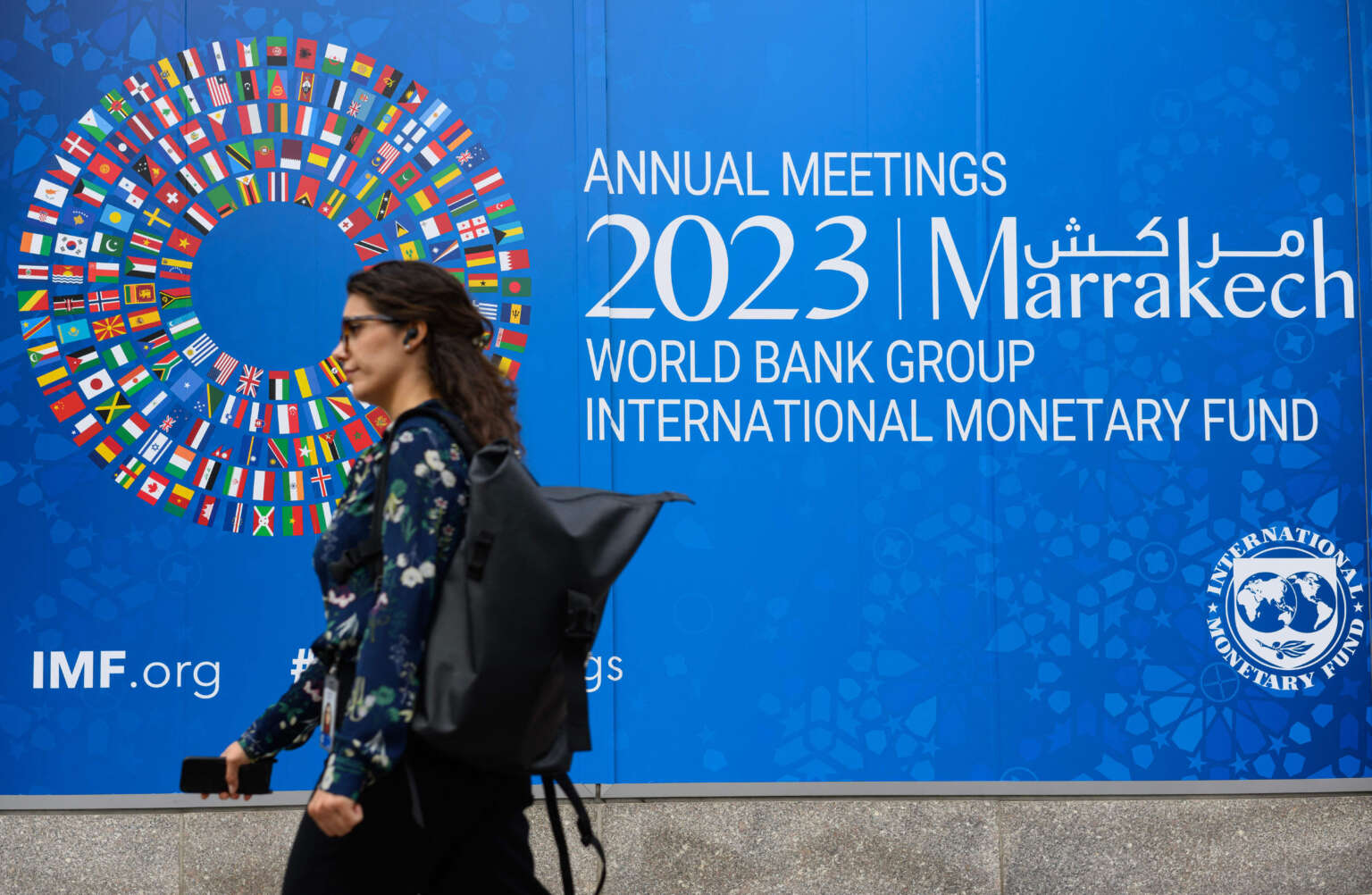
Fund (IMF) and the World Bank, on October 15 wrapped up their week-long annual meetings held under the theme “Global Action, Global Impact” in Marrakesh, Morocco in North Africa.
With the rapid geopolitical changes, it featured prominently finance ministers and central bank governors from 190 countries in desperate search of comprehensive mechanisms and suitable approaches to address the prevailing economic crisis across the globe. The coordinated annual meetings also reviewed its scope of geographical operations with particular emphasis on Africa.
Fundamentally Africa’s key drawbacks mostly mentioned in all the discussions are related to the system of governance, official policies and strategies, and persistent conflicts. Due to the severity of threatening conflicts combined with worsening insecurity and ineffective policies, speakers at the annual meetings reviewed with circumspection the economic performance in Africa.
The importance of this annual meeting particularly for Africa need not be over-emphasized. Of course, the popular paradox is that Africa has huge untapped resources including rich deposits of strategic minerals, the population is growing and now stands at 1.4 billion providing the human capital and yet that region is engulfed with abject poverty, lack of industrial infrastructure and technology, while agriculture largely remains at the rudimentary stage. It is impossible not to notice on the political map of the world – it is located roughly in the centre of the globe just on the equator and its huge expanse of territory.
Economic Picture
The global financial system “is now outdated, dysfunctional and unjust,” said a New York Times opinion column jointly written by Kenyan President William Ruto, African Development Bank President Akinwumi Adesina, African Union Commission chairman Moussa Faki and Patrick Verkooijen, chief executive of the Global Commission on
Adaptation.
It’s outdated because international financial institutions “are too small and limited to fulfil their mandate. Dysfunctional because the system as a whole is too slow to respond to new challenges, such as climate change. And unjust because it discriminates against poor countries,” the leaders wrote.
Often lenders of last resort, the IMF and the World Bank use billions in loans and assistance to buoy struggling economies and encourage countries operating in deficit to implement reforms they say promote stability and economic growth.
During a panel session in Marrakech second week of October 2023, African Ministers of Finance, Planning and Economic Development called for key reforms during a meeting of the Africa High-Level Working Group on the Global Financial Architecture, coordinated by the Economic Commission for Africa (ECA). The ECA has the mandate
to promote the economic and social development of its member states, foster intra-regional integration, and promote international cooperation for Africa’s development.
Their position, among others, was to strengthen the African voice on the global stage. This resounding call emphasized the need for a quota formula to increase the number share for Africa. The meeting expressed support for the establishment of an additional chair to represent African countries at the IMF Executive Board to amplify the region’s voice and representation.
The meeting further underscored the importance of scaling up both concessional and non-concessional financing priorities of African countries, including regional integration, infrastructure development and structural transformation. Also, there was the proposal for temporal suspension of debt service and to pause debt service payments in the event of climate-related disasters.
At the opening ceremony, IMF Chief Kristalina Georgieva in a speech stated that since 2020, successive economic shocks have led to the loss of $3.6 trillion of the global output, and that have pushed the IMF and the World Bank in hollowing for an enduring role in addressing the socio-economic challenges.
Fifty-seven per cent of the world’s poorest countries, home to about 30 per cent of the world’s population, will have to cut their public spending by $229 billion by 2029. Low and lower-middle-income countries will be forced to pay almost $500 million every day in interest and debt repayments from now until that year, according to her suggestion.
Role of the Financial Institutions
The African Development Bank, the Asian Development Bank, the Asian Infrastructure Investment Bank, the Council of Europe Development Bank, the European Bank for Reconstruction and Development, the European Investment Bank, the Inter-American Development Bank, the Islamic Development Bank, and the New Development Bank joined the World Bank in the collaboration agreement.
World Bank together with other nine multilateral development banks jointly seek to boost lending power to developing countries. These banks pledged to bolster collaboration in accelerating an appreciable, liveable world free of poverty. Under consideration is estimated $300 billion to $400 billion of additional lending capacity to help developing countries confront “a perfect storm of intertwined crises — from climate shocks and conflicts to pandemics and surging debt.”
They would also work to catalyze private-sector engagement. In addition, and as incorporated in the official document after the summit, the World Bank will be strengthening efforts to partner with the private sector, civil society, other multilateral institutions, and charitable organizations.
Some experts are of the view that the banks should also release emerging market data so private investors can better understand the actual risks and opportunities of investing in such markets. According to economic experts, exploring ways to directly increase the voice of emerging markets and developing countries in the IMF by adding another deputy managing director to represent emerging markets and low-income countries, and a third executive board chair representing sub-Saharan Africa.
“Working together for a common cause, we can bring more experience, expertise, knowledge, and, especially, more funding to the massive challenges facing the world today,” World Bank President Ajay Banga said. “Together, we are greater than the sum of our parts.”
In addition to improved analytical and diagnostic tools, including country climate and development reports, the multilateral banks have to work on principles for using concessional finance to target support for projects that address the challenges. Concessional finance involves loans at more generous terms than the market provides. The socio-cultural conditions should also form part of the decision-making process for extending these loans to accelerate private sector mobilization.
African States Struggling with Debts
International Monetary Fund chief Kristalina Georgieva called for wealthy nations to provide more support to debt-saddled developing countries, and to better help vulnerable nations deal with poverty and climate change, as she opened the first IMF-World Bank meetings on African soil in 50 years. The global lenders traditionally hold their annual gathering of finance ministers and central bank governors outside their Washington headquarters every three years.
The IMF and World Bank last held their meetings in Africa in 1973, when Kenya hosted the event and some nations were still under colonial rule. Half a century later, the continent faces various challenges ranging from conflict to a series of military coups to unrelenting poverty to natural disasters.
“Bringing the meetings to Africa, again, is symbolically and substantively very important,” Georgieva said at a meeting with members of civil society organizations. She noted that the continent is wrestling with “remarkably similar” problems as 50 years ago, including high inflation and “political upheaval in many places”.
“Many countries are under a burden of debt that can crush them and we very, very much hope that the meetings would be a place to build more trust among nations. We all need each other,” she said and added that the IMF and World Bank need “more capacity” to support African countries that need help, including providing zero-interest loans on a larger scale.
In the final analysis, China has to be considered for an increase in a quota within the institutions and given more representation if it played an active role in debt relief for low-income countries. China has already considered some African countries for addressing issues of debt restructuring deals, for instance, Angola, Egypt, Nigeria, Zambia and a few others.
It was also the result of several direct consultations by the US Treasury Secretary Janet Louise Yellen and other officials, trying to pressure and coax China — the largest creditor to the developing world — into participating more readily in such agreements. There are also proposals to seriously look at ways to revive the effectiveness and monitoring of funds utilization on the continent. Expectations are high for a breakthrough.
President Abdel-Fattah El-Sisi is looking to extend his rule until 2030. And Egypt seeks to boost IMF loan to over $5 billion amid currency woes, according to the discussions made available on the government’s website. A mission from the IMF may visit Egypt to start the two reviews around the end of October. Egypt owes nearly $22 billion to
the IMF, according to Egypt’s central bank which I found during my research for this article.
With regards to Africa, the IMF and World Bank need to take into serious account the ‘cultural change’ to better mobilize private capital. The process of reforming its operations to better address climate change and other numerous challenges requires an endorsement of a new vision “to end poverty on a livable planet” and that is what its new president, Ajay Banga, was working to turn into reality.
Under the auspices of the African Union, African leaders have to collectively within the framework of “African Problems, African Solutions” in this changing world. While calling for reforms in international organizations, the African Union also needs an urgent overhaul to effectively and rationally address the continent’s security and development issues. Africa does not need any “global coalition of democracies” to fight violent extremist groups, especially in West Africa that have been spreading south from the Sahel region. It requires African continental and/or regional forces with external support rather than bilateral mechanisms.
Fresh Hopes for a Better Future
A new tool developed by the Center for Global Development (CGD), and launched to track reforms by the World Bank and the five biggest multilateral development banks (MDBs), shows that broad changes are “firmly in play” but progress in implementing them has been limited thus far. The new platform assesses progress being made on reforms, but at the same time, concludes progress in implementing the changes was “quite limited.”
The CGD researchers however lauded some steps taken – including the World Bank’s inclusion of the phrase “livable planet” in its mission statement, but said the development banks were still largely debating how to integrate global challenges into their operations and how to pay for them.
Anna Bjerde, the World Bank’s managing director for operations, said she had been at the bank for 27 years and had never felt such energy and momentum for changing course. “To make a change in the work we’re in will, of course, take time,” Bjerde said, noting decisions already made at the spring meetings of the IMF and World Bank would boost financing and further steps were expected at the meeting in Morocco.
Critics have argued for years that MDBs manage their balance sheets too conservatively and could unlock significantly more capital without losing their AAA credit rating status. They said the reform discussion was also largely dominated by Northern Hemisphere voices and major emerging markets like China, India and Brazil, and it was crucial to include more MDB borrowing countries and address their goals and concerns.
“We have already seen notable progress in areas like raising lending limits and launching innovative finance programs,” former senior Treasury official Nancy Lee and other researchers wrote in a blog unveiling the tool. “Many reforms are still in the aspiration phase rather than the implementation phase.”
Axel Van Trostsenburg, Senior Managing Director, Development Policy and Partnership, World Bank, made known, during panel discussions, that the International Development Association (IDA), a World Bank subsidiary, is making available $70 billion of its $93 billion replenishing to Africa to support digital infrastructure and other developments.
In his idealistic view, physical-digital infrastructure needs to be developed and linked to the acceleration of the implementation and realization of the objectives of the African Continental Free Trade Area (AfCFTA). The AfCFTA is purposefully created as a single borderless market for free movement of goods products, people and services across Africa.
And it is only through digital development that we see an incredible increase in economic growth under AfCFTA. In this case, there is the necessity to engage the African leadership. This also requires the adoption of a multi-set of approaches in helping countries with regulatory frameworks, setting up infrastructure and mobilising private sector finance for digital development.
Perhaps, this is the appropriate moment for Africa to be very objective while asking for feverish reforms, such steps must begin also at home. African leaders can hardly escape some responsibility for the present state of affairs, the level of economic development and existing social welfare for the people in Africa. The African Union and the Regional Economic blocs or associations have to watch their reflections in the mirror if their platforms have undergone valuable and effective reforms necessary to achieve their fundamental development goals across the continent, at least over the past decade.
Reading through reports, the African Union’s assessment of the multinational financial banks notes the possibility of scaling up adequate funds to grease commitments, as many African countries now face the reality of growing debts that in some cases threaten to destabilize their economies. That, however, financing development objectives would have to noticeably change the expected economic progress and the landscape of bad infrastructure across Africa.
In a symbolic move, the IMF and World Bank are poised to give Africa a third seat on their executive boards. The summit’s final report has offered irreversible practical hopes for Africa. That would be a testament to the resilience on the part of the African community. But still, the African Union and Regional Economic blocs and associations have to engage in discussing and reviewing the ultimate work of international financial institutions to stand ready to support Sustainable Development Goals (SDGs).
Professor Maurice Okoli is a fellow at the Institute for African Studies and the Institute of World Economy and International Relations, Russian Academy of Sciences. He is also a fellow at the North-Eastern Federal University of Russia. He is an expert at the Roscongress Foundation and the Valdai Discussion Club.
As an academic researcher and economist with a keen interest in current geopolitical changes and the emerging world order, Maurice Okoli frequently contributes articles for publication in reputable media portals on different aspects of the interconnection between developing and developed countries, particularly in Asia, Africa and Europe. With comments and suggestions, he can be reached via email: markolconsult (at) gmail (dot) com


