Feature/OPED
NDDC’s Commendable Foreign Postgraduate Scholarship To 200 Niger Deltans
By Jerome-Mario Utomi
It is common knowledge that after an intense and rigorous selection process largely driven by technology, the Niger Delta Development Commission (NDDC) has awarded scholarships to 200 successful candidates from the region to pursue Master’s Degrees overseas, a programme which of course is an important component of the agency’s human capital development that seeks to use education to change the fortunes of the region.
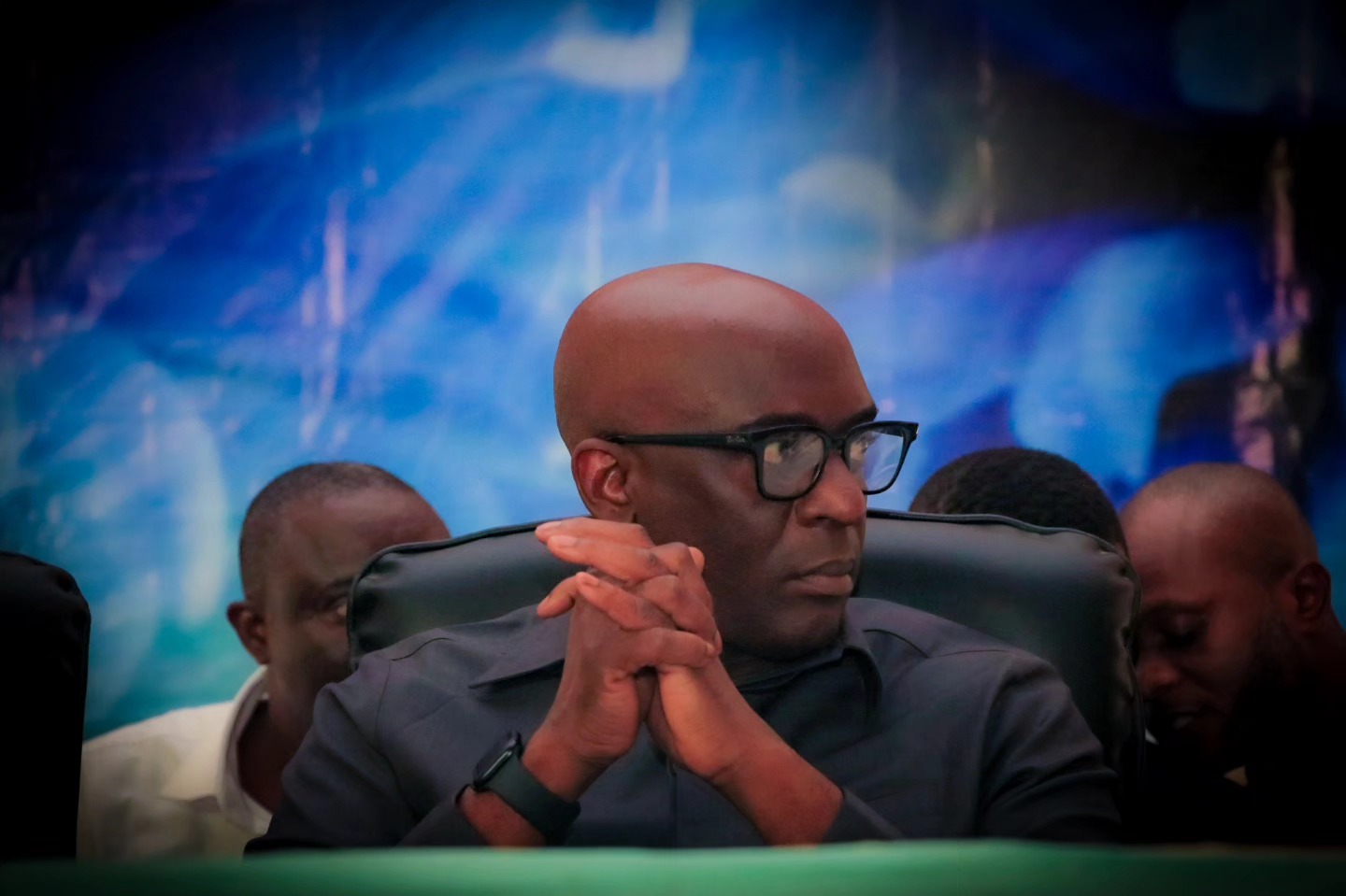
While the entire process may have climaxed with the presentation of letters by Mr Chiedu Ebie, NDDC board Chairman, to the prospective scholars at a pre-departure and award ceremony held recently in Port Harcourt, the Rivers State capital, what is, however, newsy going by the process and outcome fairness which characterized the entire exercise, is that the pre-condition for sustainable development now exists in NDDC just as it takes good people to have good agencies of government.
Adding context to the discourse, the NDDC Foreign Postgraduate Scholarship programme started in 2010 and is designed to produce top-level professionals with technical knowledge, capacity and expertise to compete in the oil and gas industry, as well as other sectors. So far, the NDDC has sponsored 2,708 scholars at both Masters and Ph.D. levels since the inception of the programme in 2010.
Aside from the high-level transparency which branded the process, and made it possible for most of the beneficiaries to be those who never knew anyone from the NDDC or anyone who works there, this unique outcome and other positive vibes recently coming out from the agency, have significantly made Deltans to hastily but rightly conclude that NDDC has finally gotten a board with the understanding that it is their duty to serve our communities and embrace its aspirations, both now and in the future, by assuring the people economic growth, education, health, security, stability, comfort, leisure opportunities and freedom in ways that will allow for the most conducive atmosphere to achieve the targets that will guarantee our welfare and a bright future.
Worthy of commendation is the declaration by the board that the Commission is promising a PhD scholarship for any of these 200 recipients who get Distinction.
The above declaration becomes even more appreciated when one remembers the time-honoured aphorism which considers education as the bedrock of development; that with sound manpower, a country is as good as made -as they will turn out all-rounded development of the society driven by well-thought-out ideas, policies, programmes, and projects.
It also points to the fact that the selection process was not a tea party but made possible by a united board and determined group of leaders backed by practical and hardworking people who trusted them, was the new awareness that in the year under review (2023), over 20,000 applications were received out of which 5,000 were selected for a Computer Based Test conducted. The number was further trimmed down to 1,500 who were orally interviewed by panels of academia.
Now, here comes a striking discovery about the agency that other agencies of government must in my view, have to be nimble in adapting and adopting.
“Most of these people never knew anyone from the NDDC or anyone that works here, they applied by themselves, they created their platforms. Some of them, not these but some people did upload fake documents. Out of those 20,000, we pruned it down to 5000 that wrote the CBTs and were given their scores immediately,”
Qualifying as impressive and exemplary was the board’s statement that the NDDC is leaving nothing to chance in ensuring that this scholarship programme meets its set objective of increasing human capital development in the Niger Delta. Part of such steps, the agency added, includes adequate provision for fees and stipends.
“It is not the intention of the board and management of NDDC to send you abroad and keep you stranded. We will try our best to see that whenever it is time to pay your fees we will do that,”.
As this piece therefore, celebrates this latest feat and authentic leadership by the NDDC, two other silent but salient points and of course a very strong lesson for other governmental agencies and Nigerians must allow going with political winds are; one, the rancour-free relationship between the board and the management of the agency.
The second point has to do with the humility of, and unflinching belief in productive collaboration by the Governing Board Chairman Mr Chiedu Ebie.
This assertion was predicated on his (Ebie) recent praise of the NDDC Managing Director (MD) and the management of NDDC for sustaining and ensuring that the scholarship was as transparent as possible and merit-based.
This should be emulated by boards of other government agencies.
Most importantly, as a nation, those in positions of authority must recognize that the development of this God-given country is a shared responsibility and therefore, must learn to acknowledge as well as give honour to whom honour is due!
Jerome-Mario Utomi is the Programme Coordinator (Media and Public Policy) at Social and Economic Justice Advocacy (SEJA), Lagos. He can be reached via je*********@***oo.com/08032725374
Feature/OPED
The Choice Before Kaduna
By Sani Abdulrazak, PhD
People go through watershed moments sometimes when the cacophony of politics attempts to drown the cadence of progress; it becomes more serious when chimaera masquerades as certainty, but it is a known fact after all that the loudest voices are most times not necessarily the wisest.
Kaduna seems to have arrived at one of those moments. The propagandist opposition within the state is trying very hard to burnish manifestoes and criticisms wrapped in hyperbole and rehearsed until it begins to mistake itself for truth.
Yet, history has always been an unforgiving arbiter. It has an uncanny habit of stripping rhetoric naked, leaving only the vestiges of deeds. It is against that backdrop that one is compelled to reflect, not on who shouts the loudest, especially on social media, but on who has quietly altered the landscape of the beautiful crocodile state. That, conceivably, is the choice before Kaduna State.
Education hewn the destiny of a society, long before it is announced in boardrooms. Governor Uba Sani of Kaduna State appears to appreciate this axiom. As if constructing hundreds of classrooms, renovating neglected schools, expanding access to education and reviving projects abandoned to bureaucratic torpor is not remarkably astral, his administration has gone further to make tertiary education more affordable through the reduction of tuition fees in state-owned institutions. That single decision has become a bulwark against hopelessness for thousands of families. Parents breathe easier, students remain in school instead of abandoning their dreams, enrolment has received fresh impetus, and human capital has become a little less hostage to economic adversity.
Even the reconstruction of roads within Ahmadu Bello University, despite its federal status, speaks of governance that refuses to hide behind jurisdictional caveats. Curiously, while lecture halls become fuller, some critics remain engrossed in composing jeremiads, as though hashtags now award degrees and social media threads have replaced convocation ceremonies. If this does not deserve another term, then perhaps Kaduna should entrust its classrooms to keyboard warriors instead?
A sector that defies drama, yet consequentially integral in Kaduna State is healthcare. Primary Healthcare Centres have continued to receive upgrades, sixteen general hospitals have witnessed rehabilitation, the once-abandoned 300-bed Specialist Hospital has emerged from years of limbo, health insurance coverage has expanded considerably, and investments in personnel and equipment continue with assiduity. Yet, one occasionally encounters the strange absurdity wrapped as opposition, that government should be judged not by functioning hospitals but by the virulence of online criticism. It is almost as though some believe ailments or surgeries retreat before social media posts. Should we now replace stethoscopes with microphones or social media posts and call it healthcare?
If there is any sector that more clearly illustrates the difference between governance and grandstanding in Kaduna State, it is agriculture. Mechanisation, dry-season farming, free fertiliser distribution, value addition, the Special Agro-Industrial Processing Zone and renewed support for farmers all point towards a carefully crafted paradigm rather than an accidental policy.
There is a metamorphosis taking place in rural communities indeed. While genuine farmers harvest maize, ginger and tomatoes, critics harvest conspiracy theories with astonishing alacrity. One group tills the soil and produces food; the other tills public resentment. Since when did viral posts become a substitute for fertile fields?
They wouldn’t want to take their ballyhoo to infrastructure for sure, because infrastructure refuses to remain invisible no matter how determined propaganda may be. Roads snake through communities once forgotten, bridges reconnect places long separated, water projects restore hope where scarcity once seemed ineluctable, and abandoned projects have gradually returned from institutional comatose. Yet there exists a peculiar group of disgruntled politicians that notices every pothole repaired only long enough to ask why another one still exists somewhere else. It is a curious predilection, almost quixotic, to dismiss completed projects because perfection has not yet arrived. Must development now apologise for not occurring overnight?
Security remains man’s most delicate labyrinth, and perhaps the easiest subject upon which to score political points. No responsible leader claims absolute victory against insecurity, yet few can deny that many communities once deserted have gradually witnessed the return of farming, commerce and social interaction. Such progress may not satisfy those addicted to political apoplexy, but it certainly matters to the farmer returning to his land after years of displacement. Or should insecurity be preserved simply because it offers better campaign material?
Economic governance, that complex yet rarely glamorous aspect of governance, is not left out. Increased internally generated revenue, prudent expenditure, strategic partnerships, capital investments and fiscal discipline have gradually strengthened Kaduna’s financial architecture. International partners investing in Kaduna State seldom do so because of slogans, but because of credibility. Sadly, the numbers don’t lie as data is a very stubborn thing. Are spreadsheets now expected to consult political parties before balancing their figures, or should economic data also join the opposition?
Youth empowerment deserves equal reflection. With a skills acquisition centre in each of the three senatorial zones of the state, entrepreneurship support, digital innovation and targeted interventions for small businesses, an attempt is being made to replace dependency with productivity. The apotheosis of governance is not the endless distribution of charity but the deliberate creation of opportunity. Young people increasingly seek tools and training against tokenism and expectancy. Still, some measure empowerment only by the number of campaign T-shirts distributed during election season. Have branded caps suddenly become the highest form of economic policy?
The choice before Kaduna State is simpler than it first appears. Shall we exchange reduced tuition fees for recycled promises? Shall rehabilitated hospitals be traded for rehearsed indignation? Shall roads surrender to rhetoric, farms to social media debates, security gains to sensationalism, and fiscal prudence to flamboyant bombast? Shall tangible progress bow before political charlatanry merely because criticism aims to be louder than construction?
For our democracy to grow further, we must come to a non-negotiable conclusion that the ballot is not an instrument for rewarding the most eloquent critic, but for judging the most effective steward. How promising can stewardship be when classrooms are expanding, hospitals are reopening, roads are stretching farther, farmers are receiving greater support, communities are gradually becoming safer, and opportunities are multiplying.
The evidence before us is not ephemerally ethereal, but enduringly concrete. And so, the lingering questions refuse to disappear: if this is not the direction Kaduna should continue, then what is? If these are not the footprints of purposeful leadership, whose are? If measurable progress has become insufficient, what miracle remains outstanding? And if the answer lies somewhere beyond Governor Uba Sani, then who, exactly, has presented Kaduna with a more convincing testament than the one already written across its schools, hospitals, farms, roads and communities?
Sani Abdulrazak, PhD, is a writer, researcher and a public affairs analyst based in Zaria, Kaduna State.
Feature/OPED
Even Messi Needed Trophies. Nigerians Demand Results, not Dribbling
By Blaise Udunze
From a general observation, comparisons are powerful political tools. They simplify complex realities, inspire supporters and shape public perception. Another side of this is that they can also become misleading when symbolism replaces substance.
The latter appears to be the objective behind two recent interventions in defence of his excellency, President Bola Ahmed Tinubu. Respectfully, it was observed that veteran journalist Martin Oloja likened Tinubu’s political journey to that of football icon Lionel Messi. He portrayed him as a resilient strategist whose patience and tactical brilliance eventually produced victory. As this now appears to be a trend, Imo State Governor Hope Uzodimma further elevated the narrative, comparing Tinubu to Singapore’s founding Prime Minister, Lee Kuan Yew. He didn’t stop at that; rather further argued that today’s painful reforms would eventually transform Nigeria just as Lee transformed Singapore. They are compelling analogies.
Unfortunately, it was observed that both began to unravel once governance, not politics, was used as the standard of measurement.
It is a known fact to the world that Lionel Messi is celebrated not because he endured criticism or finally lifted the World Cup after years of disappointment. He is celebrated because his greatness is measurable. His goals are counted. His assists are recorded. His trophies are displayed, and not just that, his records speak louder than the opinions of his admirers, which may have taken a different turn now after the outcome of the 2026 FIFA World Cup.
The same is also true of Lee Kuan Yew. History has shown that he is not revered because he introduced difficult reforms or enjoyed the support of loyal political allies. Governor Hope should be reminded that Lee is remembered because he fundamentally transformed Singapore. Amongst his achievements were transforming a poor trading port into one of the world’s richest, cleanest, safest and most efficiently governed nations.
Lee’s records speak for him because under his leadership, Singapore built world-class infrastructure, an incorruptible public service, globally competitive education, affordable housing, investor confidence and one of the highest standards of living anywhere in the world.
Neither Messi nor Lee Kuan Yew became legends through carefully crafted narratives. Yes, they became legends because the evidence became impossible to dispute. That is precisely where comparisons with President Tinubu become difficult.
It is an error to assume that winning elections is the same as winning governance, and at the same time, political brilliance may secure power, but only effective leadership secures history’s approval.
For millions of Nigerians, governance is not measured by campaign strategy or political resilience. It is measured by the realities they confront every morning.
Can they afford food? Can they pay transport fares? Can they pay rent with the current landlords’ economy? Can they keep their businesses open? Can they sleep or travel freely without fear of kidnapping? Can they find jobs after graduation? Can they access reliable electricity and healthcare? These are the scoreboards by which governments are judged.
Supporters of the Tinubu administration frequently point to encouraging macroeconomic indicators. Foreign reserves have improved. Government revenues have risen. States now receive significantly larger allocations through the Federation Account Allocation Committee (FAAC). Well, these ‘achievements’ will be reviewed soon through the lens of news narratives. International financial institutions have welcomed several policy reforms. The removal of fuel subsidy and exchange-rate liberalisation are presented as courageous decisions that previous administrations avoided.
These developments deserve acknowledgement. Yet macroeconomic improvements are not the same as improvements in citizens’ welfare.
In reality, an economy cannot be declared successful merely because government revenues have increased while household purchasing power continues to deteriorate, as this would be a complete aberration.
Again, it is considered an anomaly that Nigeria reports stronger fiscal numbers, but millions of families continue to struggle with soaring food prices, rising transport costs, expensive housing, high electricity tariffs and shrinking disposable incomes.
Statistics may comfort policymakers. They rarely comfort hungry citizens. Messi never celebrated possession statistics after losing a match; rather, he cried and cried over losing the opportunity of winning the trophy at the concluded 2026 FIFA World Cup. To him, results mattered.
The reality is that governments should be judged by the same principle. This is open to dispute, but of a truth, Governor Uzodimma’s comparison to Lee Kuan Yew deserves even closer scrutiny because it raises an important question, though it may appear hard to answer.
If Tinubu is Nigeria’s Lee Kuan Yew, where is Nigeria’s Singapore? What exactly made Lee Kuan Yew exceptional? Was it simply his willingness to implement painful reforms? Certainly not.
Many leaders across the developing world have introduced painful reforms. Very few transformed their countries.
One thing stands out here: Lee’s legacy rests on outcomes, not intentions. Judging from all indications, it is obvious that his reforms dramatically reduced corruption, attracted investment, strengthened institutions, expanded industrialisation, improved education, guaranteed affordable public housing and steadily raised incomes across generations. Unlike Nigeria’s ongoing experience, Singapore’s rise was not a promise repeatedly postponed to the future. Citizens experienced tangible improvements in their daily lives. That is why history celebrates Lee Kuan Yew. Nigeria’s present reality tells a different story.
It is glaring and ironic that despite improved fiscal revenues, many Nigerians continue to grapple with rising inflation, worsening poverty, declining purchasing power, youth unemployment, struggling businesses and persistent insecurity. If they must know, these are not merely economic statistics; they are the lived realities by which citizens judge any government.
The Lee Kuan Yew comparison also overlooks perhaps the most important ingredient behind Singapore’s success, which is primarily the institutions.
It is obvious and practically doubtful if Governor Uzodinma’s kind of Singapore is the same as the one on which its transformation was built upon an efficient bureaucracy, disciplined public institutions, predictable regulation, meritocracy, uncompromising anti-corruption enforcement and consistent long-term planning as championed by Lee Kuan Yew. An honest question here is, can the same be said of Nigeria today?
The truth is not far-fetched; Nigeria is nothing close to it because the realities and lived experiences of Nigerians are that the country continues to grapple with weak institutions, policy inconsistency, bureaucratic inefficiency, corruption concerns and widespread insecurity.
His impeccable achievements are built on the institutions; hence, without institutional transformation, every effort to invoke Lee Kuan Yew risks confusing aspiration with achievement.
One common trend witnessed lately is that the supporters of the administration often argue that Nigerians must be patient because meaningful reforms require time. That argument deserves consideration.
Let it also be made known that patience should never become an endless substitute for accountability. Citizens are also entitled to ask whether the sacrifices demanded today are producing measurable improvements tomorrow.
History remembers leaders not because they prescribed hardship, but because that hardship ultimately produced prosperity for those alive and not for the dead.
Another weakness in both comparisons is the tendency to confuse political mastery with administrative excellence. These are totally two different things, because when it comes to winning elections, it requires coalition building, negotiation and political calculation. Whilst running a nation demands competent institutions, sound economic management, transparency, public trust and measurable improvements in living standards.
Again, the two are not the same, and for this reason, many exceptional politicians have governed poorly. Many successful administrators never became political giants. Democracy ultimately rewards governance, not political mythology.
This is not to suggest that President Tinubu’s administration has achieved nothing. Tax reforms, infrastructure investments, fiscal restructuring and efforts to stabilise public finances represent important policy initiatives whose long-term impact remains to be seen. Well, acknowledging those initiatives is consistent with honest public discourse.
Equally important, however, is recognising that millions of Nigerians continue to judge the administration through the realities and their lived experiences rather than the promises they hear.
Football supporters judged Lionel Messi by the trophies in the cabinet. In like manner, history judges Lee Kuan Yew by the Singapore he built. The same measure should be applied in this nation, as Nigerians will judge President Tinubu by the Nigeria he leaves behind.
The key metric here is that if inflation falls sustainably, poverty declines significantly, insecurity is substantially reduced, electricity becomes more reliable, industries expand, jobs multiply, and citizens regain confidence in the future, history will acknowledge those achievements without requiring comparisons to Messi or Lee Kuan Yew.
Neither Messi nor Lee Kuan Yew needed political allies to persuade the world of their greatness, and that distinguishes both as the greatest of all time (GOAT).
Their records spoke for themselves. Political endorsements may dominate today’s headlines. History, however, listens only to evidence. Even Messi needed trophies. Lee Kuan Yew needed results. Nigerian leaders should be judged by no lesser standard.
Blaise, a journalist and PR professional, writes from Lagos and can be reached via: bl***********@***il.com
Feature/OPED
From Force to Partnership: How IGP Disu is Changing the Police Narrative
By Jerome-Mario Utomi
There are moments in the life of a nation when leadership is measured not merely by the ability to command institutions but by the courage to transform them. Such moments demand more than administrative competence; they require vision, strategic communication, and an unwavering commitment to rebuilding public confidence. The keynote address delivered on behalf of the Inspector-General of Police (IGP), Mr Olatunji Rilwan Disu, at the Lagos PR Fest 2026 grand finale was one of such defining moments.
Held at the iconic MUSON Centre, Onikan, Lagos, the event transcended the boundaries of a conventional police engagement. It became a national conversation on security, governance, public trust, and the indispensable role of strategic communication in nation-building.
More importantly, the IGP, who was represented at the event by AIG Simeon Udofia Akpanudom, Head of the Force Criminal Investigation Department (FCID) Annex, Alagbon Close, Ikoyi, revealed a policing philosophy that is quietly but deliberately redefining the image and operational culture of the Nigeria Police Force.
For decades, public perception of policing in Nigeria has largely been shaped by mistrust, misunderstanding, and an unfortunate history of strained relations between citizens and law enforcement agencies. While successive administrations have introduced reforms, many struggled to address the most fundamental ingredient of effective policing-public trust.
IGP Disu appears determined to confront that challenge from an entirely different perspective.
His declaration that “security is everyone’s business” was not a rhetorical flourish. It was a profound statement of intent. It reflected an understanding that sustainable security cannot be achieved through coercion alone but through partnership, inclusion, transparency, and continuous engagement with the people. Indeed, what the IGP has introduced is more than institutional reform. It is a comprehensive rebranding of policing itself.
Unlike cosmetic rebranding that focuses on uniforms, slogans, or public ceremonies, this initiative is rooted in changing institutional culture and public perception simultaneously. It seeks to replace fear with confidence, suspicion with collaboration, and silence with meaningful dialogue.
The brilliance of this approach lies in its recognition that trust is not demanded; it is earned.
Throughout the keynote, the IGP consistently emphasised evidence-based communication, accountability, and transparency as pillars upon which public confidence must be rebuilt. At a time when misinformation travels faster than facts, and public institutions are constantly subjected to intense scrutiny, his insistence that policing should be supported by credible information rather than propaganda reflects both wisdom and contemporary relevance.
Perhaps nowhere is this transformation more visible than in the establishment and expansion of the Violent Crimes Response Unit (VCRU). Rather than allowing achievements to remain hidden within internal reports, the Nigeria Police Force is increasingly communicating measurable outcomes, demonstrable operational effectiveness, and encouraging independent public assessment.
This deliberate openness and transparency represent a significant departure from the communication style traditionally associated with many security institutions.
Equally commendable is the renewed emphasis on accessible channels for complaints, feedback and citizen engagement. Every modern democratic institution understands that accountability strengthens authority rather than weakening it. By inviting public scrutiny instead of avoiding it, the Nigeria Police under IGP Disu is gradually redefining what institutional confidence should look like. The Inspector-General deserves particular commendation for recognising that public relations is not an appendage to policing but an operational necessity.
Far too often, public relations is misunderstood as image laundering or crisis management. In reality, effective public relations is about building relationships, creating understanding, managing expectations, and sustaining credibility. It is this broader and more professional understanding that permeated the Inspector-General’s address.
His decision to engage public relations professionals at Lagos PR Fest was therefore highly symbolic. It demonstrated that security communication must evolve beyond press statements announcing arrests or crime statistics. It must become a continuous conversation with citizens, communities, opinion leaders, professional bodies, and the media.
Equally remarkable is the renewed focus on community policing and the revitalisation of the Police Community Relations Committee (PCRC). These initiatives acknowledge an enduring truth: communities understand their security challenges better than distant bureaucracies.
By encouraging local participation, youth engagement, religious leaders, traditional institutions, and civil society organisations to become active stakeholders, the Nigeria Police is moving policing closer to the people it serves.
This approach is consistent with successful policing models across the world where intelligence flows more freely because communities trust law enforcement agencies enough to share information.
The emphasis on participatory campaigns such as “Security is Everyone’s Business” and “If you see something, say something” further reinforces this philosophy. These messages wisely redefine every citizen from being a passive observer into an active contributor to national security.
That represents strategic public relations at its finest. Perhaps the most compelling dimension of the Inspector General’s address is his deliberate connection between policing and nation-building.
Security does not exist in isolation. It supports economic growth, encourages investment, protects democratic institutions, and creates the stability necessary for social development. Safe highways promote commerce. Secure schools guarantee educational continuity. Protected communities attract investment. Professional law enforcement strengthens constitutional governance.
Viewed through this broader lens, policing becomes an essential instrument of national development rather than merely an agency of law enforcement. The Inspector-General’s appeal for “Nigeria First” narratives equally deserves commendation. In an era characterised by misinformation, polarisation, and divisive narratives, institutions must intentionally promote messages that unite rather than divide.
Strategic communication has become an important national asset. This is where professional public relations practitioners have an enormous responsibility. Their expertise extends beyond media visibility to fostering social cohesion, encouraging responsible public discourse, and strengthening confidence in democratic institutions.
The Nigerian Institute of Public Relations (NIPR), therefore, occupies a strategic position in supporting this national assignment.
Naturally, scepticism remains understandable. Public confidence, once diminished, cannot be restored overnight. Institutional reforms require consistency, measurable outcomes, and sustained leadership commitment.
Fortunately, the Inspector-General himself demonstrated refreshing realism by acknowledging that rebuilding trust remains an ongoing process. That honesty itself strengthens credibility.
His clearly articulated roadmap-rebuilding institutional credibility through transparency, strengthening community intelligence through grassroots participation, and promoting national cohesion through coordinated communication-provides a practical framework for long-term institutional renewal.
Importantly, these objectives align with internationally recognised principles of democratic policing. What distinguishes the current leadership is the willingness to place communication at the very centre of institutional transformation rather than treating it as an afterthought.
Leadership is often remembered less for the challenges inherited than for the direction established. Judging from the philosophy articulated at Lagos PR Fest 2026, IGP Disu is laying the foundation for a policing model that recognises that legitimacy derives not only from constitutional authority but from public confidence.
That distinction is profound. A police force may possess legal powers, but without public trust those powers become increasingly difficult to exercise effectively. Conversely, when citizens willingly cooperate, volunteer intelligence, respect lawful authority, and see themselves as partners, security becomes collective rather than confrontational.
That appears to be the future envisioned by the Inspector-General. His concluding appeal that all stakeholders must work together in transparency, accountability, and shared responsibility captures the essence of democratic policing in the twenty-first century.
Ultimately, the significance of the Lagos PR Fest address extends far beyond one conference or one keynote presentation. It represents a declaration that the Nigeria Police Force is prepared to measure success not only by arrests made or crimes prevented but also by relationships built, confidence restored, and communities united.
For me, the recent elevation by the IGP and express approval by the Nigerian Police Service Commission of some senior officers to the rank of Assistant Inspectors-General of Police (AIGs). Commissioners of Police (CPs) and others truly proves beyond reasonable doubt that the IGP is a man who understands that professionalism, strategic thinking and operational excellence are the defining features of global policing. In fact, analysts in particular and Nigerians of goodwill in general are beginning to view the recent appointment of IGP Disu as a very huge blessing to the nation.
If sustained with consistency, integrity, and measurable performance, this strategic shift may well become one of the most consequential institutional reforms in contemporary Nigeria. For at the heart of every peaceful nation lies a simple but enduring truth: security thrives where trust flourishes.
By placing strategic public relations at the centre of policing, IGP Disu has demonstrated an appreciation of that timeless principle. In doing so, he has presented Nigerians with something far more valuable than a communication strategy. He has presented a vision.
A vision in which the police badge symbolises not fear but reassurance; not distance but partnership; not mere authority but earned legitimacy. That is a vision worthy of national support, thoughtful reflection, and sustained implementation.
Utomi, a media specialist, writes from Lagos, Nigeria. He can be reached via Je*********@***oo.com/08032725374