General
Africa Has Potential for Green Hydrogen—Okonjo-Iweala
By Aduragbemi Omiyale
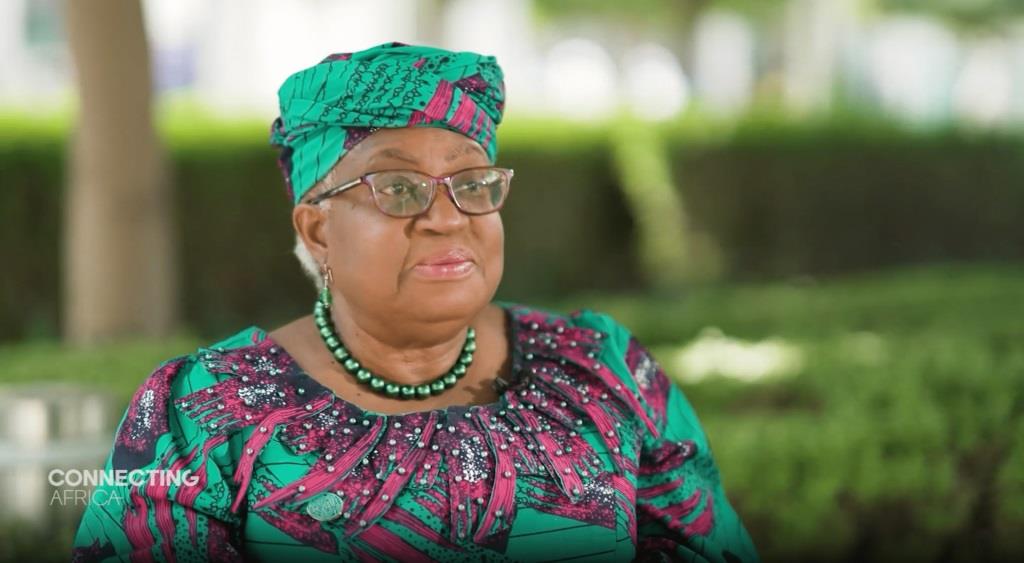
The Director-General of the World Trade Organisation (WTO), Mrs Ngozi Okonjo-Iweala, has advised African leaders to make use of the continent’s solar resources to provide clean electricity to its people.
In a chat with CNN, she suggested that microgrids could be easily installed in rural areas to supply electricity to the people.
Despite possessing 60 per cent of the world’s solar resources, Africa only accounts for 1 per cent of the world’s total solar panel capacity, according to the 2022 Africa Energy Outlook by the International Energy Agency (IEA).
“Africa has these critical minerals, lithium, you name it, all of them. We also have the potential for green hydrogen. Kenya is 95% clean energy. Many African countries have that potential. Put the two together. You can use clean energy to produce some of these critical minerals.
“You can have these many micro-grids that can be more easily installed in rural areas and give our people access to light.
“So, let’s do that and that will take care of a large requirement. Now we come to industry, and we do have a right to industrialise.
“So, there we have this issue. That’s why we say that to some of our developing countries, let’s not be hypocritical.
“We will need a transition where gas is better than oil. Let’s use that until we have more new technology that can help us with cleaner energy,” the WTO chief said.
The Head of Unit for Tracking Sustainable Transitions at IEA, Mr Daniel Wetzel, identified financing as the major problem with the continent.
“The major challenge for investment in Africa is financing. In Africa the cost to finance a solar project, the same size solar project that would be built in Europe costs three to four times more just because of the returns that are expected on financing because of the higher risks,” he submitted.
But a few companies are looking into this and one of them is ARTsolar, which boasts a state-of-the-art production facility in Durban.
“Effectively, we make 1,760 solar panels a day at peak capacity. We can reduce breakages, and increase efficiency in terms of production and cycle times in the various stages of manufacturing, and that is how AI is being used in the manufacturing process.
“A big consumer of ours is Botswana, Mozambique, Zimbabwe, Zambia, and Namibia. We are also supplying into Mauritius right now.
In Nigeria… we’ve supplied into Nigeria for the last 10 years. We’re involved in the street lighting programs,” its General Manager, Viren Gosai, said.
In sub-Saharan Africa, in 2019, 25 million Africans had home solar systems, and in 2022, 45 million had the systems installed, providing 4 electricity to African households.
Kenya’s Sun King Solar, is a world leader in off-grid solar systems, though its Vice President for Pay-As-You-Go in East and Southern Africa, Mr Victor Agandi, said, “We are currently in nine countries. We have Kenya, Uganda, and Tanzania, that’s East Africa.
“We have Mozambique, Malawi, Cameroon, Togo, and of course, Nigeria. We have over 79 stores in Nigeria with I think almost two million households right now installed in Nigeria.”
General
Swedfund Puts Down $20m for Green Business Growth in Africa
By Aduragbemi Omiyale
About $20 million has been put down by Swedfund to support efforts that limit climate change in Africa and help communities adapt to its effects.
The funds would be deployed by the Helios Climate, Energy, Adaptation and Resilience (CLEAR) Fund to back African companies that reduce emissions, strengthen resilience and create green jobs.
Swedfund’s investment is expected to contribute to significant cuts in greenhouse gas emissions and to help businesses and small farmers adapt to a changing climate.
The investment strengthens Swedfund’s work to drive a sustainable and inclusive green transition in Africa.
Africa contributes less than 3 per cent of global carbon emissions but faces some of the most severe climate impacts. At the same time, the continent’s energy demand is expected to triple by 2050.
Swedfund’s investment in Helios CLEAR will help channel capital to businesses that drive low-carbon growth in areas such as renewable energy, sustainable transport, climate-smart farming, efficient use of resources and digital climate solutions.
“By investing in this sector, we can reduce emissions, build resilience and create green jobs, all vital for sustainable growth that benefits more people.
“Africa currently receives only a small share of global climate investment, yet the potential for climate-smart business is enormous.
“Through Helios CLEAR we help build the next generation of African climate-focused businesses,” the Investment Director for Energy and Climate at Swedfund, Ms Gunilla Nilsson, stated.
Helios CLEAR Fund is a Pan African growth equity fund managed by Helios Investment Partners, one of Africa’s leading private equity firms.
The fund targets investments that deliver measurable climate mitigation and adaptation outcomes. The fund is supported by multiple development finance institutions.
General
Lawmaker Alleges Alterations in Gazetted Tax Laws
By Modupe Gbadeyanka
A member of the House of Representatives, Mr Abdussamad Dasuki, has alleged that the gazetted tax laws are different from the ones passed by the National Assembly.
Speaking on Wednesday during plenary at the green chamber, the opposition lawmaker the emphasised that content of the tax laws as gazetted was not what members of the parliament debated, voted on and passed.
In June 2025, President Bola Tinubu signed the four tax reform bills into law, becoming an act. The new laws are the Nigeria Tax Act (NTA), 2025, the Nigeria Tax Administration Act (NTAA), 2025, the Nigeria Revenue Service (Establishment) Act (NRSEA), 2025, and the Joint Revenue Board (Establishment) Act (JRBEA), 2025.
In September, they were gazetted by the federal government.
On the floor of the House yesterday, presided over by the Speaker, Mr Tajudeed Abbas, Mr Dasuki, while raising a matter of privilege, after reviewing the gazetted law and what was passed, he found out some discrepancies, appealing to the Speaker to ensure that all relevant documents, including the harmonised versions, the votes and proceedings of both chambers, and the gazetted copies currently in circulation, are brought before the Committee of the Whole for scrutiny by all members.
He warned that allowing laws different from those duly passed by the National Assembly to be presented to Nigerians would undermine the integrity of the legislature and violate constitutional provisions.
“Mr. Speaker, I will be pleading that all the documents should be brought before the Committee of the Whole.
“The whole members should see what is in the gazetted copy and see what they passed on the floor so that we can make the relevant amendment. Mr Speaker, this is the breach of the Constitution.
“This is the breach of our laws, and this should not be taken by this House,” Mr Dasuki said when rising under Order Six, Rule Two of the House Rules on a Point of Privilege.
In his remarks, Mr Abbas promised that the parliament would look into the matter.
General
Mining Marshals Reclaim 90 Illegal Sites, Prosecute 300 Offenders
By Adedapo Adesanya
Over 90 illegal mining sites have been reclaimed and 300 offenders prosecuted since the deployment of the Mining Marshals, a specialised task force established to secure Nigeria’s mineral assets.
This information was disclosed by the Minister of Solid Minerals Development, Mr Dele Alake, at the South West Leaders Conference held recently in Akure, the Ondo state capital.
He described the crackdown as a turning point in the battle against mineral theft and insecurity in mining communities.
“We created the Mining Marshals to tackle insecurity and illegal mining head-on. I’m proud to say that peace is returning to our mining fields,” he said.
According to Mr Alake, the initiative has strengthened investor confidence and improved government revenue.
“When you protect the minerals, you protect national wealth. That’s exactly what we’ve done with the Mining Marshals,” he stated.
He noted that beyond arrests and reclamations, the Marshals have restored safety in key mining corridors and curbed the activities of illegal foreign operators. “We are taking back control of our natural resources from criminal networks,” Mr Alake emphasised.
The minister reiterated the government’s commitment to maintaining the momentum through digital surveillance, stronger local intelligence, and inter-agency coordination.
“Our success proves that security is the bedrock of sustainable mining. We will keep refining this model until every site in Nigeria is safe, legal, and productive,” he added.
Launched last year, the marshals were given the mandate to stem theft and all nefarious activities around the nation’s minerals so that benefits are not extracted by the wrong people.
-
Feature/OPED6 years agoDavos was Different this year
-
Travel/Tourism9 years ago
Lagos Seals Western Lodge Hotel In Ikorodu
-
Showbiz3 years agoEstranged Lover Releases Videos of Empress Njamah Bathing
-
Banking7 years agoSort Codes of GTBank Branches in Nigeria
-
Economy3 years agoSubsidy Removal: CNG at N130 Per Litre Cheaper Than Petrol—IPMAN
-
Banking3 years agoFirst Bank Announces Planned Downtime
-
Banking3 years agoSort Codes of UBA Branches in Nigeria
-
Sports3 years agoHighest Paid Nigerian Footballer – How Much Do Nigerian Footballers Earn