Economy
Cement Manufacturers Subjecting Nigerians to Untold Hardship—Reps
By Aduragbemi Omiyale
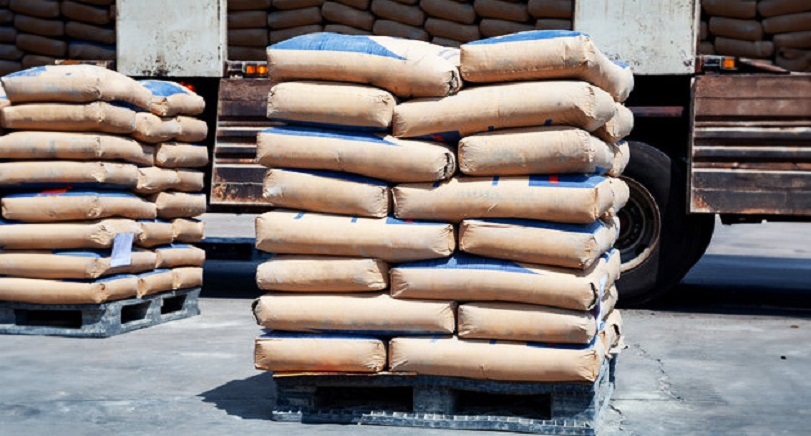
The House of Representatives has accused cement manufacturers in the country of subjecting Nigerians to untold hardship over their arbitrary increase in the price of the product.
The lower legislative chamber has, therefore, resolved to look into their pricing mechanism, summoning the major cement makers in the country for an explanation.
The cement firms in Nigeria were summoned on Wednesday by the green chamber of the National Assembly after the adoption of a motion moved by Gaza Gbefwi and Ademorin Kuye on “arbitrary increase in the price of cement by manufacturers of cement in Nigeria.”
They are to appear before the Committees on Solid Minerals Development, Commerce, Industry and Special Duties, which is to report back to the House after four weeks for further legislative actions.
While addressing his colleagues yesterday, Mr Gbefwi lamented that the rise in the price of cement in the country has led to an increase in rents due to a rise in the cost of building, giving many citizens sleepless nights.
He warned that if urgent action is not taken, things may get out of hand, as the price of cement has skyrocketed by over 100 per cent within three months.
Business Post reports that the price of a 50kg bag of cement, which used to sell between N4,800 and N5,200 in December 2023 and January 2024 jumped to N12,000 in February 2024, but currently sells between N9,500 and N10,500.
Mr Gbefwi said it was worrisome that while raw materials for the manufacturing of cement, including lime, silica, alumina, iron oxide, and gypsum, are all sourced locally and could not have been affected by the exchange rate crisis, the price of the product has been on the rise weekly.
The lawmaker accused cement producers of inflicting hardship on Nigerians by “capitalising on exchange rate volatility to arbitrarily increase the price of the product, whose cost of production has not changed significantly since last year.”
However, the Chairman of the House Committee on Defence, Mr Babajimi Benson, in defence of cement companies, blamed the rising cost of production for the increase in prices, noting that the price of a product is determined by some factors.
“It is either the frequent increment is caused by production cost or something else. Let us invite the manufacturers to meet with the relevant committee,” he submitted.
This argument was backed by the Chairman of the House Committee on Water Resources, Mr Sada Soli, who told his colleagues to be cautious.
“Let us understand the place of cost of production. These people bought these companies and turned them around. In most cases, they provide their power.
“Let us be complacent when we are talking about issues concerning the national economy. Let us support these people because they can withdraw their investments,” he said.
But the Chairman of the House Committee on Navy, Mr Yusuf Gagdi, disagreed, saying Nigerians should not be paying more for the product than their neighbours.
“Nigeria cements are a big market for Niger Republic, Cameroon and other neighbouring countries. Why should Nigerians continue to suffer from incessant increases in the price of cement?
“We have to rise and defend the common man. I think we must invite the manufacturers to tell this house what is going on because we can’t continue like this,” he said.
In his contribution, the Deputy Minority Whip, Mr George Ozodinobi, suggested the importation of cement to crash the price of the product.
“Let us open the floodgate of importation of cement into the country. This will bring down the price of the product.
“When the man from Nnewi and Chairman of the Ibeto Group, Cletus Ibeto, was allowed to bring in cement into the country, the price came down drastically but he was frustrated out of the system,” he said.
Recall that a few weeks ago, after a meeting with the Minister of Works, Mr Dave Umahi, cement producers agreed to bring down the price of the product to about N7,000.
The major cement manufacturers in the country include Dangote Cement, BUA Cement, Lafarge Africa, and Purechem, among others.
Economy
NASD Index Rises 0.89% as Market Capitalisation Hits N2.580trn
By Adedapo Adesanya
The NASD Over-the-Counter (OTC) Securities Exchange improved by 0.89 per cent on Tuesday, June 30, spurring the market capitalisation to chalk up N22.72 billion to close at N2.580 trillion, in contrast to the preceding session’s N2.557 trillion.
In the same vein, the NASD Unlisted Security Index (NSI) added 37.85 points during the session to settle at 4,2991.41 points from Monday’s 4,261.56 points.
The unlisted securities market gained weight yesterday after finishing with three price losers and gainers, led by Nipco Plc, which improved its share price by N34.24 to N384.00 per unit from N349.76 per unit. FrieslandCampina Wamco Nigeria Plc appreciated by N10.25 to close at N152.01 per share versus N141.76 per share, and Food Concepts Plc soared by 7 Kobo to settle at N2.50 per unit versus N2.43 per unit.
On the flip side, Afriland Properties Plc weakened by N1.57 to N15.17 per share from N16.74 per share, Central Securities Clearing System (CSCS) Plc lost 48 Kobo to trade at N88.00 per unit compared with Monday’s N88.48 per unit, and Geo-Fluids Plc eased by 24 Kobo to N2.37 per share from N2.61 per share.
During the session, the volume of securities traded by market participants moved up by 268.9 per cent to 846,063 units from 229,314 units, while the value of securities dropped 34.9 per cent to N15.99 million from N24.6 million, and the number of deals crashed by 26.5 per cent to 25 deals from 34 deals.
Great Nigeria Insurance (GNI) Plc remained the most active stock by value on a year-to-date basis, with 3.4 billion units worth N8.4 billion, the second spot was occupied by Infrastructure Credit Guarantee (Infracredit) Plc with 2.3 billion units valued at N6.5 billion, and the third spot was taken by CSCS Plc with 68.8 million units traded for N4.7 billion.
GNI Plc also ended the day as the most active stock by volume on a year-to-date basis, with 3.4 billion units exchanged for N8.4 billion, followed by Infracredit Plc with 2.3 billion units transacted N6.5 billion, and Resourcery Plc with 1.1 billion units sold for N415.7 million.
Economy
Naira Strengthens to N1,379/1$ at Official Market
By Adedapo Adesanya
The Naira appreciated against the US Dollar by N3.95 0r 0.29 per cent to exchange at N1,379.68/$1 in the Nigerian Autonomous Foreign Exchange Market (NAFEX) on Tuesday, June 30, compared with the previous day’s N1,383.63/$1.
The positive movement was also seen against the Pound Sterling at the same official market window, where it gained N6.59 to trade at N1,825.05/£1 versus the preceding day’s N1,831.64/£1, and improved against the Euro by N5.05 to sell for N1,572.98/€1 compared with Monday’s price of N1,578.03/€1.
At the GTBank FX counter, the Nigerian Naira, however, lost N2 against the Dollar yesterday to quote at N1,389/$1, in contrast to the previous session’s N1,387/$1, and at the black market, it remained unchanged at N1,395/$1,
A look at the cryptocurrency market yesterday showed that Bitcoin (BTC) depleted for the fifth straight day, selling at $58,668.93. This sits below the levels that sparked rebounds in February and earlier in June, as well as the 50-day and 200-day moving averages.
Dogecoin (DOGE) crashed by 1.5 per cent to sell at $0.0713, Binance Coin (BNB) lost 1.4 per cent to close at $544.98, Ethereum (ETH) went down by 1.0 per cent to $1,574.60, TRON (TRX) depreciated by 0.8 per cent to $0.3164, and Ripple (XRP) dropped 0.8 per cent to finish at $1.03.
Conversely, Cardano (ADA) grew by 2.9 per cent to $0.1493, and Solana (SOL) increased by 0.3 per cent to $74.19, while the US Dollar Tether (USDT) and the US Dollar Coin (USDC) traded flat at $1.00 apiece.
Economy
Oil Market Gains as Iran-US Negotiations Face Fresh Uncertainty
By Adedapo Adesanya
The oil market rose on Wednesday morning amid concerns that breakdowns in discussions between Iran and the United States for a final agreement to end their war may extend supply disruptions in the key Middle East producing region.
Brent futures gained 33 cents or 0.45 per cent to trade at $73.28 a barrel, while the US West Texas Intermediate (WTI) crude climbed 34 cents or 0.49 per cent to $69.84 a barrel.
US officials arrived in Qatar for talks on the Iran war, but will meet with mediators, not Iranian negotiators. The lack of direct talks further complicates efforts to find a lasting end to the conflict and fully reopen the Strait of Hormuz.
The representatives, which include US President Donald Trump’s son-in-law Jared Kushner and envoy Steve Witkoff, arrived in Doha for what the White House described as “high-level” talks on Tuesday, but Iran and host Qatar said they would meet with mediators, rather than the Iranians themselves.
The Wall Street Journal reported that while hardline military officials are pushing for full control of Hormuz, Iranian civilian leaders like President Masoud Pezeshkian are aiming to get access to billions in frozen assets, indicating different priorities.
Brent fell by around $45 a barrel between the first and second quarters of this year, its largest quarterly loss since 2008 during the financial crisis in the US. Crude futures meanwhile fell by around $31, their largest quarterly loss since 2020, when the COVID-19 pandemic crushed global oil demand.
The declines followed progress toward ending the Middle East conflict, pulling back from the sharp gains triggered earlier by the hostilities.
Analysts have cut their 2026 oil price forecasts after five straight monthly increases, as the reopening of the Strait of Hormuz eased concerns over prolonged supply disruptions.
Tanker traffic through the critical waterway has started to recover, with US Vice President JD Vance claiming that oil flows through the strait had been restored to pre-war levels.
The American Petroleum Institute (API) estimated that crude oil inventories in the US fell by 6.072 million barrels in the week ending June 26. In the week prior, US crude oil inventories fell by 765,000 barrels.
Official oil stock data from the US Energy Information Administration (EIA)will be released later on Wednesday.
-
Feature/OPED6 years agoDavos was Different this year
-
Travel/Tourism10 years ago
Lagos Seals Western Lodge Hotel In Ikorodu
-
Showbiz3 years agoEstranged Lover Releases Videos of Empress Njamah Bathing
-
Banking8 years agoSort Codes of GTBank Branches in Nigeria
-
Economy3 years agoSubsidy Removal: CNG at N130 Per Litre Cheaper Than Petrol—IPMAN
-
Banking3 years agoSort Codes of UBA Branches in Nigeria
-
Banking3 years agoFirst Bank Announces Planned Downtime
-
Sports3 years agoHighest Paid Nigerian Footballer – How Much Do Nigerian Footballers Earn