Economy
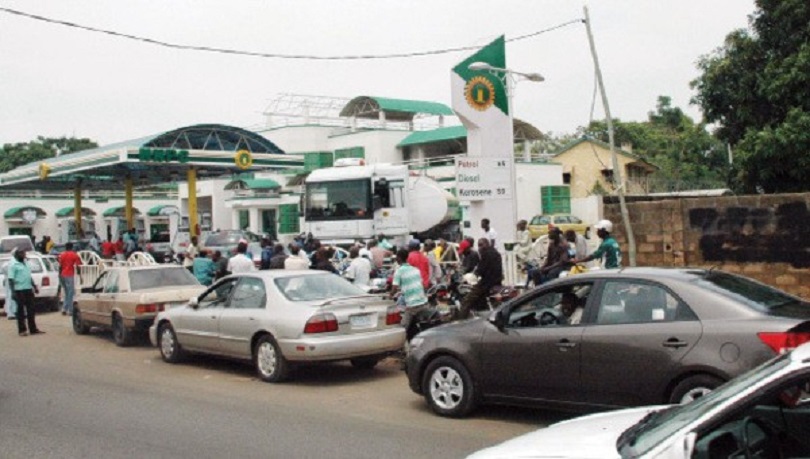
Dangote Refinery to Begin Petrol Supply Next Month
By Adedapo Adesanya
The Dangote Refinery, Nigeria’s privately-owned new mega-refinery, will begin domestic deliveries of Premium Motor Spirit (PMS), popularly known as petrol, in May 2024.
According to Bloomberg, the news of the anticipated petrol supply to the Nigerian market was confirmed by the firm’s Executive Director, Mr Devakumar Edwin.
If this happens, it would help wean Nigeria, which is Africa’s most populous country and largest crude oil producer of costly petroleum imports.
Despite its top oil producer status, Nigeria imports almost all its fuel due to lack of refining capacity.
The 650,000 barrels per day and $19.5 billion facility built outside Lagos by Africa’s richest man, Mr Aliko Dangote, on Tuesday also delivered its first petroleum products, diesel and aviation fuel.
Mr Edwin, confirming the shipping of diesel and jet fuel into the local market, said, “We have substantial quantities. Products are being evacuated both by sea and road. Ships are lining up one after another to load diesel and aviation jet fuel.”
“Ships load a minimum of 26 million litres, though we try to push for 37 million litres vessels, for ease of operations,” he added.
Mr Abubakar Maigandi, the president of the Independent Petroleum Marketers Association of Nigeria (IPMAN) said the diesel will be sold by marketers at an agreed price of N1,225 per litre following a bulk purchase agreement, before putting their mark-up.
On its part, the Depots and Petroleum Products Marketers Association of Nigeria (DPPMAN) said its members were seeking letters of credit to buy petroleum products from Dangote.
According to Mr Femi Adewole, the association’s executive secretary, upon approval and disbursement, it would start lifting products.
“Our members are discussing with banks and these talks have reached advanced stages, when we have our letters of credit, we will begin lifting products,” he stated.
Dangote Petroleum Refinery had earlier in January commenced production of diesel and aviation fuel.
Announcing the commencement in a statement, the company said the refinery had received six million barrels of crude oil at its two SPMs located 25 kilometres from the shore.
The first crude delivery was done on 12 December 2023, and the 6th cargo was delivered on 8 January.
The first cargo that arrived at the plant was from Agbami crude grade from Shell International Trading and Shipping Company Limited (STASCO), one of the largest trading companies in Nigeria and globally, trading over 8 million barrels of crude oil daily.
Economy
Naira Depreciates to N1,366 Per Dollar at Official Market
By Adedapo Adesanya
The Naira weakened against the US Dollar in the Nigerian Autonomous Foreign Exchange Market (NAFEX) on Thursday, February 5, by N7.78 or 0.57 per cent to N1,366.06/$1 from the N1,358.28/$1 it was traded on Wednesday, according to data from the Central Bank of Nigeria (CBN).
The Nigerian currency also depreciated against the Euro in the same market segment yesterday by N5.92 to close at N1,611.95/€1 versus the preceding session’s closing price of N1,606.03/€1, but appreciated further against the Pound Sterling by N8.05 to N1,855.38/£1 from the previous day’s value of N1,863.43/£1.
The domestic currency’s exchange rate for international transactions on the GTBank Naira card was further strengthened after an N8 price appreciation on the greenback to settle at N1,375/$1 compared with the N1,383/$1 it was exchanged at midweek, and at the black market, it maintained stability at N1,450/$1.
The loss suffered by the Nigerian Naira in the official market appears to be an isolated event, as Nigeria’s gross external reserves rose to $46.80 billion as of February 4, 2026, from $46.70 billion a day earlier, underscoring improved capacity to meet foreign obligations and support market confidence.
The local currency has been able to find a solid path despite no indications of any intervention from the apex bank in recent week strengthening the case of price discovery.
As for the digital currency market, Bitcoin (BTC) tumbled more than 13 per cent over the past 24 hours, selling at $63,075.23, its steepest one-day decline since the FTX-driven crash in November 2022.
The sell-off extended beyond crypto, with silver plunging 15 per cent and gold sliding more than 2 per cent. US stocks also fell.
The latest downturn comes as investor confidence in crypto’s utility as a store of value, inflation hedge, and digital currency falters.
Ripple (XRP) plunged by 23.4 per cent to $1.15, Dogecoin (DOGE) went down by 14.2 per cent to $0.0879, Cardano (ADA) declined by 13.4 per cent to $0.2459, Binance Coin (BNB) slumped by 13.2 per cent to $606.83, Solana (SOL) dipped by 13.1 per cent to $78.70, Ethereum (ETH) crashed by 13.0 per cent to $1,841.67, and Litecoin (LTC) lost 13.1 per cent to trade at $50.70, while the US Dollar Tether (USDT) and the US Dollar Coin (USDC) were at $1.00 each.
Economy
Crude Oil Dips as Iran-US Talks in Oman Ease Pressure
By Adedapo Adesanya
Crude oil was down by almost 3 per cent on Thursday in choppy trading, after the US and Iran agreed to hold talks in Oman on Friday.
Brent crude futures depleted by $1.91 or 2.75 per cent to trade at $67.55 per barrel, and the US West Texas Intermediate (WTI) crude futures slumped by $1.85 or 2.84 per cent to $63.29 per barrel.
The US and Iran are set to hold nuclear talks in Oman today after President Donald Trump warned the country’s supreme leader should be “very worried.”
The high-stakes talks are scheduled to take place on Friday in the Omani capital, Muscat, and will involve Iranian Foreign Minister Abbas Araghchi and President Trump’s special envoy, Mr Steve Witkoff.
Tensions between the two countries have escalated sharply in recent weeks following a deadly crackdown by Iranian security forces on nationwide anti-government protesters. The crackdown prompted Trump to send a US military “armada” to the region and threaten to launch strikes.
Now, market analysts noted that the talks are being given the benefit of the doubt, but noted scepticism that any reasonable deal could be made with Iran.
The discussions come as the US builds up forces in the Middle East, and regional players seek to avoid a military confrontation that many fear could escalate into a wider war and impact the Strait of Hormuz.
About a fifth of the world’s total oil consumption passes through the Strait of Hormuz between Oman and Iran. Other OPEC members, Saudi Arabia, the United Arab Emirates, Kuwait and Iraq, export most of their crude via the strait, as does Iran.
Strength in the US Dollar and volatility in precious metals also weighed on commodities and risk sentiment more broadly on Thursday. The greenback getting stronger makes oil expensive for holders of other currencies.
On the supply side, discounts on Russian oil exports to China widened to new records this week as sellers cut prices to attract demand from the world’s top crude importer and offset the likely loss of Indian sales. This week, a trade deal was announced between the US and India, which agreed to halt purchases of Russian crude.
Economy
FG Saves N6trn in Fuel Subsidy Payments in 2025—NMDPRA Chief
By Adedapo Adesanya
The chief executive of the Nigerian Midstream and Downstream Petroleum Regulatory Authority (NMDPRA), Mr Saidu Mohammed, has revealed that bold economic reforms by President Bola Tinubu’s administration saved the country over N6 trillion on petroleum product imports in just the first nine months of 2025.
Mr Mohammed disclosed this while speaking at the Nigeria International Energy Summit (NIES) in Abuja, said the savings were the result of full downstream deregulation, harmonisation of the forex market, and the trading of crude and petroleum products in Naira.
He added that these bold moves have created stability in the downstream petroleum market, encouraged investment, and ensured a sufficient supply of petroleum products across the country.
The NMDPRA boss also revealed that the nation’s refining capacity is expected to surpass 1 million barrels per stream day (bpsd) in the medium term.
He said the surge in domestic refining capacity is being driven by a combination of new refinery investments, the rehabilitation of existing Nigerian National Petroleum Company (NNPC) Limited refineries, and strategic private-sector participation.
According to him, the planned investments in other refineries, along with issued Licences to Establish (LTEs) for new facilities, will continue to expand Nigeria’s refining footprint, reducing dependence on imported products and stabilising domestic supply.
He said: “For decades, our downstream value chain has been associated with negative sectoral performance indicators such as infrastructural deficit, weak market structures, sub-optimal supply chain efficiency, inadequate investment, poor regulatory compliance, and unacceptable operational safety and environmental indices.
“Today, I am pleased to affirm that this narrative is rapidly changing and that the sector is truly witnessing the early but irreversible signs of a renaissance-type transformation that is driven by bold reform; enabled by investment; and sustained by effective market and operational regulatory enablement.
“In the few years of the operationalisation of the new legal framework of the Oil and Gas sector in Nigeria (PIA 2021), Nigeria’s downstream sector has evolved into a fully liberalised market and is no longer defined by scarcity and supply uncertainty.
Supply stability has consistently ensured sufficiency of all Petroleum products. The pricing structure of the downstream sector is becoming more driven by the fundamentals of the market and generally attaining the stability level required for encouraging investment in this expansive sector of the economy.
“The supply chain landscape of the sector, which depended significantly on import of nearly all Petroleum Products for a long time, is rapidly transforming with growing supply through the nation’s domestic refining capacity, expanding gas-based alternative fuels, improved logistics, and increased private-sector participation.
“At the heart of this transformation stands the Dangote Petroleum Refinery, the largest single-train refinery in the world with an installed capacity of 650,000 barrels per stream day (bpsd), which is currently contributing a significant portion and in some cases 100 per cent of our domestic requirement of Petroleum Products. The optimal operationalisation of the plant’s installed capacity and future upscaling of the plant is undoubtedly needed to fulfil the national aspirations of making Nigeria a regional and continental energy hub.
“The capacity for enhanced domestic supply of Petroleum product in Nigeria will continue to grow as the planned investments in our refinery sector mature. We are optimistic that the issued Licences to Establish (LTEs) refineries, which are being progressed through various levels of completion, coupled with the rehabilitation of the NNPCL refineries, will improve the overall installed refining capacity in Nigeria to well over 1 million bpsd in the medium term.
“The bold economic reforms of President Bola Tinubu have created the renaissance that the downstream sector is enjoying and would continue to leverage upon for sustained sectoral growth in the future. The cumulative impact of the full deregulation of the downstream sector, the harmonisation of the forex market, the incentivization and deepening the use of gas and the trading of crude and product in Naira has reduced the fiscal economic losses of importing Petroleum Product by over N6 trillion in the 1st nine months of 2025.”
-
Feature/OPED6 years agoDavos was Different this year
-
Travel/Tourism9 years ago
Lagos Seals Western Lodge Hotel In Ikorodu
-
Showbiz3 years agoEstranged Lover Releases Videos of Empress Njamah Bathing
-
Banking8 years agoSort Codes of GTBank Branches in Nigeria
-
Economy3 years agoSubsidy Removal: CNG at N130 Per Litre Cheaper Than Petrol—IPMAN
-
Banking3 years agoSort Codes of UBA Branches in Nigeria
-
Banking3 years agoFirst Bank Announces Planned Downtime
-
Sports3 years agoHighest Paid Nigerian Footballer – How Much Do Nigerian Footballers Earn