Banking
Adam Nuru Replaces Ladi Balogun as FCMB Boss

By Dipo Olowookere
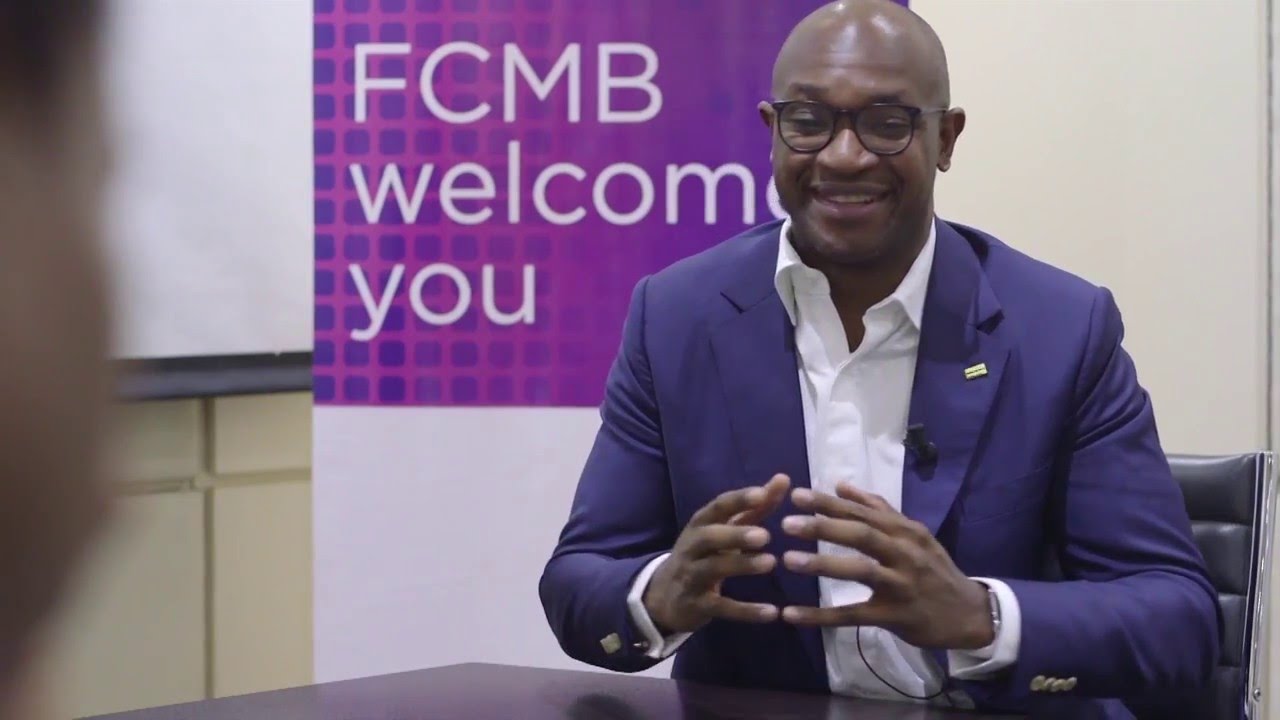
The management of First City Monument Bank (FCMB) Group Plc has announced the appointment of Mr Adam Nuru as the new Managing Director of FCMB Limited with effective from March 2017.
It was also announced that the present occupier of the seat, Mr Ladi Balogun, will be leaving the position from March 20, 2017, having served as Group Managing Director of the commercial banking arm, FCMB Limited for 10 years.
A policy by the Central Bank of Nigeria (CBN) stipulated a maximum period of 10 years for MDs of financial institutions in the country.
However, FCMB Group, in a statement issued on Monday, disclosed that Mr Ladi Balogun will quit to “assume the role of Group Chief Executive of the holding company, FCMB Group Plc.”
FCMB Group comprises FCMB Limited, FCMB Capital Markets, CSL Stockbrokers and CSL Trustees.
It was revealed that Mr Balogun’s successor, Mr Adam Nuru, is currently the Executive Director in charge of Business Development for the bank.
He previously served as Regional Director, in charge of Abuja and Northern Nigeria, where he was responsible for growing the bank’s Northern franchise to become the largest and most profitable region of the bank.
Mr Nuru has 28 years of banking experience, with seven years spent with FCMB.
He is a graduate of Ahmadu Bello University, Zaria, where he studied Business Administration, and has attended management programmes at leading international educational institutions.
In would be recalled that under Mr Balogun’s leadership, FCMB Limited has undergone a successful transformation from a merchant bank to a top 10 commercial bank in Nigeria across key metrics.
During this period, the bank has emerged as a leader in consumer finance, agricultural banking and electronic banking.
The bank’s franchise has grown to 4 million customers, 220 branches and a successful banking subsidiary in the United Kingdom.
Banking
Moniepoint Disburses Over $700m Loans to MSMEs
By Aduragbemi Omiyale
More than $700 million was disbursed in loans to Micro, Small, and Medium-sized Enterprises (MSMEs) in 2025 by Moniepoint, the financial technology (fintech) firm said in its inaugural Impact Report titled Creating Financial Happiness.
The report also revealed that for three out of four borrowers, a loan from Moniepoint was the first formal business credit their enterprise had ever accessed because of the strategies deployed by the organisation to make financing more accessible to small business owners.
“Ten years ago, we began this journey with a simple but audacious goal — to build financial infrastructure that worked for everyone. Today, that goal has crystallised into our mission of creating a world where every African, everywhere, can experience financial happiness.
“This report shows how that vision is taking shape, through the lives and businesses that are improving because they now have access to the right financial tools.
“For 75 per cent of the businesses we lent to this year, ours was the first formal business loan they had ever received. We also significantly expanded lending to women-owned businesses because we know that when African women thrive, entire communities are uplifted,” the chief executive of Moniepoint Incorporated, Mr Tosin Eniolorunda, stated.
The report showed that Moniepoint now serves over 20 million businesses and individuals, processing over $250 billion in transaction value annually.
It also highlights the impact of expanded access to credit, banking, and business management tools for MSMEs in Nigeria, which face a funding gap of approximately $32.2 billion.
In addition, businesses that received credit recorded a 36 per cent increase in average transaction value, while enterprises banking with Moniepoint employed more than 8 million people in 2025.
Beyond access to credit, Moniepoint’s payments infrastructure is extending financial access to underserved communities, as customers without smartphones or reliable internet can use the company’s USSD service, which turns a basic feature phone into a banking tool.
It was observed that people without smartphones carried out over $170 million in transactions by dialling a simple code.
Across the country, Moniepoint’s POS terminals operate in all 774 local government areas and enable payments for 100 million people in 2025. These gains are showing up in how people experience their financial lives.
In surveys of Moniepoint users, 83 per cent reported that their quality of life has improved, and 85 per cent reported increased confidence in achieving their financial goals.
Beyond its commercial operations, the report also highlights Moniepoint’s broader contribution to economic and social development through investments in talent, education, entrepreneurship and community development.
Guided by the UN Sustainable Development Goals, the financial giant has expanded employment pathways through initiatives such as Women in Tech and DreamDevs engineering programmes, while supporting STEM education, financial literacy, women entrepreneurs and underserved children, collectively reaching tens of thousands of beneficiaries.
Through strategic delivery partnerships, Moniepoint has also supported large-scale government intervention programmes, enabling subsidised food distribution to more than 800,000 people in northern Nigeria.
Banking
Euromoney Awards for Excellence Name Zenith Bank Best Bank in Africa, Nigeria
By Aduragbemi Omiyale
It was a double honour for Zenith Bank Plc at the prestigious Euromoney Awards for Excellence 2026, clinching the biggest and most coveted national and continental awards in banking.
The lender was named Africa’s Best Bank and Nigeria’s Best Bank, the latter for the second consecutive year, at a ceremony held on Thursday, July 16, at The Peninsula London Hotel, London, England.
The Euromoney Awards for Excellence are among the most respected in the global financial industry, evaluating banks on criteria including strategy, profitability, risk management, digital transformation and impact on stakeholders. Victory at the awards is regarded as a mark of the highest distinction in global banking.
“We are deeply honoured by these recognitions from Euromoney. Being recognised as Africa’s Best Bank and Nigeria’s Best Bank reflects the trust of our customers, the dedication of our unicorn workforce, and our unwavering commitment to building a truly African global financial institution.
“These awards inspire us to do even more to deliver superior value, drive financial inclusion, and support the growth of businesses across Africa,” the chief executive of Zenith Bank, Ms Adaora Umeoji, said.
The dual recognition of Zenith Bank is a testament to its sustained excellence in financial performance, customer service, digital innovation, and its contribution to economic development across Nigeria and the wider African continent.
In this year’s edition, a record of over 770 entries were received from world-class financial institutions, including HSBC, Morgan Stanley, Citibank, Barclays, Standard Bank and DBS Bank of Singapore.
Zenith Bank has continued to deliver strong financial results while accelerating investments in technology, artificial intelligence, and digital banking solutions.
In the 2025 financial year, the bank grew gross earnings by six per cent year on year to N4.19 trillion and delivered profit after tax of N1.04 trillion, while reducing its non-performing loan ratio from 4.7 per cent to 3.8 per cent.
In keeping with its dividend policy, Zenith Bank rewarded its investors with a record-breaking total dividend of N10.00 per share (totalling N410.69 billion) for the 2025 financial year, representing a 100 per cent increase over N5.00 per share paid in 2024.
Banking
WASPAN Seeks Court Order to Stop FCCPC’s Digital Lending Rules Pending Appeal
By Adedapo Adesanya
The Wireless Application Service Providers Association of Nigeria (WASPAN) has asked the Federal High Court in Lagos to suspend the enforcement of the Federal Competition and Consumer Protection Commission’s (FCCPC) Digital, Electronic, Online or Non-Traditional Consumer Lending (DEON) Regulations 2025 pending the determination of its appeal against an earlier judgment.
The application follows the dismissal of WASPAN’s substantive suit challenging the regulations, although the court made significant pronouncements on the regulatory responsibilities of the FCCPC and the Nigerian Communications Commission (NCC).
Justice Ambrose Lewis-Allagoa had ruled that the FCCPC possesses powers under Sections 104, 105, 106, and 163 of the Federal Competition and Consumer Protection Act to investigate anti-competitive conduct, protect consumers, and issue regulations.
The court also held that there was no conflict between the FCCPC Act and the Nigerian Communications Act, affirming that while the FCCPC oversees competition and consumer protection, the NCC remains the statutory regulator responsible for licensing telecommunications operators.
However, the judge clarified that “the FCCPC lacks the power to issue telecommunications licences,” adding that “nothing in the DEON Regulations creates a telecommunication licensing.”
Despite the ruling, WASPAN has filed a notice of appeal and is seeking an injunction to preserve the status quo pending the outcome of the appellate process.
In its Motion on Notice, the association asked the court for “an order of injunction restraining the Defendant whether by itself, officers, employees, agents or such other persons howsoever named from enforcing, implementing and/or otherwise giving effect to the enforcement and/or implementation of the Digital, Electronic, Online, or Non-Traditional Consumer Lending Regulations 2025” pending the hearing and determination of the appeal.
WASPAN also requested an order preventing the FCCPC from interfering with services provided by its members under the disputed regulations.
Specifically, it sought an order restraining the commission “from taking any steps towards interfering with or preventing the Plaintiff’s members from providing or continuing to provide or deploy any services or product governed by the Digital, Electronic, Online, or Non-Traditional Consumer Lending Regulations 2025.”
In addition, the association urged the court to restrain the FCCPC “from imposing any sanction, penalty, punishment or fines on the Plaintiff’s members” over any alleged non-compliance with the regulations while the appeal is pending.
According to WASPAN, the interim reliefs are necessary to preserve the subject matter of the appeal and prevent actions that could render the appellate proceedings ineffective.
Business Post reports that the latest application extends the legal battle over the FCCPC’s DEON Regulations and sets the stage for the Court of Appeal to further clarify the scope of the commission’s regulatory authority in Nigeria’s digital lending and telecommunications sectors.