General
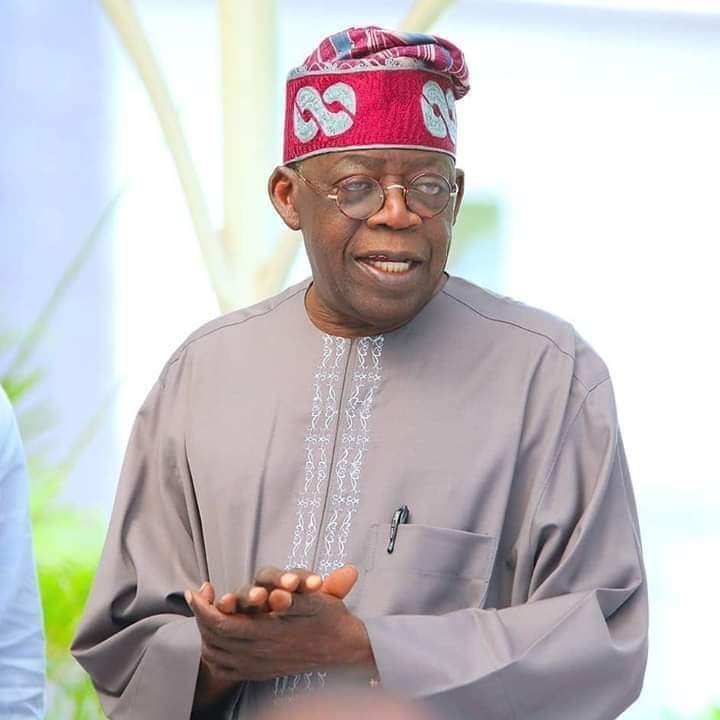
Low Confidence, Uncertainty as President Tinubu Marks One Year in Office
By Adedapo Adesanya
On May 29, 2o23, President Bola Tinubu mounted the rostrum at Eagle Square in Abuja and took the oath of office to become Nigeria’s 16th president making a promise of renewed hope; now one year later, food, energy, and transportation prices among others are up.
Part of his first office duties was the elimination of a long-standing petrol subsidy. He announced that “subsidy is gone” noting that his predecessor, Mr Muhammadu Buhari did not accommodate for the payment beyond June 2023 but some months down the line, it was revealed that the government continued to pay since prices didn’t fluctuate as it should.
Meanwhile, the decision led to a double in prices of food, transportation, energy, and shelter, among others.
To cushion the ripple effect of this, President Tinubu announced some palliative measures but to date, there is no clear evidence that Nigerians have benefitted from the relief he announced on live television.
The Bola Ahmed Tinubu administration announced in August 2023 that it would spend N100 billion between then and March 2024 to buy 3,000 compressed natural gas (CNG)-powered 20-seater buses. As of right now, neither the buses nor any other infrastructure needed to power them are available. Remarks made in the last several days seem to suggest that measures are in place to make this happen. However, the delay has negatively impacted the masses, given that the buses were intended to mitigate the impact of the high fuel cost on the general public.
President Tinubu also promised to stabilise the Naira but comparatively, the country’s currency continues to perform below expectations (down 60 per cent) compared to the Dollar and other foreign currencies. After declining to a new low following two devaluations, the Naira strengthened due to reforms of the Central Bank of Nigeria (CBN). This made the Naira the best-performing currency for a while but the momentum was short-lived as underlying factors like supply constraints remained.
The effort of the central bank to stabilise the FX market has not been matched on the fiscal front by policies on trade, security, and agriculture.
President Tinubu also said his administration would lead the drive to cultivate 500,000 hectares of farmlands across the country to grow maize, rice, wheat, millet and other staple crops to tackle the high cost of food items across the country.
Nigeria’s inflation has also climbed to a three-decade high of 33.69 per cent from 22 per cent over the past year while food inflation remains above 40.5 per cent.
Oil production has also been on a steady decline, erasing some gains last year, as the issues of oil theft, underinvestment, and infrastructure hamper one of Nigeria’s major sources of revenue.
Security-wise, nothing has changed in that area a year later. The same security issue that Nigerians faced during Buhari’s administration remains with kidnaps soaring while bandits keep robbing villages, neighbourhoods, and even towns.
As he commences the second year of his four-year term presidency before the next election cycle in 2027, many Nigerians wonder what the remaining years of the Tinubu administration hold.
General
Nigeria Confirms US Airstrikes On ISWAP Targets in Sokoto
By Adedapo Adesanya
Nigeria’s Ministry of Foreign Affairs has confirmed that the latest United States airstrikes on Islamic State West African Province (ISWAP) targets in northwest Nigeria were conducted at the request of the Nigerian government.
According to reports, the US struck at ISWAP targets in Jabo, Sokoto State, on Christmas night.
The ministry described the operation as a product of established counterterrorism cooperation between both countries.
In a press statement issued on Friday, the Ministry said the strikes were “undertaken following formal engagement and with the full knowledge and coordination of the Government of the Federal Republic of Nigeria.”
“The Government of Nigeria wishes to clarify that the airstrikes conducted by the United States against Islamic State elements in parts of northwest Nigeria were carried out at the request of Nigerian authorities and in line with existing bilateral security cooperation frameworks,” the statement said.
The Ministry stressed that Nigeria “remains firmly in control of all counterterrorism operations within its sovereign territory,” adding that international partners only provide support “where such assistance aligns with Nigeria’s national security objectives.”
According to the statement, the strikes form part of Nigeria’s broader strategy to “degrade terrorist capabilities, disrupt logistics networks, and protect civilian populations from violent extremist threats.”
The Foreign Ministry further emphasised that the federal government “will continue to work with trusted international partners to confront terrorism, banditry, and transnational criminal networks that threaten national and regional stability.”
Reacting to concerns around sovereignty, the Ministry said:
“At no time was Nigeria’s sovereignty compromised. All actions were conducted with due respect for Nigeria’s laws, institutions, and command structures.”
The statement also cautioned against mischaracterising Nigeria’s security challenges, noting that extremist violence “has affected communities across religious and ethnic lines and should not be framed in sectarian terms.”
Nigeria reaffirmed its commitment to a multi-layered response combining military operations, intelligence sharing, community engagement, and socio-economic interventions, adding that counterterrorism efforts remain focused on protecting lives and restoring stability.
The US Africa Command (AFRICOM) said the strikes were carried out in Sokoto State and that multiple militants were killed.
US President Donald Trump described the strikes as “powerful and deadly,” saying they were directed at Islamic State militants responsible for violent attacks on Christians in Nigeria.
The Nigerian government has clearly denied that only Christians are affected by the killings, saying the terror spread across all faiths.
Meanwhile, US Defence Secretary Pete Hegseth has warned that “more to come” as part of sustained efforts against extremist groups.
General
US Strikes Terrorists in Sokoto on Trump’s Directive (VIDEO)
By Aduragbemi Omiyale
The United States government gave some terrorists in Nigeria a Christmas gift that sent many of them to the great beyond.
On Thursday, December 25, 2025, the United States President, Mr Donald Trump, directed his country’s military to launch air strikes on camps of members of the dreaded Islamic State in Iraq and Syria (ISIS) in Sokoto State.
According to Mr Trump, the military action, which he threatened to carry out a few weeks ago if the Nigerian government does not stop the killing of Christians in the country, occurred on Thursday night.
“Tonight, at my direction as Commander in Chief, the United States launched a powerful and deadly strike against ISIS Terrorist Scum in Northwest Nigeria, who have been targeting and viciously killing, primarily, innocent Christians, at levels not seen for many years, and even Centuries!
“I have previously warned these Terrorists that if they did not stop the slaughtering of Christians, there would be hell to pay, and tonight, there was.
“The Department of War executed numerous perfect strikes, as only the United States is capable of doing.
“Under my leadership, our country will not allow radical islamic terrorism to prosper. May God bless our military, and Merry Christmas to all, including the dead terrorists, of which there will be many more if their slaughter of Christians continues,” Mr Trump wrote on his Truth Social platform.
In a video on X, formerly known as Twitter, the Department of War of the United States posted the below video of the air strikes;
https://twitter.com/DeptofWar/status/2004351717131903272
General
Gbajabiamila Remains President Tinubu’s Chief of Staff—Presidency
By Modupe Gbadeyanka
The presidency has reacted to speculations that Mr Femi Gbajabiamila has been removed as the Chief of Staff to President Bola Tinubu.
It was alleged that Mr Gbajabiamila has been replaced with the President’s Principal Private Secretary, Mr Hakeem Muri-Okunola.
Mr Muri-Okunola went to Abuja to take up this role after leaving as the Head of Service of the Lagos State Civil Service.
Reacting to the reports on social media on the purported removal of Mr Gbajabiamila, a former Speaker of the House of Representatives, the presidency said no such change has been made.
In a statement signed on Thursday by the Special Adviser to the President on Information and Strategy, Mr Bayo Onanuga, members of the public were advised to disregard the report as “there is absolutely no truth to this story.”
“The Chief of Staff remains in his position. The Principal Private Secretary likewise remains in his role. Hakeem Muri-Okunola has not replaced Femi Gbajabiamila as Chief of Staff.
“The viral claim is a fabrication by mischievous purveyors of fake news whose sole aim is to create disharmony within the government.
“We reiterate that news media should always verify their information before publishing or sharing on social media,” the statement said.
-
Feature/OPED6 years agoDavos was Different this year
-
Travel/Tourism9 years ago
Lagos Seals Western Lodge Hotel In Ikorodu
-
Showbiz3 years agoEstranged Lover Releases Videos of Empress Njamah Bathing
-
Banking8 years agoSort Codes of GTBank Branches in Nigeria
-
Economy3 years agoSubsidy Removal: CNG at N130 Per Litre Cheaper Than Petrol—IPMAN
-
Banking3 years agoFirst Bank Announces Planned Downtime
-
Banking3 years agoSort Codes of UBA Branches in Nigeria
-
Sports3 years agoHighest Paid Nigerian Footballer – How Much Do Nigerian Footballers Earn