Connect with us

General

African Oil Producers Seek Commitment For $5bn Africa Energy Bank

Published

on

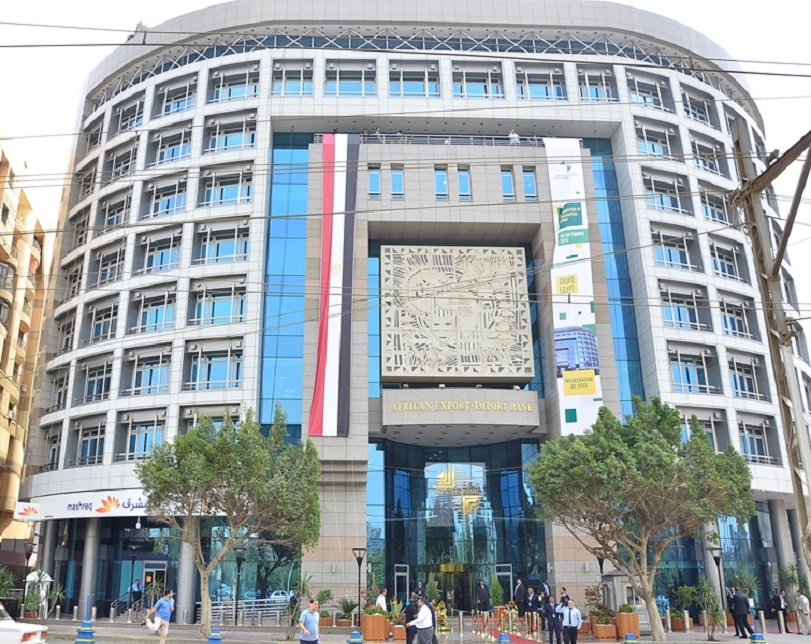
African Energy Bank Headquarters

By Adedapo Adesanya

The African Petroleum Producers’ Organisation (APPO) has urged member countries to fulfil their financial obligations towards establishing the Africa Energy Bank (AEB), the first of such financial institutions on the continent.

Recall that Nigeria recently secured the hosting rights for the bank, which will be located in Abuja, the nation’s capital.

To ensure the bank’s operationalisation, APPO Secretary General, Mr Farouk Ibrahim, called on African oil-producing member countries to contribute their subscription fees of $83 million, to aid the bank’s expected launch in September 2024.

Mr Ibrahim appealed during the 18th ordinary meeting of the APPO executive board in Brazzaville, Republic of Congo, where APPO headquarters is situated, a statement signed by the Permanent Secretary, Ministry of Petroleum, Mr Nicholas Ella, said on Wednesday.

“We are aligned with the resolutions of the APPO Council of Ministers from last week. We will double our efforts to ensure we gather the necessary funds to initiate the Africa Energy Bank,” Mr Ibrahim said.

He further disclosed that the oil-producing member countries had formally written to the Nigerian government to discuss expedited steps to establish the bank.

“On Friday, July 5, we formally wrote to the Federal Republic of Nigeria. We will discuss how quickly the bank building will be ready and the host country agreement prepared for signature. We already have one member country that has signed the establishment agreement. We need one more signature to proceed,” Ibrahim added.

Expressing President Bola Tinubu’s gratitude to member states for their unwavering support and confidence in Nigeria’s bid to host the bank, Mr Ella, who led Nigeria’s delegation, reiterated commitment to the continental bloc’s ideals to enhance energy security in Africa.

“The gathering of the 18 member countries of APPO in Brazzaville demonstrates our collective dedication to fostering unity, cooperation, and sustainable development within the African energy sector,” noted Mr Ella.

He pledged Nigeria’s determination to collaborate with other members to address the financial needs of Africa’s energy sector through funding oil and gas projects.

Mr Ella urged member countries to harness the collective strength of the continent’s nations to build a brighter, more prosperous future for Africa.

“Together, we will create an institution that addresses the financial needs of our energy projects and champions sustainable development, environmental stewardship, and economic inclusivity across Africa,” he added.

During a brainstorming session on the continent’s energy future, Algerian executive board member,  Mr Remini Amine, emphasised that local content, manpower, and infrastructure development remain key to unlocking Africa’s energy opportunities.

APPO member state representatives agreed that the energy bank would bridge funding gaps in the sector, with Mr Ibe Kachikwu, a former Nigerian Minister of State, Petroleum Resources, suggesting a 10-year plan for the energy industry to encourage an “open era” for investment. Kachikwu advised APPO to grow the energy bank’s capital base before investing.

Speakers at the week-long event emphasised the need for National Oil Companies (NOCs) to lead in crude oil production and refine oil to meet local consumption needs. The energy bank is an initiative of the APPO and Afreximbank.


Adedapo Adesanya is a journalist, polymath, and connoisseur of everything art. When he is not writing, he has his nose buried in one of the many books or articles he has bookmarked or simply listening to good music with a bottle of beer or wine. He supports the greatest club in the world, Manchester United F.C.

Advertisement
Click to comment

Leave a Reply

Your email address will not be published. Required fields are marked *

General

EFCC Re-Arraigns ex-AGF Malami, Wife, Son Over Alleged Money Laundering

Published

on

re-arraign ex agf malami.jpg

By Adedapo Adesanya

The Economic and Financial Crimes Commission (EFCC) has re-arraigned former Attorney-General of the Federation (AGF), Mr Abubakar Malami (SAN), his wife, Mrs Asabe Bashir, and son, Mr Abdulaziz Malami, on money laundering charges.

They were brought before Justice Joyce Abdulmalik of the Federal High Court in Abuja, following the re-assignment of the case to the new trial judge.

Upon resumed hearing, EFCC’s lawyer, Mr Jibrin Okutepa (SAN), informed the court that the matter was scheduled for defendants’ re-arraignment.

“The matter is coming before your lordship this morning for the very first time. I will be applying for the plea of the defendants to be taken,” he said.

Mr Okutepa equally applied that the sums listed in Counts 11 and 12 be corrected to read N325 million instead of N325 billion for Count 11, and N120 million instead of N120 billion for Count 12.

When it was not opposed by the defence lawyer, Mr Joseph Daudu (SAN), Justice Abdulmalik granted the oral application by Mr Okutepa.

The defendants, however, pleaded not guilty to the 16 counts preferred against them by the anti-graft agency bordering on money laundering.

Justice Obiora Egwuatu had, on February 12, withdrawn from the case shortly after the civil case filed by the EFCC was brought to him.

The case was formerly before Justice Emeka Nwite, who sat as a vacation judge during the Christmas/New Year break.

After the vacation period, the CJ reassigned the cases to Justice Egwuatu, who had now recused himself, before it was reassigned to Justice Abdulmalik.

The former AGF, his wife, and son were earlier arraigned before Justice Nwite on December 30, 2025.

While Malami and his son were remanded at Kuje Correctional Centre, Asabe was remanded at Suleja Correctional Centre before they were admitted to N500 million bail each, on January 7, with two sureties each in the like sum.

Continue Reading

General

INEC Shifts 2027 Presidential, N’Assembly Elections to January 16

Published

on

INEC

By Adedapo Adesanya

Nigeria will hold next year’s presidential and National Assembly elections a month earlier than planned, after the Independent National Electoral Commission (INEC) revised the polling schedule.

The elections will be held on January 16, instead of the previously announced date of February 20, INEC said in an X post, signed by Mr Mohammed Kudu Haruna, National Commissioner and Chairman, Information and Voter Education Committee.

There were also changes to the Governorship and State Houses of Assembly elections initially fixed for Saturday, March 6 2027, in line with the Electoral Act, 2022, have now been moved to Saturday, February 6, 2027.

The electoral commission said the changes were caused by the enactment of the Electoral Act, 2026 and the repeal of the Electoral Act, 2022, which introduced adjustments to statutory timelines governing pre-election and electoral activities.

“The Commission reviewed and realigned the schedule to ensure compliance with the new legal framework,” it said.

INEC said party primaries (including resolution of disputes) will commence on April 23, 2026 and end on May 30, 2026, after which Presidential and National Assembly campaigns will begin on August 19, 2026, while Governorship and State Houses of Assembly campaigns will begin on September 9, 2026.

It noted that campaigns will end 24 hours before Election Day, and political parties have been advised to strictly adhere to the timelines.

INEC also stated it will enforce compliance with the law.

The electoral body also rescheduled the Osun Governorship election which was earlier scheduled for Saturday, August 8 2026, by a week to Saturday, August 15, 2026.

INEC noted that some activities regarding the Ekiti and Osun governorship elections have already been conducted, and the remaining activities will be implemented in accordance with the Electoral Act, 2026.

Speaking at a news briefing in Abuja two weeks ago, the chairman of INEC, Mr Joash Amupitan, expressed the readiness of the commission to conduct the polls next year.

The timetable issued by the organisation for the polls at the time came when the federal parliament had yet to transmit the amended electoral bill to President Bola Tinubu for assent.

Later that week, the Senate passed the electoral bill, reducing the notice of elections from 360 days to 180 days, while the transmission of results was mandated with a proviso.

Continue Reading

General

NIMASA Rallies Stakeholders’ to Develop National Action Plan

Published

on

NIMASA revenue

By Adedapo Adesanya

The Nigerian Maritime Administration and Safety Agency (NIMASA) has pledged its commitment to provide the regulatory leadership, technical coordination, and stakeholder engagement required to successfully develop and implement a robust National Action Plan on maritime decarbonization in Nigeria.

The Director General of the agency, Mr Dayo Mobereola, made this known during the National Stakeholders’ workshop on the development of a National Maritime Decarbonization Action Plan, further describing the workshop as a critical step in actualising the Federal Government’s blue economy and climate objectives.

Represented by the Executive Director, Operations, Mr Fatai Taiye Adeyemi, the NIMASA DG underscored the significance of the IMO GreenVoyage2050 Project, a technical cooperation initiative /designed to support developing countries in implementing the IMO GHG Strategy.

According to him, the National Action Plan being developed will reflect national realities, leverage existing capacities, address identified gaps, and align with broader economic and environmental priorities of the federal government.

Mr Mobereola stressed that “this transition is not merely about compliance with international obligations, it is about safeguarding our marine environment, protecting public health, strengthening the blue economy, and ensuring that our maritime industry remains competitive and future-ready”, the DG said.

Also speaking at the event was the Technical Manager of the IMO GreenVoyage2050 Project, Ms Astrid Dispert, who highlighted that the overarching objective of the initiative is to advance a coherent and globally aligned regulatory framework to accelerate maritime decarbonization.

She also emphasised that NIMASA plays a pivotal role in driving the project at the national level.

The IMO GreenVoyage2050 Project provides technical expertise and institutional support to assist countries in developing and implementing National Action Plans that promote sustainable shipping practices, encourage investment in clean technologies, and strengthen capacity for long-term emissions reduction.

Through this collaboration, the federal government is advancing deliberate steps towards maritime decarbonization, reinforcing its commitment to global climate goals and ensuring a cleaner, greener, and more sustainable future for the sector.

Continue Reading

Trending