Connect with us

World

Russia Recruiting African Specialists

Published

on

African Specialists

By Kestér Kenn Klomegâh

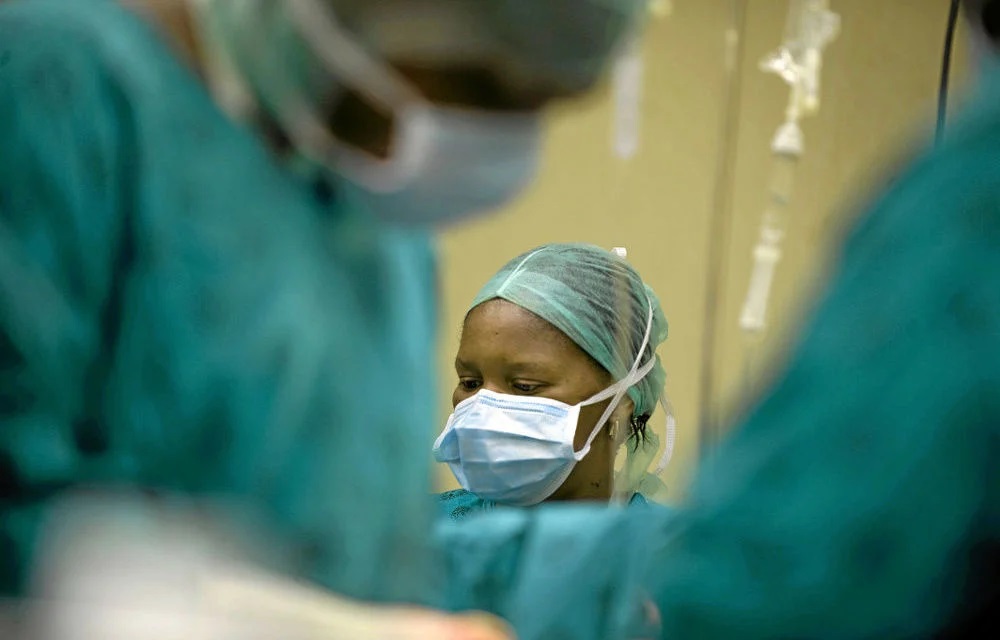
With thousands conscripted into the army to fight in neighbouring Ukraine, several more thousands escaping military mobilization and migrating abroad, Russia currently lacks highly skilled labor for offices and unskilled labour for its industries, agriculture and construction. Reports indicated Russian employment agencies are seriously recruiting all kinds of employees, both skilled and unskilled, from Africa.

HeadHunters, a recruitment agency’s report announced in mid-July that a boom in attracting workers from Africa against the backdrop of a shortage of personnel across Russia. According to the report, in the first half of 2024, Russian companies significantly increased their activity in searching for employees in Africa.

In particular, countries such as Kenya, Zimbabwe, and Cameroon became the leaders in terms of the growth rate of vacancies in annual terms, while the number of advertisements in a number of European countries and the United States, on the contrary, decreased. Together with experts, RBC looked into the reasons for the growing popularity of employees from Africa and the main difficulties in hiring workers from abroad.

African hiring boom

According to HeadHunters’ data for the first half of 2024, seven out of ten foreign countries with the largest increase in vacancies from Russian organizations are African countries. If in the first half of 2023 in each of them one could find no more than 500 vacancies from Russian employers, then in the first six months of this year the number of job offers has increased multiple times, in some cases tens of times, analysts noted in the report.

Thus, the number of vacancies increased the most in Kenya – 39 times (from 161 vacancies in the first half of 2023 to 6.4 thousand vacancies in the first half of 2024). A number of other African countries have also seen a significant increase in the number of places offered, although more modest in absolute terms. Thus, in Zimbabwe the number of vacancies increased 15 times (to 165), in Cameroon – nine times (to 130), in Zambia – eight times (to 224). In addition, a sharp increase in the number of vacancies was recorded in Algeria (seven times, up to 1.7 thousand).

Among non-African countries, the leaders in terms of growth in the number of vacancies were Albania, Pakistan and Belgium. In addition, in 2024, Russian companies posted vacancies for the first time in countries such as Nepal, the Bahamas, Barbados, Malawi, Iceland, Sierra Leone, Gabon and the Central African Republic (CAR). The total number of vacancies in the listed countries in the first half of the year reached almost 300, analysts indicated.

The fact that the geography of migration to Russia could expand at the expense of African states was previously predicted in an interview with RBC by the director of the Institute of Demographic Research of the Russian Academy of Sciences, Marina Khramova. She also admitted that in future, migrants from Southeast Asian countries, such as Thailand or the Philippines, could be attracted to the domestic labor market.

Categories of workers for recruitment abroad

The composition of the most in-demand categories of employees when hiring from foreign countries among Russian employers has not changed over the year – these are customer service managers, IT specialists and marketers, as follows from the data on invitations to vacancies. The top ten also included specialists in the field of art and mass media, administrative personnel, workers and builders.

At the same time, the greatest increase in demand was shown by vacancies for workers in science and education – in the first half of the year, the number of invitations for employees in this field from abroad doubled. The number of invitations for foreign workers increased by 68%, agricultural specialists – by 63%, employees in the field of raw materials extraction and construction – by 53 and 51%, respectively.

It is necessary to understand that the search and invitations to employees for vacancies do not fully reflect the typical portrait of a migrant, since their hiring in general varies quite a lot depending on the specialty and region, noted Danina. “We can say with confidence that attracting migrants to positions as workers and construction workers (in general, low-skilled positions) is traditionally typical for Central Asian countries and this year for a number of African countries,” she explained.

At the same time, highly qualified specialists with knowledge of the specifics of local markets and business for the positions of marketers and account managers are sought all over the world, and the search for top managers this year was concentrated in the UAE, Serbia, Turkey, Thailand.

The number of African specialists who enter Russia is growing every year, noted Vsevolod Sviridov, an expert at the Center for African Studies at the Faculty of World Economy and International Politics at the National Research University Higher School of Economics. “African labor migrants occupy completely different niches in the labor market: some are actually employed in fairly low-skilled professions, for example in construction, work in warehouses, in agriculture, while others occupy high management positions in large Russian companies, the expert on Africa pointed out to local Russian media.

A recent example is Timothy Musa Kabba, a graduate of the Mining University in St. Petersburg, who worked as a geologist for Russian oil and gas companies for almost ten years, and he is now the Minister of Foreign Affairs of Sierra Leone, recalled Sviridov.

Difficulties in hiring foreigners

Employment of foreigners is associated with a number of complicating issues, notes Danina. For example, if we are talking about hiring workers or construction workers with relocation to Russia, then the main burden lies in organizing logistics (due to the lack of direct or regular flights with Russia), obtaining quotas, and the presence of language and cultural barriers in work teams. When working with highly qualified specialists from non-CIS countries, who are often hired without relocation, there may be problems with organizing financial payments, added Danina.

Migration regulation in Russia also has its own specifics, notes Sofia Luneva, a lawyer in the labor law practice at BGP Litigation. Thus, for foreigners who enter on visas, the registration procedure is the most complex, as it requires obtaining a permit to attract foreign labor for the company, an invitation from the employer to enter and a work permit for the foreigner (in a number of areas, their number may be limited by quotas).

An alternative could be the status of a highly qualified specialist – if it is available, the employee is not subject to quotas. The downside of this simplified procedure is increased costs for the employee. Registration of visa-free foreign citizens is much simpler in terms of documents.

At the same time, all migrants are required to have documents confirming that they have undergone fingerprinting, photography and medical examination. And in any case, regardless of the status of a foreign worker, the employer is obliged to notify the Russian Ministry of Internal Affairs about the conclusion/termination of an employment contract within no more than three working days. In conclusion, workers and employees are required in the Russian Federation. (Report made with addition materials from Russian media).


Click to comment

Leave a Reply

Your email address will not be published. Required fields are marked *

World

Russia-Africa Dialogue: Untapped Prospects for Economic Cooperation

Published

on

Russia-Africa Dialogue SPIEF-2026

By Kestér Kenn Klomegâh

At the St Petersburg International Economic Forum 2026, the traditional “Russia-Africa Business Dialogue”, which was initiated in 2016, will deliberate aspects of forging economic cooperation between Russia and African countries. For a decade since its creation, this platform has practically discussed most pertinent roadblocks, highlighted the economic sectors, and outlined the prospects. The significant issues have also been treated at the first and second Russia-Africa summits.

As Moscow prepares to hold the next Russia-Africa summit in October, it is quite clear that Russia has still not worked out financial mechanisms to support its investments across Africa. Generally, the federal strategy for this area has been mapped out, Russian investors understand where to invest in Africa, but lacks extremely the financial motivation and approach to integrate young people into the business environment. Other constraining factors include a lack of financial support instruments the suitable environment for experience sharing and collaboration. At the same time, there are reports that point to a broad range of factors that hinder the development of youth entrepreneurship.

Historically, Russia–Africa relations have evolved through distinct phases after phases. The latest phase began from the first Russia-Africa summit through the second, and is currently moving to the third summit in October. As part of the strategic preparations, Tanzanian President Samia Suluhu Hassan was the guest of Vladimir Putin in the Kremlin. Russia and Tanzania have had good relations, but it has been more than a century since the last state visit of a Tanzanian leader to Russia. From the historical records, Mwalimu Nyerere visited in 1969. As a result, Samia Hassan’s official working visit had a special historic significance for the bilateral relations. “We see this as a very positive sign,” noted Putin. Further to that, Samia Hassan was decorated with an honorary doctorate degree (Doctor Honoris Causa) at the Russian Peoples Friendship University, expressed gratitude for the political solidarity, and underlined Russia for the great contribution which it provided during the African political liberation in the 60s.

Tanzania’s Distinctive Profile

Sergei Kiriyenko, the Deputy Chief of Staff of the Presidential Administration who oversees the department, visited Tanzania after the November 2025 elections. In addition, Putin’s aide Yuri Ushakov called Tanzania “one of the key partners on the African continent,” recalling that it is home to approximately 70 million people. Samia’s visit to Russia is a victory for Russian diplomacy in Africa, as Tanzania is one of those allies that strengthen Moscow, says Andrey Maslov, Director of the HSE Centre for African Studies. According to the expert, cooperation is based on mutual benefit, and Tanzania does not require assistance. The country is among the continent’s economic leaders, distinguished by high growth rates, a stable political system, and a friendly attitude towards Russia. Russia’s interest in Tanzania is largely due to its geographic location and access to the Indian Ocean. The port of Dar es Salaam is considered a key transport hub in East Africa, serving transit routes to the East African Community (EAC) countries, along with the Kenyan port of Mombasa. Given Tanzania’s population, the EAC’s combined market represents over 300 million people, and the potential for expanding trade lies primarily in agricultural products, fertilisers, and basic industrial goods.

Africa’s participation at the St Petersburg 29th forum is very unique, with the majority from East and Southern Africa. The Director General of the Tanzania Investment and Special Economic Zones Authority (TISEZA), Gilead J. Teri, noted that the Tanzanian delegation has a unique opportunity to advance its agenda and strengthen bilateral relations. The forum gave a powerful boost to trade and economic cooperation. Tanzania presented its investment potential to the Russian business community. Therefore, it could be said that bilateral relations between Russia and Tanzania are flourishing and developing dynamically today.

Eastern and Southern Africa’s Dimensions

While it envisages strengthening ties in a broad range of fields, targeting the Eastern and Southern regions by utilising Tanzania as the gateway, Russia shows that the key partners in that part of Africa. Russia’s attributes for raising investment relations are clear: stability, untapped resources and human capital.

Putin’s meeting with Tanzania’s Samia Hassan, aiming at lifting up bilateral cooperation, which symbolises a new qualitative stage or a new chapter in the relations between Russia, Tanzania and the entire SADC. “Africa is an important partner for Russia, a participant in the emerging and sustainable polycentric architecture of the world order. Our relations with the states of that continent are valuable in their own right and should not be subject to the fluctuations on the international arena,” Foreign Minister Sergey Lavrov also said long time ago at the Russia-Africa civil/public gathering held in 2018, in attendance was Stergomena Lawrence Tax, who headed the Southern African Development Community (SADC).

“We are aware that our African friends hold the same views. Relying on the accumulated experience of productive cooperation, Russian diplomats seek to pursue a consistent policy for deepening the range of Russia-Africa relations,” he added. Lavrov said it is necessary to maximise the potential of public, cultural and business diplomacy in the interests of strengthening and expanding the mutually beneficial ties between Russia and African states while invariably adhering to the principle of African solutions to African problems, formulated by the Africans themselves.

Stergomena Lawrence, however, observed that Russia has not been that visible in the region as compared to China, India or Brazil. But it is encouraging that Russia has made the decision to reposition itself as a major partner with Southern Africa. She expressed gratitude that Russia has launched a plan aimed at improving direct trade with the continent/region beyond the traditional sectors like mining, seeking to invest in areas like agriculture, industrial production, high technology and transport.

The Russian Federation’s priorities are also in line with SADC priorities, as evidenced by the priorities of the Foreign Economic Strategy in the region, as indicated below:

Prospecting, mining, oil, construction and mining, purchasing gas, oil, uranium, and bauxite assets (Angola, Namibia and South Africa);

Construction of power facilities—hydroelectric power plants on the River Congo (Angola, Namibia and Zambia) and nuclear power plants (South Africa);

Creating a floating nuclear power plant, and South African participation in the international project to build a nuclear enrichment centre in Russia;

Railway Construction (Angola);

Creation of Russian trade houses for the promotion and maintenance of Russian engineering products (South Africa).

Participation of Russian companies in the privatisation of industrial assets, including those created with technical assistance from the former Soviet Union (Angola).

In the Russian Federation, 10 SADC member countries have their diplomatic offices, namely: Angola, Democratic Republic of Congo, Madagascar, Mauritius, Mozambique, Namibia, South Africa, Tanzania, Zambia and Zimbabwe.

Final Words of Wisdom

In pursuit of following Putin’s policy to strengthen ties with the Global South, including Africa, Russia has to re-strategise and take up the existing critical challenges. Despite a noticeable increase in activity, Russia’s strategy on the continent faces several persistent structural limitations that require thoughtful responses. As geopolitical changes heat up, Russia has to understand the necessity to move ahead, back away from tectonic rhetoric and symbolism of diplomacy. By 2025–2026, the African continent had firmly established itself as a key area of ​​global competition and, simultaneously, one of the most important reserves of economic growth. For Russia, this is important to change the very logic of its African ties. It is logical to walk the talk. In other words, Russia’s relations with African countries have to shift from historical rhetoric to a more practical architecture of interests.

On December 19–20, 2025, the second ministerial conference of the Russia-Africa Partnership Forum was held in Cairo, with the Roscongress Foundation acting as the operator on the Russian side. The conference was attended by the heads of the African foreign ministries and the leaders of the continent’s integration associations. That conference has been defined as a key stage in the preparations for the third Russia-Africa summit, scheduled for October 2026. As noted by Russian Foreign Ministry spokesperson Maria Zakharova, the meeting is intended to “give additional impetus to the development of the Russian-African partnership and the strengthening of its truly strategic nature.”

For Moscow, institutionalising the format is crucial given the overall transformation of global politics. And ultimately, Africa is becoming a space where external players’ ability to not only declare respect for sovereignty but also propose practical mechanisms for cooperation is being tested. Russia’s strategy is built on combining political rhetoric about multipolarity with concrete areas of cooperation—from trade to energy, and food security to personnel training and military-technical cooperation. Economic spheres and building infrastructures are important for Africa, which is ready for foreign investors with adequate funds and not just geopolitical rhetoric. It has to be noted that Africa is a space of competition between external players.

The continent is an arena of intense competition, with China, the European Union, the United States, Turkey, India, and the Gulf states all operating simultaneously, each offering its models of interaction: from large-scale infrastructure financing to military cooperation and religious and cultural influence. African states are becoming increasingly pragmatic and multi-vector—they are consistently expanding their foreign policy space, weighing the conditions, benefits, and political costs.

In such an environment, the sustainability of Russia’s presence is determined by its ability to offer a concrete and replicable set of advantages. Anti-colonial rhetoric and appeals to historical legacy remain important, but they no longer provide a long-term advantage on their own. Each competitive proposition must be backed by institutional support.

At the St. Petersburg forum, there was a genuine international community of like-minded partners practically united by a common goal: networking and developing business cooperation. “The continued participation confirms the demand for building relationships of business trust and confidence with foreign partners from different regions, including the United States, Europe, the Middle East, Latin America, Asia and Africa,” said Alexander Stuglev, Chairman of the Board and CEO of the Roscongress Foundation. The Roscongress Foundation held the 29th St Petersburg International Economic Forum (SPIEF) from 3 to 6 June 2026.

Continue Reading

World

CANAL+ Eyes MultiChoice Turnaround as Stocks Debut on JSE

Published

on

CANAL+ JSE

By Adedapo Adesanya

CANAL+ has expressed confidence in its ability to turn around the fortunes of struggling broadcaster MultiChoice as it marks a milestone by becoming the first French company listed on the Johannesburg Stock Exchange (JSE).

The secondary listing of CANAL+ signals strong international confidence in South Africa’s capital markets and reinforces the JSE’s role as a conduit between global capital and African growth opportunities, it said in a statement.

CANAL+ enhances the JSE’s sectoral diversity and provides local investors with direct, rand-denominated exposure to a globally diversified media and entertainment business with a significant African footprint. CANAL+ listed on the London Stock Exchange in December 2024.

The group’s listing on the JSE aligns with its long-term strategy to expand its presence in high-growth markets, particularly in sub-Saharan Africa, where rising connectivity, a young and growing population (expected to increase by 800 million by 2050), strong GDP growth (4.5 per cent growth expected between 2026 and 2030) and accelerating demand for content and connectivity continue to drive sector growth.

The JSE listing will increase CANAL+ liquidity and enable African investors to benefit from CANAL+ growth.

According to Mr Maxime Saada, CEO of CANAL+ said, “Joining the Johannesburg Stock Exchange is a statement of our ambition and illustrates our belief in Africa’s future and its creative industry.

“We are proud to become the first French company ever to list in Johannesburg and the only global media and entertainment company listed on the exchange.

“Following our listing on the London Stock Exchange 18 months ago, this dual listing reinforces our ambition to be a bridge between Europe and Africa and anchors our dual-continental approach, consolidating our unique position in the global media and entertainment industry,” he said.

He noted that CANAL+ serves more than 40 million subscribers and generates €9bn in annual revenue.

“Africa will be our growth engine for years to come, and we are dedicated to creating value on the continent and sharing it with our African partners, investors and the creative community. By welcoming African investors, we deepen our roots, diversify our investor base and lay the foundation for the next phase of our growth.”

Commenting on the listing, Ms Valdene Reddy, Group CEO of the JSE, said, “We are proud to welcome CANAL+ to the JSE and to mark the first listing of a French company on our exchange.

Continue Reading

World

AfDB President Sees More African Nations Regaining Investment-Grade Ratings

Published

on

Sidi Ould Tah

By Adedapo Adesanya

The President of the African Development Bank (AfDB), Mr Sidi Ould Tah, says more African countries are likely to regain or achieve investment-grade credit ratings by next year as reforms begin to deliver results and economic growth accelerates.

Several African sovereigns have already been upgraded in recent months, including Nigeria. However, Nigeria is not yet near investment-grade status.

In May, S&P Global Ratings upgraded Nigeria’s sovereign credit ratings to ‘B’ with a stable outlook, citing structural reforms under President Bola Tinubu and key drivers like higher oil production and improved fiscal revenue.

The country is still five notches from investment-grade. Under S&P’s rating scale, the progression follows— B → B+ → BB- → BB → BB+ → BBB- (investment grade).

S&P raised Morocco to investment grade last year and increased South Africa by one level to BB in November. Ghana, Zambia, the Ivory Coast and Kenya have also benefited from positive rating action linked to fiscal, debt and economic reforms.

“We’re quite confident that the continent will continue to grow very strongly and that African countries will be better rated in the coming years,” Mr Ould Tah said in an interview with Bloomberg.

“We’ve seen Morocco receive investment grade during the last few months, and we expect other countries by next year to get toward that,” he added.

The outlook reflects improving fiscal positions and reforms implemented across countries on the continent, even as the conflict in the Middle East threatens to slow economic growth and raise costs for energy-importing nations. Better credit ratings can help countries borrow at lower rates and fund development projects.

The AfDB projects the continent’s gross domestic product expansion will accelerate to 4.4 per cent next year, if the conflict in the Middle East does not extend for a longer period. It expects the continent to slow to 4.2 per cent this year.

The war in Iran has benefited oil producers such as Nigeria, Angola and Gabon, while exerting pressure on the fiscal positions of net energy importers such as South Africa, Kenya, Ghana and Senegal.

Mr Ould Tah said the bank is ready to support countries facing budget constraints and high debt burdens due to the impact of the Iran crisis, including increasing credit lines to them.

“The board of directors of the bank will examine in the coming days how the bank can increase the volume of resources it will provide to its member countries in this specific situation,” he said.

Continue Reading

Trending