Economy
Oil-Producing Communities Urge FG to End Petrol, Diesel Importation
By Aduragbemi Omiyale
The federal government has been urged to put an end to the importation of premium motor spirit (PMS), commonly known as petrol, and automated gas oil (AGO), otherwise known as diesel, because it is putting the nation at the mercy of some oil cartels and international oil companies (IOCs).
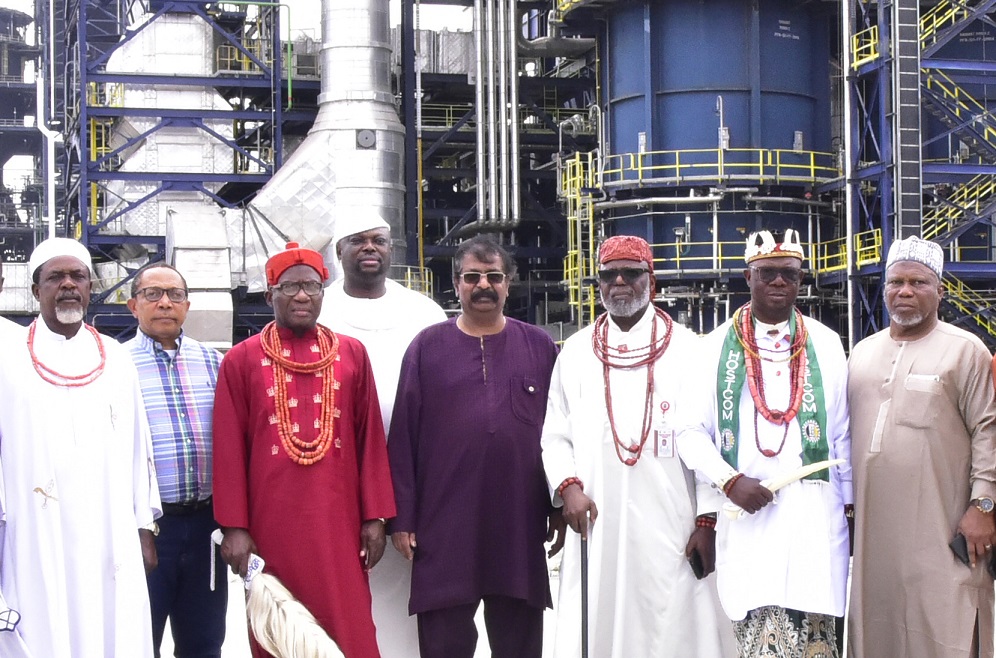
This appeal was made by a group known as the Host Communities of Nigeria Producing Oil and Gas (HOSTCOM) over the weekend.
The association was reacting to the recent development involving the lamentation of Africa’s richest man, Mr Aliko Dangote, who claimed that IOCs were frustrating the operations of his $20 billion refinery in Lagos.
HOSTCOM lamented that despite the billions of dollars spent on turnaround maintenance of Nigeria’s refineries, the country remains reliant on importing refined products.
This persistent issue, it argues, highlights the widespread corruption within Nigeria’s oil and gas industry, allegedly orchestrated by influential cabals who are intent on maintaining the status quo of exporting crude oil while importing refined petroleum products, warning that it will not hesitate to publicly name these identified cabals if necessary.
It threatened to renew agitation for greater autonomy and control of its natural resources if the Nigerian National Petroleum Company (NNPC) Limited and the IOCs fail to sell and supply crude oil to Dangote Refinery and other local refineries in their bid to ensure that Nigeria becomes self-sufficient in the local production of petroleum products.
The National President of HOSTCOM, Mr Benjamin Tamaramiebi, accompanied by his executives and traditional rulers from the Niger Delta region, during a tour of the Dangote Petroleum Refinery & Petrochemicals and the Dangote Fertiliser Limited complex in Lagos, also called for the removal of the chief executive of the Nigerian Midstream and Downstream Petroleum Regulatory Authority (NMDPRA), Mr Farouk Ahmed, over his recent statement that the government would not halt the importation of refined petroleum products.
“Our visit today to the largest and magnificent 650,000 bpd private refinery in Africa (Dangote Refinery) has opened our eyes to several ills, particularly the monumental corruption going on in the Nigerian oil and gas industry,” Mr Tamaramiebi said.
“It is obvious why the existing federal government refineries in Port Harcourt, Warri, and Kaduna can never work or operate maximally despite the billions of dollars spent on so-called turn-around maintenance (TAM) over the years.
“It is now clear that some persons in government and outside government have been identified as the cabal holding Nigeria’s oil sector by the jugular. We have identified them, and we shall reveal their names to the people of Nigeria if this trend continues,” he added.
Mr Tamaramiebi called on President Bola Tinubu to support and sustain Dangote Refinery, advising him to “do away with the cabals holding the oil sector to ransom,” emphasising that the government must not tolerate the economic sabotage being carried out by the IOCs operating in Nigeria, which have refused to sell crude oil to the Dangote Refinery and other modular refineries.
“We call on Mr President to direct NNPC or NNPCL to compel the IOCs operating in our communities to sell and supply crude oil to Dangote Refinery and other local refineries in line with Section 109 of the Petroleum Industry Act PIA 2021, particularly Section 109(4)(b), which states that “the supply of crude oil shall be commercially negotiated between the lessee and the crude oil refining licensee, having regard to the prevailing international market price for similar grades of crude oil.”
In his remarks, the Vice President for Oil and Gas at Dangote Industries Limited, Mr Devakumar Edwin, in his remarks, explained that the refinery was established primarily to source and refine local crudes for the benefit of Nigeria while also exporting excess production to boost the economy.
He noted that the lack of sufficient Nigerian crude supplies has necessitated importing crude from other countries and continents, adding that if the refinery had not been designed to process a wide range of crudes, including various African and Middle Eastern crudes as well as US Light Tight Oil, it would have become inactive due to the lack of Nigerian crude supplies.
Economy
Insurance Bond Compliance, NAICOM BPP, Bond Compliance in Public Procurement
In an era where digital financial opportunities are more accessible than ever, the difference between success and failure often boils down to a single factor: discipline. Whether one is navigating the volatile world of stock trading, exploring the emerging DeFi sector, or engaging with high-performance entertainment platforms, the ability to manage capital is paramount. In Romania, where the digital economy has seen an unprecedented surge, many participants focus heavily on “the big win” while neglecting the defensive strategies required to stay in the game long enough for those wins to materialize.
Understanding the core principles of capital preservation
A robust strategy begins with separating personal funds from the “bankroll.” This removes emotional weight from losses and protects household stability—a habit increasingly adopted in Romania as financial literacy grows. This foundation ensures rational decision-making during volatility. Once established, the “Rule of Survival” mandates that no single event should deplete the fund, requiring fractional allocation. Several models help implement this:
- Fixed percentage: Risking 1% to 3% per transaction to prevent total wipeouts.
- Kelly criterion: Adjusting allocation based on perceived edge and probability for efficient growth.
- Unit-based: Dividing the bankroll into units (e.g., 100) to standardize risk based on confidence levels.
These systems provide a roadmap to navigate uncertainty and prevent “chasing losses,” turning a reactive participant into a strategic manager.
The role of digital platforms in financial monitoring
The modern Romanian user has access to a wide array of tools that make tracking and managing a bankroll easier than in previous decades. From mobile banking apps that categorize spending to specialized software for portfolio tracking, the technological infrastructure in Romania supports high levels of transparency. Choosing the right environment is just as important as the strategy itself, as the speed of execution and the reliability of the system can directly impact the bottom line. Reliable digital environments like mrbet showcase how integrated technology can help users keep track of their activity while maintaining a focus on performance and security.
Adapting strategies to the Romanian economic landscape
Romania presents a unique set of circumstances for capital management, characterized by a mix of local currency (RON) and the heavy use of the Euro for major investments or digital transactions. Currency fluctuations can add an extra layer of risk that is often overlooked. A savvy manager must account for exchange rates and transaction fees when calculating their net bankroll, as these “hidden” costs can erode profit margins over time. Furthermore, the local tax regulations regarding digital earnings require a proactive approach to ensure that a portion of the bankroll is always set aside for legal obligations.
Long-term survival through emotional discipline
The most sophisticated mathematical model in the world will fail if the individual lacks the emotional discipline to follow it. Human psychology is hardwired to feel the pain of loss more acutely than the joy of gain, a phenomenon known as loss aversion. In Romania’s competitive digital space, the pressure to “keep up” with others’ perceived successes can lead to over-leveraging and the abandonment of sound management principles. In dynamic settings like mr bet casino live, where interaction is constant and the pace is fast, long-term survival depends on the ability to remain detached from the outcome of any single event and to focus instead on the integrity of the process.
Setting “stop-loss” limits and “take-profit” targets are essential psychological anchors. These are not just technical tools; they are commitments made to oneself during a state of calm that serve as a guardrail when the “heat of the moment” takes over. To maintain this discipline over months or years, consider the following habits:
- Maintaining a detailed log: Documenting every move, the reasoning behind it, and the emotional state at the time helps in identifying recurring mistakes.
- Scheduled reviews: Taking time every week or month to evaluate the bankroll’s health away from the “active” environment ensures a more objective perspective.
- Continuous education: Staying informed about new financial tools and local economic shifts in Romania helps in refining the strategy as the environment evolves.
By treating capital management as a skill to be mastered rather than a chore to be avoided, the individual builds a psychological fortress. This mindset is what separates the survivors from those who are merely passing through the digital economy.
Building a legacy of financial resilience
Bankroll management is the ultimate survival tool in the digital age. It is the bridge between reckless speculation and sustainable growth, providing the structure needed to navigate the complexities of the Romanian and global financial markets. By understanding the principles of preservation, utilizing the right digital tools, and maintaining a high level of emotional discipline, anyone can increase their chances of long-term success. The goal is not just to survive the next week or month, but to build a foundation that can withstand the tests of time and market volatility.
Economy
Minister Woos European Investors With Nigeria’s Steel Industry
By Adedapo Adesanya
Nigeria’s Minister of Steel Development, Mr Shuaibu Abubakar Audu, has told European investors that the country’s steel sector alone consumes about $10 billion annually, presenting a huge market opportunity for serious global players.
In a statement by the Director of Information and Public Relations in the ministry, Ms Salamatu Jibaniya, it was stated that the Minister made this disclosure when he took Nigeria’s industrialisation drive to Germany, declaring that the country is ready to trade its abundant raw materials status and embrace full-scale value addition.
Addressing the Nigeria–German Economic Forum in Dortmund, Mr Audu projected Nigeria as Africa’s next industrial hub, in line with the Renewed Hope Agenda of President Bola Tinubu.
“With a population of nearly 250 million, largely youthful and energetic, Nigeria is primed for industrial take-off,” he said.
He disclosed that the country holds over three billion tonnes of iron ore, alongside vast deposits of limestone, manganese, copper, lead-zinc, lithium and rare-earth minerals, positioning Nigeria for both domestic industrial growth and export expansion.
Mr Audu urged EU investors to key into steel and aluminium production, mineral beneficiation and processing, as well as critical infrastructure development covering power, rail, gas and ports.
He stressed that beyond capital inflow, Nigeria is prioritising technology transfer and technical skills development to strengthen local capacity.
At the high-level forum, the minister was received by Germany’s Minister for Federal, International and European Affairs, Mr Nathanael Liminski; Lord Mayor of Dortmund, Mr Alexander Kalouti; President of the Dortmund Chamber of Commerce and Industry, Mr Heinz-Herbert Dustmann; and Consul General to Slovakia, Mr Klaus Wagener.
Economy
Sunbeth Offers N100bn Commercial Paper to Boost Cocoa Export Value Chain
By Aduragbemi Omiyale
To boost Nigeria’s cocoa export value chain, Sunbeth Global Concepts Limited has secured approval to issue commercial papers worth N200 billion to investors.
In the first tranche, the cocoa exporter will sell the debt instrument worth about N100 billion in three series across three tenors of 180 days, 270 days and 364 days.
Subscription for the CP commenced on Friday, February 27, 2026, and will close on Thursday, March 5, 2026, with allotment and settlement scheduled for Friday, March 6, 2026.
Interested investors can purchase the commercial papers with a minimum of N5 million and in multiples of N1,000 thereafter.
The company stated that proceeds from the exercise would be used to finance contractual working capital requirements, including inventory procurement and the execution of physical and hedged offtake obligations within its export operations.
The Chief Operating Officer of Sunbeth, Mr Nzubechukwu Anisiobi, said the programme reflects the firm’s disciplined capital strategy and strong credit fundamentals.
“The establishment of our N200 billion Commercial Paper Programme reflects our disciplined capital strategy and solid credit profile.
“In a working capital-intensive export business, access to structured short-term funding strengthens liquidity, supports efficient contract execution and preserves balance sheet stability,” he stated.
Further emphasising investor confidence in the company’s governance and risk framework, he noted that, “The Programme underscores the confidence the capital markets have in our governance standards, earnings resilience and robust risk management discipline.”
Sunbeth, which is a top-five non-oil export contributor in Nigeria, was established in 2017 and has exported over 200,000 metric tonnes of cocoa beans and 60,000 metric tonnes of cashew nuts to international markets.
In 2025, it recorded over N600 billion in revenue, reinforcing its scale within Nigeria’s agricultural export ecosystem.
The organisation works directly with more than 30,000 farmers and collaborates with over 250 local buying agents across Nigeria.
Its global strategic partners include Cargill, GCB Group, JB Cocoa, Touton, Macquarie and StoneX, enabling diversified offtake and multi-destination market access across Europe, Asia and the United States.
-
Feature/OPED6 years agoDavos was Different this year
-
Travel/Tourism10 years ago
Lagos Seals Western Lodge Hotel In Ikorodu
-
Showbiz3 years agoEstranged Lover Releases Videos of Empress Njamah Bathing
-
Banking8 years agoSort Codes of GTBank Branches in Nigeria
-
Economy3 years agoSubsidy Removal: CNG at N130 Per Litre Cheaper Than Petrol—IPMAN
-
Banking3 years agoSort Codes of UBA Branches in Nigeria
-
Banking3 years agoFirst Bank Announces Planned Downtime
-
Sports3 years agoHighest Paid Nigerian Footballer – How Much Do Nigerian Footballers Earn