Feature/OPED
REVEALED: How Nigeria’s Energy Crisis is Driven by Debt and Global Forces
By Blaise Udunze
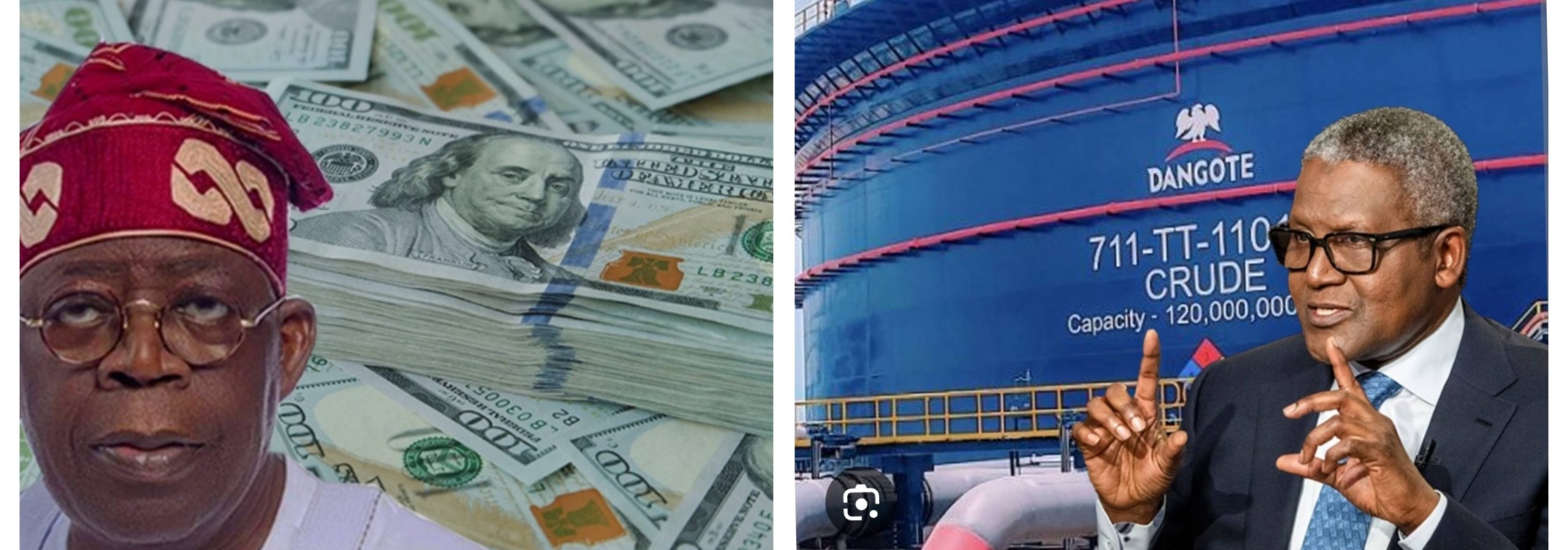
For months, Nigerians have argued in circles. Aliko Dangote has been blamed by default. They have accused his refinery of monopoly power, of greed, of manipulation. They have pointed out the rising price of petrol and demanded a villain.
When examined closely, the truth is uncomfortable, layered, and deeply geopolitical because the real story is not at the fuel pump, and this is what Nigerians have been missing unknowingly. The truth is that the real story is happening behind closed doors, across continents, inside financial systems most citizens never see, and the actors will prefer that the people are kept in the dark. And once you see it, the outrage shifts. The questions deepen. The implications expand far beyond Nigeria.
In October 2024, it was obvious that the world would have noticed that Nigeria made a move that should have dominated global headlines, but didn’t. Clearly, this was when the government of President Bola Tinubu introduced a quiet but radical policy, which is the Naira-for-Crude. The idea was simple and revolutionary. Nigeria, Africa’s largest oil producer, would allow domestic refineries to purchase crude oil in naira instead of U.S. dollars. On the surface, it looked like economic reform. In reality, it was something far more consequential. It was a challenge to the global financial order.
For decades, oil has been traded almost exclusively in dollars, reinforcing the dominance of the United States in global finance. By attempting to refine its own oil using its own currency, Nigeria was not just making a policy adjustment. It was testing the boundaries of economic sovereignty. And in today’s world, sovereignty, especially when it touches money, debt, and energy, comes with consequences.
What followed was not loud. There were no emergency broadcasts or dramatic policy reversals. Instead, the response was quiet, bureaucratic, and devastatingly effective just to undermine the processes. Nigeria produces over 1.5 million barrels of crude oil per day, though pushing for 3 million by 20230, yet when the Dangote Refinery requested 15 cargoes of crude for September 2024, what it received was only six from the Nigerian National Petroleum Company Ltd (NNPC), which means its yield for a refinery with such capacity will be low if nothing is done. Come to think of it, between January and August 2025, Nigerian refineries collectively requested 123 million barrels of domestic crude but received just 67 million, which by all indications showed a huge gap. It is a contradiction and at the same time, laughable that an oil-producing nation could not supply its own refinery with its own oil.
So, where was the crude going? The answer exposes a deeper, more uncomfortable truth about Nigeria’s economic reality. The crude was being sold on the international market for dollars. Those dollars were then used, almost immediately, to service Nigeria’s growing mountain of external debt. Loans owed to the same institutions, like the International Monetary Fund (IMF) and the World Bank, had to be paid, which are the same institutions applauding this government. Nigeria was not prioritising domestic industrialisation; it was prioritising debt repayment.
And the scale of that debt is no longer abstract. Nigeria’s total debt stock is now projected to rise from N155.1 trillion to N200 trillion, following an additional $6 billion loan request by President Tinubu, hurriedly approved by the Senate. At an exchange rate of N1,400 to the dollar, that single loan adds N8.4 trillion to a debt stock that already stood at N146.69 trillion at the end of 2025. This is not just a fiscal statistic. It is the central pressure shaping every major economic decision in the country.
On paper, the government can point to rising revenue, improving foreign exchange inflows, and stronger fiscal discipline as witnessed when the governor of the Central Bank of Nigeria, Olayemi Cardoso, always touted the foreign reserves growth. But a closer review of those numbers reveals a harsher reality. Nigeria is exporting its most valuable resource, converting it into dollars, and sending those dollars straight back out to creditors. The crude leaves. The dollars come in. The dollars leave again. And the cycle repeats.
This is not growth. This is a treadmill powered by debt. Let us not forget that in the middle of that treadmill sits a $20 billion refinery, built to solve Nigeria’s energy dependence, now trapped within the very system it was meant to escape.
By 2025, the contradiction had become impossible to ignore, which is a fact. This is because how can this be explained that the Dangote Refinery, designed to reduce reliance on imports, was increasingly dependent on them. The narrative is that in 2024, Nigeria imported 15 million barrels of crude from America, which is disheartening to mention the least. More troubling is that by 2025, that number surged to 41 million barrels, a 161 per cent increase. By mid-2025, approximately 60 per cent of the refinery’s feedstock was coming from American crude. As of early 2026, Nigerian crude accounted for only about 30 to 35 per cent, which was actually confirmed by Aliko Dangote.
The visible contradiction in this situation is that the refinery built to free Nigeria from dollar dependence was running largely on dollar-denominated imports. Not because the oil did not exist locally, but because the system, shaped by debt obligations and global financial structures, made it more practical to export crude for dollars than to refine it domestically, which leads us to several other covert concerns.
Faced with this troubling reality, there is one major issue that still needs to be answered. This is why Dangote pushed back by filing a N100 billion lawsuit against the NNPC and major oil marketers. He further accused the parties involved of failing to prioritise domestic refining. For a brief moment, one will think that the confrontation, as it appeared, was underway is one that could redefine the balance between state control and private industrial ambition, but these expectations never saw the light of day.
Yes, it never saw the light of day because on July 28, 2025, the lawsuit was quietly withdrawn. No press conferences. No public explanation. No confirmed settlement. Just silence.
There are only a few plausible or credible explanations. As a practice and well-known in the country, institutional pressure may have made continued confrontation untenable. A strategic compromise may have been reached behind closed doors. Or the realities of the system itself may have made victory impossible, regardless of the merits of the case. None of these scenarios suggests a system operating with full autonomy or aligned national interest. All of them point to constraints, political, economic, or structural, that extend far beyond a single company.
Then came the shock that changed everything.
On February 28, 2026, Iran closed the Strait of Hormuz, disrupting a channel through which roughly 20 per cent of the world’s oil supply flows. Prices surged past $100 per barrel. Global markets entered crisis mode. Supply chains are fractured. Countries dependent on Middle Eastern fuel suddenly had nowhere to turn.
And they turned to Nigeria. Nations like South Africa, Ghana, and Kenya began seeking fuel supplies from the Dangote Refinery. The same refinery that had been starved of crude, forced into dollar-denominated imports, and entangled in domestic disputes suddenly became the most strategically important energy asset on the African continent.
Nigeria did not plan for this. It did not negotiate for this. With this development, the world had no choice but to simply run out of options, and Lagos became the fallback.
And then, almost immediately, attention shifted. This swiftly prompted, in early 2026, a United States congressional report to recommend applying pressure on Nigeria’s trade relationships within Africa. Shortly after, on March 16, 2026, the United States launched a Section 301 trade investigation into multiple economies, including Nigeria. This is not a sanction, but it is the legal foundation for one. At the same time, the African Growth and Opportunity Act, which had provided duty-free access to U.S. markets for decades, was allowed to expire in 2025 without renewal.
The sequence is difficult to ignore. As Nigeria’s strategic importance rose, so did external scrutiny. As its potential for regional energy leadership increased, so did the instruments of economic pressure.
To understand why, you must look at the system itself. The global economy runs on the U.S. dollar, which the Iranian government tried to scuttle by implementing a policy that requires oil cargo tankers being transported via the Strait of Hormuz to be paid in Yuan. Most countries need dollars to trade, to import essential goods, and to access global markets. The infrastructure that enforces this is the SWIFT financial network, which connects banks across the world. Control over this system confers enormous power. Countries that step too far outside it risk exclusion, and exclusion, in modern terms, means economic paralysis.
Nigeria’s attempt to trade crude in naira was not just a policy experiment. It was a subtle deviation from a system that rewards compliance and punishes independence. The response was not military. It did not need to be. It was structural. Limit domestic supply. Reinforce dollar dependence. Ensure that even attempts at independence remain tethered to the existing order.
And all the while, the debt clock continues to tick. N155.1 trillion.
That number is not just a fiscal burden. It is leverage. It shapes policy. It influences decisions, and it also determines priorities, which tells you that when a nation is deeply indebted, its room to manoeuvre shrinks. In all of this, one thing that must be understood is that choices that might favour long-term sovereignty are often sacrificed for short-term stability. Debt does not just demand repayment. It demands alignment.
Back home, Nigerians remain focused on the most visible symptom, which is fuel prices. Unbeknownst to most Nigerians, they argue, protest, and assign blame while the forces shaping those prices include global currency systems, sovereign debt obligations, trade pressures, and geopolitical realignments. The price at the pump is not the cause. It is the consequence.
Nigeria now stands at an intersection defined not by scarcity, but by contradiction. What is more alarming is that it produces vast amounts of crude oil, yet struggles to supply its own refinery. It earns more in dollar terms, yet its citizens feel poorer. It builds infrastructure meant to ensure independence, yet operates within constraints that reinforce dependence. This is not a failure of resources, and this is because there is a conflict or tension between what Nigeria wants, which reflects its ambition and structure, and between sovereignty and obligation.
And so the questions remain, growing louder with each passing month and might force Nigerians, when pushed to the wall, to begin demanding answers. If Nigeria has the oil, why is it importing crude? Further to this dismay, more questions arise, such as, why is the refinery paying in dollars if Naira-for-crude exists? One will also be forced to ask if the lawsuit had merit, why was it withdrawn without explanation? If revenues are rising, why is hardship deepening? And if Nigeria is merely a developing economy with limited influence, why is it attracting this level of global attention?
These are not abstract questions. They are the pressure points of a system that extends far beyond Nigeria’s borders.
Because this story is no longer just about one country. The reality is that, perhaps unbeknownst to many, it is about the future of African economic independence. It is about the structure of global energy markets, the dominance of the dollar and the role of debt in shaping national destiny. Honestly, the question that comes to bear is that if Nigeria, with all its resources and scale, cannot fully align its production with its domestic needs, what does that imply for the rest of the continent?
The next time the conversation turns to petrol prices, something must shift. Because the number on the pump is not where this battle is being fought. It is being fought in allocation decisions, in debt negotiations, in regulatory frameworks, in international financial systems, and in quiet policy moves that rarely make headlines.
The Dangote Refinery is not just an industrial project. It is a test case. A test of whether a nation can truly control its own resources in a world where power is rarely exercised loudly, but always effectively. And right now, that test is still unfolding.
Blaise, a journalist and PR professional, writes from Lagos and can be reached via: [email protected]
Feature/OPED
3 Lessons Nigerian Marketers Can Learn from Top YouTube Creators
By Olumide Balogun
The Nigerian digital landscape is evolving rapidly. Across the country, YouTube creators have become the new mainstream entertainment. They command millions of views, shape modern culture, and heavily influence purchasing decisions.
For digital marketers and advertisers, observing these creators provides a masterclass in modern audience engagement. Creators understand exactly how to hold attention and drive action in a crowded digital space. They know how to speak to their communities, keep them entertained, and build lasting loyalty.
By studying their methods, brands can transform their marketing strategies to build deeper, more profitable relationships with consumers. Here are three powerful lessons your brand can learn from the success of top YouTube creators.
1. Prioritise Authenticity and Relatability
Corporate videos typically rely on high budgets and perfect scripts. Top creators prove that raw, relatable content builds much stronger trust. Audiences connect deeply with real people sharing genuine experiences. They want to see the real faces behind the screen.
Brands can apply this by showing the human side of their business. You can share behind-the-scenes moments from your office, highlight real employee stories, or feature unscripted user-generated content. When you prioritise authenticity over absolute perfection, your message resonates perfectly with modern consumers. They begin to see your brand as a relatable partner rather than just a faceless corporation.
2. Master the Multiformat Storytelling Approach
Successful creators utilise the entire YouTube ecosystem to reach their fans. They use YouTube Shorts to attract new viewers quickly with bite-sized entertainment. They create long-form videos to explore topics in depth. Finally, they use Live streams to build real-time connections with their most dedicated followers.
Marketers need to adopt this exact mixed format strategy to stay relevant. You can capture attention quickly with an engaging short video and then lead those interested viewers to a comprehensive product review or tutorial. Utilising all available formats ensures you reach your customers exactly how they prefer to consume content on any given day. It allows you to tell a complete story from quick discovery to deep consideration.
3. Cultivate Community and Borrow Influence Safely
Traditional advertising relies heavily on one-way broadcasting. YouTube thrives on active community participation. Creators ask their viewers for input, respond to comments, and build fiercely loyal fandoms. This creates immense credibility. Viewers are 98% more likely to trust the recommendations of YouTube creators compared to other platforms.
Brands can mirror this interactive approach by hosting live Q&A sessions, asking for audience feedback, and making customers feel involved in the brand’s journey. Furthermore, marketers can tap into this existing loyalty by collaborating directly with trusted voices.
Using specific collaboration tools allows your brand to align seamlessly with popular channels. For example, Creator Takeovers give your brand a dedicated presence on a creator’s channel, while Partnership Ads let you boost creator-made content directly to a wider audience. This approach allows you to respect the creator’s unique voice while turning their authentic endorsements into highly effective marketing assets for your business.
The Bottom Line: YouTube is a dynamic, community-driven ecosystem. By adopting a creator mindset, Nigerian marketers can completely revitalise their digital video strategy. Embrace authenticity, utilise multiple video formats, and partner with trusted voices to turn casual viewers into loyal brand advocates.
Olumide Balogun is the Director of Google West Africa
Feature/OPED
How Nigerians Search is Changing — and Why it Matters for our Businesses
By Olumide Balogun
There was a time when using a search engine felt like cracking a code. You typed two or three carefully chosen keywords, hoped the machine understood, and waited to see what came back. People had to learn the language of machines, shrinking complex needs into stilted phrases.
That era is ending. Today, a person can ask a question the same way they would ask a colleague, and the technology is finally learning to respond in kind. Nowhere is this shift more visible than in Nigeria, where a young, mobile-first population expects tools to keep pace with how they actually think and speak.
This change carries weight far beyond convenience. It is reshaping how Nigerian businesses reach customers and how customers find what they need.
For years, marketing online meant wrestling with rigid keyword lists. A small business owner had to guess every possible phrase a customer might type. If you sold ankara dresses, you tried “ankara dress,” “Nigerian print fabric,” “traditional wear Lagos,” and a dozen variations, hoping you covered the gaps. Anything you missed was a missed customer
The new wave of conversational search makes those lists feel ancient. People now ask layered, specific questions: “Where can I find a sustainable tailor in Yaba who makes office wear?” Older systems would have stumbled on a query like that. Newer ones, powered by artificial intelligence, can read intent and stitch ideas together. They connect a question to a relevant local website that a basic keyword search might never have surfaced.
The shift is starting to show up in concrete tools. Google’s AI Max for Search ads, now a year old, is one of the more visible examples. In plain terms, it lets a business describe what it sells and who it serves in everyday language, and the system figures out which searches to match it to, instead of forcing the owner to write hundreds of keywords by hand. Early adopters report stronger revenue growth than peers, and users say results feel more useful because the technology connects ideas for them, often surfacing local sites that would not have appeared before.
There is a quieter benefit too. When advertising becomes more relevant, it stops feeling like an interruption. An ad that answers a real question is no longer noise; it is information. That changes the texture of the internet. The marketplace gets less cluttered, and people spend less time wading through results that do not fit what they were looking for.
None of this is automatic. The technology only works if it can understand human nuance, and human nuance in Nigeria is not the same as human nuance in California. A search for “owambe outfit” or “small chops for fifty people” demands cultural context, not just linguistic translation. Newer features try to bridge that gap. AI Brief, a part of the same Google toolkit, lets a business owner type plain instructions, like “focus on sustainable traditional wear, keep a premium tone,” and the system follows them. This is steering by intent, not by keyword bingo.
There are gains for businesses with deep catalogues too. A retailer with thousands of items no longer has to match every question to the right page by hand. Tools such as Google’s Final URL Expansion read the search and send the customer straight to the page that fits, in real time. In travel, finance, and healthcare, where compliance matters, the same systems can carry mandatory legal text into every ad automatically. Regulated industries can grow without cutting corners.
These are not abstract wins. They are the difference between a small business being found by a customer in Abuja at 9 p.m. and being lost in a sea of generic results, between a hospital reaching the right patient and a tailor in Surulere being discovered by a bride planning her wedding.
We should not pretend the transition is finished. AI is imperfect. It can misread context, amplify mistakes, and require careful oversight. Regulators, businesses, and users all have a role in shaping how it develops in our market. The broader direction, however, is clear, and it is one Nigeria should engage with rather than resist.
Nigeria is a nation of storytellers and traders. Our markets, physical and digital, have always been about conversation. The technology of search is finally beginning to mirror that. It is becoming less of a vending machine and more of a market stall, where you can ask a question, get a real answer, and discover something you did not know you needed.
That is the bigger story behind any single product launch. It is about how a country full of voices is finding new ways to be heard. For Nigerian businesses willing to adapt, the opportunity has never been clearer.
Feature/OPED
Guide to Employee Training That Reinforces Workplace Safety Standards
Workplace safety is not sustained by policies alone. It is built through consistent training that shapes daily behaviour, decision-making, and accountability across every level of an organisation. When employees understand not only what safety rules exist but why they matter, they are far more likely to follow them and intervene when risks arise. Effective safety-focused training protects workers, strengthens operations, and reduces costly incidents that disrupt productivity and morale.
As industries evolve and workplaces become more complex, employee training must go beyond basic orientation sessions. Reinforcing safety standards requires an ongoing, structured approach that adapts to new risks, changing regulations, and real-world job demands. A thoughtful training strategy helps create a culture where safety is a shared responsibility rather than a checklist item.
Establishing a Foundation of Safety Awareness
The first purpose of workplace safety training is awareness. Employees cannot avoid hazards they do not understand. Comprehensive training introduces common workplace risks, clarifies acceptable behaviour, and sets expectations for personal responsibility. This foundational knowledge empowers employees to recognise unsafe conditions before incidents occur.
Safety awareness training should be tailored to the specific environment in which employees work. Office settings require education on ergonomics, electrical safety, and emergency evacuation procedures, while industrial workplaces demand detailed instruction on machinery risks, protective equipment, and material handling. When training reflects actual job conditions, employees are more engaged and better equipped to apply what they learn.
Clear communication is essential during this stage. Using plain language and real examples helps employees connect training concepts to daily tasks. When safety awareness becomes part of how employees think and talk about their work, it begins to shape behaviour consistently across the organisation.
Integrating Safety Training into Daily Operations
Safety training is most effective when it is integrated into everyday work rather than treated as a one-time event. Ongoing reinforcement ensures that safety standards remain top of mind as tasks, equipment, and responsibilities change. Regular training sessions create opportunities to refresh knowledge, address new risks, and correct unsafe habits before they lead to injury.
Incorporating short safety discussions into team meetings helps normalise these conversations. Supervisors play a critical role by modelling safe behaviour and reinforcing expectations during routine interactions. When employees see safety emphasised alongside productivity goals, it reinforces the message that both are equally important.
Hands-on training also strengthens retention. Demonstrations, practice scenarios, and real-time feedback allow employees to apply safety principles in controlled settings. This experiential approach builds confidence and reduces hesitation when employees encounter hazards in real situations.
Aligning Training with Regulatory Requirements
Workplace safety training must align with applicable regulations and industry standards to ensure legal compliance and worker protection. Laws and regulations change frequently, making it essential for organisations to keep training materials updated. Failure to do so can expose employees to unnecessary risk and organisations to legal consequences.
Training programs should clearly explain relevant safety regulations and how they apply to specific roles. Employees are more likely to comply when rules are presented as practical safeguards rather than abstract mandates. Documenting training completion and maintaining accurate records also demonstrates organisational commitment to compliance.
Many organisations rely on support from compliance training companies to navigate complex regulatory landscapes and design programs that meet both legal and operational needs. These partnerships can help ensure training remains accurate, consistent, and aligned with evolving requirements without overwhelming internal resources.
Encouraging Participation and Accountability
Effective safety training depends on active participation rather than passive attendance. Employees should be encouraged to ask questions, share concerns, and contribute insights based on their experiences. When workers feel heard, they become more invested in maintaining a safe environment.
Creating accountability is equally important. Training should clarify individual responsibilities and outline the consequences of ignoring safety standards. Employees need to understand that safety is not optional or secondary to performance goals. Reinforcement from leadership ensures that unsafe behaviour is addressed consistently and constructively.
Peer accountability also strengthens safety culture. When training emphasises teamwork and shared responsibility, employees are more likely to watch out for one another and intervene when they see risky behaviour. This collective approach reduces reliance on supervision alone and builds resilience across the workforce.
Adapting Training for Long-Term Effectiveness
Workplace safety training must evolve alongside organisational growth and workforce changes. New hires, role transitions, and technological updates introduce risks that require refreshed instruction. Periodic assessments help identify gaps in knowledge and opportunities for improvement.
Data from incident reports, near misses, and employee feedback provides valuable insight into training effectiveness. Adjusting content based on real outcomes ensures that training remains relevant and impactful. Organisations that treat training as a dynamic process are better equipped to respond to emerging risks.
Long-term effectiveness also depends on reinforcement beyond formal sessions. Visual reminders, updated procedures, and accessible reporting tools help sustain awareness. When safety standards are supported through multiple channels, employees receive consistent cues that reinforce training messages daily.
Conclusion
Reinforcing workplace safety standards through employee training requires intention, consistency, and adaptability. Training that builds awareness, integrates into daily operations, aligns with regulations, and encourages accountability creates a safer environment for everyone involved. When employees understand their role in maintaining safety, they are more confident, engaged, and prepared to prevent harm.
A strong training program is not simply a compliance exercise. It is an investment in people and performance. Organisations that prioritise meaningful safety training protect their workforce while fostering trust, stability, and long-term success.
-
Feature/OPED6 years agoDavos was Different this year
-
Travel/Tourism10 years ago
Lagos Seals Western Lodge Hotel In Ikorodu
-
Showbiz3 years agoEstranged Lover Releases Videos of Empress Njamah Bathing
-
Banking8 years agoSort Codes of GTBank Branches in Nigeria
-
Economy3 years agoSubsidy Removal: CNG at N130 Per Litre Cheaper Than Petrol—IPMAN
-
Banking3 years agoSort Codes of UBA Branches in Nigeria
-
Banking3 years agoFirst Bank Announces Planned Downtime
-
Sports3 years agoHighest Paid Nigerian Footballer – How Much Do Nigerian Footballers Earn