

Connect with us

Sports

After 22 Years of Banter, Nigerian Arsenal Fans Finally Have Their Moment

Published

on

Arsenal Players Nigerian Arsenal Fans

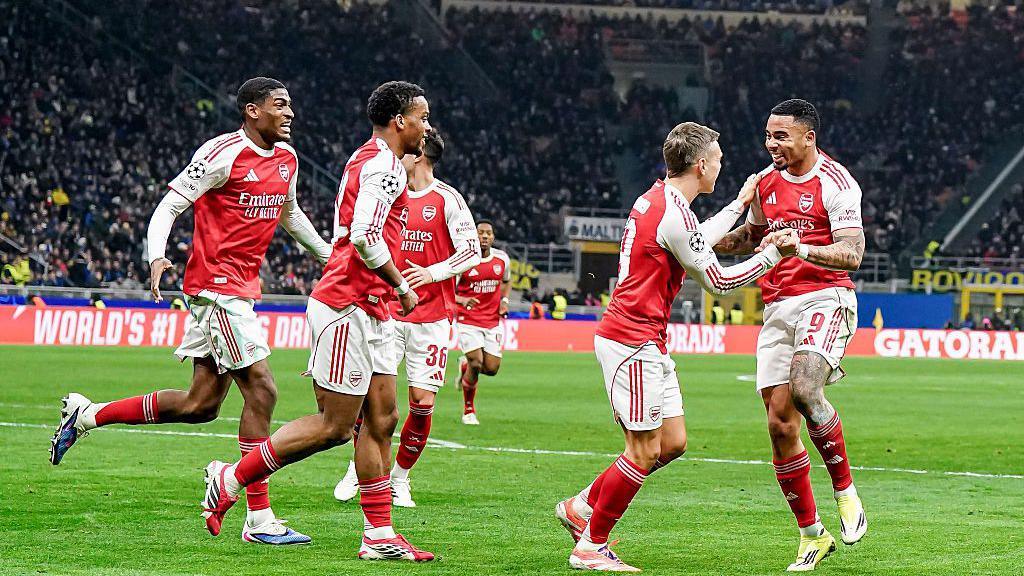
For more than two decades, Arsenal fans in Nigeria lived through the jokes, memes, near-misses and endless “second place” and “next season” conversations. Now, with the club finally back at the top of English football, the long wait has given way to celebration.

Arsenal’s Premier League triumph, confirmed after Manchester City’s 1-1 draw against Bournemouth, has triggered widespread celebrations across Nigeria, where the North London club has one of the country’s biggest football fanbases. As part of the moment, DStv and GOtv are extending the celebration by opening key SuperSport channels to more subscribers ahead of the final Premier League games and Arsenal’s UEFA Champions League final against Paris Saint-Germain.

From “Almost” Team to Champions

This title feels different partly because of how many times Arsenal came close before finally breaking through. The club finished second repeatedly in recent seasons and spent long stretches being labelled football’s “nearly men.” Every dropped point, late collapse, and failed title push became instant fodder for online banter.

Even this season threatened to unravel at different moments. A chaotic 3-2 defeat to Manchester United in January raised fresh questions about Arsenal’s mentality, while back-to-back April losses to Bournemouth and Manchester City nearly handed control of the title race back to Pep Guardiola’s side. There was also disappointment in cup competitions, including a defeat to Manchester City in the EFL Cup final and an FA Cup quarter-final exit to Southampton.

But unlike previous Arsenal sides, Arteta’s team recovered. The Gunners closed the season with ruthless discipline, grinding out key straight wins against Newcastle, Fulham, West Ham and Burnley to finally end the club’s 22-year wait for a league title. Much of that success was built on the league’s best defence, led by William Saliba, Gabriel Magalhães and David Raya. At the same time, goals and attacking contributions came from across the team, from the defence to the attack. It really was a team effort.

The Celebration Continues

Attention now shifts to Arsenal’s final Premier League fixture against Crystal Palace on Sunday, 24 May, where the club will officially lift the trophy before turning focus to the UEFA Champions League final against Paris Saint-Germain on Saturday, 30 May.

The Open View window for the UEFA Champions League final begins on Monday, 25 May, giving DStv Yanga customers access to SS Football Finals (DStv Channel 202) and SS Football (DStv Channel 205). GOtv Jolli customers will also enjoy similar access and will be able to watch the final live on SS Football (GOtv Channel 61).

Live studio build-up for the final begins at 3:30 p.m. ahead of kick-off at 5:00 p.m., as Arsenal attempt to crown their title-winning season with European glory.

As part of the wider celebration for football fans, DStv will open select Premier League fixtures to customers this Sunday, including Crystal Palace vs Arsenal, Manchester City vs Aston Villa, Liverpool vs Brentford and Tottenham Hotspur vs Everton.

1 Comment

1 Comment

  1. Pingback: After 22 Years of Banter, Nigerian Arsenal Fans Finally Have Their Moment – PRIMA NEWS
Leave a Reply

Your email address will not be published. Required fields are marked *

Sports

Football Talent Investment Across West Africa

Published

on

Football Talent Investment

Football talent systems have become one of the most attractive investment areas in West African sport. Investors no longer focus only on stadiums, sponsorships, or broadcasting rights. They increasingly direct capital toward player development systems that can produce long-term financial returns.

The logic is straightforward. A successful talent system can develop players, generate transfer income, attract sponsors, and strengthen club performance. As a result, investment in player pathways now influences football analysis, player markets, and betting interest across the region.

West Africa remains one of the world’s most productive football talent hubs. Players from Ghana, Senegal, Côte d’Ivoire, Mali, and other countries continue to move into top European leagues. Many of those careers started in local talent programs that received steady investment and professional management.

Football audiences increasingly consume content through digital platforms. Many supporters follow player development, transfer news, and performance statistics in one place. Entertainment options often appear alongside sports content, and features such as online slots on 1xBet form part of the broader group of digital services that many football fans use throughout the season.

Why football talent systems attract investor attention

Football talent programs offer something many sports projects cannot provide. They create assets that can appreciate in value over time.

A promising player may arrive with little commercial value. Several years later, that same player can generate a transfer fee worth millions of dollars. Clubs understand this equation. Investors understand it as well.

The region already provides strong evidence. Transfer records show that footballers developed in West African talent systems continue to secure contracts with clubs across Europe, North America, and the Middle East. Those transfers create revenue streams that help finance future development programs.

Three factors continue to attract investors:

  1. Lower development costs compared to many global markets.
  2. Strong supply of athletic and technically gifted players.
  3. Growing international demand for emerging football talent.

Some talent program operators compare player development to venture capital. Many players may never reach elite level. One successful transfer can still justify years of investment.

The business model behind talent development

Investment in player development systems involves much more than coaching sessions and training pitches. Modern development centers operate like professional businesses.

Investors fund facilities, medical support, performance analysis, scouting networks, and player support services. Clubs seek efficiency at every stage because player development requires patience. Returns rarely appear overnight.

A single successful transfer can transform a development center’s financial position, yet sustainable projects depend on producing quality players year after year. Consistency matters more than one breakthrough star.

Several West African talent programs maintain partnerships with clubs abroad. These relationships help players gain exposure, create pathways toward professional contracts, and increase potential returns.

Investors increasingly favor structured development programs over short-term spending. They want systems that continue producing talent long after individual players leave.

How regional talent systems changed the football economy

Football development in West Africa looked very different twenty years ago. Many talented players relied on informal pathways to reach professional clubs.

Today, organized talent systems play a much larger role. Better facilities, qualified coaches, and stronger recruitment systems have changed the process.

The transformation has influenced local football economies in several ways:

  1. Higher transfer revenues for clubs.
  2. Greater international scouting activity.
  3. Stronger commercial partnerships.

These changes created more structured club operations . Clubs can now plan for long-term growth rather than relying only on matchday income.

The economic impact extends beyond football itself. Talent programs generate employment for coaches, analysts, medical staff, administrators, and facility managers. They also attract sponsors seeking exposure within football communities.

Some observers describe talent development as the region’s most valuable football export. The statement may sound bold, yet transfer activity supports that argument.

Real-world examples illustrate the scale of investment in player development systems. Senegal’s Generation Foot has built one of the most successful development models in African football. The organization helped produce players who later joined major European clubs and national teams. Ghana’s Right to Dream followed a similar path, combining player development with long-term commercial planning. In Côte d’Ivoire, ASEC Mimosas developed a reputation for producing professional footballers who moved to leading leagues abroad. These projects demonstrate how structured investment can create both sporting and financial returns.

Data, analytics, and modern recruitment

Football recruitment no longer relies solely on traditional scouting. Data now plays a larger role in identifying prospects and evaluating performance.

Investors pay attention because data reduces risk. Better information helps clubs decide where to allocate resources.

Modern talent programs track physical performance, match statistics, and technical development. Coaches use this information to refine training programs and monitor progress.

One development program director described football data as “a second set of eyes.” The phrase reflects how clubs evaluate talent more efficiently.

A growing number of clubs also use video analysis software. Scouts can review matches from different regions without extensive travel costs. This approach improves efficiency and expands recruitment networks.

Why investors view talent as a long-term asset

Football often rewards patience. Some players progress quickly, while others require additional years before reaching professional standards.

Financial reports from football organizations worldwide show that player trading remains a major source of revenue. West African clubs want a larger share of that market. Investment in talent systems represents one route toward achieving that goal.

A few projects already demonstrate encouraging results. Several regional talent programs have produced players who later competed in major European competitions. Those success stories attract fresh investment and strengthen confidence in the model.

One long-term trend appears especially interesting. International investors increasingly look for football projects that combine sporting success with commercial sustainability, and well-managed talent systems often satisfy both objectives.

How talent development growth influences betting interest

Statistics, domestic competitions, and transfer rumors generate discussion throughout the season.

The betting audience increasingly follows football through multifunctional digital platforms. Many users combine match analysis, player research, and entertainment features within the same digital ecosystem. Games such as Chicken Road 2 1xBet often appear alongside football content, reflecting how sports and digital entertainment continue to attract overlapping audiences across the region.

Analysts frequently study players emerging from talent systems when assessing future team performance. This information becomes part of broader football research that betting audiences also consume.

Several trends connect talent development with betting interest:

  1. Greater attention to player statistics and performance data.
  2. Increased coverage of football talent and transfers.
  3. More detailed analysis of club development strategies.

The connection remains indirect but clear. Better information creates more informed football discussions. Betting markets often respond to the same information that attracts scouts, journalists, and analysts.

For experienced football followers, understanding talent systems can provide useful context when evaluating future team strength. Clubs with productive development programs often maintain stronger squad depth over time.

The next stage of football investment

Investment in football talent systems is receiving greater attention across West Africa. Clubs, private investors, and international partners increasingly view talent development as a strategic priority.

The region already supplies players to many of the world’s leading leagues. Stronger infrastructure may increase that influence even further.

Competition between talent programs continues to intensify. Clubs seek better facilities, stronger coaching staffs, and more efficient recruitment systems to strengthen their development structures.

Football remains a results-driven business. Yet some investors focus on what happens long before matchday. They understand a simple truth: successful teams often begin with successful development systems. Investment in talent systems may not deliver instant rewards, but many believe it offers one of football’s most reliable long-term opportunities.

Continue Reading

Sports

Team Drogba Clinches First E1 Victory in Monaco

Published

on

Team Drogba E1 victory

By Modupe Gbadeyanka

On Saturday, July 18, 2026, Team Drogba Global Africa claimed its first E1 victory in Monaco, moving to sixth on the table with 59 points.

It defeated Team Brady, which came second over the week, though it leads the championship with 119 points, nine points more than the second on the log, Westbrook Racing by Visit Angola.

Kiwi Micah Wilkinson and his Spanish teammate Tara Pacheco combined to put together a memorable performance and secure a long-awaited first visit to the top step.

Drogba’s best result of the season so far had been seventh in Lake Como, but something clicked in the Principality, and the victory has moved them up to sixth overall.

Home heroes Team Monaco had set the fastest time in qualifying and were leading the way, but they made a wrong turn on the course, which consigned them to join Westbrook in the Place Race. Will Smith’s team took a damage-limiting victory, leaving them in seventh at the end of the day.

But the Finals were both dominated by Drogba. In Final 1, with Tara Pacheco at the wheel, they finished just ahead of Emma Kimiläinen’s Brady E1 RaceBird. The battle resumed in Final 2 and, on this occasion, Micah held off Sam Coleman. Timmy Hansen came through to finish third for Miami to secure their first podium in 13 races.

Micah Wilkinson was also rewarded with PIF Pilot of the Day for his performance in Final 2.

Hosted at the world-renowned Yacht Club de Monaco, the Championship’s third visit to the Principality once again transformed Port Hercule into one of the world’s most spectacular sporting venues.

E1 now heads to its first foray in Southern Africa for the E1 Luanda GP 2026, Angola, on September 12 to 13.

“Huge congratulations to everyone at Team Drogba on securing a remarkably assured maiden victory here in Monaco. We leave with a new Championship leader in Team Brady, with Will Smith’s team in close contention.

“The Principality once again delivered an extraordinary weekend of thrilling on-water action to reinforce our belief that E1 is creating a new chapter in global motorsport. We now head to Angola, Africa, for the next round as the Championship battle intensifies,” the chief executive of E1, Mr Jamie Copas, said.

Continue Reading

Sports

Spain Defeat Argentina to Lift Second FIFA World Cup Trophy

Published

on

Spain 2026 FIFA World Cup

By Dipo Olowookere

Spain put one past Argentina to clinch their second FIFA World Cup trophy in New Jersey, USA, on Sunday night.

Ferran Torres put the only goal of the match in the back of the South American’s net in the 106th minute after both teams could not settle scores in normal time.

The Argentines, led by Lionel Scaloni, were reduced to 10 men in added time of the second half after Enzo Fernández got his second yellow card for a tackle on Spain’s Pau Cubarsí.

Lionel Messi could not inspire his team to victory in the final watched by the President of the United States, Mr Donald Trump, as the Europeans dominated the match, with Argentina not having a shot on or off target before the extra time.

The 2022 FIFA World Cup champions only managed to show signs of pressing after the winners of the 2010 edition in South Africa scored a minute after the resumption of the second half of the extra 30 minutes.

The win by Luis de la Fuente’s men left Lionel Messi teary after the match. This could be his last World Cup as he turned 39 this year.

The next FIFA World Cup in 2030 goes to Spain, Portugal, and Morocco. This year’s edition was hosted by the trio of the USA, Canada, and Mexico. The Mundial kicked off on June 20, 2026, and ended on July 19, 2026, with 48 teams participating, more than the usual 32 teams of the previous editions.

Continue Reading

