Connect with us

Technology

Protecting Telecommunications Infrastructure: A National Imperative for Nigeria’s Digital Future

Published

on

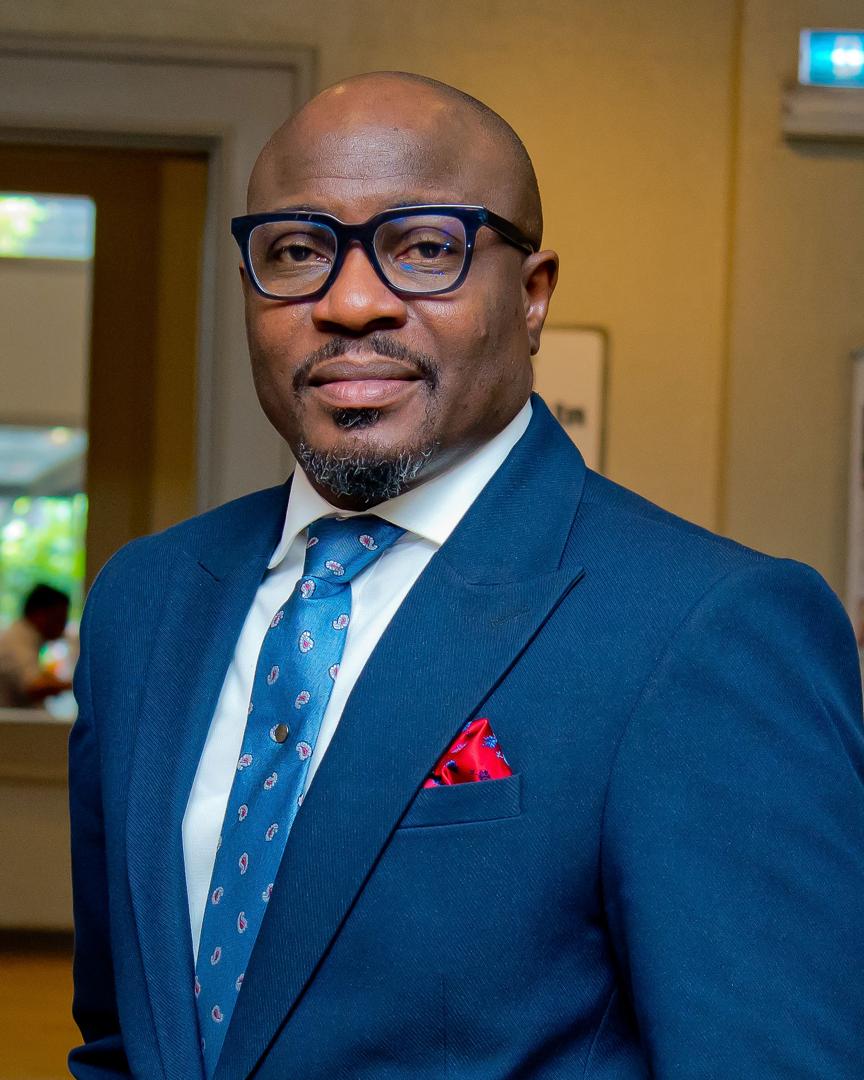
Femi Adeniran

By Femi Adeniran

Imagine waking up one morning to find no internet, no mobile network, and no access to emergency services—all because a single fibre cable was carelessly severed during routine construction. This is not just a hypothetical scenario; it’s a reality that plays out daily across Nigeria, threatening the backbone of our digital economy and undermining national security.

The Federal Government’s recent designation of telecommunications assets as critical national infrastructure is a landmark decision that underscores the strategic importance of connectivity in today’s Nigeria. Telecommunications infrastructure is not just about phone calls or browsing the internet; it powers vital sectors like education, healthcare, banking, and public safety. In a world increasingly defined by digital transformation, the integrity of our telecom networks is as critical as our roads, bridges, and airports.

Yet, this critical infrastructure faces relentless threats. Fibre cuts—primarily caused by construction activities, vandalism, and a lack of coordination between stakeholders—have become an epidemic. On average, operators report multiple incidents daily, disrupting services to millions of Nigerians.  Airtel Nigeria alone records a daily average of 43 fibre cuts and in the last six months, a total of 7742. These interruptions not only inconvenience consumers but also hinder businesses, delay government operations, and compromise public safety, particularly in emergencies.

The dry season, while ideal for construction and public works, has exacerbated the problem. With an increase in road and building projects, the frequency of fibre cuts has spiked alarmingly. This trend jeopardizes Nigeria’s broadband penetration goals and the collective efforts to harness technology for economic growth and social inclusion.

This is therefore a clarion call to all stakeholders—government agencies, security agencies, construction companies, telecom operators, the media and civil society—to collaborate urgently in safeguarding Nigeria’s telecommunications infrastructure. Beyond policy declaration, there is a need to urgently move to practical actionable steps some of which are:

  1. Stronger Enforcement and Coordination: Security Agencies and Regulatory bodies, must enforce stricter penalties for fibre damage while creating platforms for seamless coordination between construction companies and telecom operators.
  2. Regulating and Monitoring the Operations of Construction Companies: Construction companies to be regulated and monitored to ensure they accord similar status to telecom assets as they do to assets of other utility companies.
  3. Right-of-Way (RoW) Simplification: Streamlining the RoW process will ensure operators can bury cables securely and proactively plan for infrastructure protection in partnership with local governments.
  4. Adoption of Technology: Leveraging geospatial mapping and real-time monitoring tools will enable better identification of high-risk zones and faster response to incidents.
  5. Increased interest and Support from the Nigerian Media: Media stakeholders should support Public and private sector actors to drive targeted campaigns and public enlightenment on the importance of telecom infrastructure and the dire consequences of fibre cuts.

Nigeria’s digital economy is a critical pillar of our national development strategy. To achieve the ambitious targets of the National Broadband Plan 2020-2025 and unlock the full potential of critical initiatives of the Federal Government like the 3 Million Technical Talents 3MTT which aims to train and find job placements for 3 million Nigerian youths (local and international) by 2027, the “Project 774” of the Federal Government of aimed at digitizing all the 774 local government offices across the country for efficiency, and private sector led developmental initiatives such as the Airtel-UNICEF Reimagine Education Project where Airtel Africa has committed $57m to connect children to digital learning across the 14 countries of its operations in Africa, with Nigeria taking the lead,  our telecommunications networks must be protected with the same rigor we reserve for our power grids, water systems, and transportation networks.

The time to act is now. Together, we can ensure that Nigeria’s telecommunications infrastructure remains resilient, reliable, and ready to power the future. Failure to act will cost us more than just dropped calls—it will jeopardize our journey to a truly connected nation.

Femi Adeniran is the Director for Corporate Communications and CSR at Airtel Nigeria

Technology

Leticia Otomewo Becomes Secure Electronic Technology’s Acting Secretary

Published

on

Secure Electronic Technology

By Aduragbemi Omiyale

One of the players in the Nigerian gaming industry, Secure Electronic Technology (SET) Plc, has appointed Ms Leticia Otomewo as its acting secretary.

This followed the expiration of the company’s service contract with the former occupier of the seat, Ms Irene Attoe, on January 31, 2026.

A statement to the Nigerian Exchange (NGX) Limited on Thursday said Ms Otomewo would remain the organisation’s scribe in an acting capacity, pending the ratification and appointment of a substantive company secretary at the next board meeting.

She was described in the notice signed by the Managing Director of the firm, Mr Oyeyemi Olusoji, as “a results-driven executive with 22 years of experience in driving business growth, leading high-performing teams, and delivering innovative solutions.”

The acting secretary is also said to be “a collaborative leader with a passion for mentoring and developing talent.”

“The company assures the investing public that all Company Secretariat responsibilities and regulatory obligations will continue to be discharged in full compliance with the Companies and Allied Matters Act, applicable regulations, and the Nigerian Exchange Limited Listing Rules,” the disclosure assured.

Meanwhile, the board thanked Ms Attoe “for professionalism and contributions to the Company during the period of her engagement and wishes her well in her future endeavours.”

Continue Reading

Technology

Russia Blocks WhatsApp Messaging Service

Published

on

WhatsApp Self Messaging Feature

By Adedapo Adesanya

The Russian government on Thursday confirmed it has blocked the WhatsApp messaging service, as it moves to further control information flow in the country.

It urged Russians to use a new state-backed platform called Max instead of the Meta-owned service.

WhatsApp issued a statement earlier saying Russia had attempted to “fully block” its messaging service in the country to force people toward Max, which it described as a “surveillance app.”

“Today the Russian government attempted to fully block WhatsApp in an effort to drive people to a state-owned surveillance app,” WhatsApp posted on social media platform X.

“Trying to isolate over 100 million users from private and secure communication is a backwards step and can only lead to less safety for people in Russia,” it said, adding: “We continue to do everything we can to keep users connected.”

Russia’s latest move against social media platforms and messaging services like WhatsApp, Signal and Telegram comes amid a wider attempt to drive users toward domestic and more easily controlled and monitored services, such as Max.

Russia’s telecoms watchdog, Roskomnadzor, has accused messaging apps Telegram and WhatsApp of failing to comply with Russian legislation requiring companies to store Russian users’ data inside the country, and of failing to introduce measures to stop their platforms from being used for allegedly criminal or terrorist purposes.

It has used this as a basis for slowing down or blocking their operations, with restrictions coming into force since last year.

For Telegram, it may be next, but so far the Russian government has been admittedly slowing down its operations “due to the fact that the company isn’t complying with the requirements of Russian legislation.”

The chat service, founded by Russian developers but headquartered in Dubai, has been a principal target for Roskomnadzor’s scrutiny and increasing restrictions, with users reporting sluggish performance on the app since January.

Continue Reading

Technology

Nigerian AI Startup Decide Ranks Fourth Globally for Spreadsheet Accuracy

Published

on

Nigerian AI Startup Decide

By Adedapo Adesanya

Nigerian startup, Decide, has emerged as the fourth most accurate Artificial Intelligence (AI) agent for spreadsheet tasks globally, according to results from SpreadsheetBench, a widely referenced benchmark for evaluating AI performance on real-world spreadsheet problems.

According to the founder, Mr Abiodun Adetona, the ranking places Decide alongside well-funded global AI startups, including Microsoft, OpenAI, and Anthropic.

Mr Adetona, an ex-Flutterwave developer, also revealed that Decide now has over 3,000 users, including some who are paying customers, a signal to the ability of the startup to scale in the near future.

SpreadsheetBench is a comprehensive evaluation framework designed to push Large Language Models (LLMs) to their limits in understanding and manipulating spreadsheet data. While many benchmarks focus on simple table QA, SpreadsheetBench treats a spreadsheet as a complex ecosystem involving spatial layouts, formulas, and multi-step reasoning. So far, only three agents rank higher than Decide, namely Nobie Agent, Shortcut.ai, and Qingqiu Agent.

Mr Adetona said SpreadsheetBench measures how well AI agents can handle practical spreadsheet tasks such as writing formulas, cleaning messy data, working across multiple sheets, and reasoning through complex Excel workflows. Decide recorded an 82.5% accuracy score, solving 330 out of 400 verified tasks.

“The result reflects sustained investment in applied research, product iteration, and learning from real-world spreadsheet workloads across a wide range of use cases,” Mr Adetona told Business Post.

For Mr Adetona, who built Decide out of frustration with how much time professionals spend manually cleaning data, debugging formulas, and moving between sheets, “This milestone highlights how focused engineering and domain-specific AI development can deliver frontier-level performance outside of large research organisations. By concentrating on practical business data problems and building systems grounded in real user environments, we believe smaller teams can contribute meaningfully to advancing applied AI.”

“For Decide, this is a foundation for continued progress in intelligent spreadsheet and analytics automation,” he added.

Continue Reading

Trending