Connect with us

General

Customs Targets N6.58trn for 2025 After Generating N6.11trn in 2024

Published

on

Nigeria customs wale adeniyi

By Adedapo Adesanya

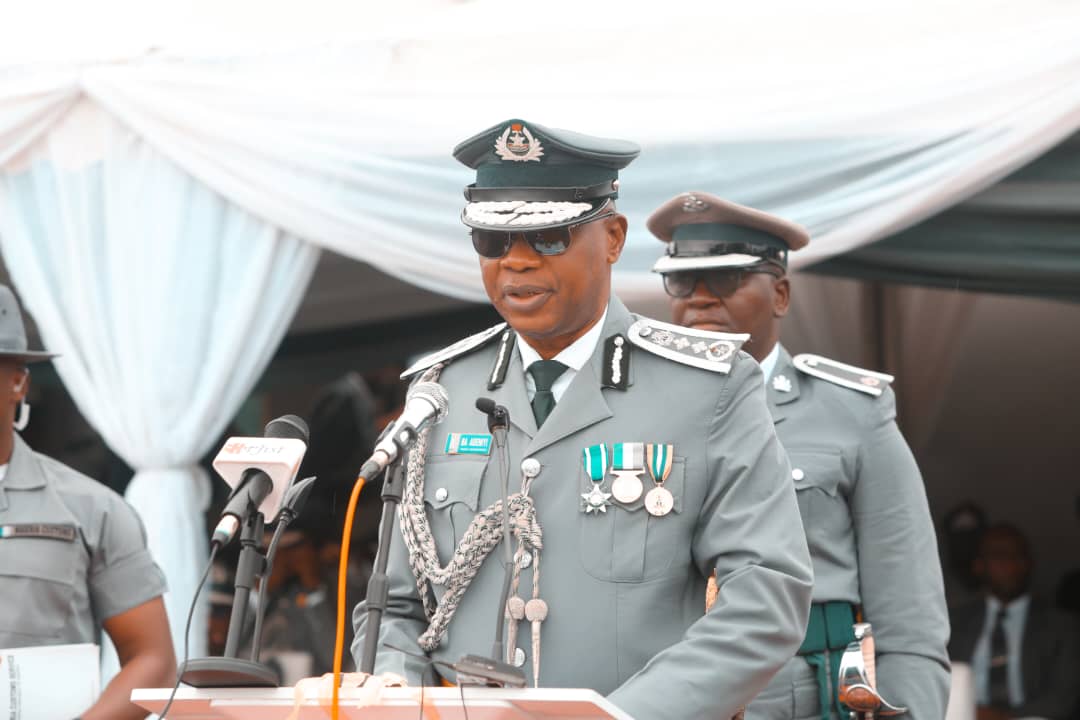
The federal government has set a revenue target of N6.58 trillion for the Nigeria Customs Service (NCS) for 2025, according to the Comptroller-General of Customs (CGC), Mr Bashir Adewale Adeniyi, after the agency collected an unprecedented N6.11 trillion in 2024.

The amount generated last year according to the customs chief, surpassed its N5.08 trillion revenue target for the year by N1.03 trillion or 20.2 per cent.

Mr Adeniyi said the remarkable achievement represented 90.4 percent increase compared to N3.21 trillion collected in 2023, describing the revenue growth as historic as it marked the highest year-on-year increase recorded by the service in recent times, surpassing the 52.24 per cent growth recorded in 2022 by 38.18 per cent.

Mr Adeniyi also pointed out that the service achieved another milestone in October 2024 when it recorded N603.17 billion as the highest monthly collection in the history of the NCS, noting that the new revenue target reflected the government’s confidence in customs’ capabilities and the expanding scope of its operations.

Further providing a breakdown of the revenue collection for last year, Mr Adeniyi stated that N3.66 trillion was collected into the Federation Account, consisting of import duty, excise duty, fees, e-auction proceeds, and Common External Tariff (CET) levy.

He pointed out that the collections were achieved despite significant concessions granted to support various sectors of the economy, totaling N1.68 trillion, saying these concessions comprised N723 billion in import duty waivers, N372.65 billion in other levy concessions, and N586.65 billion in import VAT relief.

Mr Adeniyi noted that the strategic concessions were granted to stimulate economic growth, support industrial development, and enhance the overall business environment in line with government policy objectives.

He said the 2024 concession value represented a significant reduction from the N3.95 trillion recorded in 2023, adding that the reduction was a direct result of the service’s enhanced monitoring mechanisms and strategic reforms.

According to the CGC, this was aimed at blocking loopholes and eliminating abuses in the concession granting process, ensuring that only genuine and qualifying enterprises benefitted from these incentives, adding that the service made several commitments towards modernising its operations and enhancing service delivery.

He said despite its impressive revenue performance, the service remained conscious of the need to strike a balance between revenue collection and trade facilitation, adding that this balance was evident in its commitments at the beginning of the year and served as a milestone for gauging performance throughout 2024.

The CGC pointed out that trade data for 2024 reflected significant growth in trade value despite global economic headwinds, stressing that the service processed imports with a Cost, Insurance, and Freight (CIF) value of N60.29 trillion in 2024, representing a remarkable 117.4 per cent increase from N27.74 trillion in 2023.

He said this was achieved through 1,262,988 import transactions, handling a total mass of 15.35 billion kilograms –noting that the higher value recorded despite an 8.2 per cent decrease in transaction volume from the previous year’s 1,376,514 transactions indicated a shift towards higher-value goods in our import trade portfolio.

He said export trade performance was equally impressive, with the total CIF value rising significantly to N136.65 trillion in 2024 from N42.77 trillion in 2023, marking a 219.5 per cent increase.

He said while the number of export transactions remained relatively stable at 38,199 compared to 38,294 in 2023, the country witnessed a substantial increase in export volume, processing 12.35 billion kilograms in 2024 compared to 3.70 billion kilograms in 2023, noting that the 234 per cent increase in export mass, coupled with the higher value, indicated a robust growth in our export trade and suggested increasing competitiveness of Nigerian products in the international market.

According to him, the total trade value handled by the service in the review year amounted to N196.94 trillion, compared to N70.50 trillion in 2023, representing a 179.3 percent increase.

On its anti-smuggling operations, Adeniyi stated that the NCS adapted its strategies to the evolving security challenges resulting in 3,555 seizures in 2024 with a dramatic 100.92 per cent increase in the Duty Paid Value (DPV) of seizures from N17.56 billion in 2023 to N35.29 billion in 2024.

He said the seizures, with CIF value of N28.46 billion and a total duty of N6.83 billion highlighted the scale of attempted economic sabotage prevented by the service, adding that the recorded seizures included traditional and emerging risks to Nigeria’s economic and overall national security.

The customs chief stated that there were seizures of arms and ammunition, including 900 arms and 113,472 rounds of ammunition, and the interception of narcotics and other illicit drugs, resulting in 105 seizures across various forms that were aided by the declaration of a state of emergency at our major entry points.

Mr Adeniyi said the service also intercepted unauthorised pharmaceutical products, with 40 seizures including 175,676 pieces and 6,271 cartons of various medicaments valued at N3.04 billion, protecting public health from potentially dangerous counterfeit drugs.

According to him, the service’s enforcement activities also revealed evolving patterns in environmental and wildlife crimes, with 76 seizures of animal/wildlife products valued at N5.93 billion.

“We also maintained vigilance over trade-sensitive goods, as evidenced by the seizure of 183,527 bags of rice. Additionally, significant seizures were made of other restricted items including 3,785 bales of textiles valued at N945.9 million, and various quantities of footwear, beverages, and other consumer goods, protecting local industries and supporting the government’s economic diversification agenda.

“The service also recorded 397 seizures of vehicles valued at N5.64 billion, as we continue to enforce import regulations and protect government revenue.

“The mounting sophistication of smuggling networks also necessitated a corresponding elevation in our enforcement capabilities, leading to enhanced collaboration with national and international partners and the deployment of advanced detection approaches.

“Worthy of note is the launch of operation Whirlwind with the support of the Office of the National Security Adviser (ONSA) and the Nigeria Midstream and Downstream Petroleum Regulatory Authority (NMDPRA) under the Nigeria Petroleum Corporation (NNPC) Limited

“This operation resulted in the seizure of significant quantities of petroleum products totaling 1,716,656 litres from saboteurs diverting petroleum products intended for home use to neighbouring countries.

“Most significantly, our enforcement activities have yielded 55 arrests of suspects currently under investigation as we continue to dismantle the criminal networks behind these activities.

Mr Adeniyi stressed that to strengthen customs’ enforcement capabilities further, the service is actively expanding its technological infrastructure by integrating geo-spatial technology and other cutting-edge solutions.


Adedapo Adesanya is a journalist, polymath, and connoisseur of everything art. When he is not writing, he has his nose buried in one of the many books or articles he has bookmarked or simply listening to good music with a bottle of beer or wine. He supports the greatest club in the world, Manchester United F.C.

Click to comment

Leave a Reply

Your email address will not be published. Required fields are marked *

General

FCCPC Denies Approval of New Airtime Credit Operators

Published

on

FCCPC

By Adedapo Adesanya

The Federal Competition and Consumer Protection Commission (FCCPC) has dismissed reports claiming that President Bola Tinubu has approved the entry of nine new operators into Nigeria’s airtime credit market, insisting it had no knowledge of, or involvement in, such claims.

In a statement issued by its Director of Corporate Affairs, Mr Ondaje Ijagwu, the commission described the reports as inaccurate, stressing that it did not submit any list of Fintech companies to the presidency for approval as part of reforms in the sector.

The reports, which circulated in several national newspapers (excluding Business Post), alleged that the President endorsed proposals by the FCCPC to restructure the airtime credit market and approved a number of Nigerian financial technology firms to operate within the space.

However, the agency clarified that the regulatory framework under which such approvals were reportedly granted remains suspended, following a court order.

Mr Ijagwu explained that the implementation of the DEON Consumer Lending Regulations 2025 was halted after an interim injunction was issued by the Federal High Court in Lagos on April 15, 2026.

The case was instituted by the Wireless Application Service Providers Association of Nigeria (WASPA), which challenged aspects of the regulation and secured a judicial restraint pending the determination of the substantive suit.

The FCCPC said as a law-abiding institution, it remains bound by the court’s directive and cannot enforce or act on the suspended framework until the matter is resolved.

Reacting to the development, WASPA also raised concerns about how approvals could be granted under a regulatory regime that is currently under judicial review and administrative suspension.

The controversy has left unanswered questions about the origin of the reports, which included detailed policy proposals and named specific companies allegedly cleared to operate in the sector. The case is scheduled for further hearing on July 20, 2026.

This newspaper reports that with the suspension, lending services such as Globacom’s Borrow Me Credit and Airtel airtime advances have been restored, allowing subscribers to get airtime or data during emergencies or temporary cash shortages. Meanwhile, MTN has yet to restart the service.

Continue Reading

General

NUPRC, NNRA Harmonise Processes to Cut Compliance Costs in Oil Sector

Published

on

oil and gas sector

By Adedapo Adesanya

The Nigerian Upstream Petroleum Regulatory Commission (NUPRC) has commenced moves to harmonise regulatory processes with the Nigerian Nuclear Regulatory Authority (NNRA) as part of efforts to strengthen radiological safety in oil and gas operations and reduce the cost of doing business in the upstream petroleum sector.

The initiative emerged from a recent meeting between the Chief Executive of the NUPRC, Mrs Oritsemeyiwa Eyesan, and the Director-General and Chief Executive Officer of the NNRA, Mr Yau Idris, at the commission’s headquarters in Abuja.

According to a statement issued by the Head of Corporate Communications and Media at the NUPRC, Mr Eniola Akinkuotu, on Sunday, the collaboration is expected to address overlapping regulatory requirements, close existing gaps in oversight, and create a more efficient compliance framework for operators in the industry.

The statement read, “The Nigerian Upstream Petroleum Regulatory Commission is partnering with the Nigerian Nuclear Regulatory Authority in order to enforce radiological safety in oil and gas operations and reduce the overall cost of operations.”

The latest partnership comes as the Federal Government intensifies efforts to boost investment in the petroleum sector, increase production, and enhance operational efficiency following the implementation of the Petroleum Industry Act (PIA).

While the NUPRC regulates the technical, commercial, and operational aspects of oil and gas exploration and production, the NNRA is responsible for regulating the possession, use, transportation, and disposal of radioactive materials and radiation-emitting equipment across the country.

Speaking during the meeting, Mrs Eyesan stressed the need for greater collaboration among regulators to eliminate duplication and improve the investment climate in Nigeria’s oil and gas sector.

She noted that excessive regulatory requirements often translate into additional costs for operators, ultimately affecting the competitiveness of the industry.

“The only way we can safeguard investments is to reduce our cost of operations, and when you have a multiplicity of laws, the likelihood is that you will have higher costs because each law normally will come with its own fees and charges,” the NUPRC boss said.

Mrs Eyesan nominated senior officials from the commission who will work closely with the NNRA on the task ahead.

“We have identified critical areas on both sides, and we believe that, as we collaborate, we can close existing gaps,” she said.

On his part, Mr Idris said the cooperation of the NUPRC was crucial because the upstream petroleum industry remains one of the largest users of radioactive sources and radiation-emitting equipment in Nigeria.

According to him, radioactive technologies are widely deployed in well logging, industrial radiography, and nuclear gauging activities that support oil and gas exploration and production.

He explained that the partnership would enable both agencies to share information and simplify compliance procedures for operators.

“The goal is a single-window approach, where both agencies share information rather than requiring operators to submit the same data twice,” he said.

Mr Idris further stated that, since oil and gas extraction often brings Naturally Occurring Radioactive Materials (NORM) to the surface, the NNRA seeks the assistance of the commission to ensure that operators conduct radiological impact assessments as part of their broader Environmental Impact Assessments, while NORM management protocols are incorporated into the NUPRC’s environmental guidelines for the upstream sector.

The two agencies also agreed to deepen collaboration in training, capacity building, and knowledge sharing on radiation protection and safe operational practices.

Continue Reading

General

Nigerian Army Rescues 360 from Boko Haram Captivity

Published

on

army rescue 360

By Adedapo Adesanya

The Nigerian Army on Sunday said the troops of Operation Hadin Kai (OPHK), a joint task force in the North-east, have rescued 360 abducted persons from a Boko Haram camp in the Mandara mountain axis of Gwoza, Borno State.

Recall that Boko Haram insurgents abducted 416 people, including minors, when they invaded Ngoshe in March.

Following the raid, the group released a video filmed inside Ngoshe in which a commander boasted that it would hold the community through Ramadan and observe Eid-el-Fitr prayers at the Ngoshe Central Mosque. It sent a series of other videos in the next couple of weeks after that.

Then, in another video released on April 19, a Boko Haram commander identified as Mallam Abu issued a 72-hour ultimatum demanding a N5 billion ransom and warned against any military rescue attempt.

On May 17, the captives appeared in another video, lamenting their ordeal in the mountainous terrain and pleading for help from government authorities.

In a statement on Sunday, the acting spokesperson for Operation Hadin Kai, Mr Haruna Sani, said the rescue mission was the result of weeks of intelligence gathering, surveillance and operational planning.

According to him, the operation was launched after security agencies received credible intelligence pinpointing the location of the hostages and identifying an insurgent support network sustaining the camp.

He said military intelligence personnel subsequently combined human intelligence, signals intelligence, and surveillance operations using unmanned aerial systems and long-range reconnaissance patrols to map the area, monitor insurgent activities and assess the condition of the captives.

Mr Sani, a lieutenant colonel, said a breakthrough came after intelligence operatives successfully penetrated the terrorist network, providing detailed information on the exact location of the abductees, the disposition of insurgent commanders and planned movement routes.

He added that coordinated information and psychological operations also created confusion within the insurgents’ ranks, weakening their command structure ahead of the assault.

Acting on the intelligence, troops launched a multi-axis operation under the cover of darkness, isolating the objective area and blocking potential escape routes.

“The operation achieved complete tactical surprise, overwhelming the terrorists before an organised response could be mounted,” he said.

The army spokesperson said several insurgents fled into the surrounding mountainous terrain while others surrendered as troops advanced on the enclave.

Following the assault, soldiers secured and evacuated the hostages, who were subjected to medical screening before being moved to safe locations for treatment and humanitarian assistance.

However, Mr Sani disclosed that two infants died from exhaustion caused by the difficult terrain and the harsh conditions they endured during their captivity.

He described the rescue as one of the most significant hostage recovery operations conducted in the North-east in recent times and a major setback for the terrorist group.

Mr Sani said the military high command commended the troops involved in the mission, noting that the success demonstrated the effectiveness of intelligence-led operations and the growing coordination among security agencies.

He added that the high command also assured the public that follow-up clearance operations are ongoing to track down fleeing insurgents, dismantle remaining support networks and prevent future abductions in the region.

Continue Reading

Trending