General
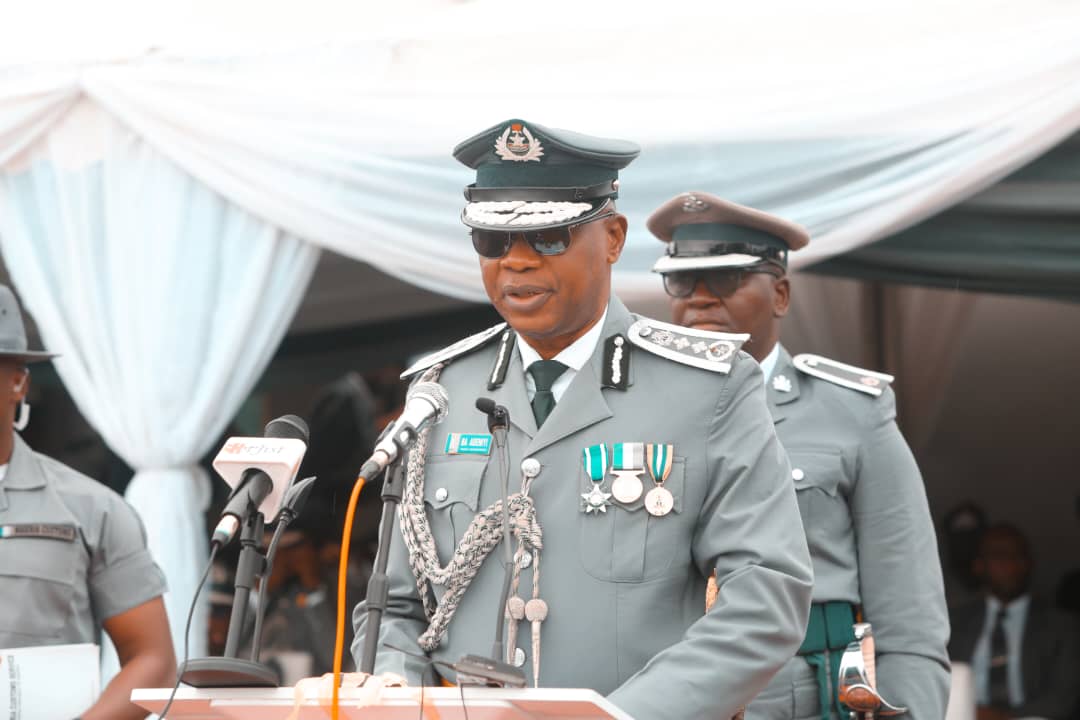
Customs Targets N6.58trn for 2025 After Generating N6.11trn in 2024
By Adedapo Adesanya
The federal government has set a revenue target of N6.58 trillion for the Nigeria Customs Service (NCS) for 2025, according to the Comptroller-General of Customs (CGC), Mr Bashir Adewale Adeniyi, after the agency collected an unprecedented N6.11 trillion in 2024.
The amount generated last year according to the customs chief, surpassed its N5.08 trillion revenue target for the year by N1.03 trillion or 20.2 per cent.
Mr Adeniyi said the remarkable achievement represented 90.4 percent increase compared to N3.21 trillion collected in 2023, describing the revenue growth as historic as it marked the highest year-on-year increase recorded by the service in recent times, surpassing the 52.24 per cent growth recorded in 2022 by 38.18 per cent.
Mr Adeniyi also pointed out that the service achieved another milestone in October 2024 when it recorded N603.17 billion as the highest monthly collection in the history of the NCS, noting that the new revenue target reflected the government’s confidence in customs’ capabilities and the expanding scope of its operations.
Further providing a breakdown of the revenue collection for last year, Mr Adeniyi stated that N3.66 trillion was collected into the Federation Account, consisting of import duty, excise duty, fees, e-auction proceeds, and Common External Tariff (CET) levy.
He pointed out that the collections were achieved despite significant concessions granted to support various sectors of the economy, totaling N1.68 trillion, saying these concessions comprised N723 billion in import duty waivers, N372.65 billion in other levy concessions, and N586.65 billion in import VAT relief.
Mr Adeniyi noted that the strategic concessions were granted to stimulate economic growth, support industrial development, and enhance the overall business environment in line with government policy objectives.
He said the 2024 concession value represented a significant reduction from the N3.95 trillion recorded in 2023, adding that the reduction was a direct result of the service’s enhanced monitoring mechanisms and strategic reforms.
According to the CGC, this was aimed at blocking loopholes and eliminating abuses in the concession granting process, ensuring that only genuine and qualifying enterprises benefitted from these incentives, adding that the service made several commitments towards modernising its operations and enhancing service delivery.
He said despite its impressive revenue performance, the service remained conscious of the need to strike a balance between revenue collection and trade facilitation, adding that this balance was evident in its commitments at the beginning of the year and served as a milestone for gauging performance throughout 2024.
The CGC pointed out that trade data for 2024 reflected significant growth in trade value despite global economic headwinds, stressing that the service processed imports with a Cost, Insurance, and Freight (CIF) value of N60.29 trillion in 2024, representing a remarkable 117.4 per cent increase from N27.74 trillion in 2023.
He said this was achieved through 1,262,988 import transactions, handling a total mass of 15.35 billion kilograms –noting that the higher value recorded despite an 8.2 per cent decrease in transaction volume from the previous year’s 1,376,514 transactions indicated a shift towards higher-value goods in our import trade portfolio.
He said export trade performance was equally impressive, with the total CIF value rising significantly to N136.65 trillion in 2024 from N42.77 trillion in 2023, marking a 219.5 per cent increase.
He said while the number of export transactions remained relatively stable at 38,199 compared to 38,294 in 2023, the country witnessed a substantial increase in export volume, processing 12.35 billion kilograms in 2024 compared to 3.70 billion kilograms in 2023, noting that the 234 per cent increase in export mass, coupled with the higher value, indicated a robust growth in our export trade and suggested increasing competitiveness of Nigerian products in the international market.
According to him, the total trade value handled by the service in the review year amounted to N196.94 trillion, compared to N70.50 trillion in 2023, representing a 179.3 percent increase.
On its anti-smuggling operations, Adeniyi stated that the NCS adapted its strategies to the evolving security challenges resulting in 3,555 seizures in 2024 with a dramatic 100.92 per cent increase in the Duty Paid Value (DPV) of seizures from N17.56 billion in 2023 to N35.29 billion in 2024.
He said the seizures, with CIF value of N28.46 billion and a total duty of N6.83 billion highlighted the scale of attempted economic sabotage prevented by the service, adding that the recorded seizures included traditional and emerging risks to Nigeria’s economic and overall national security.
The customs chief stated that there were seizures of arms and ammunition, including 900 arms and 113,472 rounds of ammunition, and the interception of narcotics and other illicit drugs, resulting in 105 seizures across various forms that were aided by the declaration of a state of emergency at our major entry points.
Mr Adeniyi said the service also intercepted unauthorised pharmaceutical products, with 40 seizures including 175,676 pieces and 6,271 cartons of various medicaments valued at N3.04 billion, protecting public health from potentially dangerous counterfeit drugs.
According to him, the service’s enforcement activities also revealed evolving patterns in environmental and wildlife crimes, with 76 seizures of animal/wildlife products valued at N5.93 billion.
“We also maintained vigilance over trade-sensitive goods, as evidenced by the seizure of 183,527 bags of rice. Additionally, significant seizures were made of other restricted items including 3,785 bales of textiles valued at N945.9 million, and various quantities of footwear, beverages, and other consumer goods, protecting local industries and supporting the government’s economic diversification agenda.
“The service also recorded 397 seizures of vehicles valued at N5.64 billion, as we continue to enforce import regulations and protect government revenue.
“The mounting sophistication of smuggling networks also necessitated a corresponding elevation in our enforcement capabilities, leading to enhanced collaboration with national and international partners and the deployment of advanced detection approaches.
“Worthy of note is the launch of operation Whirlwind with the support of the Office of the National Security Adviser (ONSA) and the Nigeria Midstream and Downstream Petroleum Regulatory Authority (NMDPRA) under the Nigeria Petroleum Corporation (NNPC) Limited
“This operation resulted in the seizure of significant quantities of petroleum products totaling 1,716,656 litres from saboteurs diverting petroleum products intended for home use to neighbouring countries.
“Most significantly, our enforcement activities have yielded 55 arrests of suspects currently under investigation as we continue to dismantle the criminal networks behind these activities.
Mr Adeniyi stressed that to strengthen customs’ enforcement capabilities further, the service is actively expanding its technological infrastructure by integrating geo-spatial technology and other cutting-edge solutions.
General
4th South Africa Focus Week Begins in Lagos to Strengthen Bilateral Ties
By Adedapo Adesanya
The South African Consulate General in Lagos, in partnership with Brand South Africa and the Development Bank of Southern Africa (DBSA), is hosting the 4th edition of the South Africa Focus Week in Lagos, Nigeria, from April 22 – 26, 2026.
The annual platform continues to grow as a strategic initiative aimed at fostering social cohesion between South Africans and Nigerians while positioning South Africa as a preferred destination for business, tourism, and education. Since its inception in 2023, South Africa Focus Week has attracted over 1,500 participants, bringing together stakeholders from across sectors, including trade and investment, arts and culture, tourism, aviation, and the culinary industry.
The 2026 edition holds particular significance as it coincides with the 30th anniversary of South Africa’s democratic Constitution, enacted in 1996, as well as 32 years of unbroken diplomatic relations between South Africa and Nigeria, established in February 1994. These milestones underscore the enduring partnership between the two nations, rooted in shared history and strengthened through formal agreements and ongoing collaboration.
The 2025 economic relationship between South Africa and Nigeria reflects a strategically significant, multi-dimensional partnership anchored in trade, energy security, investment flows, and strong institutional cooperation. While bilateral trade remains structurally imbalanced – with South Africa exporting US$468.48 million and importing $1.69 billion, resulting in a $1.22 billion deficit – this dynamic is largely driven by South Africa’s reliance on Nigerian crude oil, positioning the relationship as one of strategic interdependence rather than imbalance alone.
This partnership is further elevated by the relative economic weight of both countries. According to IMF projections, South Africa’s economy is valued at approximately $443.6 billion, while Nigeria’s stands at around $334.3 billion in nominal terms for 2026. As two of the largest economies on the continent, their bilateral engagement constitutes a central axis of African economic activity, with disproportionate influence on the success of continental integration efforts.
Beyond trade, the relationship is reinforced by deep two-way investment linkages. South African firms -including MTN Group, Shoprite, and Standard Bank – maintain a strong presence in Nigeria, while Nigerian companies such as Access Bank and Paystack have established a growing footprint in South Africa. Although investment flows are asymmetrical and some Nigerian firms have faced operational challenges, these exchanges reflect an emerging bi-directional economic corridor that extends beyond goods trade into services, finance, and digital innovation.
Aligned with Brand South Africa’s mandate to build the country’s global reputation and competitiveness, the week-long programme will convene leaders from government, business, civil society, academia, and the media. Discussions will focus on leveraging the African Continental Free Trade Area (AfCFTA) as a tool for market access and global positioning, with Nigeria serving as a key focal point.
The South Africa Focus Week has features a series of high-level engagements and cultural activities designed to deepen economic ties and promote collaboration: South Africa–Nigeria Infrastructure Investment Conference (April 22, 2026) which was held under the theme South Africa–Nigeria Partnership: Unlocking Infrastructure Opportunities,” the conference will bring together key stakeholders in infrastructure development to explore collaborative projects in road, rail, and transportation systems.
The forum also examined the role of Public–Private Partnerships (PPPs) and facilitated discussions on project financing and implementation with institutions such as the DBSA and Nigeria’s Infrastructure Concession Regulatory Commission (ICRC).
This was followed by the 2nd Economic Diplomacy Roundtable (Thursday, April 23, 2026), which was hosted in partnership with MTN Nigeria under the theme Role of Technology in Infrastructure Development, the roundtable will convene senior government officials, private sector leaders, and industry experts to identify investment opportunities and strengthen strategic partnerships.
Friday, April 24, was for Arts and Culture Experience, which is a dedicated cultural day will showcase Lagos’ creative spaces and features a panel discussion on South Africa’s arts, film, music, and culture. The programme includes a South African film screening, engagements with filmmakers, and a networking reception aimed at fostering collaboration between the creative industries of both countries.
The event continues on Thursday, April 25, with Freedom Day Celebration and Closing Ceremony. This commemorative event will celebrate 30 years of South Africa’s Constitution, 32 years of freedom and democracy, and the enduring diplomatic relations between South Africa and Nigeria. The ceremony will also provide an opportunity to reflect on outcomes from the week and outline future areas of cooperation.
The celebration forms part of Brand South Africa’s Global South Africans Programme, which recognises and connects South Africans in the diaspora as ambassadors of the nation’s values and identity.
The week climaxes with the 4th edition of the South Africa Golf Tournament at Ikoyi Golf Club on Saturday, April 26, 2026, which will be done in partnership with Crossflex International.
According to a statement, the event aims to strengthen people-to-people relations through sports diplomacy, bringing together South African and Nigerian golfers in a spirit of camaraderie and collaboration.
General
EFCC Arrests Ex-Skye Bank Chair Tunde Ayeni Over Alleged Diverted Loans
By Modupe Gbadeyanka
The former chairman of the defunct Skye Bank Plc, Mr Tunde Ayeni, has been apprehended by the Economic and Financial Crimes Commission (EFCC).
Spokesperson of the anti-money laundering agency, Mr Dele Oyewale, confirmed the arrest of the businessman on Friday but declined to provide further details, according to TheCable.
Mr Ayeni was accused of diverting the N36.5 billion and $30 million loans from Polaris Bank Limited to companies with which he has links.
He was alleged to have obtained the credit facilities for marine security, electricity distribution, and real estate projects, but moved them to telecom investments tied to NITEL/MTEL assets via a NATCOM account.
After the Central Bank of Nigeria (CBN) revoked the operating licence of Skye Bank in 2018, it nationalised it to Polaris Bank.
The EFCC has been looking into the alleged diversion of funds by Mr Ayeni, resulting in his arrest in Abuja on Thursday, April 23, 2026.
He is being grilled over the matter and would be arraigned in court once the investigation is concluded.
This is not the first time Mr Ayeni has been nabbed and probed by the EFCC, as this happened a few months after his bank lost its licence.
The then acting spokesman for the EFCC, Mr Tony Orilade, said Mr Ayeni was quizzed by detectives over issues related to fraud and embezzlement allegedly committed by him when he was Chairman of the bank a few years ago.
General
Customs, Police Commence Tighter Security at Ports to Protect Oil Trade
By Adedapo Adesanya
“We are fully committed to working with the new Commissioner of Police and giving all necessary support towards the successful discharge of his responsibilities.”
-
Feature/OPED6 years agoDavos was Different this year
-
Travel/Tourism10 years ago
Lagos Seals Western Lodge Hotel In Ikorodu
-
Showbiz3 years agoEstranged Lover Releases Videos of Empress Njamah Bathing
-
Banking8 years agoSort Codes of GTBank Branches in Nigeria
-
Economy3 years agoSubsidy Removal: CNG at N130 Per Litre Cheaper Than Petrol—IPMAN
-
Banking3 years agoSort Codes of UBA Branches in Nigeria
-
Banking3 years agoFirst Bank Announces Planned Downtime
-
Sports3 years agoHighest Paid Nigerian Footballer – How Much Do Nigerian Footballers Earn